

Anselm Viola i Valentí (1738-1798) - Missa Alma Redemptoris Mater
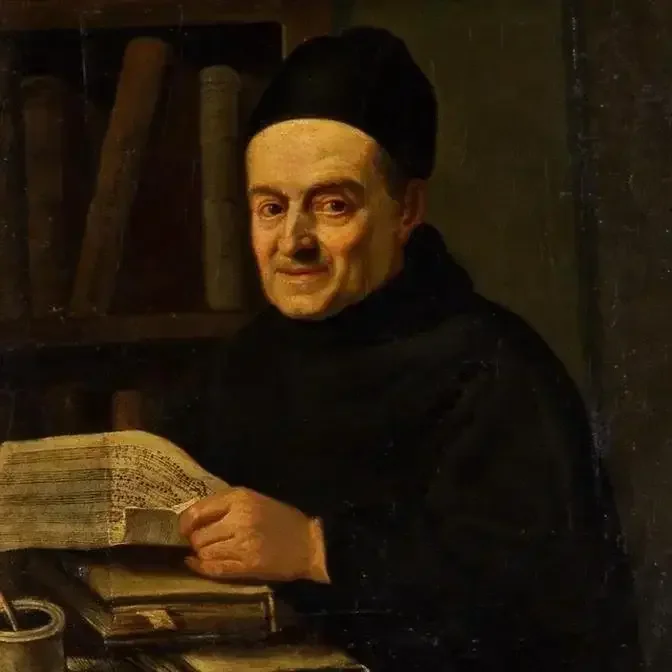
Moltes felicitats Anselm Viola i Valentí! 🙏🏼🎁
Composer: Anselm Viola i Valentí (1738-1798)
Work: Missa Alma Redemptoris Mater
Performers: Escοlania de Montserrat https://tinyurl.com/3mpdcdrv
Orquestra d'antics escοlans
Ireneu Sеgarra (1917-2005, conductor) https://tinyurl.com/bdukdzuc
Missa Alma Redemptoris Mater
1. Kyrie 0:00
2. Gloria 10:13
3. Credo 31:15
4. Sanctus 43:02
5. Agnus Dei 44:55
Engraving: Alexandre de Laborde (1773-1842) - Vista interior de la iglesia de Mont-Serrat (1806)
HD image: https://flic.kr/p/2sdZ2vW
Engraving: Johannes Janssonius (1588-1664) - Coloured town view of Montserrat (1657)
HD image: https://flic.kr/p/22PpYpU
Further info: https://www.trito.es/ca/botiga/article/1103/missa-alma-redemptoris-mater
Listen free: https://open.spotify.com/album/6dbR09BlbXlVaUQFDtQ5Ya
---
(Pere) Anselm Viola i Valentí
(Torroella de Montgrí, 13 June 1738 - Montserrat Abbey, 25 January 1798)
Spanish teacher and composer. The eldest son of Francesc Viola's third marriage, his mother's name was Maria Rosa Valentí. He trained at the Escolania de Montserrat under Benet Julià and Josep Antoni Martí. On 20 March 1756, he began his novitiate at the Monastery of Montserrat, where he took his vows in 1757. He then moved to Madrid, where he completed his ecclesiastical and musical studies at the Church of Nuestra Señora de Montserrat, coming under the influence of José de Nebra. He also premiered many of his works there, achieving great success at the royal chapel. Upon returning to Montserrat in 1768, he was appointed master of the Escolania, teaching renowned students such as Fernando Sor, who wrote memoirs detailing the life of his master Anselm Viola, and master of the music chapel, positions he held until his death. As a composer, he wrote instrumental works, sonatas, and other pieces for keyboard instruments, as well as a classical-style concerto for bassoon and orchestra. He composed two masses for voices and orchestra, two Magnificats for six and seven voices (the second with basso continuo), 'Tèrcia i Completes' (both for seven voices with accompaniment), and a Lamentation for alto and orchestra.