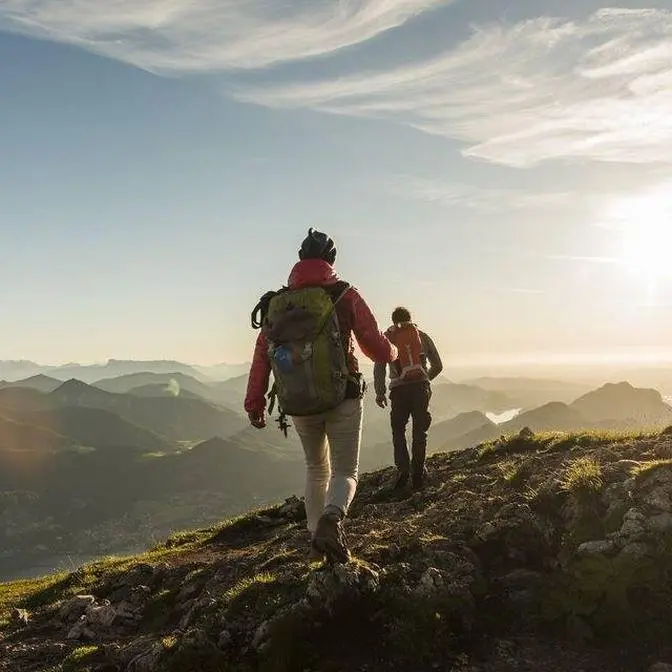
A huge thank you to Himalayan Masters for making this special experience possible. I’ve used them for all my treks here, and honestly wouldn’t want to go with anyone else. If you’re thinking about trekking in Nepal, I can GENUINELY recommend them👇:
Kanchenjunga is one of the least visited trekking routes in Nepal - despite being home to the third highest mountain in the world.
This trek takes over two weeks to complete, crosses multiple high mountain passes, and leads deep into one of the most remote regions of the Himalayas. It’s long, unpredictable, and far from the busy trails like Everest Base Camp or the Annapurna Circuit.
This is the story of that journey.
From days of being stuck in snowstorms, to navigating landslide-prone trails, to having to make the difficult decision to turn back and change our route… this trek became so much more than just reaching a destination.
📍 What’s in this video: The full Kanchenjunga trek route (North + South Base Camp) 3 days of travel just to reach the starting point Remote tea house trekking in Nepal Crossing the Sele Le Pass Getting stuck due to extreme weather
🏔️ About the Kanchenjunga Trek: Location: Eastern Nepal (near the Indian border) Distance: ~200–220 km Duration: ~16–20 days Max altitude: ~5,140m (North Base Camp) One of the least trekked routes in Nepal Requires a special permit + registered guide Difficulty: Moderate (long distances + unpredictable weather)
If you’re looking for a quieter alternative to Everest Base Camp or Annapurna Circuit, this might be one of the last truly off-the-beaten-path treks in Nepal.
🌞 About Me: Hi! I’m Flora - adventure traveler, storyteller, and lover of all things outdoors. Join me as I discover the hidden gems of the world and share the magic of travel with you :)
🌍 Connect with Me: Instagram: / flora_gonning For Inquiries/Collaborations: [email protected]
🗺️ Details: Time of Visit: November 2025
🎥 Gear: Main camera: Panasonic Lumix S5 mark ii Lens: Sigma 24-70 F2.8 Side camera: Insta360 Ace Pro 2 Microphone: Rode VideoMicro Drone: DJI Mini 4 Pro
I license my music from @Musicbed. Here’s an affiliate link which will get you a discount! https://fm.pxf.io/floragonning
📌 Timestamps 0:00 - Kanchenjunga 1:33 - Why I chose this trek 2:50 - The long journey begins (getting there) 5:06 - Reaching the trailhead 6:36 - The first official day 8:33 - Nepali tea houses 9:57 - Jungle and rhododendrons 12:57 - Gyabla's monastery 13:35 - Receiving some bad news 15:55 - Ghunsa (aka paradise) 17:08 - We're stuck 22:36 - First real mountain views 24:49 - The sketchy part 26:35 - The most beautiful tea house of the trek 27:24 - Jannu Base Camp 31:23 - More bad news 34:18 - A change of plans 35:03 - The Sele Le Pass 39:32 - Reaching the tea house 41:30 - The most beautiful one yet 44:25 - The weather changes (again) 48:15 - I'm getting tired 52:35 - Pushing for South Base Camp 55:04 - The way down 56:43 - Is this my new favourite trek?
Every single time I come back to Nepal, I think I have found my favorite trek.
And then I realize I might have spoken too soon.
Welcome to the Kanchenjunga trek.
Speaking at 4,800 meters Celsius, it is exhausting.
Kanchenjunga, a name you might not have heard before,
even though it is the third highest mountain in the world.
This is one of the least trekked major routes in Nepal.
A trek that takes weeks to complete and days to just reach.
It's remote.
It's rugged.
Yeah, like I said, the snow is deep.
It's unpredictable and at times a bit unforgiving.
This is so sketchy.
And somehow that is exactly what made me want to come here.
So if you have been following me for a while,
you know that Nepal has kind of become my annual tradition.
Everest Base Camp, Annapurna, Gokyori, Lobuchi East, Manaslu.
At this point, I have ticked them all off.
And every time I finish one, I'm like, okay, this is it.
This is the one.
This is my new favorite.
But then I start reading about another trek
and my brain goes like, could this be the one?
Could this be the next big Nepal trek?
So this year, I again decided to go look for one.
And yep, I think I might have found it.
I don't know if this will be my new favorite.
It might be, it might not be.
But I guess we're going to find out.
One thing is for sure though,
we are going deeper into Nepal than ever before.
And getting there is going to take some serious effort.
Yes, the struggle of this trek actually already starts
long before the real hiking does.
You need to bring a lot of stuff for a 20-day trek.
This trek is so remote,
it takes three full days just to reach the starting point.
Kicking things off with a flight.
So we are currently at the domestic airport of Kathmandu,
about to hop on a plane to Bhadrapur.
And the flight is just the beginning.
After that, we still had hours of driving ahead of us,
winding deeper and deeper into a part of Nepal
that already felt very different from anything I'd seen before.
You see, Kanchenjunga sits all the way in the far east of Nepal,
far away from the Everest and Annapurna regions,
and very close to the Indian border.
And I still don't know how,
but I somehow managed to convince two of my friends
to sign up for this long and painful adventure too.
Say hi!
Hi!
Together, we set off feeling excited.
And for a while, the drive was actually kind of fun.
So we just arrived in a place called Pickle,
and we're going to spend the night here,
continue the jeep ride some more.
First stop of the trip.
Should we count how many we have?
No, 23.
21.
25.
The next day though, reality started to kick in a little.
Day two, still no hiking.
Eight more hours in the jeep.
And by day three,
after another five hours of being thrown around
in what felt like the world's bumpiest ride,
yeah, we were definitely over it.
But I guess that is what you get
when you choose to hike one of Nepal's most remote regions.
It's all part of the journey.
Well guys, we just got to the final G point.
No more road from here.
We're gonna walk.
Bye!
And so with our third delbat already down
before even starting to walk,
we were finally on our way.
So one thing that I am already loving about this trail
is that the trail really starts at the end of the G point.
So it's not like you're walking alongside dusty roads
or there's construction going on.
No, it's really your 16 days out of civilization.
And this is very unlike the other treks in Nepal,
like the Annapurna and even Manaslu,
where you walk for days alongside the road
at the start and at the end of the trail.
So I think this already makes Kanchenjunga one step ahead.
Although calling this a proper hiking day
might be a bit of an overstatement
because after just about an hour,
we already reached our first tea house.
Cheers!
The next morning, things started to feel real.
First official day on the trail.
Now we're really beginning.
So we are kicking things off with a bit of elevation gain.
We are doing about 1300 meters today.
Should be around a five, six hour day.
So not too bad.
The Kanchenjunga trek basically starts
at quite a low elevation.
It started at 650 meters,
which is actually really nice
because in that way,
you slowly make your way up
through all the different climate zones.
So you get a lot of variety on the trek.
So for example, right now,
we're like walking alongside this beautiful river.
Like it's kind of like jungly vibes around us.
And yeah, it's honestly beautiful.
We have perfect weather.
Oh, I'm just so glad to be out here.
It feels so good.
And pretty quickly,
we realized there is not much easing into it
on the Kanchenjunga trek.
Well, we have officially entered the steep part.
It's pretty steep.
Because you pretty much start climbing straight away.
Quite a start to this trip.
But then you look up
and you catch the first glimpse of snow-capped peaks.
And somehow that's all the motivation
you need to keep going.
We're here.
We did it.
So even though this region is really remote,
it's still a classical Nepal tea house trek,
which means you don't have to carry tents and gear
up the mountain
because you stay in little lodges like this behind me
on the trail.
Up until now, they've been pretty basic.
I would say more basic than on Manaslu, Nepurna.
So there's like shared bathrooms.
There's no Wi-Fi, no connection.
The food is minimal.
There's basically no menu.
You just get what, you know, they serve here.
But honestly, I feel like just a bed to sleep in
after a long day of trekking is really all you need.
So yeah, can't complain.
Today was the day we officially entered
the Kanchenjunga Conservation Area.
Turns out this whole region is actually pretty restricted.
Up until the mid-1980s,
it was completely off-limits to trekkers.
And even now, you can't just come here freely.
You need a special permit and a registered guide to enter.
So we're having a short break right now.
Today's kind of like a short, easy day.
Only four to five hours.
A lot of up, a lot of down,
but total incline gain isn't too bad.
I think it's around 300 or 400.
In terms of scenery, it's very similar than yesterday.
It is still jungle vibes.
We are getting to see a lot of rhododendrons today
because it's the season that they're blooming.
So we're very lucky.
I slept absolutely horrible though.
I had a rat in my room, a giant fat rat.
And I couldn't sleep because of it.
So we're doing it on very little sleep,
but we're doing it.
So a few more of these and I'll be fine.
Wow, so jumbly today.
I love it.
It actually does remind me a lot of the Annapurna circuit
because also with that track,
you start at a very low elevation.
So you get to see jungle and then pine trees and everything.
The only difference obviously is the crowds.
Like Annapurna circuit is busy.
Here I can literally count on one hand
how many other trekkers we've seen so far.
So yeah, that's definitely really, really nice.
It feels like you have the whole trail to yourself.
Apparently fewer than a thousand trekkers come here each year.
Compare that to the Annapurna circuit,
which sees around 15 to 20,000
or Everest Base Camp, which gets even more than that.
Yeah, the difference is pretty noticeable.
Wow, made it to Kiabla.
That's the tea house.
When we reached Kiabla,
we saw a small monastery sitting on top of the hill,
just above the village.
So with the tiny bit of energy we had left,
we decided to make our way up and go explore.
Not a bad place to end the day.
So today is an exciting day
because we are going to get to a place called Gunza.
Gunza is supposed to be a town, like an actual town,
meaning there is going to be an actual menu,
hot showers, Wi-Fi,
just a little bit more luxury, let's say.
So we've all been looking forward to this day a little bit.
But first, we still have a little bit of a walk to do.
So let's keep going.
But then somewhere along the way that day, we got some news.
Apparently, there is a big storm rolling in right now,
which is not great
because the storm is supposed to be there exactly on the days
that we are going to progress to base camp and see Kanchenjunga.
And now we don't know.
We don't know what is going to happen.
We don't know if we're going to see it or not.
So yeah, that's the mountains.
I mean, you never know.
And all you can really do is just keep going.
Out here, weather warnings aren't something you can just ignore
because the Kanchenjunga trail has quite a few sections
that are already a bit sketchy, even on a good day.
Bear that with bad weather and things can change pretty quickly.
Paths become unstable, landslides become a real risk,
and sections can suddenly become too dangerous to cross.
So yeah, it felt like we could use a bit of luck over these next few days.
Lunchtime!
I'm starving.
No more pancakes.
But we didn't let the possibility of bad weather take away
from the excitement we felt about getting to Gunza.
And before we knew it, we were there.
That's Gunza!
Oh yeah!
Shower time!
Oh my goodness.
After six days, I don't think I have ever appreciated a shower more.
That felt so good.
But then once the night hits...
Guys, it's snowing.
It's like full on snowing right now.
It's so beautiful, but it makes me worried about tomorrow and the rest of it.
I mean, we knew about the big storm, but it's already started.
Yes!
Okay, now we go back to the fire.
Wait, get the chocolate!
And the next morning, we found out that it didn't stop during the night.
So much snow!
Yeah, it's still snowing.
Well, as you guys can see, there has been a lot of snowfall last night.
Right now, we are basically stuck in Gunza.
Yeah, because of the snowfall, there's a huge risk of landslides right now going forward.
So we can't really, you know, do that.
It's not safe.
Today was actually supposed to be an acclimatization day.
In that regard, it's actually great timing for the storm to be
setting in now because we were gonna stay here for a day anyway.
Obviously, we can't hike to the viewpoint now because that's also not safe.
It's still snowing.
Let's see how it goes today.
But yeah, according to the weather forecast,
it's gonna keep snowing for at least today and tomorrow.
So chances are we're gonna be waiting it out here for a couple days.
At least they have coffee here.
How are you feeling, Ava?
Oh, you know, a little excited, a little cold, a little nervous.
But I'm excited to see the mountains once the sky clears a bit more.
Yeah.
And actually see like the Himalayas.
How do you feel about being stuck here?
There are worse places to be stuck.
That's what he said.
We've got Wi-Fi, there's a cappuccino machine, like brownies.
There's brownies.
We're fine, yeah.
And it feels like Christmas.
It kind of does.
With nothing better to do anyway, we decided to explore the village.
See what's going on.
Yeah, Gunza is actually really, really pretty, especially in the snow.
It's funny because in my head, I think I was expecting it to be
a little bit like Namche Bazaar, which is this big town on the Everest Base Camp Trail.
It's not.
Or let's say it's like the way more basic version of it.
Because Namche is basically just this place with all these bakeries
and coffee and Wi-Fi and showers, just a little bit more luxury.
In that sense, this place does have some of that.
Like we do get the Wi-Fi.
I had a hot shower yesterday.
There's a bakery, a bakery, one bakery.
And they also do have a coffee machine.
So yeah, it's like I would say it's comparable.
We ended up spending most of the day inside.
Reading, resting, playing games and eating lots and lots of food.
Okay, basically, since we have nothing better to do,
we thought to kind of show you the plan a little bit, like what's happening on this trek.
So basically, it's a circuit.
So we walk in a circle and it's not an out and back trail,
but it is a really, really long route.
So it's like, what, 200?
200 kilometers.
200 kilometers spread out over like 15 days of walking.
So it is definitely one of the longest classic Nepalese tea house treks in the entire country.
We are planning to visit both North and South Bay Base Camps.
So that means if the weather is going to work on our side,
we're going to see Kanchenjunga from like two different sides.
So that's North Base Camp.
Then after that, we would move back again to...
Yeah, so we'd come back to Kunsa, take the pass,
and then go to South Base Camp and then circle out somewhere here.
But to make any of that happen, we needed the weather to become better.
And as the day went on, it became pretty clear that wasn't happening.
If anything, it just kept getting worse.
And you could feel it in the atmosphere as well.
More and more people started talking about changing plans,
turning back, trying to figure out what to do next.
And it was hard not to start worrying a little.
And then a bit later, we got more bad news.
Okay, so a little update.
We just heard that the Selele Pass,
which is the pass that would take us basically from this,
from the North Base Camp area to the South Base Camp area,
is closed.
Like the tea houses are shut.
There's just way too much snow right now.
So things are looking very, very unsure right now.
It would really suck to have come all the way here
to not even get in any mountain views.
Oh well.
But then when we woke up, it seemed like we had a bit of luck on our side.
Guys, good news.
Clear skies.
That means we're going today.
Oh my goodness, I can't believe the weather this morning.
It is absolutely perfect.
The sun is out, the snow is fresh.
And I'm so glad we get to see Gunsan like this
because it's just so picturesque.
Like there are 360 degree mountain views right now,
which is just totally insane.
That day was the first time we were actually seeing some proper Himalayan peaks.
And it felt like we were finally getting a glimpse of what we came here for.
Yep, this is the definition of winter wonderland.
So today, we are making our way to Kambachen,
which is supposed to actually be a very, very nice place.
Like a very scenic place surrounded by mountains.
Should take about five to six hours.
700 meters elevation gain.
But it's supposed to be gradual and not so much like up and down, up and down.
So let's see.
Yeah, I would say the only tricky thing about today
is obviously the sun is out, the snow is melting,
and this area is known to be landslide prone area.
So yeah, we just got to be a bit careful today.
A bit of a narrow path here.
Oh, that looks so good.
Unfortunately though, our brief moment of sunshine didn't last very long.
So the clouds are slowly settling in around us again.
Let's hope it's just clouds, not more snow.
Yeah, wishful thinking.
It's snowing guys, again.
We've got about one and a half hour more to go probably.
So it seems like we're gonna be hiking in the snowstorm for a little bit.
From there, things started turning sketchy.
Mist rolled in, visibility dropped,
and we still had several narrow sections to cross.
Exactly the kind of places you don't want to be in when the weather turns.
We basically just crossed that.
And look at the drop.
Holy freaking moly.
This is so sketchy, especially now that it's so slippery.
I mean, look.
Seeing a rescue helicopter fly by didn't exactly help either.
Oh my goodness, look.
Insane.
At that point, we were all pretty ready to get out of there.
Oh my goodness, what was supposed to be a four to five hour day
basically turned into an almost eight hour day.
Crazy.
I think we all felt a huge sense of relief once we finally made it to Kampachen.
After some much needed rest following the intense day we had yesterday,
we woke up a bit cold but with fresh energy
in what was probably one of the most beautiful tea houses yet.
Morning.
Today is an acclimatization day,
which means we get to stay in this beautiful, beautiful camp for two nights.
So we are now at 4,100 meters altitude,
which basically means that our bodies can't really adapt to the thinner air anymore automatically.
So we're going to have to stay here for our bodies to get used to it.
So basically, the higher you go, the less oxygen there is in the air
and your body needs time to adjust.
And if you just go up too quickly, you risk things like nausea, headaches,
or even worse, you get altitude sickness and that's bad.
But don't be mistaken because acclimatization days do not equal rest days.
Like you still want to hike a little, get your heart rate up,
ideally go to a higher altitude and then go back down and sleep low.
So that's exactly what we're going to do after warming up.
Yes, that's the life.
So today we are walking to Jammu Base Camp, which is at 4,500 meters altitude.
So it's like about a four or five hundred meter incline,
which is perfect for an acclimatization hike.
And yeah, weather is clear.
So we're getting some beautiful mountain views in.
It's just so awesome.
After all the weather uncertainty of the past few days,
it felt good to be out there and just enjoy.
So we just tried to take it all in,
knowing that out here you really can take anything for granted.
Wow, this is so freaking special.
We're in the freaking Himalayas.
I can't believe it.
I swear food tastes better at 4,400 meters altitude.
Oh yeah, I like that one.
Well, guys, we are on the way back to Kambachen.
We almost made it to Base Camp.
Not entirely, though.
I think we got up to 4,400 something.
But then the clouds started to roll in, as you can see behind me.
And we figured it was better to head back
before we would get another scenario like yesterday,
where we had to walk with zero visibility.
But still, I think we're pretty well acclimatized now.
Well, that was fun.
When we got back to the tea house,
of course, we did what we've been doing every night.
Wait for the fire to come on and eat.
But the next day, we were right back where we started.
Snow, clouds, no visibility and nowhere to go.
Well, guys, we might have a little problem.
We just woke up and look at this.
Oh, well, yeah, that's quite a lot.
Yeah, this is not good.
Let's try and find Govinda, see what he thinks.
It's not looking great.
So we have to pass the landslide today.
Yeah, if you walk like this, it's snowing time.
It's sometimes caused by the landslide.
Too risky.
All of us were stuck for the day, contemplating our next moves.
The thing was that it seemed like we had a short weather window coming up,
just a few days of good weather before things were meant to turn again.
So we had to choose, wait it out and try for North Base Camp in a couple of days
or turn back now and use that window to get to the south.
Well, guys, bad news for us.
We couldn't move forward today because the issue is that there is a stretch on the path
from here to Lunak, which would be the next place that has a very high risk of avalanches.
And especially with the fresh snow, obviously it becomes extra dangerous.
So right now, none of the groups are moving up
and the groups that are there can't reach North Base Camp because of the snow.
So we have basically made the decision to skip North Base Camp and instead just
fully focus on trying to get to the Southern Base Camp.
We think our chances of getting there are better.
Like, obviously, we really wanted to do both, but I don't know.
The mountains are just not having it.
Like, they don't want us to go up there, it seems.
It sucks.
Like, I've never not reached a base camp before, so I'm trying really hard to be okay with it.
I'm sure there is a lesson in it somewhere.
I'm sure there is, I don't know, the Himalayas are trying to test us somehow.
But yeah, right now it sucks a little bit.
For now, there wasn't much we could do,
except for just making the most of where we were.
Enjoying the moment and hoping that this wasn't the last of it.
It was tough, getting so close and then having to turn back.
But we knew it was the right decision.
The mountains out here demand respect and with the risk of avalanches,
rockfall and landslides over the next few days, it just wasn't worth pushing it.
Goodbye, Kambachen.
No north base camp for us.
And so, with a new plan, we made our way back down to Gunza,
ready to take on the second part of this trek, the one to south base camp.
Cheers!
Good morning, guys.
As you can see, we have made it back to Gunza.
No snow this time.
We are currently getting ready to tackle what is probably going to be
the most challenging part of the entire trek, which is this little pass.
Today kind of felt like we were starting all over.
A new plan, a different route and another chance to get it right.
So basically, what makes the Selele pass so challenging?
It's a lot of up and down.
Basically, it's three passes that we're going to do.
All of them are around 4,600 meters.
So the altitude profile is just crazy.
And especially at such high altitudes, like you're just so quickly out of breath.
Everything takes so much energy.
It's going to take us two days to do this stretch.
Today should be relatively fine.
We're just going up to 42, starting at 3,400.
So that's about like 800 meters of elevation gain, maybe a bit more.
Tomorrow, though, is supposed to be a 10 hour day.
So not trying to think about that yet.
And so we started our journey straight up the mountain.
So actually, up until yesterday, the Selele pass was closed.
That's another like kind of challenging thing with this pass.
It's very sensitive to weather.
So as soon as there's like a little bit of snow,
it becomes impossible to cross it because it's just so dangerous.
So this is also one of the reasons why we actually decided to skip North Base Camp
and come back here and try the Selele pass instead.
Because we saw a weather window, like an opportunity of two days of good weather
so that we can cross this thing.
We're hitting a very steep part now for about 30 to 40 minutes.
Straight up.
Well, that was the most difficult part of the day.
Hopefully, there is no lunch place today on the way.
So protein bars it is.
Oh, nice.
Might want to try.
But after our little lunch break,
the Selele pass showed us exactly what it was known for.
Quickly changing weather conditions.
We were kind of hoping to get a good view at the top of this,
but as you can see, we're in the clouds.
The fog rolled in.
Visibility dropped to almost nothing.
You can literally barely see Keith and Govinda.
And things got tricky again.
But if we wanted to get to South Base Camp, really the only way was forward.
Oh, well, as long as we can get over this pass,
I guess we shouldn't really complain.
We just want to get to South Base Camp.
It's so insane how this morning was so beautiful, so sunny.
And now we find ourselves in such a freaking hostile environment.
We made it.
Well, that was exhausting.
And that was supposed to be the easy part.
How cozy.
Well, I think it's going to be a cold night.
Hi.
How are you doing?
Let's go eat.
Another day, another dhaba.
So let me quickly show you the toilet situation.
Up until now, it's actually been pretty good.
It's all squatty toilets, no western toilets, but...
So this is basically what it looks like.
Just a shed with a hole in the ground.
I think the shittiest thing about the toilet situation on the trek,
pun intended,
is that all the toilets are outside,
which means if you wake up in the middle of the night at like 3am,
and you need to go,
you need to get out of your warm sleeping bag,
go outside into the cold,
which is definitely, I would say, one of the worst parts of trekking.
This is definitely the worst part of every day.
So it is currently 6am in the morning.
Like I said yesterday,
today is probably going to be the most challenging day of the entire trek,
which is also why we're starting so early,
because we're going to need the time.
We're going to cross three passes, all above 4,600 meters.
So it's going to be a lot of up, a lot of down, then a lot of up again.
I'm a little bit nervous.
Let's see how this goes.
Today started out in a way that is hard to put into words.
Mountains in every direction,
and views that just didn't feel real.
It might be the most challenging day,
but I'm pretty sure it's also the most beautiful.
Holy moly.
This is why you do it, you know,
to see this, to experience this, this feeling.
This is pass one, I guess.
Time to tackle a bit of uphill.
A lot of uphill.
There it is, guys.
First pass.
Here we are.
Pass number one.
We made it.
Check.
Is anyone else scared that that's the next one?
No, that can't be.
I hope not.
So another challenging thing about today is that
there are no tea houses on the way,
meaning that we're going to have to survive on snacks for the coming nine hours.
Snacks with a view, though.
And although it felt like a victory, we were far from done.
Time for some downhill.
Look at this.
But not long after that,
the pattern that we just couldn't seem to escape returns.
The weather shifted.
Oh no, we're losing the views.
The clouds are already settling in.
With the views gone, so went my good mood.
And from that point on, it became a bit of a grind.
It's just hard because you're at such a high altitude for such a long time.
Just going up and down, up and down through a thick layer of snow.
Yeah, like I said, the snow is deep.
It's definitely a mental as well as a physical challenge.
Oh well.
Okay.
Look at my stick.
Guys, we just spotted the second pass all the way over there.
Pass number two.
Check.
Two down, one more to go.
Let's do this.
I am exhausted.
It has started snowing.
It is slippery.
It is wet.
Okay, Tom, not having the best time.
I am struggling.
I'm not gonna lie.
It is hard.
I think I'm gonna put the camera down now because it's basically just nothing but white
and a struggling flora, which I know is not the most interesting.
Just gonna focus on getting there, getting safely over pass number three.
And see you on the other side, hopefully.
Guys, the third pass is right there.
Look, there it is.
Oh, I'm so happy.
4,700 meters.
Well, that was the third and final one.
From here on, it's about two and a half hours down to the tea house.
I'm looking forward to a warm tea and hopefully a fire in the tea house.
That would be great.
From there, it was just a long gradual descent.
One of those stretches where you think you're close, but it just keeps going.
At some point, we decided to change tactics a bit.
You ready?
Now I have a wet butt though.
Yeah, safe to say that didn't really work.
We're all super thirsty and dehydrated too,
because there hasn't been any point along this trek that we could refill our water.
It's been a long one.
Can't freaking wait to get to the tea house.
Still got a while to go though.
But then finally, after 10 hours...
Oh my goodness, guys.
There it is.
Ta-da!
Finally!
I'm pretty sure I slept for like 10 hours straight.
And guess what?
It is snowing again.
So today should actually be a relatively short and easy day.
Although we do have a lot of fresh snow,
which means it's probably going to be a little bit of a push again.
But that's okay.
I think after yesterday, we can pretty much do anything.
Definitely the most challenging thing about the Kanchenjunga trek is just the duration.
Like it's a lot of days of hiking.
And I think I've reached a point where I'm just like
starting to look forward again to being in Kathmandu,
having a shower, a good bed, good food.
Excited for today?
You're ready?
I'm ready, yeah.
Today, we were making our way to Damje.
And by now, it probably won't surprise you,
but the weather wasn't exactly on our side.
But we refused to let it get to us.
We had already missed one base camp
and we simply were not going to turn back without seeing either.
And so we pushed our way through another layer of snow.
600 meters uphill through thick, thick snow.
Wish us luck.
Even though it was supposed to be a shorter day,
it ended up being exhausting.
This is crazy.
I mean, where even are we right now?
My body was starting to notice it.
And by the time we reached the tea house,
I was more than ready to call it a day.
But at least there was one thing waiting for us.
The one thing you could always count on out here.
So it's currently 5.30 p.m.
And as you can see, I have already crawled under one, two, three blankets.
I am ready to call it a night.
Tomorrow is going to be another very, very long day.
So basically the plan is to get up at like 5, 4.45, 5.
Have breakfast at 5.30 and then leave for base camp at 6.
Because of the snow, it's probably going to take a lot longer
to get there than it normally would.
So that's why we're also leaving so early.
And also because early in the morning the snow is still ice,
which makes it easier to walk on
because you don't like fall through it with every step like we did today.
Yeah, these are always the hardest parts of the expeditions.
I feel like just sleeping at such a high altitude,
like we're at 44, 50 meters now, I think.
And there's just no way of being comfortable or being warm,
even with three blankets.
But yeah, I just try to remind myself that it's part of it.
It's part of the experience.
That's the sacrifice you make to reach base camp, to reach your goal.
Yeah, after tomorrow, it's all gonna be worth it.
I just feel it.
Right now, just getting through tonight is the goal.
I guess I'll see you very early tomorrow morning
on my way to Kaichinchunga base camp.
That night was probably one of the coldest of my entire life.
But once I stepped outside against all odds, I saw clear skies.
And just like that, it felt like we might actually get our shot.
I feel ready.
So we didn't waste any time.
Time to go to finish this off.
Because we knew this was it.
The hardest part, honestly, wasn't the distance or the altitude.
It was the cold.
I can't even describe how cold it is right now.
But then all of a sudden...
Oh my god, look at her.
She's beautiful.
And I didn't feel cold anymore.
Well, guys, we did it.
Kaichinchunga base camp.
That right there is the third highest mountain in the world.
Oh, I can't believe it.
So little fun fact about Kaichinchunga.
This was actually thought to be the highest mountain in the world until the mid 1800s.
And then they found Everest.
And then they found K2 as well.
So it got bumped to the third place.
For the local communities that live here,
Kaichinchunga is actually considered to be a sacred mountain.
So it's believed to bring prosperity and fortune to their lands.
And this is also the reason why most of the expeditions that go to the top of Kaichinchunga,
they don't actually stand on the actual top out of respect for these local beliefs,
which I thought was pretty cool.
Well, guys, that was it.
Kaichinchunga South Base Camp.
Who knew we would actually make it after all the challenges,
the altitude, the passes, the weather, the sickness.
The sense of accomplishment is huge right now.
And I feel just so happy, so grateful.
But today's far from over.
From here on, it's just going to be down.
A whole lot of down.
Kaichinchunga isn't your typical Nepal trek.
It doesn't just hand you the experience.
You really have to work for it.
It takes time and patience and planning
and a willingness to deal with whatever comes your way.
But that's also exactly what makes it what it is.
A trail that's quiet, untouched, empty.
This trek, to me, more than anything, was about committing to the whole journey.
Uncertainty and all.
One final down back.
Oh, yeah, this is crazy.
And maybe more than anything, it was about learning that not everything goes to plan.
That sometimes you have to take it as it comes and keep moving forward anyway.
Back in civilization, I just had my first shower in like 20 days.
I had some pizza, I slept a lot, and I feel great.
But I realized that I didn't film as much anymore towards the end of the trek.
And it kind of left you hanging with that question that I asked at the beginning.
Is this my new favorite trek?
Is this the next big Nepal trek?
Well, in some ways, yes.
In other ways, not really.
Let me explain.
I think this trek made me realize that every trek in Nepal is just so different.
And it really all depends on what you're looking for.
For example, Everest Base Camp is all about mountain views.
If you're looking to see big peaks, that's the one.
But if you want quiet trails, maybe not so much.
Instead, Manasu is way quieter.
But it's maybe a little bit less about big mountain peaks and more about culture, monasteries,
local life.
And then Annapurna, it gives you way more variety than the other treks.
It starts in the jungle, then you move on to pine trees,
and then you reach the alpine landscapes.
In a way, I feel like Kanchenjunga is very similar,
only without the crowds that you find on Annapurna.
I would say Kanchenjunga, for me, is defined by its rawness and its roughness.
It is longer than any of the other treks.
It's more remote than any of the other treks.
And more than any other trek I've been on,
this one gives you that real sense of being deep in the Himalayas.
So, is this one my new favorite?
I guess it doesn't really matter,
because what will be my favorite probably won't be your favorite.
And knowing myself as well,
I'll probably come back next year and change my mind again anyway.