
Exploring Nyuto onsen and a wild hot spring on foot
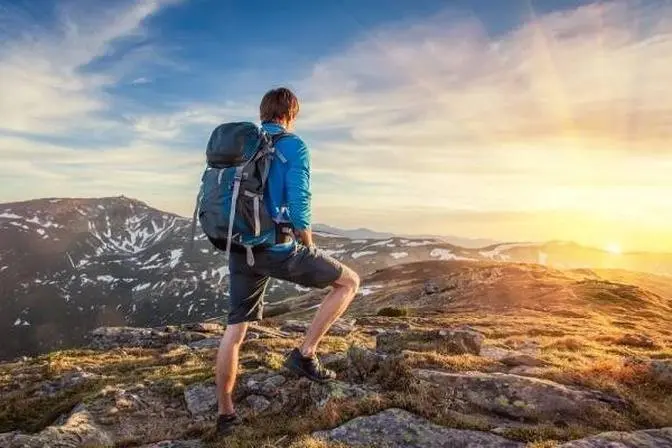
Hi, this is Quinlan. Today I'm in Akita visiting the Nyuto Onsen.
Nyuto Onsen is a collection of around eight hot springs ryokan, traditional Japanese inns,
here deep in the mountains of Akita, just below Mount Nyuto, or Nippo Mountain.
It's called a hito, or a secret hot springs, but there's nothing secret about this area.
It's one of the most famous places in Tohoku for these remote, gorgeous hot springs.
These hot springs have had a lot of press over the years, and so I'm not going to show
you the baths themselves, but rather some of the other things you can do when you're visiting.
Now this first trail I'm going to explore is at the Tsuruno-Yu old road bus stop, and it's kind
of a difficult to spot trail, because there's an obvious trail marker that takes you on a different
trail, but you want to take the unmarked trail that goes straight to Tsuruno-Yu. So if you get
off at this bus stop right here, the Tsuruno-Yu Onsen old road entrance, this is not the way.
You don't want to take this way. This will take you to a different fun place. It looks like about
a little over a half an hour walk to go through a beach forest. We want to go over to the parking
lot here, but again the most obvious trail is the wrong trail. It's rather an almost unmarked trail
on the left side of the parking lot that has this little sign that's half broken off that says
Tsuruno-Yu Kyo, or the Tsuruno-Yu Gorge. And so off we go. This looks at least at the beginning like a
beachwood forest. All these trees are beech, which means there may be bears, because bears love these beech
knots that fall from here. It's a rainy day, and so this trail is actually a little bit slippery and
sketchy, going with tree roots and steps along a fairly steep ledge. Make sure you've got appropriate
footwear if you're coming here. But man, look at these colors. Okay, I can see the sketchy bridge.
That's where we're going to cross. Lightweight, maybe aluminum planking here. And look at this
bridge. Wow! Slippery! Reached the junction. The left way goes to the road, the Tsuruno-Yu road,
whereas this one goes in 600 meters right to Tsuruno-Yu Hot Springs. So we'll go right.
It's clouded over. It's raining a little bit. All right, looks like some buildings up ahead.
Are we there? Oh, is this the main onsen area? I think it is. These are the ones that you can
spend the night at, the lodges. And here we are at the main area of Tsuruno-Yu, the oldest
of the hot springs here at Nyuto Onsen. It's pretty nice. I've been here all times of year,
and fall is definitely my second favorite, because there's nothing like being in a hot
springs bath when you're surrounded by meters and meters of snow. This building right here is
where you buy tickets when you're going to take a bath. And when you go in there and buy tickets,
then you would cross the bridge, and there's two different hot springs areas. The one over there,
which has the women's outdoor bath and men's, a couple of indoor baths, and then the mixed
outdoor bath, as well as a couple of indoor men's baths, are right over there. It's perfect.
I've retreated from Tsuruno-Yu back into the woods a little ways to talk to you because I
didn't want to get in the way. Tsuruno-Yu is the oldest of these hot springs, with history going
back more than 300 years. The name Tsuru means crane, and the legend goes that a hunter found
a wounded crane that was resting in the hot springs, healing its wounds. And this is how the
hot springs was first discovered, back at the beginning of the Edo period. Of course, a lot of
hot springs have stories like that, like either a warrior or a samurai healed themselves in the
hot springs, or they saw an animal healing it and came there as well. That's sort of the standard
narrative for how hot springs were founded. Maybe it's true. It actually only took me about 20
minutes to walk this trail from the main road to the hot springs, which, to be honest, is almost as
long as it takes to drive down the long and winding road it takes to get from the main road
to Tsuruno-Yu. It takes like at least 10 or 15 minutes, and so you don't even lose much time
walking. And it's a relaxed walk through the forest, and so if it's not the middle of summer,
you wouldn't work up a sweat either. So if you've got spare time, are coming by car, or don't mind
stopping at a different bus stop, I think why not try taking a little forest walk before and after
your bath? Or if you're busing it, you could walk to the hot springs, of course, take the bath, and
then catch the bus right from Tsuruno-Yu there to get to your next destination. Do it any way you want.
While we're here, let me say a few things about Japanese hot springs. If you're new to them, if
haven't had a chance to try them before, I really recommend them. If you have small tattoos, a lot of
people recommend putting stickers and such on to cover them up when you go to the hot springs,
I'm sure that's easy. If you happen to have a larger one, there are a number of hot springs,
especially in Tohoku, that will not bat an eye at that, and there are others that will. So google in
advance, or if it's difficult for you to find information, feel free to leave a comment on this
video or send me a message, and I'd be happy to check that for you and let you know, because I'd
like to also sort of create a longer and longer list of hot springs resorts that are accepting of
tattoos. It's an important data point that I'd like to know, and I'd be happy to help you with too.
Let me briefly summarize the rules for using hot springs, which some of you may not know. Basically
when you go in there'll be a locker room, you take off all your clothes, you have two towels with you
generally, you'll have your bath towel, and then a small sort of towel, a face towel, hand towel, about
this size. Strip completely naked, you put that in the locker or a basket, and you carry just the
smaller towel with you into the hot springs. You first go to one of the little sort of sitting on
a stool shower areas, rinse your body off or wash yourself completely, either way, and then get in
the bath. And usually you would set the little towel next to you if there's like a rock or something
on the edge of the hot springs, and a lot of people up here like to just fold them and put them on
their heads. That's basically what I do unless there's a nice rock on the edge that I can
set it on. There's lots of different baths, indoors, outdoors, some places will have saunas
or cold baths, and so you can do the thing where you heat yourself up then go sit in the ice cold
one and then repeat. There are differing theories on if you should rinse off with normal tap water
after you've taken a hot springs bath. I think it really depends on the type of bath and on your
skin. If it's a very acidic bath, and you should know, you can tell generally because it'll be in
a sign in Japanese, but even in Japanese, you'll be able to see the pH number so you can tell if
it's acidic or alkaline. And if it's particularly acidic, I personally need to rinse off afterwards,
because otherwise I get sort of an itchy, irritated skin the next day, like a bad sunburn or
something. Some people say it's a waste, you're getting all these great minerals, all this natural
benefits from the hot spring, and if you rinse it off, you're shortening the effectiveness of all
these benefits from the minerals. But if it's an alkaline hot springs, then maybe it's fine to
leave it on. But I know lots of Japanese people who prefer to rinse it off, because everybody's
bathing in those same baths. And you know, some people in Japan tend to be really serious about
cleanliness, and so they don't like everybody's bodies in there. So maybe there's a little bit
of dead skin, or there's like dust particles, you don't know. There's little bits of particles
floating in a lot of hot springs, and so some Japanese guys I know like to rinse off the shower
anyways, no matter what kind of hot springs it is, because that's what makes them feel cleanest.
Basically, do what you like, except be careful of the acidic ones. You'll definitely
want to rinse off after those, if your skin is anything like mine. Okay, I'm gonna walk back to
my car and maybe show you around a few other spots, since I'm in this area today. And it's a,
yeah, nice enough day for exploring these fall colors out here in the mountains of Akita. Let's
go! Kuro-Yu is another one of my favorite hot springs here in Yuto hot springs, Yuto Onsen.
And this hot springs, unfortunately, closes during the winter months, because it's just
inaccessible. But from the spring through the fall, you can still visit, and it is fantastic.
There's a lot of great baths. One of the reasons why I also love it is because here
is the trailhead to Mount Yuto, one of the mountains that I love hiking in this area.
And so if you're staying here, it's easy to just hike up to that mountain a couple hours and back
down. There's some nice, gorgeous trails that I've done videos of. In fact, I'll link to them
in the description. And I want to show you not the normal bath right now, but one of the wild
baths that's nearby this. Just a couple minutes walk from Kuro-Yu is one of the most easily
accessible wild hot springs right here. Right next to the river, up here in the mountains,
and it's perfect. There's no rules, no fees, come in with a swimsuit, do as you like. So this wild
outdoor hot springs right here is just a little over a five minute walk from the back of Kuro-Yu
hot springs in Yuto Onsen-kyo. And it's perfect and exciting and free and you'd have it all to
yourself. And so if you're not comfortable getting naked but want to experience the Yuto Onsen,
you could always come here and wear a bathing suit. Just do it on a hot day because you're
going to have to rinse off afterwards in the river. This is a fairly acidic hot springs and so
you'll probably want to rinse your body off afterwards. To access this closest wild hot
springs bath to Kuro-Yu, you just follow the little trail that goes right down past Kuro-Yu,
cross a little bridge up the right, basically follow the steam. At this junction you would
basically just go down here, keep going down, and go towards those steaming areas there. And it's
before you get to them down on the left. And if you keep following the trail then you'll find,
of course, the other higher up bath. About a 20 minute, 15-20 minute hike. So if you're here in
the Yuto Onsen area, I hope you don't just come by car or bus and get in the bath and leave again.
There's a lot of fun tiny little trails, even if you just want to walk for 15 minutes or a half
that go all along these different baths. They're really all over the place and there's little
Japanese signs with walking paths all over the place. And I recommend that you just explore them.
Just look at the maps and walk along and enjoy the gorgeous fall colors. It's perfect for that
Japanese tradition, the famous shinrin-yoku, or forest bathing. Why not bathe in a forest before
you bathe in hot springs while you're here? Well, looks like the weather's not getting any better.
The rain is continuing, so I'm gonna head back. Thanks so much for watching and I'll see you on
the trails.