
My mini Full Frame Setup is now PERFECTED
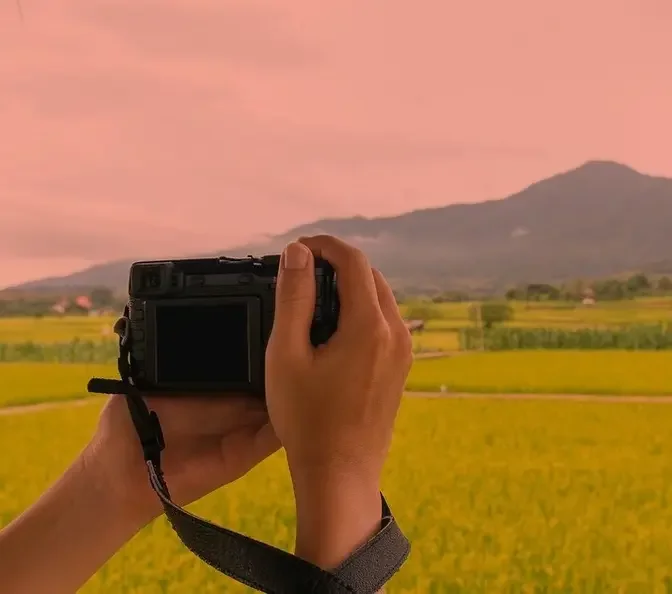
#PhotoCamera, #LandscapePhotography, #PhotographyExpert, #NatureShots, #ScenicViews, #OutdoorPhotography, #CameraGear, #LandscapeExpert, #TravelPhotography, #WideAngleShots, #PhotographySkills, #NaturalBeauty, #CameraTips, #PhotographyMastery, #LandscapeLovers
The best compact full-frame camera you can buy right now
are going to be the A7C Mark II, the A7CR, and the ZV-E1.
The A7C Mark II, arguably gonna be the best choice
for 80% of the people out there
who's just looking for a decent hybrid 33 megapixel photo
and super crispy 4K 30p video camera
with a cropped 4K 60p option.
The A7CR is a great future-proofing choice
as it can deliver 61 megapixel photos
and high quality, not as cropped, 4K 60p videos.
As a tech nerd and pixel schnob myself,
I highly recommend this one.
And finally, the ZV-E1, the best compact and lightest
low-light video focus camera
that can literally see into the dark.
If you do more photography, go ahead and skip this one
as it's just 12 megapixel.
The ZV-E1 is only for the cinematic dreamers.
Now, I love these cameras because the results they produce
is exactly the same as their bigger pro equivalents,
but obviously at a much smaller form factor.
Cheaper too.
But the irony is, when we slap on big-ass lenses
on these compact full-frame cameras,
we can't exactly call these compact setups anymore now,
can we?
Of course, I love that we can slap on these big-ass lenses.
It's what makes them incredibly versatile.
But unbeknownst to the public,
there are a lot of great pocket full-frame lenses out there
that really help make these compact cameras truly pocketable.
There we go.
Doesn't this look so much better?
So let's go over a few of my favorite compact lenses,
shall we?
Lens number one, the Shorty Tele.
We're gonna cover the whole spectrum here,
but we're gonna start backwards first
with this 90 millimeter F2.8.
Look at this ultra compact telephoto setup here.
Look at the reach that I'm getting.
Slap this on a camera like the a7CR
and we can crop in even more to get an even closer image.
Not just the reach, but the images that we're getting
with a short tele prime like this, it's just magical.
It has the ability to pull the background closer
to our subject and give them an epic backdrop.
And these types of lenses are the cheat codes
to creating pro-like results.
I still haven't found any other lenses
that have this long of a reach
in this short of a form factor.
But my comments below are open to suggestions.
In the last two years,
this lens has effectively replaced
both my beloved 85 millimeter F1.8
and 135 millimeter F2.8.
And I think it's obvious why.
Like legit, it actually makes me really sad
because I really love these lenses.
But as I'm getting older,
my body is starting to ache in places
that I never knew even existed.
Oh God, what is hurting right here?
That's your shoulder.
And don't get me wrong,
the 85 and the 135 are incredibly light for what they are,
but their body sizes still take up
significant amount of space in my bag.
Just look at how much space that I'm saving in comparison.
Even the filter diameter on the 90 millimeter
is much smaller, 55 versus 67.
And yeah, yeah, yeah, Michael,
I know I'm practically downgrading here, right?
I'm going down a whole ass number on the F-stop.
Oh no, my precious bokeh.
But listen, you gotta understand,
at focal lengths at this reach,
the F2.8 blur on full frame is still buttery good.
Results are very comparable
to the go to 70 to 200 millimeter F2.8,
arguably a popular choice for weddings,
portraits and events.
But this 90 millimeter is the closest tiniest lens
that gives us the 70 to 200 millimeter look
without the 70 to 200 millimeter back pain.
Okay, yeah, that's a bit of a stretch.
I get it.
But I think some of you will know what I mean.
And low light performance on modern day mirrorless cameras
have gotten so much better
where we can all shoot comfortably at ISO 12,800.
And if we need to push it further,
come on, just use Denoise and Lightroom, right?
But even Sony themselves have a desktop app
where it can merge a series of photos
shot at a ridiculously high ISO, like ISO 51,200,
and you can merge them together to make a spotless image.
Damn, that looks pretty good.
While the material does make it slightly heavy,
I still really enjoy the all metal build from Sigma.
It somehow gives off a nice premium feeling,
especially the aperture ring here.
Oh, and the lens cap, magnetic.
Now I just need Sigma or anybody else
to make a compact 200 millimeter in this size,
slightly longer is okay, just not wider.
And you know what?
I'm perfectly fine if it has to be F5.6.
I know, heresy.
But I'm a realist, unlike the Michaels out there
who are always asking for a 16 to 3000 millimeter
F0.95 pancake lens.
Yeah, keep dreaming, Michael.
Lens number two, the OnDuty Do-It-All.
Now, 90 millimeter gives us great pro-like images, right?
But admittedly, at times it can feel too tight, too close.
But because it's so small,
we can pair it with another compact lens
that will give us a bit more breathing room.
And the popular options include the 35 millimeter F1.8
and the 50 millimeter F1.8
if we desperately need the F1.8.
For me, the mid range prime lens
that's on my compact full frame cameras 80% of the time
is the 40 millimeter F2.5.
Now, despite it being only just F2.5,
the performance actually outclasses those two F1.8 lenses.
And I'll explain why in just a bit.
The 40 millimeter is not too wide and it's not too tight.
Perfect to capture these artistic-esque shots.
There's a reason why street and travel photographers
love this focal length.
Not only is the whole set of covert
at just 49 millimeters in diameter,
but it's a storytelling lens that tells the relationship
between your subject and the environment.
Frame it just right and we would get better photos
than we would from a casual snap off of our phones.
And yeah, I know, F2.5.
Let's not get into it again, all right, Michael?
If your whole photography revolves around
getting the most maximum amount of blur,
just remember you have the bigger F1.2 options.
It's so heavy.
Anyways, F2.5, really not that shabby.
Get close enough and we're getting that great subject
and background separation even at this focal length.
Now, Viltrox has a much more affordable option,
but I primarily stuck with the Sony G series
because they do look better aesthetically.
Even if you got a black version.
Practicality, the focusing has been the most reliable,
which is really important when you only have a split second
to make the shot.
I've never had any focus hiccups with this lens
when it counted.
You can't go wrong with Jason Vaughn.
Now, unlike the Sony 35 millimeter F1.8
and 50 millimeter F1.8, the 40 millimeter G
has the latest two extreme dynamic linear motors,
making it incredibly fast to track moving subjects.
And because it's a first party Sony G series lens,
it's compatible and takes full advantage
of the A7 Mark V's 30 frames per second raw verse.
Third party lenses like Viltrox and Sigma
are capped at just 15 frames per second.
And I know we're talking about compact camera setups here
and the A7 V doesn't quite fit the bill,
but I think the eventual A7C Mark III
will have the same exact specs as the A7 Mark V.
And oh boy, when that camera finally comes out,
it will be the best compact full frame beast of a camera,
baby, let's freaking go.
Lens number three, too wide, too curious.
And finally, our ultra wide options.
The latest Sony 16 millimeter F1.8 is an incredible choice
for a high quality ultra wide angle F1.8.
But unfortunately, just a tad bit too wide
with a 67 millimeter filter thread size.
On the other hand, Viltrox have been spoiling us.
Up until now, we'd be hard pressed
to find a full frame ultra wide angle lens in a tiny size.
But just last year, Viltrox released a 14 millimeter F4
and 20 millimeter F2.8 that are not only as light as air,
but also cost next to nothing.
Absolutely great beginners choices
for ultra wide angle photography and vlogging.
Now for me, I actually own
this other ultra wide angle lens.
And what makes it so special for me
is this ridiculously close focusing distance.
Hear me out.
For the past couple of years now,
the POV, point of view trend skyrocketed on social media,
where creators share their day in the life
or photographers sharing their behind the scenes
of their photo shoot through a first person perspective,
usually with a pocket camera
or a phone with a chest mount of some kind.
And I think these types of shots here
look absolutely sick.
So I was trying to figure out how to capture
high quality POV of me testing out camera gear.
And then I remember, I bought this a few years ago,
the Sigma 17 millimeter,
which has a ridiculously close focusing distance,
12 centimeters.
It's close.
Not only that,
but it's also wide enough to show off the environment.
So I slapped it on my ZV-E1 mounted behind the camera
that I was testing on a dual bracket.
And my Lord, the quality was extra crispy.
Just look at this first person style shot.
Almost like we're playing an FPS game
like Counter-Strike or Battlefield.
Go, go, go.
Because it's on a light full frame camera like the ZV-E1,
this whole setup here actually feels very manageable.
For pro shoots,
this will be my de facto high quality POV camera.
Oh, and the lens cap?
Magnetic.
Squarespace is an all in one platform
to create beautiful websites.
No coding knowledge needed.
It's perfect if you want to showcase your photos,
sell prints, and run your business online all in one place.
And with Blueprint,
Squarespace's new AI power website builder,
getting started has never been easier.
Just answer a few quick questions
and it instantly builds a custom site
with layouts, colors, and even sample content.
Plus built in SEO tools
to help more people discover your site.
Use my link down below for a 14 day free trial.
And when you're ready to launch,
use code Jason Wong to get 10% off your first purchase
of a website or a domain.
Appreciate you supporting the channel by watching that ad.
We'll see you guys in the next video.
Peace.
Get out of here, Michael.