
The Manual Mode Mistake That Costs You Photographs
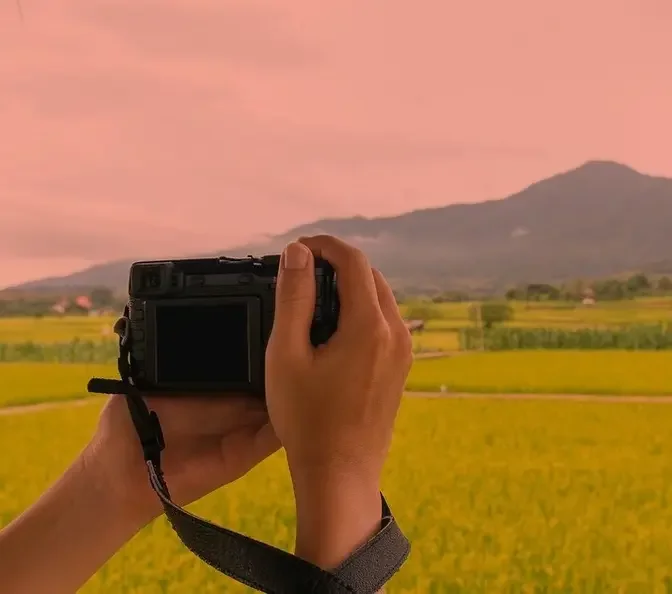
The Manual Mode Mistake That Costs You Photographs
#PhotoCamera, #LandscapePhotography, #PhotographyExpert, #NatureShots, #ScenicViews, #OutdoorPhotography, #CameraGear, #LandscapeExpert, #TravelPhotography, #WideAngleShots, #PhotographySkills, #NaturalBeauty, #CameraTips, #PhotographyMastery, #LandscapeLovers
One of the slightly strange things about getting better
at photography is you can actually end up
making it harder for yourself.
So once you get good at getting the right exposure and you understand
what the camera is doing,
you start noticing all the mistakes of things that you used to do.
Which is good, but somewhere along the way we sort
of pick up this idea that there's a proper way of
doing photography. You should probably be in manual mode,
the ISO needs to be as low as possible.
And you need this kind of lens for this kind
of picture to make sure everything is absolutely
sharp as possible and we get fixated on these things.
And again, none of those things are bad.
I think there's a point where you become, for want of a better phrase,
post-technical. So that means that you know your stuff,
you're just not constantly trying to prove
it all the time. And manual mode is probably
the easiest place to see what I mean. Comment below.
What do you normally shoot in,
do you shoot in manual mode aperture priority or shutter priority
or program or something else?
I'd be really interested to see that because it tells us a
lot about what people are actually using.
Now I think that you should learn how to use manual
mode and I think it's important.
If you don't understand what shutter speed is doing, what
aperture does and what ISO actually is and how to use it,
then you're going to be making choices
Without really understanding what it's
costing you in terms of your image.
But learning manual mode
and deciding you must now use it for every photograph until
the day you die are completely different things.
So in the studio when I'm doing studio portrait
photography I use manual mode most of the
time.
Because the light is controlled I want
to keep that consistency and it makes my life
easier.
Now if I'm outside taking photos
and the light is changing every few seconds that is different.
Somebody commented recently on one of my videos
that he spent about 18 months learning his camera
and forcing himself to shoot manually.
Then he looked back and realized he'd been
missing composition and lighting and moments
because he was concentrating so hard
on just operating the camera
and I thought to myself yeah that's exactly the problem.
The camera had become more important than
the reason that he'd taken the camera there in the
first place. Here's the thing,
if aperture priority gets me the photograph more reliably, I'll use
aperture priority. So if manual mode and auto ISO makes sense,
I'll use manual mode with auto ISO.
So if manual is the best tool for what I'm doing for manual,
I'll use full manual. I don't really
Which one of those sounds professional to other people?
You're not going to get any extra marks for it.
There are no extra marks for using manual mode,
but manual mode is the obvious version of this.
I think what gets more interesting
though is when you stop sort of worrying about
how the exposure was made, the worry quite often just moves elsewhere.
Usually it's into some other thing like sharpness and so on.
And photographers are brilliant at this.
They'll take a picture and they'll quite like it and then zoom in.
And immediately find something to be disappointed about.
Now I love cameras and lenses
so I'm not going to do the thing where somebody
with a room full of equipment tells you gear doesn't matter.
Of course to some degree it does matter.
If you're shooting in a dark location
having a wider aperture lens can really make
the difference. So sometimes
the equipment is the limitation
but what it can't do is give you an idea of what to do.
So I've heard people say that they're taking the F1.4 lens
because they want to be creative.
And I know what they mean.
I've probably said that or versions or something like that myself.
But F1.4 has given you an option.
And that is all.
You still have to decide whether the background should be blurred out
or whether it should still stay part of the picture.
You have to decide where you're standing, how you're going
to use the lighting, what you're actually photographing.
Gear buying gets a bit weird because there's no obvious end point.
When you buy something it's exciting and you use it constantly
then after a while it's just your camera again.
Photography marketing is fairly dependent on that feeling
and I think that rules and photography do something very similar.
Just you know it's doing it in a sort of less expensive way.
When you're learning asking what am I supposed to do here
is completely reasonable.
The problem is if those starting points become instructions to you then
you feel like these are a set of rules that you have to obey
because eventually the better
question isn't really what's correct it's what
am I trying to do with this photograph. So white
balance is a really simple example of this accurate color might
be exactly what I want and that's fine.
On another photograph I might want it warm
because it suits what I'm trying to make or I might want
it cool because I want it to feel less inviting.
The camera can be technically right and I can
still prefer something else.
This is the same thing with composition. Sometimes a setting
that looks less impressive
on paper can actually make the better picture
and that for me is where the technical knowledge becomes useful.
It gives you those choices.
That technical knowledge isn't making the choices for you.
That's the distinction.
There is a slightly more, I think,
uncomfortable version of all of this, though.
And I think photographers are very good at doing this to each other.
We start taking photographs for other photographers, not consciously.
And I don't think anybody stands there thinking,
oh, you know, I hope Dave from the camera club approves
of my shutter speed in this picture.
You're aware another photographer might notice noise
or question your lens choice and here is
where even manual mode can become like a little badge
of honor that says you know what you're
doing and once you're aware of all
of that I think it starts influencing what you make.
The person looking at the photograph usually has
no idea what mode you used and they don't
care whether the corners of your lens are perfect at f2.8.
They care about the picture
and actually sometimes nobody else has to care about it at all.
You can take a technically terrible photograph
of somebody you love and years later it can
be one of the most important photographs you've got.
Not every photograph you make has to justify itself to a portfolio.
Um, to Instagram or to like some idea
of camera club critique or something.
Some of them are allowed to just exist
because you want to take them for you.
And I think that's probably where I end up with all of this.
You can become very good at photography,
but also become very good at finding reasons why
a photograph that you've taken isn't good enough.
And I'm not sure that those are the same skill.
My mom has always said to me that life is to be enjoyed, not endured.
And photography probably deserves the same treatment.
So learn the technical side properly.
Know your camera well enough
that when something happens in front of you,
you have more ways of responding to it.
That's really what I mean by post-technical.
The knowledge hasn't gone anywhere.
It's just stopped sitting in front of you,
in the front of your brain,
demanding like all of your attention all the time.
So if you want to stop following a bunch of set rules
and start getting some creative ideas
on what to do with your editing of your pictures,
then check out the links in the description down below.
I've got three editing workshops
in Lightroom and Photoshop.
And they will teach you how to become more expressive
and get more out of your work.
I think the ideas that I apply in Lightroom
and Photoshop sit into that post-technical
space where we're making decisions about what we want
to do and the way that we want to do it.
So check them out, the links are down below.
I hope you enjoyed today's video
and I'll see you guys again in the next one. Take care.