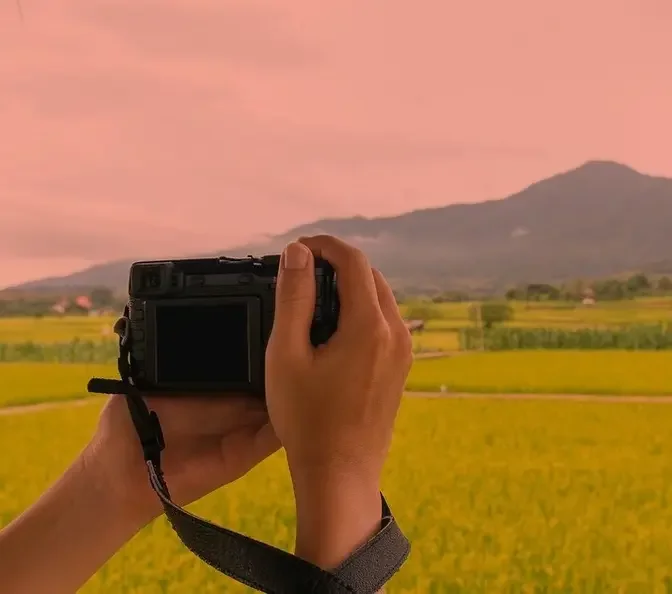
Jason Vong shares five practical tips for street photography, specifically tailored for shy or anxious photographers. He emphasizes capturing authentic human stories and emotions while managing social anxiety through a gradual approach, moving from environmental shots to closer, more intimate human interactions.
I love street photography.
I love all the little randomness that happens
in the ordinary mundane life.
And when all the right puzzle pieces come together,
the perfect scene, the perfect lighting,
and the perfect subject, it's just...
It'll feel like you won the lottery.
Not that I know what that feels like.
But believe it or not, street photography is difficult for me.
Despite my exuberant YouTube persona,
I'm actually quite shy and anxious in the real world.
So my style of street photography is inevitably going
to be different from a traditional sense.
But I still want to share with you five tips,
especially for my fellow shy photographers out there
who want to capture great street photography.
without the crippling anxiety.
My name is Jason Vong. Let's get started.
Tip number one, small commuters, big battle.
So I'm going to give this to you in building blocks
because even to this day,
I still do this method first
as a warmup before getting closer to my subject.
I like to start with the environment and make it less about the people.
Now, I didn't say make it no people,
I said make it less about the people.
We still want people in it, even if they're blurred or super tiny,
because they help create scale and add a bit of life to our photos.
So first, we are going to set the scene,
by finding an interesting anchor point
for our viewers' eyes to lock onto.
This could be a landmark, a mountain, or even a sign.
This not only grounds the photo, but also us, the photographers too.
Because now that we have a scene,
we'll patiently wait for an interesting subject to walk into position.
For example, I love this particular underpass because not only
is the mural on the wall an interesting anchor point, but also
When the sun hits the bridge just right
on a midday high afternoon, it creates these
deep dark shadows on the left and right,
and a beautiful sliver of light right in the middle.
Oh baby, we are cooking with oil.
Now, this is still street photography
in the sense that we're capturing the daily
commutes of the people.
All we have to do is wait for a subject to walk right into the light.
And boom, we got an office worker, a student on a bike,
and possibly a mother on an errand
run.
And we could be here all day
to capture even more variety of subjects walking by.
And this method is the easiest thing
that you can do today because we're not focusing
on anyone in particular, and we also don't come off that way.
As far as anyone's concerned,
our focus is primarily on the environment rather than the
people.
But, now that we are...
Warmed up a bit, let's move on to the second building block
and get a little closer.
Tip number two. In the hood for love.
The silhouette method is one of my top favorite styles
of street photography because we aren't
showing any faces but rather emotions through the subject's actions.
Now capturing silhouette
is easy to do but hard to master. What do I mean by that?
Capturing people's backs staring off into
the distance is easy but sometimes there
are no emotions being captured. Nothing wrong with that
I want to show you the difference here.
Look at this Eiffel Tower shot that I almost nailed.
I got who I presume to be the mother of this child
at the bottom right here, smiling at them.
And we can even see that shape of her smile, beautiful.
But I could have framed this a bit better.
I should have quickly zoomed out more
and included the entire family.
Well, as they say, you win some, you lose some.
Thankfully, I've gotten some winning silhouette shots
that I deem to be 99% perfect.
Now, you might have seen this countless of times on my channel before,
but it's an absolute favorite of mine.
A couple staring right into each other,
having a romantic moment with Tokyo Tower in the back.
I mean, just the way that they turn
to each other without even being prompted
just have so much rawness to it.
Just, ah!
By the way, taken with the Sony A7R Mark IV
and the Sigma 24-70mm f2.8 version 1.
Old-ass gear, but the image quality still holds up.
Goes to show you don't always need the latest
and greatest. Fast forward to something a bit more recent,
I captured a similar photo with
the latest Panasonic Lumix L10,
and I just love how on the left we have a couple having
an intimate moment and on the right a family
of three having their own little moment.
Not a composite, I didn't use Photoshop
to merge two different photos together,
it's complete random perfection.
Just two separate groups of people coming in together
for an amazing scene.
Yeah, sure, AI might be able to create the perfect photo nowadays,
But that feeling of capturing a real human moment?
Just can't be beat.
Tip number three, the fast and the curious.
So I once read something really interesting,
that retro street photography
was capturing people reading the newspaper
and modern street photography
is capturing people doom scrolling on their phones.
Since everyone browses their phones nowadays,
it's not as interesting in my opinion.
What I find more engaging are people walking,
riding a bike, or driving.
In fact, the higher level of engagement the activity is,
the less the subject will notice you.
But here's the thing, even if they do notice you,
I find that they're generally more welcoming of you
taking a photo of them.
For example, while I've never done the actual experience myself,
I love photographing real life Mario Kart.
They just look super out of place in a real world city
and the buildings make excellent backdrops. And the people doing it
always look like they're having a great time.
They often strike a pose and smile for me, and I'm just like,
I don't know your contact info,
you're never getting any of these photos,
but you look great, bye!
Or if it's an area where people get a little dressy,
they're also more receptive to having their photos taken,
especially when you ask.
So go to public areas where people are generally having a good time.
Not only will you get authentic emotional reactions,
but they will also be likely less intimidated by a camera.
I mean, they spent a lot of time putting that outfit together.
They might as well get some mileage out of it, right?
Hey, look at that.
We went from taking photos of the environment
to successfully taking photos of people up close.
But we're not done yet.
I still got a couple of tricks that you don't want to miss out.
But first, I just want to let you know
that this helpful guide is brought to you by PPA.
Professional Photographers of America have over 900 online courses
from the basics of photography to running a business
to marketing yourself to clients and much more.
On top of that, the moment you become a member,
you get $15,000 worth of gear insurance.
That means you get full replacement coverage
with a flat $350 deductible
Or you can repair your equipment with a flat
$50 deductible.
I know you, Michael.
You got a serious case of butterfingers.
PPA also offers data loss, negligence,
and malpractice protection with their indemnification
trusts.
I mean, those two benefits alone will allow you
to have a bigger peace of mind when you're
out on the job.
To learn more, check out my link in the description
box below, which you can also use to save
$25 off your membership when you sign up.
Thanks for listening.
Now back to the video.
Tip number four, the true human show.
Now, some people will say it's cheating
and that authentic street photography is using a
35mm lens only and getting really up close to your subject.
But I don't care. I love using
telephoto lenses for street photography from time to time.
Telephoto lenses have this look where it
just pulls the background closer to the subject
and creates a nice backdrop, turning our subjects
into main characters.
But of course, telephoto lenses help us keep our distance, allowing us
Allowing us to capture the authenticity of the scene.
And I'll link some of my favorite telephoto
lenses in the description box below,
as well as the pinned comment.
Now, I want to quickly talk about the rules
and ethics of street photography,
because I'm always anxious about my actions
and what I'm posting on the internet.
Tip number five, the first rule of street photography.
Street photography to me isn't about taking photos of people.
It's capturing stories about people.
Having this in the forefront
of our minds will help us focus more on the moments
versus a specific individual,
which then I think makes for a better photo.
But long story short, just don't be creepy, all right?
No ifs, ands, or buts.
Don't be invasive and shove your lens and flash at someone's face.
With that said, I have seen others pull this off,
particularly photographers who have a lot
of charisma. Now I don't,
but if you're naturally friendly and you know how to defuse tense
situations, hey, it might work out for you.
But then again, why are you watching this video?
Next up, make your subjects heroes.
If you're going to be taking photos of people,
just make them look good, you know?
If you caught them looking unflattering, just don't post it.
Just because street photography is legal in the public space
doesn't give us the excuse to post embarrassing photos of others.
So if you want to capture the best of people,
check out our Ultimate Guide to Street Photography,
a free one-hour video on YouTube, no sign-up necessary.
Join me and my buddy Professor Hines
as we take you into the streets of New York City.
Virtually and go into extreme details on how to capture great
street images and how to edit them as well.
You can scan this QR code here on the screen or find a link
in the description box below and shout outs to PPA for
sponsoring a portion of this video, guys.
Thank you so much for watching.
We'll see you guys in the next video.
Peace.