
Behind the Camo - What does the Army do?
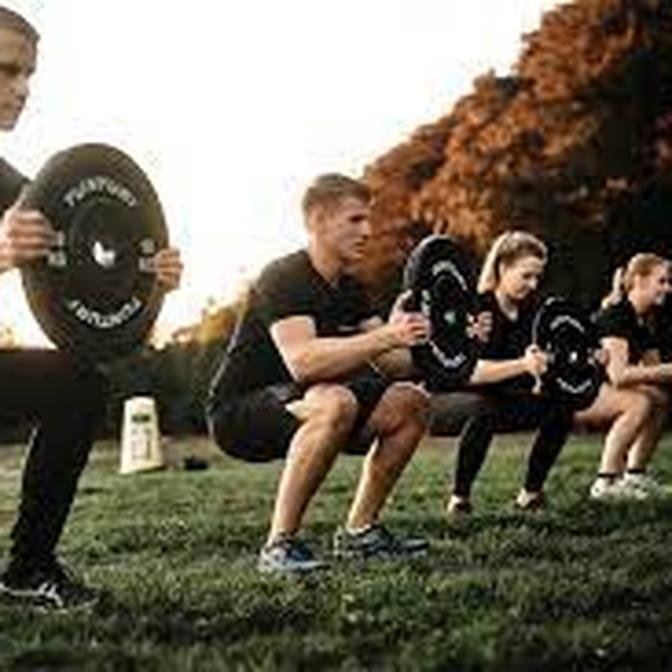
54 Video Views·Mar 28, 2026
AI GeneratedMay contain errors
Welcome to Behind the Camo, our four-part series created for you.
The idea is to provide a real, honest look at life in the British Army.
We know there are plenty of stereotypes out there so this series is here to break those down
and show you what it's really like.
Through open conversations with our soldiers doing different jobs within the Army.
Whether you're thinking about your next steps or just curious,
we want these episodes to be informative and true to the values that drive Army life.
I'm an Army Reservist working as a Port and Maritime Troop Commander
with 165 Regiment Royal Logistics Corps.
In civilian life, I'm a sports broadcaster,
business owner and I enjoy the odd game of football as well.
If you're watching us live, you can pop your questions in the chat box
and our team will reply and give you some answers.
The British Army is the biggest team you'll ever be part of.
Our primary role is to protect the UK and its interests,
both at home and abroad through military action.
This includes defending against attacks, deterring potential adversaries
and contributing to international peacekeeping and security efforts.
The Army also participates in humanitarian aid missions
and supports civilian authorities in times of crisis.
To successfully do so many different and important tasks,
we need people from all kinds of backgrounds who want to make a real difference.
For instance, you could join in a trade role such as a driver, plumber or mechanic,
but no matter which you choose, everyone in the Army receives world-leading training
for qualifications and skills that will develop your career in the Army and beyond.
Well, joining me today is Lance Corporal Kitty Brooks,
Lance Corporal Kieran Fisher, Corporal Samuel Morris,
Captain Brooklyn Goldstone and Private Darcelle Francis.
Thank you so much for joining us, pleasure to have your company with us today.
I think a great place to start is your journey in the Army so far,
your motivations for joining and your journeys.
So let's start and work our way through each of you one by one.
Okay, I joined the Army when I was 21.
Before joining, I had just done various part-time jobs,
worked in a school, worked in a bingo hall, cafes, that sort of thing,
just to pay the bills.
My desire to join the Army started when I was about 12 years old
and I was in the Army Cadets, so I kind of got a taste for military life
and then kind of delayed it a bit until I was of an age
where I had a bit of life experience and then, yeah, joined at 21.
And then since I've been, I've been for six years now,
done various different things.
I always knew that sport was a really big thing in the Army
and I've always been into my sports,
that was quite a big incentive for me to get in there
and just be out doing stuff, something different every day.
I don't like to be doing the same thing, so.
So, joined the Army when I was 19.
Beforehand, I was working as an apprentice bricklayer,
found it quite mundane.
I was looking for something that involved a lot more travelling.
That was the best choice, was going to the Army.
Nice, and what have you joined as?
I've joined as a driver, yeah.
And enjoying it so far?
Yeah, yeah, it's good, it's good, yeah.
Travelled the world only in the short time that I've actually been in,
so it's good.
I'm part of the Queen's Royal Hussars, which is the Royal Armed Corps.
I've been in the Army since I was 22 years old.
Before I joined, I worked in a factory,
making bath bombs and things like that, okay.
Obviously, I didn't want to do that for the rest of my life,
so kind of always had a little background of wanting to join the Army sort of thing.
Went to the careers office, etc, you know,
and just thought this should be for me,
something more exciting, more adventures and stuff like going away and stuff like that.
So, that's the main reason why I joined,
particularly tanks, because at the time,
I thought it was probably the coolest thing to do,
at the time, in my opinion, and still now.
But yeah, so I've been in literally almost nine years this October,
and absolutely loved every minute of it, every minute of it,
and do a lot of football as well.
I've been away on football tours and things like that,
so quite exciting so far, but yeah.
So, for me, I knew I always wanted to join the services from a really young age,
but interestingly, I always wanted to join the police,
and that was my lifelong dream to join the police.
And then at 16 years old, I went on a trip with the Army,
and I'd never considered the military or the forces at all,
and then absolutely loved it,
and I went into careers office literally the week later and signed up.
So, I was really fortunate.
I started basic training just after my 18th birthday.
I have been in 13 years now and have done so much,
and I've enjoyed every minute of it.
I think for me, what made me want to join
and what appealed to me for the Army,
which I'd never considered before I went on that trip,
was all the opportunities that you were given,
the ability to move out of my hometown and go and do something different,
and the ability to have a career that I have.
Yeah, I definitely didn't think I would end up where I am today,
and I've loved it.
So, I joined from the Commonwealth country of Saint Lucia at 18.
So, when I left, it was really hard because I had no close family.
We did it in the UK.
When I joined, I did phase one in September to December,
so I'm not really keen on the cold winter side of the UK,
but I had an amazing experience.
It took me out of my comfort zone a lot.
Fast forward, I went to phase two,
did a little bit of driving because I'm a driver by trade,
then went to a unit and did more driving, more exercise,
and then I got a really cushy posting where I joined a joint helicopter squadron,
did that for two years,
and then I'm now at RLC HQ where I do a little bit of recruiting.
So, everyone's got a real kind of different journey so far.
Let's talk about those kind of initial moments for you.
So, you've made your decision of wanting to come and join the army.
Everyone's process of doing that is slightly different.
I was a kind of late entry kind of reservist,
and you joined when you were younger and all those different bits.
Just, I guess, to share some experiences of those kind of first moments,
going to that recruiting centre and then doing your basic training.
What was that journey like for you?
Yeah, it was good.
I joined just at the end of COVID, so there was still a whole lot of restrictions.
The first time I'd actually seen a soldier was at my assessment centre.
Before then, everything was over the phone.
I originally wanted to join the army as a nurse,
and luckily, I fell into the healthcare assistant role, which is a very similar role.
So, I went up to Scotland to do my assessment centre,
and when I actually got there,
you're with a group of people who are all in the same position.
So, it's actually very similar to kind of basic training vibes,
like when you get chucked into a group of people, make friends, basically.
I then joined very shortly afterwards.
The actual process was quite smooth.
Yeah, cool.
So, my experience joining was pretty swift.
I knew what I wanted to, like what unit or kind of pathway I wanted to go down
within the army, the Royal Armoured Corps.
I knew I wanted to work on tanks and things like that,
so I just went down to my local careers office,
which is down in Bournemouth.
I think it's NAFCO or something like that.
I spoke to one soldier there.
They just pointed me a direct way to go about applying.
I think it was still, yeah, it was online at the time.
Literally, within applying, I must have quite rapidly got my,
is it the two-day assessment?
I did mine at Perbright.
Passed that quite with ease, I would say.
I was quite confident.
I was keeping myself fit prior to going as well.
Yeah, and then, I would say about maybe a week or two later,
I got given the basic training start date.
So, it was all pretty swift and quick.
I enjoyed it, good.
So, mine was a little bit different.
So, I actually applied, as I said, at 16
and I was really interested in going to the Army Foundation College at Harrogate
because of my age.
And then, I actually got a medical deferral.
So, I had to go through a couple of extra hoops,
provide a couple of extra bits of paperwork and some tests and stuff like that
and then was successful.
And I think that that's probably really relevant to bring up
because I think a lot of people in the recruitment space,
if they get a career from a medical perspective,
it really puts them off and they just think,
oh, well, I'm not going to get in then
and I won't reapply again and I won't go through the appeals process.
So, for me, taking no for an answer was absolutely not going to happen
and I went through the appeals process and it was really quick and easy.
So, yeah, it took me a little bit longer to get to basic training because of that
but I stuck with it and made it through
and here I am 13 years later still loving it.
So, I think it's important that if people do find
that they need to go for medical appeals,
I'll always encourage people to do it because you do get through it.
I can second you on that as well.
I also had a medical deferral in between.
So, it is something that you can challenge and come back to and still get in.
Yeah, and I think it puts so many people off
and they think, oh, well, because I've had this,
then I'm not going to get in and that's not true at all.
It just means that they need a couple of extra bits of paperwork off you
or maybe some extra tests and stuff
and it's actually a lot more common than people think.
So, I just don't think people should let it put them off.
I think, and before they apply as well, they're like,
I won't be able to join and I always say just try
because they'll tell you very quickly if you can or you can't,
you might as well put the application in if you can.
To add on that as well, I worked in recruiting for a couple of years
and a lot of people seem to think, oh, I've got this condition or whatever.
A lot of the time, it was like a case-by-case process.
So, yeah, they might just need to provide that little bit more information
on said medical condition, whatever you've got sort of thing.
So, it's not always a straight no, they can work it out.
I joined online like anybody would.
We don't have career offices in St Lucia.
So, I joined online.
I went through the application.
I did my medical back home, sent it, shipped it off to the UK.
I got a date in July, but I was going to A-level when I put in my application.
So, I had to wait until I finished my exams to leave the country
or it would have been a waste of my parents' money.
And then I came up in July, did my assessment at Pembroke,
had the fastest time at the time for women.
So, could have done it.
Small flax.
And from there, I joined.
It was like a month break afterwards joining into doing my phase one.
So, it was quite a pretty smooth application process for me
because I had that sporting background.
So, I didn't really struggle and I was pretty much healthy to join the army, really.
Some really kind of interesting and varied kind of experiences
of how you kind of got involved and kind of got started then.
It'd be great to hear about some moments that have stood out for you so far on your journey
as we go through this series.
I'm sure we're going to touch on some of the exciting opportunities
and adventures there are out there.
But let's just touch on a few things that you've done so far with the army
that have kind of been completely different, life-changing
and experience you never thought you might have.
So, I think probably the most standout experience I've had
was getting to go to Kenya for four months.
We worked from the nuke and then I would travel out,
bring out the diesel, keep them all running for the battle groups coming through.
As well, I got to do some whitewater rafting, which was really good.
Very cool.
I mean, I've not done so many deployments or exercises or anything like that.
But like I said at the beginning, sport and AT,
I will jump on any opportunity for that possible.
So, end of last year, I went to Texas to play rugby,
which was just, I mean, I'm not going to get that opportunity really anywhere else.
And for a significantly cheaper price than it would have been in civilian world.
Beginning this year, I went skiing for a week.
Again, it cost me basically nothing.
I've done various different sports that have just been,
like I've not even played most of these sports before
and I've just kind of been like, yeah, I'll do it, I'll try it.
And I've been able to travel around the country,
as well as the world playing sports I never thought I would,
I would never choose to play until it was the opportunity has arisen.
I think like in the sporting world in the army, you get to travel so much.
Like I've had the opportunity to go to Nepal and Australia just to play sports.
Yeah, so I would say my best moments in the army is like traveling.
We've also like deployments, like I've been to California.
I've been to Falklands.
Like I never thought I would see penguins walking on a white sandy beach.
But yeah, I got that opportunity to do paddle boarding
with penguins and dolphins in Falklands.
So that was amazing experience I had.
Yeah, for me, I think I got to my unit, which were based in Germany at the time.
And I got there in September.
And then October, we went straight to Cyprus to play football.
I think I paid like £180 for a week in Cyprus,
just literally like living in the sun,
playing football with my new friends from the regiments, etc.
Obviously a couple of nights out as well, as you do.
And then a year later, we went off to Los Angeles for a football tour
for 11 days, I think it was.
And again, I think it's like £250 we spent per person.
And we were staying on Venice Beach, which is,
I don't know if you know, it's like the main beach in LA.
So yeah, absolutely loved it.
So sport is definitely a big opportunity in the army to go places as well,
not just deployments and things like that.
Makes it sound like none of us are ever in work.
Playing sport all the time.
Yeah, I've been away on other, aside from sport,
I don't know, kind of like educational packages
that we've got to other countries and stuff like that.
So a bit of kind of history learning and stuff like that.
So it's not all work, work, work and deployments like sports,
like we all mentioned.
I think something else you can back me up on as well,
just from what I know is it's a bit more like adulty and boring.
But like housing for me has been like,
I currently live in Camberley in a two bed house
for again, a fraction of the price compared to civilian life
where you have to pay crazy rent,
create like cost of living is just insane.
And then it's things you don't notice when you're already in the army.
You don't notice how privileged you are
to have the things we have for the price that we have to pay for them.
I know that you're in a...
Well, just two years ago, three years ago,
me, my wife and daughter was living in Victoria,
which is right in the centre of London
and was paying like less than 500 pound a month.
Literally had like the tube at my door, go anywhere in London,
had a rail card paid for by the British army.
So I could kind of hop on the tubes,
pretty much most of London,
all the places that you would want to go to get there for free.
I'm an Arsenal fan.
So I was going every week to watch Arsenal, you know,
so just get my travel there, paid for pretty much.
In a future episode, we're going to talk about qualifications
and bits and pieces behind the camo.
But I think the qualifications piece is like really interesting as well,
of like actually getting paid to do those degrees.
Compare that to civilian people that are doing the same thing.
Yeah, absolutely.
I mean, like I say, I initially wanted to do my nursing
and the reason that I couldn't was
I was a couple of UCAS points off of the criteria,
which is, you know, it was frustrating at the time,
but I've then come into this job role,
which has allowed me to get the clinical experience
I wanted to go on to do my nursing.
I've got a level three apprenticeship out of it
and last year I completed a higher education course,
which gave me the UCAS I then need to go on to do my nursing.
So kind of all the way through, I've only benefited,
like initially it felt like a setback,
but I see it as a step sideways
because I've actually gained more than I would have.
So I've now got a level three,
I've got a higher education course
and then I'm going to go on to do my nursing,
which, yeah, is all going to be paid for
compared to people who've done it in civilian worlds
and are going to end up with student debt
and have to pay for accommodation
and not getting paid whilst you're at university
and that kind of thing.
I always use it as a, I remind myself very often
that it's quite fortunate of the position that I'm in.
I think probably actually linking that in
with the retraining you talked a bit earlier.
So for me, I joined the army originally as a soldier
and I, again, 16 to 18 years old
going through the application process,
probably due to my own self doubt,
like very much thought that from, you know,
a Northern, very typical Northern family in the Northwest
that like I wasn't the type of person
that would go be an officer.
So I joined the army originally as a soldier
and did four years and had an amazing time,
but was like really lucky that my chain of command
then highlighted me to then go to Sandhurst to commission.
And without them, I don't think I would have pushed myself
to go forward for it.
So that probably brings me on to the thing
that's the most memorable for me, for the army.
I've been really lucky to go
and do loads of sport and AT as well.
I've been opportunity to go and deploy.
I went to Afghanistan and up Herak.
I've been to Kenya.
I've been to loads of loads of different places,
but probably like the two most memorable moments
for me are both at Sandhurst.
And one was commissioning from Sandhurst
and having my mum and dad there on the parade
and thinking to myself, oh, wow, look at me,
like I've made it here.
And then I was really fortunate that I've just been
at Sandhurst as a platoon commander.
And in April, 2023, we hosted His Majesty the King
on the commission parade, which I got to meet him.
And it was my platoon that was commissioning on that parade.
I think they're like two big standout moments
that are probably a little bit different
than your normal day-to-day in the army
that I don't think that I can compare to anything
that I would have done in civilian training.
I think like being proud moments,
like for me, having my dad come from Saint Lucia
to watch me pass out was amazing.
I remember like freezing on the parade square.
But like when I saw my dad in the crowd,
like I just started crying whilst being on parade
because like I actually made it.
I came from country, like hot country to cold country
and actually survived basic training.
So yeah, it was really a proud moment.
It makes it worth it as well, doesn't it?
Like when you're going through basic training,
like everyone knows that it's not easy.
It's not meant to be easy, but it is testing.
But all I was waiting for was that moment
where my family could be there and I'd be like,
it was worth it.
You know, in the grand scheme of things,
three months or 13 weeks isn't that long.
Like for that feeling that you feel on pass-out day
is just, for me, incomparable to any other feeling.
Like I still think back to how my family felt
and the things they told me.
And yeah, that was just one of the best moments, I think.
Well, thank you very much for sharing those experiences.
Well, it's brilliant to hear those personal stories
and seeing just how varied army life really is.
And that might have you wondering,
how do you actually get started?
Well, first up, if you want to be
at the very heart of army life,
you might join as a regular soldier.
That means full-time, fully trained
and getting qualifications along the way.
It's not just about operations either.
You'll get stuck into adventurous training,
travel and all types of sports.
And if you're 16 or 17,
you can start your journey
at the Army Foundation College up in Harrogate,
designed especially for junior soldiers.
If leading from the front appeals to you,
you could go down the regular officer route.
Officers are given real responsibility
right from the start.
You'll train at the Royal Military Academy Sandhurst,
famous for turning out world-class leaders.
And you'll put that leadership into action,
both here in the UK and operations across the globe.
And then there's the Army Reserve.
This is the part-time route.
You can be a reservist soldier or officer,
combining your civilian life with army service.
It's flexible, but still gives you the chance to travel,
take on adventurous training and all types of sports
and make a real difference
both in your local community and beyond.
And of course, I can speak about this personally
as a reservist.
I get to balance my civilian job
with meaningful service and experiences
that I wouldn't have anywhere else.
Now, one of the biggest misconceptions about the army
is that it's all just about fighting wars.
But as we've already touched on,
the army's purpose goes far beyond combat.
From engineering and logistics to peacekeeping,
disaster relief and community support,
soldiers play a crucial part in operations
that protect, build and support
both at home and overseas.
And I'd love us to discuss now
about how army life is so much more on that front line.
We've touched on quite a bit of this already,
but I think from a trade perspective
and the jobs you do on a day-to-day basis,
those are vital to supporting forward operations
and bits and pieces that we do around the world.
So if you'd be open to sharing some experiences
of what you do on a day-to-day basis
that goes towards supporting that combat element,
but also helps the army run
and keeps those wheels turning.
I think that a lot of people see the uniform
and they see the green uniform
and they imagine that everyone in the army works in combat
and they think about automatically frontline soldiers.
And a lot of people don't realise
how many different jobs and roles
and responsibilities and trades that we have.
And we're all small cogs in the big machine.
And every job that you do at every regiment
is completely different.
And it means that you could be a driver by trade
or a photographer or a nurse or whatever.
And each unit you go to
and you can change jobs and assignments every few years,
depending on when you're due to move on
or whether you promote promotion, et cetera, et cetera.
Everywhere can be completely different.
Every job I've done has been completely different.
So I'm in a job right now as an adjutant
where my job is very much office-based.
I wouldn't like to compare it
to a normal kind of eight to five because it isn't,
but I understand where I'm gonna be every single day,
can revolve my life around it.
A job before that, I was on the road a lot
and I was away quite a lot.
And it meant that I had to organise my life a bit better.
You'd go away on exercise a lot
and be away from home for, you know,
sometimes prolonged period of time.
And I think that every job is completely different.
And for me, in my role in the Adjutant General Corps,
one of the reasons it really appealed to me
to go and do my job is the ability to do that
and to serve with different cap badges
at different units anywhere in the UK and overseas.
I think I always tell people that to a degree,
you can kind of pursue the route you want.
So if you want to stay what we call really green,
so like really deep in that frontline
or the deployments and that kind of thing,
you absolutely can.
But equally, if that isn't your biggest interest,
you can kind of base your career around that.
Especially within the Med Corps,
if you want to stay clinical,
you're not interested in kind of going
further out into the field army,
you can try and influence it.
I'm not saying you can always guarantee
that you're never going to get deployed
or anything like that,
but you can definitely influence it
and try and stay on that route.
And equally, like I'm in a recruitment job at the minute,
which has absolutely nothing to do with my trade.
So I'm not clinical because it's something different
and that's what I wanted to do.
But it was never forced upon me.
And obviously in terms of Med Corps,
if we were all frontline in combat,
then we wouldn't be much use to anyone
because we're needed at every stage
of what we call the chain.
So we do have combat medics
who are more combat and frontline
and that kind of thing.
But we go all the way back to doctors, surgeons,
dentists who will probably be based in the UK
providing that treatment.
So you'll see lots of different cores
within the British Army as well.
And obviously the Royal Logistics Corps
help the cogs move and get the bits of kit
to where they need to be.
And they're a vital part.
Again, that line of where the product comes from
and getting it towards that frontline
is a very big production line.
You can slot in wherever you want on that.
Yeah, definitely.
Start off with your warehouse managers.
They will get all the supplies in,
send it to our drivers.
We'll go out to wherever the army is.
If we can't get it to it by road,
get to it by plane.
We have air dispatchers,
can't get it to by plane,
we'll get it by mariners.
Yeah, so logistics wise,
it doesn't even take to be a driver.
I'm a driver, but I've been attached to RAF.
So I've been posted at Joint Helicopter Squadron
where we basically hook loads
under Chinooks or different aircrafts.
And it's still logistics
because you're getting the supplies
out there to frontline or hurricane relief.
So it's not just by road, sea or by air.
We still take part in different tri-service,
I would say,
because sometimes we work with the Navy
as well as the RAF
to get these supplies out there, really.
So you can go away and do things like that.
I'm actually going away again soon
to work at a training establishment
down in the south, Bovington.
So yeah, it's not all guns blazing all the time.
There is, you go on exercise a few times,
obviously practice your skills and drills,
potential deployments,
going abroad and things like that.
But yeah, it's not all combat all the time.
You mentioned obviously deployments
and a big question sometimes
we kind of hear is kind of a worry
some people might have
is leaving friends and family behind.
You mentioned that you kind of moved away
from the family to get out
of from where you kind of grew up.
It'd be great to get your experiences
on that of kind of,
you know, the relationships
with friends and family,
how you maintain those.
And I guess also there's a big plus
of creating a new family and friends
as well within the Army.
Yeah, so I live up in Scotland,
so about seven hours away from here.
All my friends I still talk to very,
very regularly,
not as regularly as you might want,
but you meet new friends,
family, yeah, sorted.
They're always going to be there for you,
even if you don't see them that often.
People often think that
you never get to see your family,
like you don't get to come on weekends.
I feel like there's this idea
it's like a prison,
like you're stuck there at camp
Monday to Friday,
you're not allowed to leave
when they don't realise
you can go home as much as you want.
Like for some people, it's a good thing.
You don't have to go home every day,
but then something like you can go home.
Like if you're not working at the weekend,
you can go home every week if you want.
Can I just add as well,
like I think is it 38 days a year
we get leave,
which is more than most jobs.
I'm pretty sure anyway,
so that's quite a lot.
So we tend to get like maybe two
to three weeks off at Christmas,
which is a long time to have off.
So there's plenty of time to see family
again, two, three weeks off in the summer.
Basically your school holidays,
I believe, isn't it?
Pretty much.
But yeah, there's loads.
I started off my career in Germany.
That's because I chose to go there,
by the way.
I didn't just get sent there.
So I was away from my family
for a couple of years
and I would only see them
on those leave periods.
But those leave periods
are like I said,
like two to three weeks at a time.
So there is plenty of opportunity.
Yeah, and you're not stuck in camp
from Monday to Friday.
Like you can't leave or anything.
You can do what you want.
Like you're an adult.
I once got asked if you're allowed
your phones when you're in the army.
Yeah, of course you are.
It's not a prison, I promise.
We're not forced to be here.
Yeah, so I'd sometimes use that,
save up a little bit of money
and maybe book a long weekend,
like Friday and Monday
and get a flight home.
So you don't have to have
your leave period.
You can have a little long weekend
if you want it as well.
Things like that as well.
I think it all depends on
what job you're doing
and what unit you're based at
and where that is in
a location to home.
So for me, I've never had a job
up near my family,
but I've also actively chosen jobs
that I wanted to do
sometimes over location.
And as a couple of you mentioned,
I've been really lucky.
I've done a bunch of jobs in trade.
I've also done lots of jobs
outside of trade to train establishments
and stuff like that.
You know what you sign up for
is the honest answer.
Like you understand that
when you're applying to go
and do a job at a training establishment
or you're going to a unit
that is higher deployable
that you're probably going to
get less time off, etc.
But I guess it's all about managing it.
So like in those periods of time
when I've been doing jobs
that are really busy,
I know when my block leave
is going to be in the summer and stuff
and I'll turn around to my friends
and be like, right, OK,
I'm going to be home sometimes
for like four weeks
for the whole of August
in those four weeks.
Let's go on holiday.
Let's do this.
Let's do that.
But then also you do have times
where you'll be in jobs
where like, as I just said,
the job I'm doing right now
is definitely a job
where I get a lot more time
at the weekends off now.
So, you know, I'm at the age
where a lot of my friends
are having children,
people are getting married
and it means that like
my weekends are taken off
and I'll organise to go home
up north, etc.
But, you know, I've got friends
that are from the Midlands
and they've joined a job
or a regiment
where they're based out of the Midlands
and they see their family all the time.
And I think it depends as well
what you class as family.
So like when you're really young,
you know, you'll see
maybe your parents, your siblings,
your friends as your family.
But then as you get older
and maybe get married,
have your own children
and stuff like that as well.
I know you touched on it earlier
about like the housing.
So if you get married,
you can get entitled
and in long term relationship
to married quarters.
So people will have their husbands
and wives and children
that will be living with them.
So I think as that evolves,
probably understanding
where you class as home
might not necessarily be
your hometown anymore,
if that makes sense.
I also feel like you kind of like
briefly on it then,
like you get friends,
like what do you class as friends and family?
Because since I've joined the army,
my collection of friends
is now spread across the whole country,
if not the world,
because when you meet people in the army,
you'll be based at a unit with them,
live with them maybe for two years
and then they move and you move.
So I've now got friends
literally over the whole country,
if not around the world.
So that whenever I go anywhere,
I'm like, oh, hey,
I'm in the area sort of thing.
So you just automatically
have friends with people
like when you're,
I guess they call it the brotherhood,
the sisterhood that,
you know, if you meet someone
wherever it is
and you figure out
that you're both in the army,
it's like, oh, okay,
we're automatically friends
because we're both doing a similar thing.
And that, for me,
is one of my favourite things
that no matter kind of where I go,
I'll know that there's someone there.
Yeah, that's really important.
And from a Commonwealth soldier perspective,
because, you know,
I think the British army,
we're blessed, right?
We have soldiers from the Caribbean,
from Nepal, you know,
we're very lucky with that
as a breadth of community.
But how does that work
for travel and family?
Well, for me, like home
is like eight and a half hour flight.
So normally, like,
I break down my leave period.
I normally don't take Easter leave,
but I use my leave over summer
and Christmas to actually go home
and spend time.
With my family.
Also, like I have my friends
that are classed as my family.
So like if I don't go home,
maybe I spend Easter by them instead.
So it's a different life,
really being like Commonwealth,
like your friends are classed as home
because they can relate
to what you're actually feeling
and you're not alone
or left out, really.
So like for me,
like I went home on Domcall
and Domcall is something
that the army gives
Commonwealth soldiers
that you can go home
for 45 days,
a paid flight
if you're not naturalised
and you go home on vacation
and you spend time with your family.
So I've had that opportunity
because I've done six years in the army
to actually go home over that period.
There is that support structure
to support, which is great
and really, really important.
Well, as you just heard,
then it's not all work and no play.
Army life gives you the space
to keep those important connections
and to enjoy the things that you love
outside of the uniform too.
Now, this is a misconception
that definitely needs busting
is the idea that the army isn't forming.
In reality, women play massive roles
across every single part of the army
and it's great to have three of you
with us today as well
to kind of share your experiences
and journey.
I think it's actually the other way
for us in the nursing world
is that men aren't allowed to be nurses,
but we absolutely can
and we have plenty of them.
But I have never experienced
any kind of discrimination
or anything like that,
but just because I'm female
and if anything,
I like to kind of use it to my advantage
and kind of give me that extra drive
just to prove because it is like
the army is quite a male
dominated environment.
But I kind of thrive in that
because it gives me more of a boost
to prove that I can do hard things
and I can do whatever the boys can do.
I think that's that when I was at school
and I still have carried it
through into my career.
I've never faced any real issues for it.
I've never been stopped
doing anything I want to do.
Now we have women
being on the front line,
so I think like it's amazing
and I think like we shouldn't
be discouraged as women.
Like everything a guy can do,
we can do.
We might not be as strong
and as powerful as them
because they're men.
Their bodies built differently,
but I think like we are capable
of doing everything that they can do.
I think it's all about
what you want to do in your career
and we're really lucky to work
for an organisation
where we don't have
a problem with equality
and I find that I sit and talk
to some of my civilian friends
and I forget that out
in other organisations
there's things like gender pay gaps,
there's issues with things
like maternity leave
and women are fighting every day
for rights to be the same
of equality and equity and etc.
And I don't think that
that's something that we have
in the British Army.
In this day and age,
it's actually more of a,
I'm more shocked people
ask me that question
because I'm more a bit like,
but what do you mean?
Like I don't see any different,
I don't see us treated
any differently.
I don't see me any differently
than my male counterpart.
Ultimately, if me and you
are both able to do our job,
why does it matter
what sex you are?
And I think that I'm quite proud
to be part of an organisation
that I feel makes
its women feel that way.
Yeah, 100%.
I don't know how in depth
you want to go into it,
but things I think is quite a big
thought process for younger girls,
especially things like
pregnancy and periods.
And it's in the quite recent years
that periods have kind of become
or been brought to the attention
of, you know,
the seniors within the Army
and that sometimes people
get really like,
is this going to be a problem?
You know, things like exercise
when you're out in the field
and that kind of thing.
And I don't know if you guys
have experienced it as well,
but I feel like there's been
a big development
of like being aware of that,
especially it is quite
a male dominated area
and men don't tend to think
about that kind of thing
or didn't.
And now it's becoming
kind of customised a bit more
so that that can be allowed for
and there can be things provided
and understanding
and education of that.
And then the same with maternity.
We want people to still have
a family and still have
their normal life
as well as the Army
instead of one or the other.
And people tend to think
that if you want to have a family,
you can't join the Army
when that's absolutely not the case.
Like there's lots of support
for childcare
and that kind of thing.
I mean, even things like,
like you say, your hair,
like for some females,
the idea of wearing your hair
scraped back in a bun
is like that themselves
will put them off
to join the Army
and they don't realise
that you can wear it
in a ponytail or a plait.
You can wear makeup
as long as it's kept professional.
You can still have your identity
and especially when
you're not in uniform
at the weekend
when you've got your own time,
you can do like,
to a degree,
you can do whatever you want
and you can still
have your own identity.
It doesn't mean you get like
indoctrinated into this
cut out mould
that the Army want you to be.
Like people still
have some flexibility
in what they want
to do with themselves.
I don't think people
understand that.
People think that
once you're in,
that's it, like
your whole world changes
and you've got to be
this perfect soldier.
Like doing recruiting,
like going to school.
So normally we have
female search weeks
where we go in
and we just speak
to predominantly females
and the first question
they will ask is,
can I do my nails?
Yeah, you can do your nails,
you can do your hair,
you can wear lashes,
but it needs to be professional.
It cannot be
standing out
where you have
blue lashes
or red nails
or stuff like that.
I remember like
going through phase one,
my section commander,
he never had a girl's section.
So we literally had to
teach him about
periods and stuff.
Even though he had a partner,
he didn't really
understand our bodies.
So we literally had to
take him 13 weeks
of just pure torture.
Crash course on females.
Yeah, about
being working with women
because he's never had
strictly girls as a section.
So it's really breaking
the stigma of
girls cannot do stuff
in the army
when they actually can.
I feel like recognising
that men aren't
the best people to advise women
on women's things
is also a big thing.
Like that doesn't really happen.
I don't feel it happens.
Like normally if a man,
you know,
if a male is approached
with a female question,
they're not going to try
and lie about it
and say,
I don't care about it.
They'll just kind of
refer you on
or signpost you to
someone who can answer
relevantly
and understand
what you're asking,
which I think is
a step ahead in itself.
It certainly is.
Well, thank you so much for sharing this.
Some really kind of
interesting information there.
I think it's clear that
the army is a place where
women thrive,
break barriers
and lead from the front.
And the opportunities
just keep growing as well,
which is great to see.
One of the other misconceptions
we hear a lot
is that you've got to be
some kind of elite athlete
before you even think about
joining the army.
So let's put that to our soldiers.
Fitness levels when you first joined.
Obviously, you were saying
that you kind of like
to keep fit anyway.
I do.
But were you some kind of
like Mo Thara super athlete
when you first joined?
No, absolutely not.
I would say I was reasonably fit
prior to joining
because I think you have to have
some sort of fitness
to a degree to join the army.
I actually ended up
I'd say one of the fittest people
within the squadron
or we could say regiment at the time.
And the army does a lot of fitness.
So it's all about them building you up.
You don't have to be super, super fit
like Mo Thara or whatever
or Usain Bolt in speed.
The army, it's all developed
to you from phase one
through to phase two
and then continue in regimental duties.
Like we do a lot of PT
four or five days a week sort of thing.
And it's good.
But yeah, I would say
you need to be super fit.
The army definitely develops you yourself
and they give you plenty of time
to go and do your own physical activity
like I like running.
So I do a lot of that in my own time
which the army are fully supportive of.
But yeah, or sport.
You can do lots of sport as well.
So always keep your fitness up that way as well.
Being really fit is a bonus
joining into the army
because like me back home
I used to run.
I used to represent St Lucia.
I played sports.
So coming in the army
I was naturally fit already.
But being that I was naturally fit
I was able to guide somebody
that's not fit
that can actually reach that standard.
So I think being fit
helps somebody that's not at that level
because you can actually motivate them
to get to that level.
So I would say being fit is a bonus.
But at the same time
you don't really need to be fit.
I've seen girls that struggle with runs
lifting
and they're still in the army
because the army is there to help you.
You have instructors there to guide you
and get you to the standard
that you need to be really.
I would echo all of that.
I think that absolutely coming in
fit as fit as you can be
is a huge advantage
because let's be honest
your personal fitness
unless you've got a medical issue
is well within your control.
So like when you go to assessment
we have got instructors
and we've got amazing physical training instructors
that their actual job
is to improve people.
And I think that
if you look a lot of the fitness that we do
so when we look at like tabs
and all that kind of stuff
that's not necessarily something
that you would have done
as a civilian before joining.
We don't just chuck a burger on your back
with like 40 kilo in it
and expect you to run eight miles
on your first week.
Our training is all build up training
strength training.
Our physical training instructors
have done so much work on
improving how we do fitness.
And I think it was mentioned already
but again
I don't know any organisation
other than ours
that like pays people to go
and do fitness during working time.
So in a job before
where we have physical training instructors
I turn up at the gym
three times a week
and I'm told what to do
and I just do it
and it keeps me fit.
But I was in a job prior to now
where I wasn't at a standard unit
and therefore I got given
time off during my working day
to go and do fitness.
So I decided to join my local gym
and went and did that instead.
So again keeping fit
is something that we have to do
for our job
and therefore the Army's invested
in helping you do it.
Yeah like sometimes I'd say
you might not get that opportunity
to do a lot of fitness as well
like if you're away on exercise
or you're on a course for example
and you're kind of working like nine to five
you just you're exhausted
you don't have that time
but it's also your responsibility
as a soldier or officer
to do that physical activity
in your own time as well.
Like I mean you could go two weeks
without potentially doing something
due to being away or whatever
but as long as you're being professional
and keep on top of it
when I first started in the Army
I probably couldn't even run 5k
but now I can run 21k plus sort of thing
so yeah.
I think people have a crazy idea
of what the fitness standards are
when you first join anyway
like I think everyone thinks
you have to be able to run 5k
or like run you know lift crazy weights
and that's not the case
like if people actually were to research
their job role
and see what the fitness test is
I guarantee you it's much lower
than what people think it is
like it's not that crazy
you don't have to be able to do anything wild
it's just basic stuff
that you've probably already
like people have already done
at school or at college
or something like that.
The idea of basic training
is to build your character
your fitness
just shape you into what the Army want.
No massively
well I think that's kind of proving the point
you don't have to be superhuman
and to be some kind of massive
supercharged athlete for this one.
What matters is of course
your determination
and as we've heard
the Army is there to help you
get stronger every step of the way
and that brings us to the end
of our first episode of Behind the Camo
thank you so much
to every single one of you
for giving your time
and joining on this one.
I hope today's conversations
have helped you see
that Army life is about so much more.
There's a whole world of opportunities
challenges and support
ready and waiting for you to explore
but this is just the start.
In our next episode
What's In It For You
we'll take a closer look
at the long-term development
education and career prospects
that come with an Army career.
So if you're wondering
how the Army can help you
build your future
make sure you join us
to find out lots more.
Thanks for watching
and we'll see you next time.