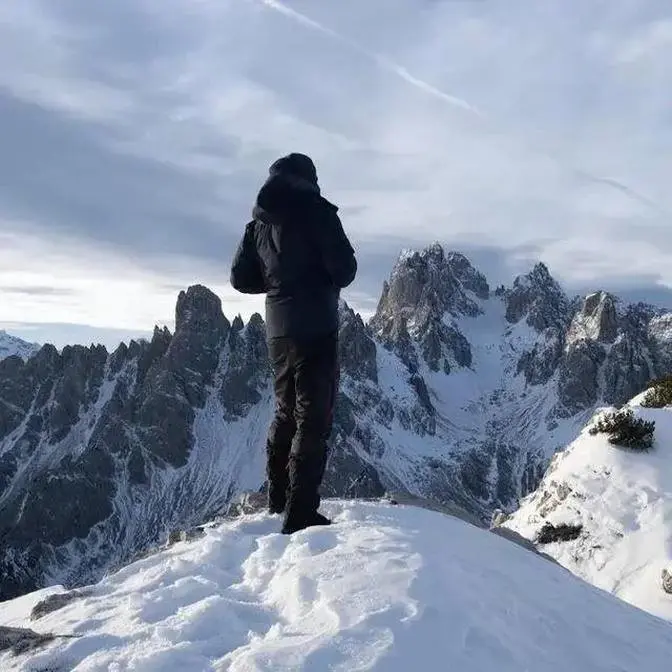
The big wide open landscapes of Southern Utah really make you want to capture the massive scale of the scenes with grand scenic images. My last video focused on the intimate details, but in this one I look at going wide and trying to convey the sense of awe that these landscapes give.
Chapters 0:00 Intro 1:55 The Sky 3:18 Composition 5:30 Finding the Right Angle 7:22 Harmony & Depth 9:41 Landscape Geometry 11:30 The Mesas
If you’d like to join me for a landscape photography workshop in Hokkaido or elsewhere, many t. Check my website for more information https://www.andymumford.com/workshops/
If you're interested in purchasing any of the gear I use in this video, and you enjoy my videos, please support my work by clicking on the affiliate links below. Thanks so much.
So for as long as I've been doing photography, I've been kind of obsessed with the deserts
of the southwest of the United States.
You've got these red towers, these vast wide open spaces, big skies.
It's just landscape on the grandest of scales.
It really is huge here, the scale, the size of everything.
So I finally came here two years ago, road trip with my friends through southern Utah
for a couple of weeks and just really fell in love with the landscape.
It's just such a wonderful place to be, such a wonderful place to shoot, and it's just
inspiring.
Every time you go out, the landscape here really inspires you, and it's not just the
national parks, and there are incredible national parks here in Utah.
You've got Bryce, you've got Zion, you've got Arches, Canyonlands, Monument Valley,
but so many places in between which are just incredibly photogenic too.
And I've been down here for three weeks now, if you saw the last video I made, that was
all about finding intimate landscapes in here, zooming in, finding the abstract details,
looking at shapes and patterns.
But you can't come to this place, you can't come here and not shoot the big wide landscapes,
the grand scenics.
It really is impossible not to put a wide angle lens on and really try to capture all
of this, all of the majesty of these incredible landscapes.
Now when you shoot these grand scenics, these big wide angle views, the sky is really important
because it is going to be a big part of any image that you shoot.
It's going to be at least a third at the top of the image.
So having an interesting sky, lots of clouds or a really good sunrise or a really good
sunset really does help make the image.
Clear blue skies, you can shoot these kind of scenes with clear skies.
I've done it before, it is the kind of weather that you get most commonly in this part of
the world.
And it does work because the landscape here is so strong, you've got so many colors, such
interesting shapes in the landscape that it's not sky dependent, but having a good sky really
does help.
It gives extra depth, extra drama to the scene and really just elevates the image to a different
level.
So every night we've been checking the weather forecast, looking at what the weather is going
to be doing the following day, looking to see if there's going to be medium and high
clouds which are the best kind of clouds for getting color.
If you have too much low cloud, it can block the sun from the horizon so you get heavy
cloud but the light doesn't come through and you don't get that color.
Last night we looked at the forecast and it looked like it was going to be a really good
sunrise this morning.
So we came out here to Valley of the Gods, which is just this wonderful big wide open
location with lots of red buttes, cliff walls.
When the first light of the sun comes up, it paints the walls a really deep red.
And then we also had a really interesting sky.
So that's the first thing, you've got the good conditions, you've got the good light,
you've got the interesting sky, but then you have to start to think about composition.
So you're looking at ways of communicating the scale, you're looking at ways of incorporating
just the different pinnacles, the different buttes to give it depth, just to try to communicate
that feeling of epicness and the scale of the location.
Now places like this, you have a great blue hour, the colors really, really saturate in
the blue hour and then when the sun first comes up, you get wonderful golden light and
shadows and contrast and depth.
So I've been looking around, I've been doing some shots with the camera, trying to shoot
panoramically to get this array of buttes behind me.
What I found then was that the road worked with some leading line to give it some scale
and to give it some depth.
And then we've been using the drones and the drones really help a lot when you're trying
to get the epic landscape, when you're trying to get that wide sweep because you're just
getting elevation, being able to get up quite high and look down a little bit on the landscape.
You get a better impression of the way that the succession of the spires and the towers,
like one after the other, behind the other, that creates depth that goes through the image
and you can see the tiny road at the bottom, which does, it does, it goes some way towards
kind of communicating the idea of this place.
So this morning we've come out to a spot that overlooks these spires, these towers in the
Utah Badlands.
It's a really incredible spot.
Now these kind of towers, these rock formations, they make really good subjects for big scenics,
for wide epic landscapes and they really kind of dominate the landscape here.
You get a sense of scale when you see them.
But even with subjects this strong, there's always going to be a huge part of the frame,
at least a third of the frame is going to be sky.
So you really do need to have a good sky to support that.
This morning there's not really much happening in the sky, there's not really many clouds,
there wasn't a huge amount of color, which means a big part of the image is sort of empty,
it's lacking any drama.
Now you can work with light skies, but it's not ideal, it can weaken the image, it removes
the depth a little bit.
There's also a little bit of a challenge in terms of the light, because in the blue hour
they don't really stand out very much, a lot of the rock here is the same color, so even
though they're very strong subjects, they are the same color as the surrounding landscape,
so they don't really separate.
Usually you need light to give you that kind of separation, you need side light on the
subject, but because of our orientation to the sun, it's kind of hard to get side light
on the subject, they're quite strongly backlit.
So we have been using drones, drones give you a lot more freedom to move around, to
get different angles, to go literally below the level of the ground that we're standing
on and get the spires above the skyline.
So I've been playing around with lots of different compositions, but what you're really trying
to communicate here is that sense of scale, you're going wide with the wide angle lens
on the camera, with the wide angle lens on the drone, because you really want to communicate
that sense of scale, that sense of just an epic landscape.
But we did have a few other occasions where everything came together and we got good light
and a great sky.
So then you're looking at building the image to give it both harmony and depth.
In many places here, there are so many interesting foregrounds, particularly these kind of ridges
of rock, which run like veins up to the mesas, they make really good foreground elements
because they work as leading lines, which lead to the subject of the larger buttes or
mesas.
In some places, the scale was so large that I couldn't fit everything into one frame and
so I shot a vertical panorama to be able to include the foreground leading up to this
massive mesa.
Also ensuring the images are harmonious and that different elements in the image balance
is important.
These large rock structures are dominant in the frame and have so much compositional weight
so they really need to be centred in the frame, with the tension paid to the diagonals of
the slopes and the positioning of the towers on a third.
It was the same here with this butte.
The rock structure itself dominates the frame and needs to sit in the centre with plenty
of room to breathe around the sides and the bottom, but the low-lying cloud made for an
interesting addition and so I was trying to find the height with the drone where the top
of the rock, interacting with the cloud, created an interesting contrast between the weight
of the rock and the light weightlessness of the cloud.
So there are places where the scenery, the landscape is so big that it's almost intimidating.
It's kind of hard to know where to start.
We're at a location now with these incredible rock formations.
It's got these wonderful kind of triangles, these chevrons that just go on and on and
on for kilometres in either direction with a river running next to them and they're huge,
they're massive.
This must be five or six miles long and it's just when you, you can only really photograph
from the air.
If you photograph from the ground, you can see behind me now, it's quite hard to photograph
it because it's kind of hidden behind this butte and you just don't get the same angle.
So capturing it from an aerial perspective, which gives you the elevation to look down
on, but then it's so big, it's kind of hard to almost know where to focus on, what to
build the composition around.
There's not one particular subject.
What you've got is a long pattern.
Now normally those kind of patterns, they lend themselves to intimate landscapes, like
almost abstract compositions, but because these formations are so big, the temptation
is to try to make it into a grand scenic, to show this kind of epic scale with the river
flowing through it and these rock formations going off into the distance.
So this has been quite challenging because it's a very one-sided composition.
All the rock formations are on one side of the frame, so it's hard to find balance because
you have diagonal lines that really only flow in one direction, which doesn't necessarily
lead your eye through the frame, it leads your eye across the frame.
So what I've been doing is just kind of moving the drone around, looking for different ways
in which we can move the eye through the image so the diagonals come in one direction, but
the escarpment flows in the other direction, so you've got these kind of two contrasting
diagonals.
But it is a challenge, and trying to show the scale of it, trying to give it that big
scenic feel, it's quite hard here.
So wherever you go in southern Utah, you get the mesas, which are these incredible plateaus
that just rise up out of the landscape, these flat-topped mountains, they're about a kilometre
high or so.
When you stand on the edge of them, you just get a view that goes on for what feels like
forever.
It really is just the definition of the epic landscape.
And in some of the places, like where we are this morning, you get really nice rock formations
like you can see here, which make for extremely good subjects when you're trying to photograph.
So the landscape here is so big that it's very hard to communicate it.
You need these rock formations to give it some form or scale, to give it also some depth,
because even though it is big and it goes on forever, it can feel flat, even with good
light, unless you have elements throughout the frame that step through the frame to give
you some depth.
And this rock formation really works for that.
We had a great sky this morning, the light was lovely, but without these rock formations
in the foreground, it wouldn't have any depth.
But even beyond that, you can still add extra depth by using the foreground that we're standing
on to create leading lines, which is what we've been doing, walking up and down the
cliffs, trying to find leading lines among the rocks, shapes of rocks that will pull
your eye towards the main rock formation, which is the main subject.
So just looking for angles in the rocks, for cracks, for lines, which lead your eye in
the right direction.
And that's pretty much it from Utah.
It's been an amazing trip in these incredible landscapes.
I hope you've enjoyed the video.
I hope it's been interesting.
I hope it's been useful.
If you have enjoyed it, please like and subscribe because it really does help the channel.
And if you enjoy my photography and you'd like to join me here on a workshop, we'll
be back here for two workshops in 2027.
We're also going to be in Alaska.
We're going to be in Namibia.
We've got workshops in the Drakensberg and the Galapagos.
You can find full information on all my tours on my website.
So please check that out and drop me a line if you've got any questions.
And as ever, thanks so much for watching and good luck with all your photography and I'll
see you next time.
Take care.