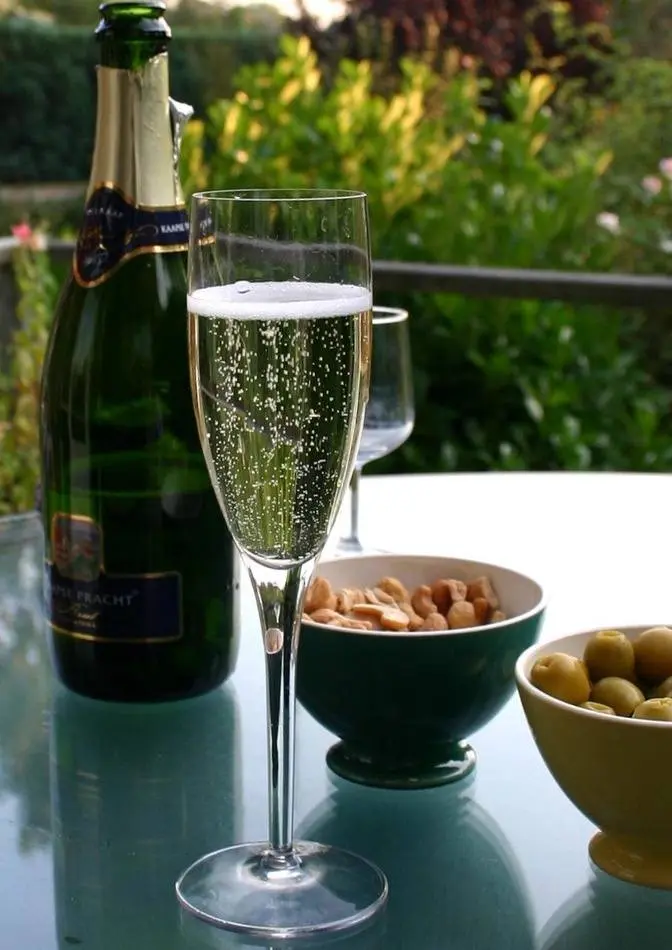
The history of sparkling wine dates back to the 17th century and over the last few hundred years, this incredible drink has gained a remarkable reputation around the world. In this episode, we cover a brief history of Champagne, delving into the names that made it what it is today as well as the fact that the art of making sparkling wine may not actually originate from France as many might think...
Order the Champagne Explorer Selection, a 6-bottle mixed case designed to introduce you to the different styles of Champagne. Learn how to compare and contrast these different styles of different dosages, blends and the difference between a Grower and Grandes Marques Champagne. Order now and unlock The Champagne Explorer Selection Wine Tasting Video to guide you through each of these 6 Champagnes.
Champagne, the famous sparkling wine that has been a cultural icon for hundreds of years.
Just the pop of a champagne cork is the sound of celebration. Referenced in classical music
and hip-hop alike, champagne has been loved throughout history by everyone from Winston
Churchill to James Bond. The history of champagne is a fascinating one, with the creation of
sparkling wine dating back to the 17th century. Whilst the famous monk Dom Perignon is often
credited with discovering the method for putting the fizz in champagne, he wasn't actually the
first. He did, however, play a pivotal role in perfecting the method and declared that drinking
champagne was like tasting the stars. So who perfected champagne? The first one who really
developed the method is the monk Dom Perignon that everybody knows. Of course. I would not say
he invented champagne, but he did a lot to perfect the process of making champagne
by controlling the second fermentation, which is the essence of the method Champenoise, and also by
blending. He was the first winemaker to start and try to blend different crues, different villages,
and try to find the perfect blend to make champagne. And after, he started also to develop
the second fermentation process, and it was at this period that the first sparkling wines
appeared in champagne. The English scientist and physician Christopher Merritt was actually
the first to discover and document the method of putting fizz into wine in 1662. Primarily,
this was a way of preserving wines during long voyages at sea. When it came to promoting
champagne internationally, the Grand Dame of Champagne was undoubtedly Madame Clico,
also known as Verve Clico, which means Widow Clico in English. This tireless, incredible
businesswoman took over her husband's business after his death in 1805, and it was she that
sowed the seeds for the global recognition that champagne has today. A true trailblazer,
Madame Clico was at the forefront of innovation, marketing, and export of champagne during an era
where women were excluded from the business world. Although sparkling wine is produced
in many regions and countries, only sparkling wine produced in the wine region of Champagne
can be labeled as such. Champagne and the name Champagne is protected. Of course,
in all around the world, you can find what we call sparkling wine. Champagne is a sparkling
wine. The name Champagne goes with the region, goes with the people, the savoir-faire. Champagne
comes only from Champagne, and that's it. Today, there are over 15,000 growers across
Champagne's 35,000 hectares of vineyards. These vary massively in size and scale of production,
from the small local growers that often sell their grapes to the larger producers,
to the 24 major houses known as Grands Marques, which can produce tens of millions of bottles
per year. Champagne has such an amazing history and so many passionate producers.
It is a truly wonderful drink that can add sparkle to any occasion.