
Extended interview_ Dwayne _The Rock_ Johnson
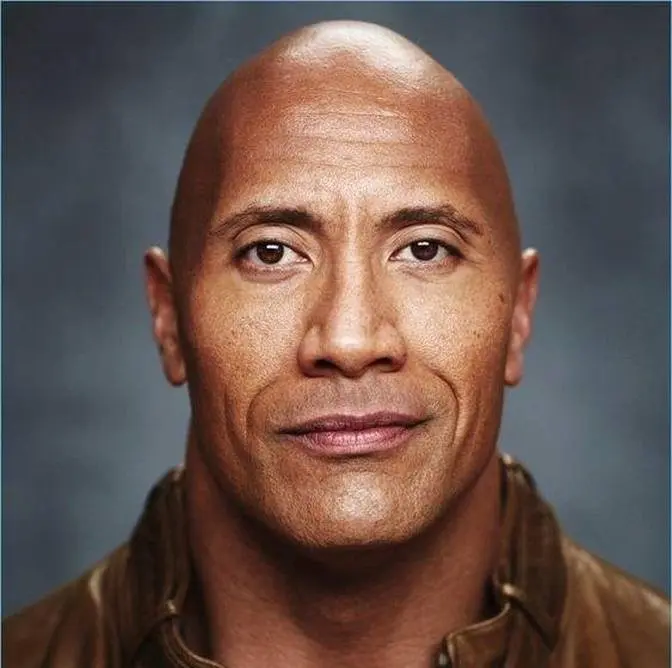
In this web exclusive, the actor and former wrestler talks with Tracy Smith about his new film, "The Smashing Machine."
"CBS News Sunday Morning" features stories on the arts, music, nature, entertainment, sports, history, science and Americana, and highlights unique human accomplishments and achievements. Check local listings for "CBS News Sunday Morning" broadcast times.
#film #entertainment #Dwaynejohnson #actor
Just listen to that.
Please, it's so true.
I sit out here every morning and meditate, doing some breath work, right here on this porch.
And you close your eyes.
It's amazing what your ears become attuned to and what you hear.
It's all the stuff that we kind of don't hear when our eyes are open.
You close your eyes, you sit in silence, I hear everything.
And you do that every morning?
Every morning.
Every morning, as the sun is coming up.
It's beautiful.
So let's talk about where you just were.
Venice Film Festival.
The film got a 15-minute-plus standing ovation.
What was going through your head and your heart?
I was really overwhelmed by that.
I went into Venice wanting to be unattached to an outcome, wanting to be unattached to what's going to happen.
Because you're in competition and you were invited.
I felt like maybe at this point and stage in my life, I can just go in being a little bit more as calm as possible.
Not expecting too much?
Well, there's not expecting anything.
I just was happy to be in competition and happy that Venice saw the film and they felt it was good enough to be in competition.
So I didn't want to expect anything.
I went in neutral.
I had this phrase that I was saying to myself as I was going into Venice and when I landed, which was,
Look, just act like you've been here.
Be cool.
Just act like you've been here.
It's kind of like what you tell a football player if they score a touchdown.
Act like you've been in the end zone before.
So I was like, OK, I'll act like I've been here.
And Tracy, to my right was Mark Kerr, who is the man who I played, who lived this life of ups and downs and addiction and ODing twice.
And he's lucky to be alive.
And it's the first time that I watched it with him side by side.
He had watched the film before a few times.
We always gave him space to watch it and then we'll talk after.
But I watched it there in Venice with him and I felt his body shaking during these scenes, especially the intense scenes where you saw the film.
There are big fights that happen with the love of his life.
And he goes through loss multiple times.
So I felt his body shaking.
That was emotional for me.
So by the time the lights come on, I'm already wiping tears away.
And then the applause happens.
And I spent a couple of days in Venice when we went and we had to do press and a press conference.
And as you're scrolling through your phone, you're seeing all these films in competition and they're getting these standing ovations.
And this film with these stars and these incredible actors and directors, they're getting five minute ovations and six minute.
I was thinking, wow, I hope maybe we get two minutes where somebody will clap.
I don't know.
It was my first time in Venice.
So, again, act like you've been there.
But it was hard for me to act like I've been there because I hadn't and I didn't know what to expect.
And then that applause was was an eruption.
And we were supposed I guess they were supposed to wait until the credits rolled.
They didn't wait until the credits rolled.
There's a card at the end that says and his name is Mark Kerr.
And that was it.
And they forced the lights on with their applause.
And I stood there with Emily and, of course, our director, Benny Safdie and Mark.
And and for 15 and a half minutes, I was really overwhelmed and I was really moved by that.
And I was so grateful for that.
And because it also just I guess it it's signified so much in this moment.
It kind of just all converged for me in a career that I've been very lucky to have in this moment there in Venice.
I have the man who I say in Mark Kerr, his life changed mine.
And then to my left, I have Benny Safdie, our writer and director.
And I say, you changed my life.
And he did.
And then, of course, I have one of my best friends, Emily.
And the whole thing was you ever want to see what a T-Rex looks like crying?
No, that was that was you.
That was me.
It was special.
Let's talk about the journey getting to this spot.
Sure.
How long have you been dreaming about playing a dramatic role?
For years, I've been dreaming and hoping and my desire was to play not only a dramatic role,
but something that I felt like I could really sink my teeth into that we can get raw with and intense and rip myself open.
You hear that term just to want to do drama.
I wanted to do something that really allowed me to do that for a few reasons.
Now, I didn't realize this back then, but I realize it now after I've gone through the process in 2019 is when I met Benny Safdie.
And that's when we talked about doing Smashing Machine.
So it's six years ago.
And COVID hit.
And everything shut down.
And I had three film commitments that I had to complete.
And we started them.
We had to shut down because of COVID again in 2021.
So it took five years to get through that process.
And I connected back with Benny again and we make this and then we make Smashing Machine.
So I had wanted to do this for some time.
But also, what I realize now, I didn't realize it then, is I was chasing something for a lot of years.
And what I was chasing was box office.
And what I realized is I was chasing box office because, of course, it felt good.
Some movies do well and are really good.
Some movies, uh-uh, not that good.
That's okay.
That's just the nature of what we do.
But I wanted to do more and I wanted to test myself.
I was also in a comfort zone.
And your mind can, at times, fight with your heart.
Because you realize that your heart is its own boss.
And as strong as the mind is, you can only tell the heart so much before the heart says, no, no, no.
And for a long time, my heart was saying, hey, there is more.
You can do more.
I'm not a big therapy guy.
I've tried it a few times.
And I've had some great conversations with therapists.
It's just not my lead foot.
So I unhealthily carry a lot.
I think like a lot of guys do.
And I didn't have a place to put it.
And I would have these conversations with Emily, who I became best friends with for years now after we shot Jungle Cruise.
And we would laugh and joke and she would say, what are you afraid of?
You need a place to put all that stuff.
And you're all these things that I see as a human being and as an actor.
Go for it.
And I was still nervous because I was in my comfort zone.
And in thinking about it, the reason why I stayed in that comfort zone is because I grew up a trailer park kid.
And I lived in trailer parks and apartments as I was growing across the country.
You know that.
We went to a trailer park.
We went to a trailer, yep.
That's right.
We went to where I used to live.
Outside of Memphis.
Downtown Bruno.
And I think when you come from that and you've been evicted before and you know what it's like to live paycheck to paycheck.
And then you come to Hollywood and you can make these films that make some money.
You make some money.
A lot of people make money and people get happy.
Families watching the movies.
That's comfort.
Sure.
And you want to go to that.
And I stayed there.
And there's a part of me, the brain, don't rock the boat.
Stay in this zone.
Everyone's happy.
Family's happy.
You're paying the bills.
You're not going back to having seven bucks.
But the heart, it's like, yeah, but you're not being fulfilled.
Did you feel like that you weren't being fulfilled?
100%.
Because I wanted more.
That's the thing.
And it's cool to stay in your comfort zone, by the way, if that's what you want to do.
But it was a big part of me that didn't want to stay in that comfort zone.
That wanted more.
That wanted to test and challenge and work with filmmakers.
Work with Benny, Aronofsky, Scorsese.
We're developing those movies where you want to get tested and challenged.
And that's what I wanted.
So for a long time, I was holding back in that comfort zone.
And then the heart, luckily, I got a pretty strong ticker.
The heart won out.
It's its own boss.
Were there people telling you, stay in your lane?
You know, they weren't saying those exact words.
But I could feel the vibe.
And because staying in my lane means staying in my lane and staying in my comfort zone means their comfort, too.
And their life isn't disrupted by, oh, wait, Dwayne, what are you getting ready to do?
Does that equate to box office?
Does it equate to that?
Now, I'm not saying that a lot of people around me are shallow.
It's human nature.
Change and any kind of disruption is scary to people.
But that's what you got to do.
And I know that in my world, I need people's opinions, those who I trust.
I need their insight.
But ultimately, I'm going to make the call.
And this is the direction I'm going to go in.
So even if there were doubters, you said, hold my beer.
I got this.
Well, I said, hold my tequila.
I got this.
Of course, tequila.
I'm not a beer guy.
But there were doubters.
And there's ones who, of course, you always find that.
And by the way, that's OK.
But I also feel like the doubt comes in the fear of change.
And things are good.
Why are you rocking the boat?
Did you doubt yourself?
This is a big, raw role.
Did you have any doubts that you could do it?
When it became real, yes.
And I was already nervous and reticent to do it anyway
because it is a big change.
And it is a raw role.
And it's not your typical fare and drama.
This is a real human being who you're playing,
who lived a real life of real ups and downs and addictions.
And he's lucky to be alive.
And his highs were high.
And his lows were low.
And they all took place in the exposure to the world.
And so once it became real, I thought,
first it was this buildup of, I can do this.
I can do this.
Now I know I can do this.
And I need people around me who can see it too.
Benny Safdie, A24, Emily Blunt.
You can do it.
And I have this group who eventually became my family.
And then it becomes real.
And you think, wait a second.
Can I do this?
Can I?
Do I?
I've never done it.
Never done anything like this.
Wanted to.
Think that I could tap into something
and hopefully deliver a decent performance.
But I was really nervous.
And on day one, I remember Benny coming to me
and Emily as well, said, are you scared?
I went, yes.
You flat out said, yes, I'm scared.
Yes, absolutely.
I am.
And both of them said, it's OK.
That's a good thing.
And we all got each other.
Here we go.
And Benny so smartly and astutely in that moment
said, before we even roll our first take of the film,
I want to tell you what the film is all about.
This film is about human vulnerability.
And that's what you're carrying now.
And that's what I'm carrying as a director.
This is my first outing as a director
away from my brother, Josh Safdie.
Emily has never played a person this broken before.
We're all vulnerable here.
It's a good thing.
You mentioned that Emily's been kind of pushing you
along the way since the days of Jungle Cruise.
Yeah.
What kind of advice did she give you
or help did she give you about playing dramatic roles?
Wow, we had so many talks.
I would say the number one thing is we would consistently
talk about being real and how important that was
and how important that was for not only
these particular roles, not only in drama,
but this particular role.
Reminding ourselves of the work and the diligence
that we did of getting to know Mark,
the woman who she plays, Dawn Staples,
getting to know her very well.
They became great friends.
We're all great friends today.
And how important that was in terms of its authenticity
to make sure that we keep it real.
And just always in the forefront of our minds,
keep in mind that these are real people
who live real lives.
And that is a hell of a responsibility
because we're going to...
Because their, in a way, their legacy up until now
was this documentary on HBO
that the movie is based off of.
And the documentary was gripping
and it was made in a certain way.
And out of that documentary over 20 years ago,
if you're Mark and you're Dawn, you think,
wow, that's how the world is going to remember me for that.
Where in Mark's case, I fight for everything
and I lose it all.
And in Dawn's case, I fight for the man I love
and I'm there to support him
and sacrifice my life and my dreams
to support him and his.
And at the end of that doc, that's it.
We lose.
But life goes on and there was so much more to tell for them.
So back to Emily and I, it was always,
hey, let's keep that in mind
and let's keep that in the forefront of our mind.
And we were using this analogy about standing on the shoreline
and every day and looking at these waves that seem like,
oh my God, these waves are so big,
we can't swim these, we're going to drown.
But it's okay.
Grab each other's hands, we'll dive in the ocean
and swim these crazy waves.
And on the other side of those waves is Benny.
Benny Safdie pulling us through, saying, I got you.
Some of those waves, you talk about the,
okay, first of all, there's fighting in the ring,
there's fighting in the cage that is brutal,
but the really brutal fights are between you and Emily at home.
I mean, oh my goodness.
What did that take out of you?
I feel like those kind of fights that we had,
the fights that Emily and I had on set,
in our house, at home, as a couple,
there's parts of us that,
and I know it sounds crazy, but now I understand,
there's parts of us that have been left on that set
that we'll never get back.
And the places you go, not only as actors,
but also keeping it real.
And one of Benny's signature artistic visions
is always to make things as real as possible.
So for example, in the house that we lived in
and that we shot in, that house was built from scratch,
running water, electricity,
and the reason why it was built from scratch,
on a soundstage, and not like only two walls
and then the rest is a soundstage,
it was an entire house built from scratch.
Their house that they lived in,
and he did that so he could hide the cameras.
So you never saw a camera, Tracy.
You never saw a camera, you never saw a lighting setup.
What do you think that did for you?
It immediately allowed us to be real
and allowed us to go in as a couple
and allowed us to have these intense, raw,
no holds barred fights that couples have
that I heard growing up as a kid
and watching my own parents fight in that way.
Brutal.
And I'll never forget as a kid,
and I remember sharing this with Benny and Emily in that,
when you hear fights as a kid
and it's your parents fighting,
it's actually, in a way,
more traumatic than seeing them
because as a little kid, you're hearing things.
It's probably why I come out here every morning
and I close my eyes and I hear things,
but you hear things and then it's left up to your imagination
what's happening when you hear things
and you're hearing those kinds of things.
When you get on set and there's no cameras,
there's no lighting setup,
and you go into those scenes,
you go elsewhere
and you feel that when you see the movie
and you see these scenes.
We got one of the greatest compliments.
Watch your feet because I'm going to drop a name.
Benny is close friends with Christopher Nolan,
as is Emily.
They both shot Oppenheimer with Christopher Nolan
and Benny showed Christopher one of the scenes,
one of which you and I are talking about,
one of those intense scenes that go down
between a husband and a wife
who are codependent
and there's addiction involved.
And at the end of the scene,
Christopher looked at Benny and said,
wow, I feel like I shouldn't be watching this.
And to you that says?
That was the greatest compliment we can get
because Nolan is the king.
And it's that intimate.
And it's that intimate and it's that raw
and it's that, oh my God,
this doesn't feel like a movie.
And I think that speaks to,
it also speaks to Benny's prowess as a director
and his real desire to shoot things that are real
and make them feel real,
cinema, verite style, truth.
And that's what Benny is.
Benny is very exact and meticulous as an artist,
as a director with what he wants to shoot,
how he wants to shoot
and what he wants out of his actors.
But then also, Tracy,
he's beautifully prowling and free
with eventually you look up and there's no cameras
and you wonder, is there another camera in this scene?
No, it's not.
But that's Benny in and out and movement.
So that was a really cool compliment, by the way, to get.
Yeah, that's pretty good.
That's pretty good.
So I want to talk about another scene
that struck me, the hospital scene.
I know Benny has you watch It's a Wonderful Life.
And I've heard that Jimmy Stewart,
in some of those very vulnerable scenes,
was drawing on the trauma
that he experienced during World War II.
And I'm wondering if you had a similar experience
that you were reliving past trauma in those scenes.
I was.
And Jimmy Stewart is one of my favorite actors.
I never had the privilege of serving our country.
And It's a Wonderful Life was one of my favorite movies.
And that's why Benny and I went back to that movie a lot.
And in that particular scene,
there were times that I had to draw from trauma in my past.
And I've not OD'd on drugs in my life.
I don't know what that's like.
But I do know what it's like
to want to be anywhere else than where you're at
and the embarrassment of that and the shame of that.
And I went back to, I'll share this with you,
I went back to, for that moment,
I went back to what it's like being a 15-year-old kid
and coming home and being evicted.
And you come home, and I'm with my mom,
and we come home, and there's an eviction sign on our little,
we lived in Little Efficiency in Hawaii.
And in my very young 15 years, as my mom is crying,
and the eviction at that time says
you have five days to get out.
And if you don't get out,
then you're going to be removed by the police.
And she's crying. I'm crying.
I'm trying to hold it together.
And my dad's not there.
My dad's in Nashville,
where eventually I went to live with downtown Bruno
and in that trailer park, which you, I brought you to.
And I wanted to be anywhere else but right there.
And I wanted to be anywhere else for my family
but right there in that moment.
And so the hospital scene that you talk about,
for Mark Kerr, he ODs, he almost dies.
He's in that hospital.
He has his girlfriend who loves him,
who's committed her life to him,
watching him right from outside the room
and his best friend.
And I know in that moment,
Mark wanted to be anywhere but there.
He was the greatest fighter in the world,
and now he is reduced to this.
And there's so much, there's pain, yes,
physical, mental, but as we've known,
as we get older in life,
we realize that the number one thing
that is so crushing to us and debilitating is shame.
And to be in that hospital bed in front of your loved ones,
shame.
And for me, I felt like to be evicted
and not know where we were going to live,
but shame.
And to have to go to Nashville
and then realize when I landed in Nashville,
I thought I was going to live with my dad.
And then I had a stranger pick me up,
and I was like, where am I going?
Where am I going to live?
He's like, oh, I'm going to take you to this motel.
So shame, right?
So that's where I went in that hospital scene.
And it's funny because you've got to keep
that kind of stuff really into perspective
because you've got to be careful, I think,
with how deep you go in terms of the performance,
what you tap into,
because the perspective I thought was,
well, you know what?
Let me go there.
I'll go to those places.
And also it was new for me.
Like I, again, not a therapy guy,
so I went into that scene thinking
this scene is going to be cathartic for me either way,
wherever it goes.
I don't know where it's going to go,
but it's going to be cathartic,
and I'm going to let it go.
And the perspective I felt like,
hey, just keep in mind you're okay now.
Today you're good.
Your babies are good.
Things are good.
Mark Kerr is alive.
He's going to see this.
He made it.
He's an inspiration.
People who are addicted,
who go to that almost finish line,
but they pull back and they make it through,
it's okay.
Because if not, I feel like you might get stuck there.
Were you a little worried about that,
getting stuck there?
Yeah, because I just didn't know
if I had the tools to come out of it.
What do you think?
That's my friend.
He thinks I'm asking the wrong question.
He's like, you're doing great.
Good, good.
You said it felt like you were ripping yourself open.
What do you think that did for you,
Dwayne Johnson,
ripping yourself open like that?
It allowed me to realize that the thing
that I was scared of
and the place that I was scared of going
to rip myself open to go to those places
is tap into the trauma.
I went through a lot of stuff as a little boy
and as a teenager.
It's like 8 years old, 15 years old, 10 years old.
Then as you get older, you have babies,
you go through a divorce.
There's a lot happening.
But those early years were defining years.
And it's the stuff that was traumatic,
so traumatic for me that I don't want to,
not only do I not want to go there,
but for many years I thought,
why don't I want to do that in movies?
It's Hollywood.
It's makeup, it's make-believe.
I want to feel good.
But the thing that I was running from,
which was ripping myself open,
is actually the thing that I needed the most
was to rip myself open
because it made me realize that the thing I love,
which is acting and telling these stories,
now I see it in a different world
and in a different light and in a different way
where, of course, I can and I will
go make the big fun movies, Jumanji, Moana.
Those are fun.
What can I say except you're welcome?
It's fun.
But now there's a whole other side to filmmaking
that I don't have to run from.
I can rip myself open,
and I have a place to put all this,
and I have a Benny who says,
yeah, not only should we rip it open,
but let's do it together.
And so that was it.
That's the thing that I realized.
The thing that I was running from
was the thing that I actually needed,
was the thing that actually brought me peace
because for a long time I was wrestling and struggling.
The brain and heart,
hey, don't rock the boat, stay in this lane,
make these kinds of movies.
Heart saying, yeah, but I don't know
if the characters you're playing
are really commensurate with who you are
as many layers that you have
on a surface, go for it.
And also, Tracy, I was tired of waking up thinking,
I didn't want to continue to wake up thinking,
oh, but wait, what if?
That's what you were doing, what if?
What if?
What if I tried these dramatic movies?
What would happen?
What if?
But also, what if you,
but what if there is more,
and what if you can do more?
And then what we really don't want is,
God, well, years from now, if I didn't do it,
what if I did do it?
How fulfilling life could have been.
And I didn't want to do that.
I want to go for it and do it.
I want to talk a little bit about
the physical transformation.
Oh, yeah.
So before we get to the prosthetics,
which is a whole thing.
We're like, where'd he go?
Yeah, exactly.
Where did you go?
But training-wise, did you,
you had to change your body?
I did.
Yeah, believe it or not, it was,
you know, I already came to the party a fairly big boy.
Yeah.
But, so, when I talked to Benny,
Benny, and very specifically, he said,
I don't know how to say this,
but I need you to get bigger,
and he was searching for the words,
and then he goes, puffier, but just,
and I said, I think I know what you're saying.
He said, give me 24 hours,
and then I came back to him,
and I showed him these pictures of Mark Kerr,
and I said, I think what you're saying is,
Mark Kerr had a very specific,
very rare body,
and when you look at pictures of Mark Kerr
back in his prime,
his silhouette, Tracy, was just crazy.
It was like, not human.
And the way his body was shaped,
and his shoulders, and his waist was this small,
but his shoulders were this wide,
and tall, and his legs were massive.
I mean, he had, he was one of those unicorn athletes
who was also a wrestler,
and when you're a wrestler, amateur wrestler,
you have a motor that doesn't stop,
and that's how they're trained,
and they have that level of conditioning.
So, I had to, I had to transform my body,
which was a massive challenge for me.
I'm a workout nut.
I like working out and just being physical
and sweating every morning,
but this was different.
This was, I had to, not just,
it's different if you put on size and put on muscle.
I've done that in the past for some roles,
but this is the kind of muscle that you have to put on
that has real fast-twitch fibers to it,
which is just a different kind of muscle.
It's also a different kind of separation
from your shoulders to your arms.
It's all this stuff that I never really thought about,
heard about, I knew about,
but until I watch it,
and so I put on, I put on just over 30 pounds,
and that was a lot,
but the key was to put on the muscle
to make sure that it was,
and I know this sounds kind of weird and funny,
but you got to put on the kind of quality muscle
that will allow you still to be athletic.
Yeah, because you had to still fight.
Yeah, I got to move,
and Benny very early on said,
I would love to not cut away.
I would love, and I know what that means.
That means that I would love to not use a stunt double,
and I said, I would love that,
and I went to training camp,
worked with real MMA coaches and MMA fighters,
and that in and of itself
was a very eye-opening experience.
I have been in the ring,
obviously in the pro wrestling ring,
so I have a good sense of where the ropes are
and how wide everything is and movement,
but MMA is a completely different world,
and it's a completely different animal
for the men and the women who do it.
I had to put on that weight, 30 pounds,
still be agile, still move.
I was maybe 280, 290.
It was a lot.
It's a lot, and to still be fast.
And to be fast and to be agile
and still to be quick,
and I trained a lot with Mark Kerr,
who helped me with my movements,
making sure that I was pliable and flexible,
and it was a lot of weight to carry
for that amount of time,
for a good three, three, four months of filming.
And then on top of it, you had prosthetics.
Yes.
That took a couple hours to put on.
It's about three to four hours every day,
but I got to tell you, Tracy,
the physical transformation was one thing,
and that was a whole learning experience,
and it also forces you to really be
even more attuned with your body,
and how am I feeling in the morning?
How am I feeling at night?
Am I sleeping well?
All this stuff you have to start thinking about
when you put on that amount of weight,
because usually as an athlete,
for Mark Kerr, for example,
for him to get to the physical place
that he got to in his prime,
that took years.
I had maybe six months, seven months,
so the prosthetic transformation,
that was everything.
Why everything?
Because I became a new person.
I feel like with the added weight physically,
I would look in the mirror and think,
well, that's still me.
I could see me, I see my face,
and I'm a lot bigger.
But the prosthetic transformation
was the thing that allowed me
to really transform and become Mark Kerr,
and I sat there every morning
for three to four hours,
and I would be on my phone,
working, reading lines,
and I'd look up,
and a little bit would change.
Look down, 10, 15, 20 minutes,
look up again,
a little bit more would change.
Look down again,
and that happened before you know it.
Three, four hours later,
I would look up,
and I would be completely different,
gone, elsewhere,
and that immediately allowed me
to be Mark,
and it also just helped my speech,
work closely with a dialect coach,
Liz Himmelstein, who's amazing.
She was Emily's dialect coach
at Oppenheimer.
The Toledo, Ohio accent
is very specific,
and people in Ohio,
you know what I'm talking about,
but also Mark Kerr,
he is this walking contradiction
of a man who's a giant,
but he's so soft,
and he's so tender,
and he's so soft-spoken,
and he speaks as Liz
and I talked about very early.
He's not a man,
and I mean this respectfully,
who speaks from the ground up.
A lot of the fighters and men
who are in these physical sports
activities,
they speak from the ground up.
There's that.
Mark speaks from here.
He's very soft.
Hi, how are you?
It's good to meet you.
Yeah.
I love what you're wearing, Tracy.
Like he's that soft,
and you have to kind of lean in,
and you think,
God, this man,
you're the most lethal man
in the planet,
which I guess maybe
makes it even more scary.
Right, the soft-spokenness.
Soft-spoken and genuine.
True gentle giant.
Gentle giant.
What did it do for you
to disappear into this other person?
Two things.
That's a great question.
It allowed for me,
number one,
to completely disappear,
which also allowed me
to realize, like,
oh, I like this,
because for my entire career,
I couldn't,
not only could I not disappear
in films,
because, well, I could,
I just never tried it,
but you know,
usually it's like,
I'm as advertised.
This guy is the same guy
on screen.
So when I did transform,
though,
day one,
I was in love
with this idea
of transforming
into someone else.
And I don't see myself.
And I liked it.
I really, really did.
What do you think that was,
just not being
Dwayne Johnson
for a while?
Yes, yes, yes.
That's what it is.
And I got to be careful
with that,
because it's like,
you want to, you know,
strike the little violins,
like, oh, you know,
I can't go anywhere.
laughs
You know,
I can't go to a mall,
but no, no, no.
It, it,
it just,
it allowed for a freedom,
Tracy,
that I thought,
oh, this is beautiful.
It's amazing.
When I came on set,
Emily will tell the story.
No one recognized me.
They didn't know
I was me.
And the seats kind of parted.
Everyone got quiet.
I kind of walked on set
and it was amazing.
You know,
the other thing is
that I really realized
that I think
you'll find interesting
and people watching,
I think we'll find
this interesting.
Becoming Mark Kerr
really allowed me
to become even more empathetic
just to the world.
Because maybe,
like, I try to be empathetic.
I try to not be too judgy,
wait and see.
There might be context
I'm missing out of something.
Or I don't know
what that person is going through.
That was a big thing
that I realized
is that I was talking
to Benny about that.
Like, hey, you don't,
you never know
what people are going through.
Right?
They could seem like
they have it together,
especially a guy
like Mark Kerr.
He's on top of the world.
He's a world champion.
He's the greatest fighter
on the planet.
He looks like he's capable,
but he's just dying
on the inside.
So becoming Mark
just allowed me
to become more,
just even more empathetic
to you just never know
what people are going through.
There's the most
beautiful butterfly
that just went by,
this blue butterfly.
You know what I learned
about butterflies, by the way?
I don't know if you know this,
but I went to a butterfly zoo.
I don't know what they're called.
Sanctuary.
I took the girls there.
And we loved it.
And then I realized
the thing that rocked me
is that when you see a butterfly,
it has approximately
two weeks of life.
That's it.
I was like the big weird dad
at the sanctuary.
I'm sorry.
I know you want to
continue the tour,
but can you tell me that again?
Like, all these butterflies
only have two weeks.
You're like, yeah.
Their lifespan is two weeks,
which made me think,
again, empathy.
Empathy and also going back
to this story.
Mm-hmm.
You only have so much time
on this earth.
Use it.
Wisely, right?
There's a great quote
that I heard,
and it means even more now
that I filmed
Smashing Machine,
and I can apply it.
I did apply it
to Smashing Machine.
And this idea that
at the end of the film
without any spoilers,
sometimes winning
becomes the enemy.
And the thing you want most
sometimes is a thing
you never get,
and you think it's all over.
And the quote is
from Louis L'Amour,
who is an American novelist,
and he says,
there's going to come a time
where you believe
that everything is finished,
and that's where it begins.
And so I think, Tracy,
I know this sounds funny,
but I think,
and it sounds so sappy,
but I think the applause
at the end of Smashing Machine
in Venice
at the Venice Film Festival
was the,
was my gut,
my reaction to that
where I got emotional.
Big T-Rex was crying over here,
but it was probably
my gut telling me,
it's just the beginning.
And you stepped out,
and now you're here,
and it might be
just the beginning.