
Discover the Power of Mudra – Hand Gestures in Buddhist Art
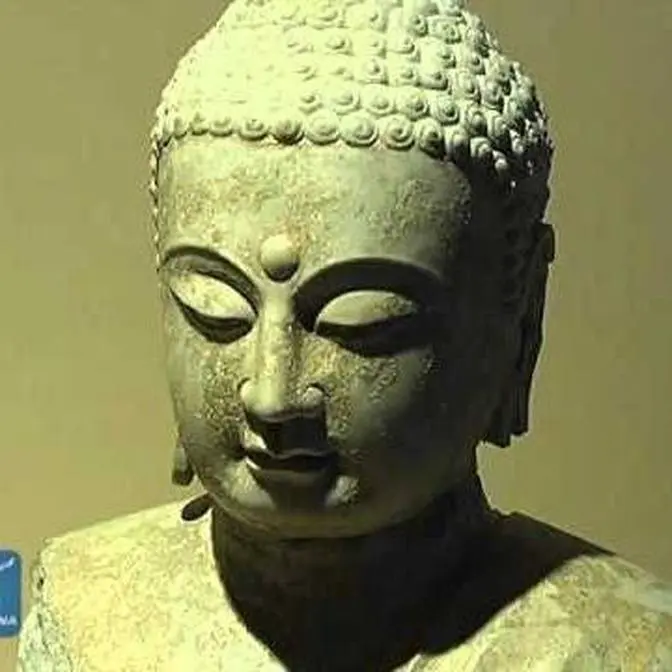
#timelesstreasures #history
Sotheby's upcoming exhibition on 16 September, Images of Enlightenment: Devotional Works of Art and Paintings, traces the development of Buddhist art across Asia. This short video describes the importance of hand gestures, or 'mudra' in Sanskrit, which were used to convey specific meanings to the viewer.
Buddhism was founded and later developed and spread into preliterate and semi-literate cultures
starting in the fifth century BCE. It was art, particularly in the form of portable sculpture
and painting, and those who carried it, that facilitated the spread of Buddhism outside of India,
across the Silk Road, and throughout Asia.
Mudras, or hand gestures, are one of the most direct ways of identifying a Buddhist figure.
Mudra is a Sanskrit term which means seal or sign, and the mudra points out some of the most
significant characteristics of the figure which we are viewing. In this bronze figure of Padma
Pani from Kashmir, or the Western Himalayas, the bodhisattva's right hand is raised palm
outwards at the level of the heart in a bhaya mudra, or the gesture of fearlessness. It represents
protection from the fear of suffering and cyclical existence, and is also a hand gesture that was
commonly used in early Christian art in depictions of Jesus, known as the magna manas, or great hand.
Dharma chakra mudra is the gesture of explaining the Buddhist teachings, or turning the wheel of
dharma. It is made by raising the two hands and forming circles or wheels with the thumbs and
forefingers, as we can see here in this beautiful bronze depicting Maitreya, the Buddha of the future.
Vittarka mudra, or the gesture of discussion and explication, is often ascribed to historical
figures and great teachers. Vittarka mudra is made by the right hand raised in the AOK gesture,
with fingers extended and the thumb and forefinger touching. We see vittarka mudra in this sculpture
of the fifth Dalai Lama, Ngawang Labson Gyatso, who was also known as the great fifth, and renowned
as a scholar, as well as a skilled diplomat and politician. One of the most recognizable hand
gestures throughout the Buddhist world is Bhumi Sparsha mudra, or the earth-touching gesture.
This gesture, as we can see in this Qing dynasty sculpture, symbolizes the moment of the Buddha's
enlightenment, when he called upon the earth to witness his grand awakening. Also recognizable,
and perhaps entirely emblematic of Buddhism, is Anjali mudra, with the hands pressed together
in a prayer-like gesture at the heart. This is the gesture of respect and adoration, and is
commonly used throughout Asia today. Eleven-headed Avalokiteshvara is commonly depicted with his
primary two hands in Anjali mudra, gently cupping a wish-fulfilling jewel between his two palms.
Avarada mudra, with the right hand palm out and pointing down, is the gesture of charity and
open-handed generosity. It is commonly used by peaceful and wealth-bestowing deities, such as
the Bodhisattva of Compassion. Buddhist art and iconography often appears very opaque to the
casual viewer. Learning how to read Buddhist art and unlock the iconography is the first
step towards developing an understanding and appreciation of this kind of artwork.