
Drawing From a Master, John Singer Sargent. Cesar Santos vlog 090
4 Video Views·Feb 5, 2025
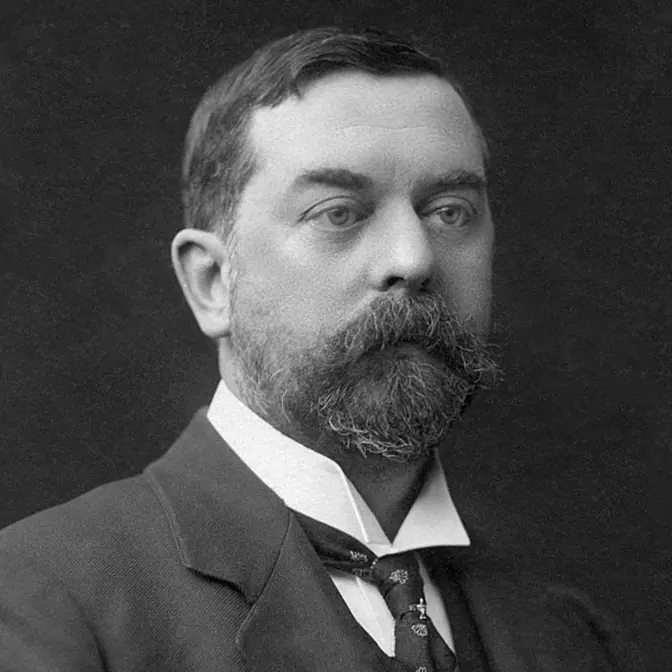
Drawing in my sketchbook at the Morgan Library and Museum in New York City. John Singer Sargent is one of the greatest portrait artist of all time, I took advantage of a special exhibition showing his drawings in charcoal. I am demonstrating how I interpret the drawing technique of such a Master.
Hi, I'm Cesar Santos. I'm here in New York City.
We are heading to the Morgan Library and Museum
to check out one of my favorite portrait painters, John Singer Sargent.
His show is very unique. It's about drawings.
So let me show you how I go about studying and learning from such a master.
Let's go!
It's very rare to see drawings meant to be finished products from a master.
Especially from the classical period
because most drawings at that time served as studies
for bigger projects or for ideas, composition.
But in this case, after Sargent turned 51, so he was already a master,
when he decided to not do portrait commissions painted anymore,
he would draw the sitter.
He still had demand, so he would paint famous artists, influential people, politicians, friends.
This means that there were drawings meant to be appreciated by a third party,
by the commissioner, by the person who's going to have it.
So we can see a mixture of Sargent, the academic painter,
the master of his craft, and also Sargent, the personal artist,
reacting and having that relationship with his paper and charcoal and reacting to the sitter.
In the academic language, we often say and we hear
that we should be painting as if we were drawing,
meaning draw with the brush, draw with paint,
because drawing is the foundation of the art.
Drawing is the infrastructure.
This is what makes us understand what we're looking at
and how we're interpreting it and applying it.
I want to take you to another way of seeing the same concept.
Instead of saying draw with a brush,
now I'm going to be thinking of how he painted with charcoal,
because he was doing portrait commissions for the clients
and he has been doing that as paintings before,
but since he got frustrated because it was time-consuming,
who knows why, you know, artists are a little crazy.
So he decided to just do drawings, but these drawings are a little bit like paintings.
So instead of saying draw with a brush,
we're going to be thinking paint with a charcoal stick.
Since I love Sargent's way of paint application,
I know that that comes from his drawing technique,
from his temperament and his way of applying charcoal or paint onto a surface.
What I'll be doing is that I'll be looking at his drawing
and I'll be painting it, copying it with oils,
copying it with black, ivory black, and titanium white
and see if I can capture that energy of drawing, but with the brush.
The idea to copy for me is to just get more tools,
more points of views from different people.
It's like reading a book.
When you read a book, it's not just to act like the writer
or to go about your life thinking of that story forever.
It's more about wisdom, gaining wisdom from people
who already did the work, who experienced it.
So in a way, copying these drawings helped me interpret
and play with my tools to see my potential
that I can develop from within as a personal vision.
I'm going to try to understand his system of application with graphite,
simple graphite, so that I can divide the system
and see how he put the whole drawing together.
So first, what I'm thinking he did was to measure
and do bigger proportions just with simple lines
so he knows where the placement of things will be.
After getting my proportions down lightly just with the line work,
I'm going to do a massing of the values
and simplify them into just a couple of tones.
This is also going to be lightly,
so I create a smoky, kind of foggy feeling of the drawing.
Nothing precise, nothing sharp.
So first, I got the proportions down a little bit,
kind of a construct stage,
just to get simple forms simplified with lines.
I left my stump. I don't have it here, so I'm using my finger.
I can try this at home.
Soften those masses and get that simplification of values growing.
The reason I'm doing them so small is because the charcoal is thicker,
so if you have a bigger page and you draw with a charcoal stick,
I think it's pretty similar to this kind of tiny point of the pencil
in a smaller area.
Basically, I think he would just kind of soften this stuff like this
and create this smoky feeling.
And here, I don't have a background,
but if you had a background like the other ones, I would do it too.
And even in this area of light,
just completely kind of erase it
and leave it undefined like that so we can do it after.
I'm doing the eye sockets.
Very lightly. Don't worry about going dark at the beginning.
You have time to darken stuff. It's better to be precise.
This is a totally different method, but if you click here,
you can see the other video where I did the line drawing in the cruise ship.
That was a different approach.
Here it's very kind of appearing soft.
And as we develop the drawing, then we become more specific
and add smaller and smaller information.
And as I develop that, I can get darker areas
and push that graphite to create darker accents
and also smaller marks that entertain the eye throughout the portrait.
As well as getting the eraser and taking out some of the lights
and highlights and adjusting those masses
so at the end, we express the character of the cedar
with the soft and sharp elements playing together in good proportion.
As we develop it, we can increase and add some of the dark areas
around the bigger masses like the hair.
And that will give us kind of a range
so we can add more accents within the face.
But always remember just to keep it,
keep all those strong accents for later
when you become more confident about the drawing and the proportions.
I love how Sargent elongated the neck, shoulders.
So this is just a quick demo for you guys to see
how I create quickly studies and learn from such an amazing master.
And I'm not copying line by line.
I'm not copying exactly what he's doing.
I'm just feeling it and trying to represent it in an honest way.
Saying, oh, he probably saw hair and I'm thinking of hair.
Like if I'm doing this, I'm not just coldly looking at the drawing and copying it.
I am kind of analyzing,
oh, that's interesting how he realized that that was hair
and he did it like that.
And then, you know, the structure of the face, the eyebrows.
When he put something darker because it was deeper into the shadows,
leaving all this light area almost paper.
And you can go back and soften it
if you need to with whatever, with bread, with a finger.
All right, so I'm going to finish it like that
because I'm drawing a little bit uncomfortable here in an angle
and I'm seeing a lot of glare,
but I think it's enough to show you a little bit of how I interpret Sargent's system.
Okay, so let's wrap this video up with a sketchbook and pencil in hand.
Here I stand sharing a story as I develop my brand.
Thank you for watching.