
John Singer Sargent, Painting On Holiday
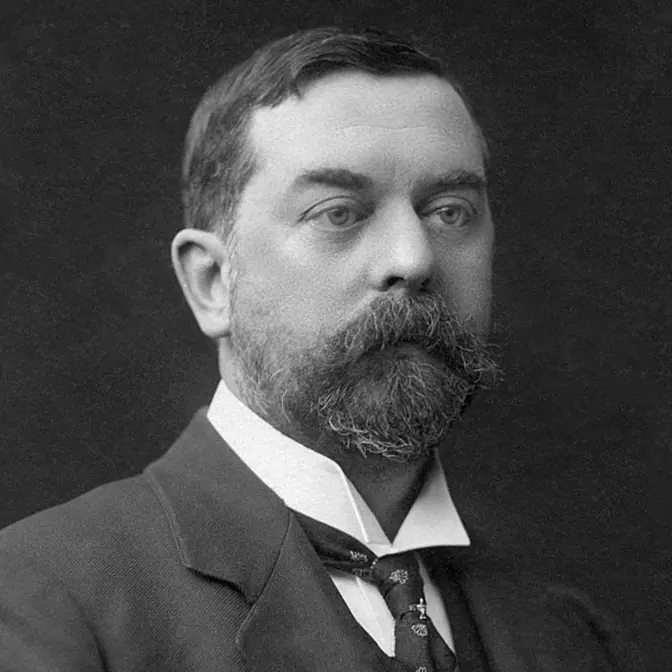
It may be said of his reputation that it is based upon, and measured by the strength of
his originality and boldness, as an irreverent innovator, rather than upon the real penetrating
value of his work. To this assertion, there are exceptions in the history of art of known
exceptionalism, so it is with John Sargent. Sometimes from out of the depths of their
enigmatic imaginations and methods, there comes a simple manifestation of straightforward
individualism that all can understand. So it is that while Carolus Duran aided in his formulation
and foundation, it was within the artist to muster all the energy and self-assuredness that made him
a standout from the start. Through his canvases and distinct preferences, it is in a vein quite
the artist's own. On holiday, we look at Sargent's summers of leaving the confines of the studio,
and the obligations of portrait schedules to emerge for a fresh and needful change,
to venture out and rekindle the mind to observe and record with a renewed excitement,
sometimes with friends, but more often with family, all of whom were ready models at a given
moment to seize a given opportunity, and record in paint. Sargent would go wherever his eye led him
and choose his subject. Life was plain sailing on a sea of summer. He would breakfast at 7.30
and then venture out to sketch, working till the light failed. His energy was inexhaustible,
the hours of sunshine were treasured like gold. We are given an account by Miss Heinemann of his
advice to her regarding her own pictures. Paint a hundred studies, he would say. Keep any number
of clean canvases ready, of all shapes and sizes, so that you are never held back by the sudden need
of one. You can't do sketches enough. Sketch everything and keep your curiosity fresh.
He thought it was excellent practice to paint flowers, for the precision necessary in the study
of their forms and the pure brilliancy of their color. It refreshed the tone of one's indoor
portraits, he insisted, to paint landscapes or figures out of doors, as well as to change one's
medium now and then. He disliked pastel. It seemed to him too artificial, or else it was made to look
like oil or watercolor, and in that case why not use oil or watercolor? His general remarks were,
Cultivate an ever-continuous power of observation. Wherever you are, be always ready to make slight
notes of postures, groups and incidents. Store up in the mind without ceasing a continuous stream
of observations from which to make selections later. Above all things get abroad. See the
sunlight and everything that is to be seen. The power of selection will follow. Be continually
making mental notes. Make them again and again, and test what you remember by sketches till you
have got them fixed. Do not be backward at using every device and making every experiment that
ingenuity can devise, in order to attain that sense of completeness which nature so beautifully
provides, always bearing in mind the limitations of the materials in which you work. We typically
think of John Singer Sargent as a citizen of the world, and his brilliant watercolors,
many depicting exotic locales, attest to that. He was born in Florence, Italy in 1856,
to an expatriate Philadelphia surgeon father, who was also a skilled medical illustrator,
and a Boston heiress mother who enjoyed watercolors and a passion for Europe. Growing up,
he lived all over Europe, France, Italy, Switzerland and Germany. Sargent spoke four
languages and studied art in Florence, Dresden, Berlin and Paris. He considered himself an American
but it wasn't until he was 17 that he actually stepped foot in the United States. But when he
did visit America, he considered Boston, and especially the Back Bay, his home. Sightseeing
was reserved for rainy days. In the evenings he would play chess, or the piano where one was
available, duets with Mrs. de Glen or Miss Eliza Wedgwood from Brahms, Schumann or Albanese.
The only pleasure, he wrote, of coming back to one's own house is the pleasure of unpacking
the bibblots or ornaments one has got elsewhere, good wholesome sentiments. From his earliest days
he was out from the studio and painting landscapes and whatever fancied him. Apart from Carolus
Duran's studio, Sargent demonstrated his skills in the beach scene of the Oyster Gatherers,
which was a hit at the Salon, much to Duran's delight, not an easy task for a youth to gain
such praise. His studies alone are remarkable and freshly conceived. Sargent was a determined
draughtsman as well, taking additional classes with Yvonne and Bonnard at the Ecole des Beaux-Arts
evenings. It was necessary for Duran's pupils to already have drawing skills in place before
entering his studio. He was as precocious at out-of-door colour as he was doing figure work
and portraiture in the confines of the studio, where the light is controlled and much easier
to define. In 1878 Sargent would make his way to Capri, and we have his model Rosina Ferrara
posing resting against a tree and two other remarkable figure pieces about the same time.
One is Head of a Girl, and another painting of Rosina smiling with hand on her hip.
The delicate colour harmony and economy of means were becoming more and more a trademark of his
paint handling, as also with The Man in Reverie, a dark-haired model very firmly placed against
a white wall and draped with a black garment to a striking effect of tones. A couple of years later
in 1882 Sargent would head south where we find his remarkable Venetian pictures, using the more
romantic depictions of young men and women on the streets, again with the deeper tones
expressing the mood and character of the alleyways making use of contemporary subject matter.
Sargent frequented with artist friends who were ready models to pose as the opportunity provided.
In between his busy portrait schedule, Sargent is as active as ever in his plein air work.
We begin to see him working with the Vickers family and individual portraits of members
which included the Mrs. Vickers daughters and the beginnings of Carnation, Lily Lily Rose.
Sargent stayed with artist Francis David Millett at Farmhouse in Broadway Worcestershire
and there he began working on the painting. This time the young models are Dorothy and Polly Barnard.
Sargent's progress was slow. He worked on the painting from September 1885 and completed it
sometime in October 1886. Earlier sketches were made of two younger children as they posed near
lilies potted about the garden, water pitcher in hands. The greens are rich with the fading light
of early evening. The glowing whites of the flowers especially crisp and dotted about the composition.
As the year is expended, Sargent is back and the theme takes on new energy with Dorothy Barnard
as she is with an oriental lantern about to be lit and in the same garden area. The many studies and
sketches Sargent produces over this project make it evident that he wants it to become something
very worthy. The painting is held over the winter in a barn until the following year and he returns
to it with the same enthusiasm as one artist friend witnesses that the painting each night
is scraped to the bone so as to keep the shapes and thick paint globs under control for the next
day's effort. The result is one of great impact with bright clean tones with violet traces of
color pervading as the evening light is captured in true fashion. In 1891 Sargent made a journey
to Egypt and Greece for the purpose of studying the ancient pictorial and relief conceptions of
the gods and goddesses of idolatry and polytheism. Knight, Pharaoh, the Assyrian King, Pasht, the
Sphinx, Osiris and many others that were to be introduced in the lunette and ceiling at the
north end of the hall in the Boston Library. This was the first part of the series of mural paintings
illustrating the history of the Jewish and Christian religions. It was upon the visit to
America Sargent and Edwin Abbey were greeted in New York, Philadelphia and Boston where the cities
were doing honor to both Sargent and Abbey. It was at this time the buzz was being circulated
about a mural project with discussions concerning general topics. Sargent took advantage during the
visit to paint the celebrated picture of Carmencita, a popular Spanish dancer which he later
sent to the exhibition of the Society of American Artists in New York and which was later bought by
the French government for the Luxembourg Museum. With a decision made the trustees of the Boston
Public Library commissioned Sargent and Abbey to paint the mural decorations for two of the
principal rooms of the great monumental library which had just been erected in Copley Square
from the designs of architects McKim, Mead and White. Returning to England the two artists plotted
with their minds full of projects for the important public commission which opened up.
From this time forth a large part of Sargent's attention and energy were dedicated to the mural
work. While he was in Egypt and Greece he made a number of good sketches and studies including the
full-length nude study of an Egyptian girl which he sent to the exhibition of the New English Art
Club in 1892 and he also made sketches of a fellow woman. Following that we have the painting of a
In 1902 Sargent spent the month of August in Norway. There he painted On His Holidays, a salmon
river tumbling with agitated waters through a rocky channel and a portrait of young McCulloch
lying on one of the rocks beside the salmon he had caught. The picture is brilliant and has the
chilling accuracy of real life. It is a plain unvarnished and honest portrayal told in the cold
northern light. The pinkish skin tones arranged carefully juxtaposed on the canvas in such a way
that it brings warmth to the overall colour scheme. A work of an accomplished craftsman who has the
colouring carefully thought out and true. Hostilities were brewing and suddenly there was a concern over
the artist. John Singer Sargent, the painter, is somewhere in Austria 1914 and his friends are
greatly worried as to his safety. He was last heard from on August 4th. Mr Sargent had been
painting in the Tyrol. He was accompanied by Major Armstrong, an Englishman. It is believed
probable that he has been detained by the Austrian military authorities and not permitted to return
to England. When the exile returned in due time to London he brought with him some of the strangest
looking pictures while detained he had ever painted. Strangest of all were the Tyrolese
crucifix and the Tyrolese graveyard. Less odd but more profound is the painting of the Tyrolese
interior, a group of folks around a table in a despairing mood, perhaps the news of war no one
wanted to see. But the painting now in the Metropolitan Museum New York is a touching work
and by far the most pleasing to look upon was Master and Pupils, a poetic and intimate portrayal
of a master teaching students in the open air and now owned by the Boston Art Museum
which is conceived in an entirely different mood and carried to a finer degree of finish.
In 1916 Sargent departs from Europe for a summer vacation trip to the Canadian Rocky Mountain
region. Avoiding the army of tourists at Banff and Lake Louise Sargent found his way to a retired
camp on the banks of Lake O'Hara far from the madding crowd and there it was that he painted
his gloriously beautiful landscape Lake O'Hara. He began to paint this picture on a gray day when
the scene was very impressive but before he had got very far with it there was a change in the
weather and the clouds rolled away. He changed his mind and made it an effect of sunshine but
then a spell of bad weather intervened interrupting the work but when the sun finally made its
reappearance he was able to finish the picture. During stormy weather he made a watercolor sketch
of the subject again as a gray day effect. Sargent's sojourn at the Lake O'Hara camp is further
commemorated in several other excellent pictures of tents which give an interesting idea of the
kind of place the camp was and the gusto with which the painter responded to the call of the
wilderness. Then we have two girls fishing now in the Cincinnati Art Museum providing us a glimpse
of the small gathering of close associates Sargent enjoyed amidst the beautiful Canadian Rockies.
To these tours through Europe and in America or the Canadian backcountry in his chosen company
he owed some of the happiest months of his life. He was away from portraits which by 1909 had
become wearisome to him. As early as 1906 he had written to Lady Lewis, I have now got a
bomb-proof shelter into which I retire when I sniff the coming portrait or its trajectory.
Sargent was free to paint whatever moved him and with family and friends he had all he required
for a full life. Albeit as time went on he withdrew from others as his inner circle became tighter
which was needful. His portrait drawings were the replacement for oil portraits in which the
demands of clients with preferences of their own became burdensome. Sargent would declare whenever
I do a portrait I lose a friend. However his admirers were many as wrote Professor Phelps.
One is justified in predicting immortality for these compositions. Sargent belongs among the
great portrait painters of all time, his pictures revealing the mysterious but unmistakable stamp of
genius. In fact everything he does shows this quality which makes his painting the envy of
competitors and the pride and glory of American art. From 1917 to 1925 Sargent needed larger
studio space in order to execute his colonnade murals for the new art museum on Huntington Avenue.
So he rented a studio of his own at the Pope building which is across the street from Back
Bay station. There and at his London studio as well he produced eight paintings, twelve reliefs
and lots of architectural ornament all made of plaster. Instead of painting fresco style directly
onto wet plaster Sargent created monumental oil paintings and the canvases were adhered to the
walls. He planned to oversee the final installation but unfortunately passed away suddenly on April
14th 1925 on the eve of his departure for Boston from England. His elaborate work was unveiled
posthumously to great acclaim at the Museum of Art in 1925. Now to turn to another aspect of Sargent
it is his generous interest in the work of his fellow artists that has been mentioned. It was
often manifested both in England and America but his friendly aid and encouragement were
sedulously kept from the public. Frank Tompkins was one of the painters occupying studios in the
Columbus Avenue building where Sargent had his work rooms for eight or ten years in Boston
and once in a while when Tompkins door stood open or partly open Sargent would drop in for a few
minutes to look over his neighbor's work and if requested to do so to criticize it. Shortly after
one of these friendly calls Tompkins was surprised by an unexpected visit from a representative of
the Boston Art Museum who asked to be shown a certain painting of a mother and child. A few
days later the picture was bought by the museum. Here was a case where the busy preoccupied Sargent
had gone out of his way to persuade the officers of the museum to purchase a picture by a relatively
obscure man for unquestionably it was his advice that had led to their action but never a word did
Sargent say to Tompkins or to anyone else about his part in the transaction and it was only by
accident sometime afterward that Tompkins learned how it all came about. Painters and students of
painting will be interested in an account of Sargent's method of making ahead. Mr. John Collier
some years ago in a lecture before the Society of Arts made public the notes that one of Sargent's
pupils had taken. Briefly there was first a careful drawing of the masses together with the
correct placing of the subject on the canvas with spots giving the exact location of the features
then with a large brush and with plenty of paint the tone and color of the background were put in
the background being allowed to overlap the borders of the portrait. Next a kind of middle
tone was painted over the whole flesh space light on the light side and dark on the dark
the tone being painted right into the background background into flesh and vice versa until the
effect of blending or melting of the one into the other was obtained. There were yet no features
finally for the first day's work the broad tones in which might be said to reside the features
were painted into the big middle tone while it was wet and care was again taken to have color
tone and drawing right and to observe subtly the various relations in tone of the darks and lights
later on after this painting was dry it was oiled out and the ground was gone over again
much in the same way the values of the underpainting being retained by thin rework
over it. To this description of the painter's practice another student added the further
remark that at the end of the day everything was brushed together while the paint was still wet
so as to get rid of the sharp edges an approximation to Franz Halse's indeterminate blur
and finally we hope you enjoyed this presentation of the remarkable John Singer Sargent we focused
on just a small portion of his great output so give a like if you will and thank you until next
time if you would remember to leave a like Mr Sargent will be back again and thank you