
How a Japanese Town Keeps its 800 Year Pottery Tradition Alive
Hello world.
It feels like everywhere I go in Japan,
you can find traditions that have been followed for hundreds of years.
In Tamba Sasayama, it's no exception.
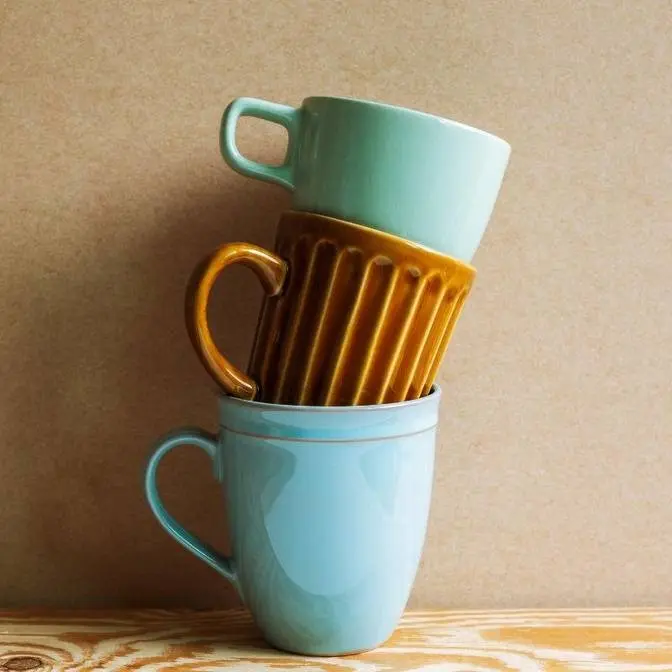
Tambayaki, or Tamba ware, is an 800 year old tradition
that is still carried on today by about 60 kilns located around the Tachikui district.
What is often the case when hearing about these kinds of traditional practices
is that you find out it's a dying craft.
So it's encouraging to hear that this group of potters
have not only been able to keep the craft alive generation after generation,
but they are still thriving to this day.
What's the secret?
A technological improvement they made happened around 1611,
when they started constructing Korean style kilns,
which are locally called Noborigama, or in English, a climbing kiln.
This enabled the mass production of pottery.
Around this era, the Edo period, they also started making sake bottles and tea ceramics.
And if we now look at Tambayaki today,
you'll see a lot of very practical everyday items.
However, the second reason I believe that the tradition is still going strong
is because the artists are allowed to be creative.
There are two aspects to this.
One is that they really can make whatever they want.
The second is that even when they're creating practical items,
they're each doing it with their own style.
To see some of the more traditional Tambayaki,
I visited Toshihiko Shimizu, who has been making pottery for 50 years.
Like many in the profession, his son is also continuing the tradition.
One thing you'll notice is that despite being a family business,
his son's pottery is quite different from his father's.
So while he's following tradition, he's also breaking from it.
What I found surprising was that while there was a cooperative factory
where you could get potter's clay from,
there are potters that are still searching the local areas
and gathering their own to get the precise texture they like.
At its most basic, making pottery is quite simple.
Get the clay, add water, and create whatever you like.
Although, of course, the normal steps they take are a bit more complex.
If you mix the clay with a vacuum purifier,
you lose the taste of the clay.
So you don't have to use a purifier.
A purifier is a machine that makes fine, fine clay.
I think what the area has done well is to market their products
and come together to represent the whole area as a brand.
You can visit Potter's Alley and see over 50 artists represented.
The spots are very affordable to rent,
and the location of each artist's wares are rotated
so that everyone gets a chance at exposure.
There's also a group of eight that got together to create TS, Tanba Star.
I think this is the beginning of my dream as a potter.
I wanted to create a brand to sell Tanba pottery.
It might take a long time, but the eight of us would make the same thing
and compete to see which shape or size was better.
After a month of competition, everyone would make a sample and bring it to me.
Then I would decide which item to add to the list.
The eight of us would make the final product.
In terms of numbers, there are about 80% of potters in the area,
but the problem is that there aren't enough potters.
Compared to other areas, Tanba pottery is still a very active area.
Nishibata-san, too, is a successor to her father, who's on the left.
I love that she worried about the little bucket in the way
in an otherwise immaculate studio,
especially when I had just visited Shimizu-san who had stuff everywhere.
I usually work here.
I just finished drawing a picture.
And like Shimizu-san and his son,
Nishibata-san and her father have different styles.
She went to an art school and likes to make designs on her pottery.
I put the color on the tip first,
then I dry it a little,
then I scrape it to create the outline.
I used to be a potter,
but I've always loved drawing and making things.
I feel like I have a lot of freedom.
I visited yet another father-son duo.
Some of the items made by Onishi-san's father
are very thin and light bear cups.
His son likes his pottery rougher and more raw.
He showed me the climbing kiln that they have.
I'll use up all this firewood next week.
It takes about three days for the kiln to heat up.
Then I start digging into the firewood.
I don't even have a thermometer here.
If I feel like I'm almost done,
I come up here and start digging again.
and when I'm working here, I can see if this part is done.
The feature of the Noborigama is that it keeps going up.
Normally, there aren't many kama that have a 20cm gap like this.
This is a Noborigama that is unique to the Tamba,
commonly known as the Jagama,
and it's a low and long kama.
It's nice, isn't it?
Yeah, it used to be like that.
Oh, it's not going down.
The red part is coming out nicely.
This is the ash that comes out after the firewood is burned.
The wood melts and becomes ash.
This is called natural grace.
When I look at old kimonos, I get excited.
My ideal kimono is called Akadobe.
Akadobe was a kind of traditional kimono from the Edo period.
I've been making kama to recreate that.
The color around here.
This is more interesting.
The funnest stop I made was to Masahiko-san's studio.
The reason I say this is that despite being a famous local artist,
he didn't say a word about his work.
Instead, he was interested in showing me things like his water basin.
I asked him about the flow of water,
and he got out a screwdriver just to adjust it.
I love how he had this new, really nice place,
but kept the water pipe rustic on purpose.
Here's the outside view,
and here's the inside view.
Quite a contrast, right?
His work also ranges from the refined to the raw.
I wish I had time to fly my drone here,
but his property is quite large,
and he even bought his own excavator in order to do landscaping himself.
His reason for doing it himself was that if you hire some people a few times,
it's just as expensive as the excavator,
so why not buy one and operate it yourself?
He also has his collection of clay and a forklift.
Of course, he was more than happy to demonstrate it in action.
For the pottery you see here,
it's designed by him and made by his apprentices.
I personally bought this bowl for my daily yogurt and muesli.
I had actually first encountered it at the restaurant I ate at the night before,
where it was filled with miso soup.
All of the restaurant's courses were served using local tambayaki.
When we stopped to eat lunch, I again found myself eating on art.
We were at Luna Papados,
whose owner, Suzuki-san, became a super fan of Masahiko-san.
He liked the tambayaki and area so much
that he decided to open a restaurant making food for the dishes.
On our last day in the area, Tamba Sasayama City,
my wife and I visited one of the countless shops that sell tambayaki
and picked out some of our favorites.
For me, I love cats, so I couldn't resist these little plates.
My wife, who clearly doesn't love her cats as much as I do,
picked out this sake bottle and cup.
Although, since she never drinks sake at home,
she's going to use this as a milk pitcher to be served with tea
or a salad dressing container.
How did the 800-year-old tradition of tambayaki stay alive?
To me, it seemed they were able to keep a balance
between the artist's creativity
and the needs of the people they made their wares for.
The artists were also able to work together
without getting in each other's way.
In some ways, I related to the artisans I met.
I won't compare my work to theirs.
I'm only starting out, but I've always felt that,
yeah, I have to create videos
that the viewers will be interested in watching.
So I try and do that.
But I also make videos just for me
that satisfy my curiosity, satiate my creativity,
and I've been fortunate enough
that you have continued to watch
the variety of videos I make.
So thanks for watching.
How are locals in your area keeping traditions alive?
♪♪♪
See you next time. Peace.