
How brilliant was Einstein? | Andrew Strominger and Lex Fridman
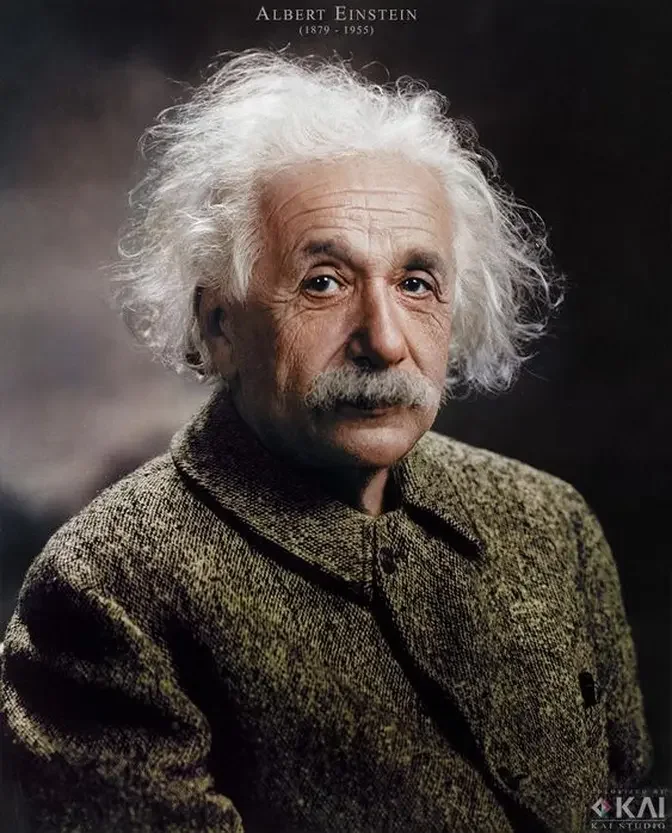
The interesting thing is Einstein himself didn't think that
these
Objects we call the black holes could exist, but let me actually linger on this. Yeah, that's incredibly interesting
There's a lot of interesting things here first of the speed limit
How wild is it to you if you put yourself in the mind in the time of Einstein before him?
To come up with a speed limit of that. There is a speed limit that and that speed limit is the speed of light
How difficult of an idea is that isn't it, you know, you said from a
Mathematical physics perspective everything just kind of falls into place, but he wasn't
Perhaps maybe initially had the luxury to think mathematically. He had to come up with it intuitively. Yes
So like what how common intuitive is this notion to you? Well, is it still crazy? What no, no
It's a very funny thing in physics the best discoveries
Seem
Completely obvious in retrospect. Yeah
even my own
Discoveries, which of course are far lesser than Einstein's but many of my papers many of my collaborators
Get all confused
We'll try to understand something. We said we've got to solve this problem. We'll get all confused
finally, we'll solve it we'll get it all together and
Then we'll
All of a sudden everything will fall into place
we'll explain it and then we'll look back at our discussions for the proceedings of months and
Literally be unable to reconstruct
How confused we were yeah, and how we could ever have thought of it any other way
So not only can I not fathom
How confused?
Einstein was
Before he went, you know when he started thinking about the issues, I can't even
Reconstruct my own confusion from from two weeks ago
You know, so the really beautiful ideas of physics have this very hard to get yourself back into the mindset
Of course Einstein was confused
about
many many things
Doesn't matter if you're physicists, it's not how many things you got wrong
It's not the ratio of how many you got wrong how many you got, right? It's the number that you got, right?
so Einstein
Didn't believe black holes existed
Even though he predicted them and I went and I read that paper, which he wrote, you know, Einstein wrote down his field equations in
1915 and
Schwarzschild
Solved them and discovered the black hole solution
three or four months later in very early 1916 and
25 years later
Einstein wrote a paper what so with 25 years to think about what this solution means
Yeah wrote a paper in which he said that black holes
didn't exist and
I I'm like well
You know if one of my students in my general relativity course wrote this
You know, I wouldn't pass them. You get it. You get a C-. Oh, you wouldn't pass them. Okay
Same thing with gravity waves. He didn't believe oh, he didn't believe in gravitational waves either
he went back and forth, but he wrote a paper and I think
34 saying that gravity waves didn't exist because
people were very confused about what a coordinate transformation is and in fact this confusion about what a coordinate transformation is
Has persisted and
We actually think
We were on the edge of solving it a hundred years later
Well, what a hundred years later. Well, what is coordinate transformation as it was a hundred years ago to today? Let's imagine I
want to draw a map with pictures of all the states in the mountains and then I want to
draw the weather forecast what the temperatures are going to be all over the
country and
I do that
using one set of weather stations and I number the weather stations and you have some other set of
weather stations and you
Do the same thing. So the coordinates are the locations of the weather stations
They're how we describe where the things are at the end of the day
We should draw the same
map that is coordinate invariance and
if we're telling somebody
We're going to tell somebody at a real physical operation. We want you to stay as dry as possible on your drive from here to California
We should give them exactly the same route
No matter which weather stations we use or how we yeah
It's a very trivial. It's it's the labeling of points is an artifact and not in the real physics
so it turns out that that's
almost true
But but not quite
There's some subtleties to it
the statement that you should always have the same you give at least the same kind of trajectory the same kind of
Instructions no matter the weather. Yeah. Yeah, there's some very
delicate subtleties to that which
Began to be noticed in the in the 50s
it's mostly true, but when you have a space-time with
edges
It gets very tricky how you label the edges
It's based on me in terms of space or in terms of time in terms of everything just based either one
Space or time that gets very tricky and Einstein
Didn't didn't didn't have it right and in fact, he had an earlier version of general relativity
in
1914 which he was very excited about
Which was wrong
Gave it wasn't fully coordinate invariant. It was only partially coordinate invariant. It was wrong
It gave the wrong answer for bending light to the Sun
by a factor of two
There was an expedition
Sent out to measure it during World War one. They were captured
before they could measure
And that gave I gave Einstein four more years to clean it to clean his act act up by which time he'd gotten it
Right, so it's a very it's a very tricky business
But once it's all laid out it's he's
It's it's it's clear