
John Singer Sargent Drawings, Extended
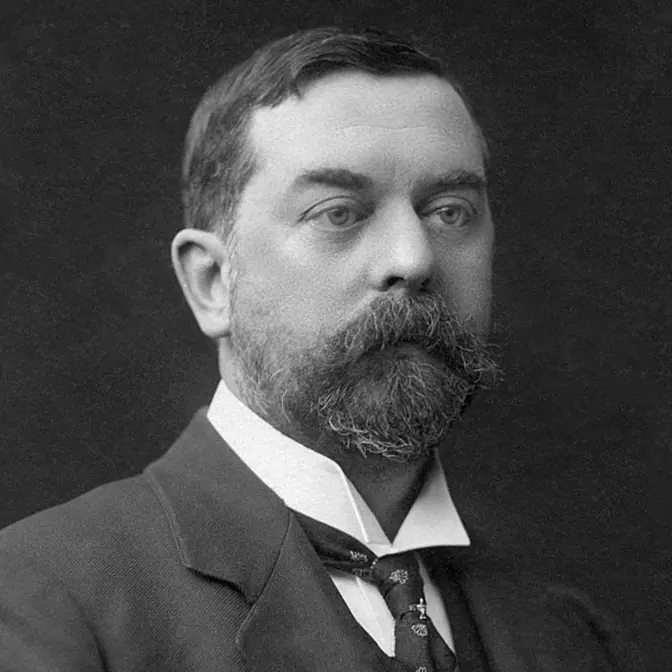
One may ask, what is the secret to John Singer Sargent? How was he so enabled to rise to such
heights in his chosen profession? What, indeed, is the explanation of why he could do so many works
with his own hand? That hand was a highly trained and obedient servant of his eye,
and his eye took in at a glance those salient facts of appearance, out of which the average
person builds his world, and as he never felt tempted to probe emotions deeply, but to probe,
analyze, and discover what the eye sees in truth and in wholeness. Nevertheless, with prolonged
contemplation, there was nothing to check his unbounded energy, nothing to prevent him from
succeeding as he did every time. A young John Singer Sargent in 1874, at the age of 18, has a
drawings to be presented at the famous atelier of one of France's premier portrait artists.
The drawings that he was able to show to Carolus Duran upon his arrival in Paris were of the sort
that would have pleased English writer, art historian, and art critic John Ruskin, and the
English pre-Raphaelite painters. In the drawings there were ivy vines were drawn climbing over
casement windows, with every separate stem and vein shown with minuscule faithfulness.
Already the boy's drawings had been seen and commended by no less a man than Frederick Leighton,
the future Lord Leighton and President of the Royal Academy. It is not to be supposed that
these juvenile studies were great masterpieces. Far from it. But what was more to the point?
They indicated that this precocious young person was a serious and industrious student,
who was already seeing things with his own eyes, and was not afraid of work.
So it was that the young sergeant departed from Italy, their winter quarters, and applied for
admission to the atelier of Carolus Duran, located in the Boulevard Montparnasse. As Carolus Duran
looked over the contents of the young man's portfolio, and saw that he had much to unlearn,
he also saw signs of promise far above the average. The applicant was accepted as a pupil,
and began his studies. He was industrious, alert, and thorough, and soon became one of
the French master's favorite pupils. We'll show them something at the salon yet,
said Carolus Duran. But John Sargent did not stop there. His ambition to master all aspects of his
craft meant that he had to work hard, and, along with colleague Carol Beckwith, decided to join
the art classes for drawing at Yvan's Atelier Evenings, and he added to that the atelier of
Léon Bonnard. It was expected for students at Carolus Duran's studio to be well-grounded in
their draftsmanship. For to be able to lay in a portrait in paint, one must have sufficient
skills to do it once and correctly. So repeated drawing exercises were the insurance that that
hurdle was not a misstep. In this presentation, our goal is to look more carefully into the art
of drawing, and in particular the growth of Sargent's success that contributed to his mastery
of the brush, as they go hand in hand. Carolus Duran's skill at showing the student how to master
the big shapes of blocking in a portrait or figure meant Sargent would need to master the
characterization of the model with as little detail as possible, but be able to capture the essence
very precisely. Each stroke of the brush must be carefully positioned so that the volumes faithfully
represent the forms as light passes over them, with all subtlety in the middle tones. Drawing the
forms in charcoal is one of the best ways to sort out values as opposed to linearly with the pencil,
where one can flesh out the shapes correctly and accurately. In Sargent's drawings, his particular
skill to express light was far above his peers due to his insistence and understanding of the flow of
light, that he innately was able to grasp as the real skill needed to excel, whether in charcoal or
pencil, and it can be added that his watercolor paintings broadened that skill. With this kind of
discipline, he covered all the bases needed to master his craft without hesitation. The third
thing that was part of his practice was the challenge to paint or draw whatever was before
him. His adage that one needed to be curious was not just a byword, but something he worked at.
Look around, be alert, not too fussy about what, but how, to put to paper or canvas the thing in front
of your eyes. This unusual practice can also be traced to the Italian painters of the day
who sought unremarkable plain aspects of landscape or groups, and candidly recorded them to great
effect. No doubt this attitude was already part of Sargent's character, as he was noted to be shy
and reserved, but always alert and ready to simply get at it. Travel was to play a part as well.
To stay fresh and at the top of one's game meant one needed fresh new ideas and challenges.
We mention these items to help to identify why Sargent was able to be consistently on top of
his game and not slip into a routine that can bog one down, even for the best of artists over time.
His portrait work in charcoal that we will be concerned with later
must not overshadow the many studies and remarkable drawing exercises that came before
and are wonderful to see as part of our discovery of his working method.
Artist colleagues continued to be a part of an entourage that enabled Sargent to sketch those
around him. Many of the sketches were gifts, but many others amazingly were tucked away,
more likely never seen by the public, and may have been among his numerous portfolios but now
are being seen again and can be viewed and studied with interest today. It's not surprising
and has been noted. His first experiments in line and color were taught at his mother's knee,
and from the outset drawing seemed to come natural to him. He early showed remarkable precision and
what was more important, a faculty for straightaway hitting off the tricks of expression
in the face, a gift which he was later to develop into deadly accuracy. Meanwhile, he received a
good classical education, chiefly in Florence, and later attended the Academy of Fine Arts in that
city. Now let's take a closer look into Sargent's amazing command of drawing and the skill he
possessed to record light. We find he never shied away from difficult or unusual lighting effects,
but rather welcomed them. It is one thing to draw or paint under a single light source in
the studio, and quite another to have it coming from all directions, and it may be further
observed in the effects of out-of-door rendering, where the middle tones are so closely related
that it can be the ultimate challenge as any artist can attest. Sargent is noted for his quick
decisions to travel at a given impulse, and copying the old masters was an important part.
As he was looking for inspiration from outside sources to stay fresh,
his notations became integral to growing his observation abilities. His adage that,
you can't do sketches enough, sketch everything and keep your curiosity fresh,
was his advice to others, and he was the first to abide by that motto. Sargent searched out
everything, his choices of subject were wide-ranging and often could be complex,
so drawing out a thing or idea was the best way to start, it forces one to put down on paper what
the mind and eye take in. It is that kind of discipline that fleshes out beforehand any
design problems that await, or if indeed it was picture-worthy to pursue. One never knows whether
a sketch done impromptu may lead to something even further down the road in the studio.
From his famous oyster gatherers and throughout his career, drawing and more drawing was a
to have. It was an instance where Sargent took on a complex idea from his early training with
Carolus Duran and won him recognition from the Salon of 1878. In Venice, Sargent took to his
watercolours as well as oils to paint one of his favourite motifs, architecture, and he threw in
gondolas as well for good measure. His curiosity, but more importantly, his challenging mindset to
the other point, suggestive, for the whole impression must be the thing sought for.
As time went on for Sargent and his ever-blossoming career over time,
he wearied of doing portrait after portrait. Oftentimes the demands to get a likeness
and to please a client in order to paint them as they see themselves can be daunting, not to mention
the constant perfectionism that he demanded of himself, as can be witnessed by the repeated
attempts to paint a head over and over, sometimes as many as a dozen times, which it may be said is
a powerful testimony to his true professionalism. His reprieve from the constant requests for
portrait work was the occasional full-blown composition, simply to do as one wishes.
Exercise the need to be creatively able to finally paint something that satisfies the hunger to paint
that thing that was in the mind, and perhaps was put off for another more appropriate time,
such is the case of his famous El Jaleo. The Spanish influence is unmistakable in this work,
and he did many studies to find the right way to express the oddly lit room of musicians and dancer,
a tour de force, to be sure. So as he slowly decides to limit his portrait activity,
it also becomes apparent that a habit after so many years, when it's been one's work for so long,
to keep doing them, even when his mind wearies of another one coming, continues in another form.
He finds that one way to satisfy the demands and, it may be added, to stay fresh at one's skill,
he decides on portrait drawings exclusively, and in this period of his career he begins the finest
of his efforts while doing them. His ability to capture the essence and character of an individual
was always his to use, his great gifts he did not take for granted, and his adage that
to work is to pray, is fitting here. He can use every sort of imaginative device and arrangement
to be able to satisfy his client and his own interests, all the while avoiding a lengthy
oil portrait painting process, which is no longer an issue. While John Sargent is on his quest to
in preference to charcoal drawings, he is offered an opportunity, along with Edwin Austin Abbey,
to paint a large project for a mural decoration in Boston, and he will spend the rest of his life
in preparing for that, and the debut will be monumental, and by all accounts a final tour
de force. He and Abbey begin with great excitement and share studio space occasionally,
which no doubt will find each inspiring one another. It is with the various studies and
final results that we wish to focus our attention on at this point. The profit series alone would
be sufficient to examine, but there is so much more in the series that can be reviewed,
however we will do that more properly in another presentation. The wonderful figures, drawings,
oils, sketches, and compositional design elements are exemplary in the history of mural decoration.
Sargent is again able to venture into this new territory with gusto, and his inventiveness to
work into the architectural spaces provided gives new challenges for him, and he makes an impact
with the profits singular gestures alone. They are quite striking, and the many preliminary sketches
shown here are but just a small sampling that is within the Boston Museum of Art collection.
So we see the profits, in Sargent's viewpoint, are as reverent and as moving in terms of their
painted presence, not unlike the power of Michelangelo and his Vatican ceiling, albeit
the rendering by Sargent more contemporary and naturalistic, but strong in emotion and feeling
at the same time. His profit mural series has been acclaimed ever since being reproduced in books and
prints, and artists have revered his skill to be able to transition to the scale that mural painting
requires seemingly with little struggle. It has been remarked by many writers and artists alike
who knew him that Sargent was able to work at the rate he did, apparently without additional help,
that it almost seems to be on the order of heroic. His drawing skills never subsided,
even though at the early age of 51 he chose to retire from portrait painting, yet he was still
very much in the game, moving forward to the more personal projects that gave him greater challenges
and the ability to pick and choose whatever fancied him. Our look at the drawings by Sargent
only touches the surface of the vast number of drawings, all of which are highly treasured
by their respective owners, and thus far the charcoal portrait drawings number about 750
in existence. His pictures possess the strong imprint of light and shadow, but within that
structure is the modeling of middle tones that comes from an innate skill present in the finest
masters throughout the ages. He never disappoints us with his bravura and ability to confidently
wield the brush. His technique, though possibly influenced by mentors like Carolus Duran
and inspired by earlier masters such as Franz Hals and Diego Velasquez, is unmistakably his own.
Sargent's artistry reflects a disciplined diligence and innate instinct evident in his
triumphs through portraiture. His talents transcend this single genre as we have already seen,
because he embodies the total artist, excelling in all phases of painting. Beyond portraiture,
he embraced new challenges such as the charcoal drawings for his eager clientele,
and beyond that, tackling the monumental task of large-scale mural work, without assistance no less.
In an era dominated by trends and gimmicks, Sargent's art stands apart, relying on a
His execution, though brilliant, appears unforced, serving the singular purpose of
faithfully capturing his vision. This sincerity allows viewers to experience the beauty of his
perception. His compositions effortlessly integrate elements of line, form and arrangement,
leaving us in awe of the elegance in his work. And with that, we trust you enjoyed this brief
look at some of the drawings, by a master craftsman as much as we did. We wish to thank
all who have already subscribed to the channel and remember to leave a like,
as it helps our efforts to reach out. And there is a PayPal link below for any amount.
So until next time, it's bye for now.