
John Singer Sargent: Portraits in Charcoal
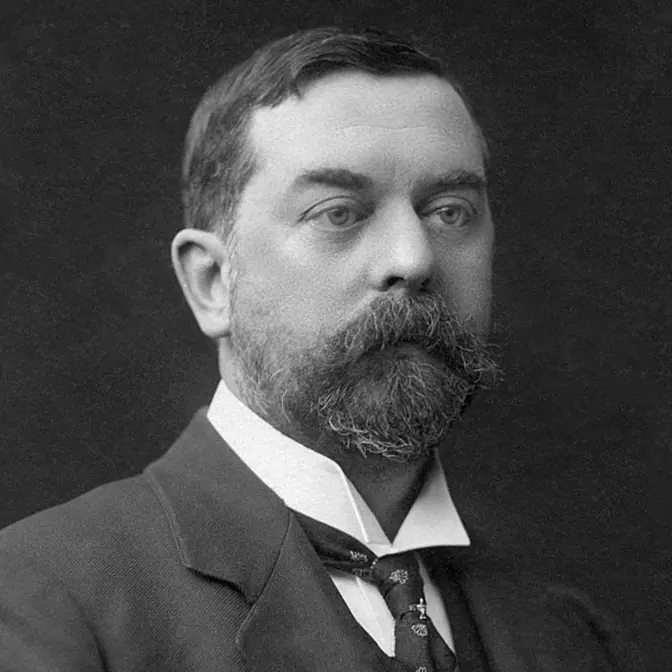
John Singer Sargent, Portraits in Charcoal, sheds new light on an important but often overlooked
aspect of the artist's work. I'm Robin Osleson, curator of prints and drawings at the Smithsonian's
National Portrait Gallery, and I'd like to share with you some of the highlights of the exhibition.
Sargent's international fame as a portraitist brought him into the orbit of some of the most
influential men and women of his day. In 1907, when Sargent renounced portrait painting
and began making charcoal drawings instead, the range of his subjects expanded to include a
fascinating mixture of artists, musicians, actors, writers, and political figures.
Many of these people were what we would call influencers today. They were the trendsetters
who shaped contemporary taste, shifted politics, and challenged social conventions.
Eugenia Erazuriz had a background as cosmopolitan as Sargent's. She was a native of Chile who met
him while living in Paris before moving on, like him, to London and then to Biarritz.
Sargent greatly admired her as an authority on art, literature, and music, and his respect comes
through in this drawing, which also conveys an air of sumptuous luxury and a bewitching sense
of mystery. The feathers and beads of the extraordinary hat merge with the shimmering
strands of the woman's hair. It is unclear whether the design visible between the two strands of
pearls, which Sargent created by erasing charcoal rather than adding it, is meant to represent a
pattern on her blouse or additional pieces of jewelry. The vigorous strokes of charcoal in
the background envelop the portrait in a shadowy atmosphere. Yet despite all of this, it is the
confident face at the center of the drawing that commands our attention. The portrait exemplifies
Sargent's gift for representing strong women. We sense an intelligent mind at work here.
Erazuriz is presented not as an object to be observed, but as an observer. She looks back at
us, and with a slight tilt of her head and an expression of mild amusement, she seems to take
our measure. Sargent's portraits of literary figures span the transition from the late Victorian era
to the modern 20th century. The Irish poet William Butler Yeats also bridged that gap.
Considered the last of the romantics in his youth, he probed psychology and politics in his later work.
Sargent was commissioned to make this drawing as the frontispiece of a volume of Yeats's poems.
We all know not to judge a book by its cover, but in this case the frontispiece may have helped to
sell the book. By cloaking half of the poet's face in shadow, Sargent drew attention to his sensuous
full lips, strong jawline, and tousled hair, creating a beguilingly moody and enigmatic
impression. Yeats was highly self-conscious about his image, invariably dressing in what
he considered a poet's costume of floppy bow tie and velvet jacket. Though he was 43 when Sargent
drew him, he appears much younger, and judging from photographs, he was never quite this fetching.
Needless to say, Yeats was delighted with the way Sargent portrayed him.
Music was Sargent's great pleasure, and many of his charcoal portraits feature
musicians, composers, and patrons who shared his passion. Gertrude Vanderbilt Whitney,
the modern art collector who founded New York's Whitney Museum of American Art,
was also an important patron of modern music and dance. It was probably at Whitney's request
that Sargent represented her in this unusual full-length format, which allowed him to show
her striking a dancer's pose, dressed in her favorite outfit, which had been created for
her by Leon Baxt, the designer for Diaghilev's Ballet Russe. Sargent's versatile touch can be
seen in the contrast between the firm charcoal marks that define Whitney's boldly patterned tunic
and the feathery strokes that suggest the filmy fabric of her pants. With his instinctive knack
for flattery, Sargent emphasized Whitney's elegant movements and slender form. Anyone
who sits for a portrait is staging a performance to some degree, but here Whitney presents herself
with a particularly self-conscious sense of drama. Although Sargent spent most of his life in Europe,
Boston was his American home base. While working on a series of murals there, he made charcoal
portraits of the city's most notable residents. In this drawing he represents Eleanora Randolph
Sears, a trailblazing athlete who was born into the elite, but refused to be limited by its
conventions. She excelled in at least 19 sports, ranging from figure skating to boxing to football,
and she was also a long-distance walker who could hike from Newport, Rhode Island to Boston
in 16 hours and then change into a ball gown for an evening party.
Sargent puts her self-assurance and lack of pretense on display in this drawing.
He shows her dressed in the simple blouse and jacket that she wore for tennis,
with no jewelry, and her hair blown back as if by the wind. She meets our eyes with a steady gaze
and just the slightest hint of a smile twitching on her lips. The early 20th century was a time
of tremendous social and political upheaval, and Sargent, through his charcoal drawings,
documented many of the agents of change. One of the most important, but least known today,
was Moorfield Story, a prominent American civil rights attorney who led the anti-imperialist
league from 1905 to 1921, and served as founding president of the NAACP for two decades. Story was
also an outspoken advocate for Native American rights, and he brought cases before the Supreme
Court concerning residential segregation, voting rights, lynching, and mob intimidation.
A close look at this dignified portrayal of Story reveals the subtle dynamism that Sargent
conveyed through vigorous vertical strokes of charcoal in the background, contrasting
with diagonal strokes in Story's jacket, and the bold highlights that glint off Story's forehead
and hair. Mindful of his firebrand reputation, Story once joked that this drawing could be
considered, as he put it, a fraud on the public, since it represents such an amiable old gentleman
instead of a ferocious bruiser. Sargent's insights into personality and psychology,
and his ability to rapidly record his impressions in charcoal, made him the ideal artist to portray
the women and men at the forefront of a rapidly changing world. Thank you for joining me for this
highlights tour of John Singer Sargent, Portraits in Charcoal. Richard Ormond was the exhibition's
lead curator, and the Morgan Library and Museum were co-organizers with the National Portrait
Gallery, on whose behalf I would like to thank the sponsors whose generosity helped make this
exhibition possible.