
KODALY METHOD| A TEACHING STRATEGY IN MUSIC EDUCATION| INTRODUCTION TO HAND SIGN
Comments are disabled for this video.
The Kodaly philosophy of music education supports music role in the intellectual,
emotional, physical, social and spiritual development of every child.
A central tenet of the Kodaly approach is that music belongs to everyone,
that an education in music is the right of every human being and cannot be left to change.
Sultan Kodaly was an ethnomusicologist and composer from Hungary.
He was appalled by children's poor singing quality
and began to create teaching methods to improve it.
His approach was highly sequential.
He began with sight reading and mastering basic rhythms and pitches
that gradually increased step by step to become more complex,
sometimes by adding only one new note or rhythmic value at a time.
The Kodaly method's philosophy is that music education is most effective when started early
and that everyone is capable of music literacy
through the use of folk and composed music of high artistic value.
He begins with sight reading, mastering basic rhythms,
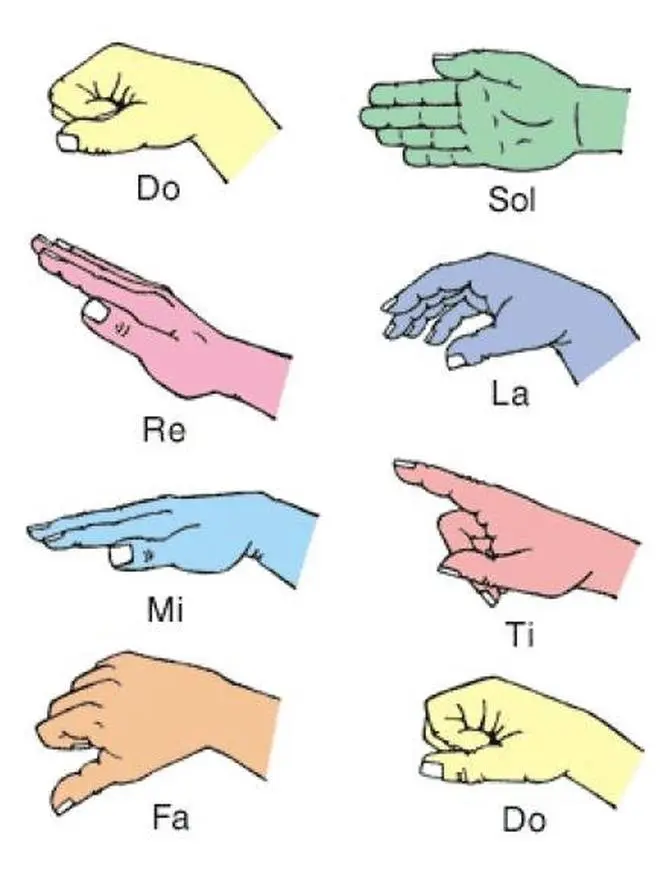
and learning pitch with the hand sign method.
The hand signs help children visualize the spatial relationship between notes.
Hand signs combined with solfege singing
aids in singing that is on pitch.
Kodaly is known for a system of rhythmic syllables
to teach steady beat, tempo, and meter.
So now to a video demonstration of how the Kodaly method is applied in music education.
This video focuses particularly on the solfege and the hand signs
And now let us apply this hand sign on a famous nursery rhyme,
Twinkle Twinkle Little Star
How I wonder what you are
Up above the world so high
Like a diamond in the sky
Twinkle twinkle little star
How I wonder what you are