
What is Relativity? | Sean Carroll on Einstein's View of Time and Space
Cosmologists don't actually know why the early universe had a low entropy,
but we will think about what the plausible explanations are.
And what that means is we need to understand cosmology, the study of the whole universe.
And when we need to understand cosmology, that means we need to understand gravity.
Gravity is the force in the universe that is the most important and influential one
when it comes to cosmology. And when we need to understand gravity in the modern world,
that means we need to understand relativity.
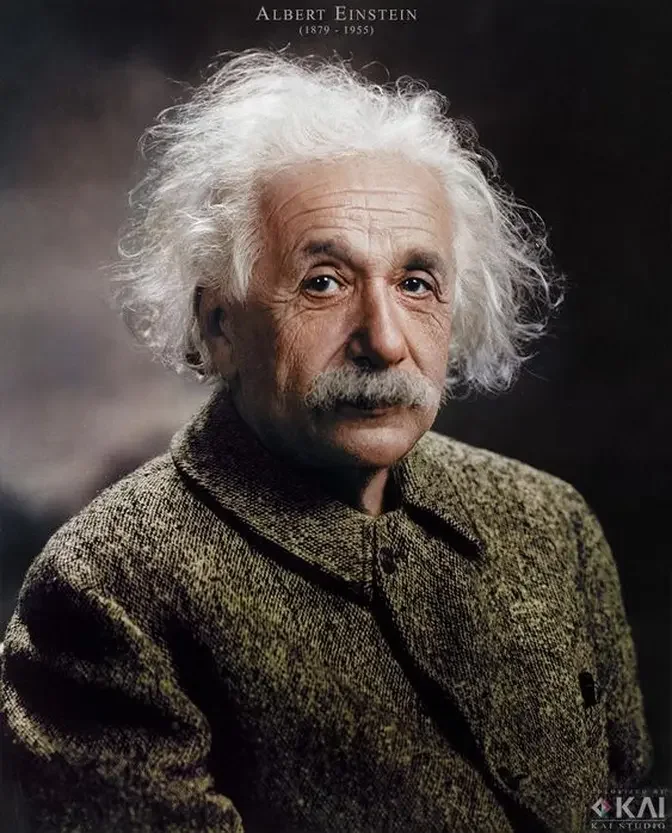
Relativity is Albert Einstein's theory of space and time, and especially gravity.
So once we dig into that, we can understand not only cosmology and the expansion of the
universe and the Big Bang, but also interesting questions like how time began.
Can you travel backwards in time?
This makes sense because Einstein's theory is a theory of space and time.
So even if we weren't interested in the past hypothesis and the low entropy of the
early universe, we would still want to talk about relativity anyway.
To really understand relativity, the secret is to take a truly four-dimensional viewpoint.
We can say that the universe is made of four dimensions.
There is three dimensions of space and one dimension of time.
What we mean by that is that to locate something,
you need to give me those four pieces of information.
Where are you in three-dimensional space?
And when are you in one-dimensional time?
So if you want to meet somebody at 5 p.m. at a certain location,
you just say where that location is and give the time.
Nevertheless, we tend to think in terms that say that time and space are very different.
We tend to think of the universe as a three-dimensional universe with stuff in it.
We tend to think that reality is a three-dimensional thing,
and that three-dimensional thing happens over and over again as a function of time.
As time passes, three-dimensional reality evolves.
But the four-dimensional point of view, which is optional in a Newtonian viewpoint,
becomes absolutely necessary when relativity comes along.
So let's think about what that means.
In three dimensions, we have points.
We say here is a particular point in space.
It's different than all these other points.
In four dimensions, in what we call space-time, instead of points, we have events.
So if you say this particular point at 6 p.m. on October 25,
that one moment of time, that is an event.
So event is not a place, nor is an event a specific time.
It's both.
It's a specific point at a specific time.
It's crucial that we mean, you know, not that there's an important event.
An event is not a happening, either a glamorous event or a non-glamorous event.
It's not something that occurs.
It's just a location in space-time.
Just like we have locations in space,
if you have a location in space at a specific time, that's what an event is.
And then space-time, the four-dimensional reality of our universe,
is just the collection of every event.
Just like space is a collection of an infinite number of points
indexed by the three dimensions of space,
space-time is a collection of an infinite number of events.
What we want to do is to understand those events and internalize it so well
that we can throw away the division of space-time into space and time
to treat it as one truly four-dimensional thing.
This is a very difficult trick to pull off intuitively.
We're not used to thinking four-dimensionally,
but we can train ourselves to do better and better.
The real difference here is the difference between the Newtonian view of the universe
and the Einsteinian view of the universe.
They both have a four-dimensional space-time.
In both Newton and Einstein, you need three dimensions of space, one dimension of time.
The difference is that they divide space-time up into space and time
in very, very different ways.
If you were Isaac Newton or any of Newton's followers,
you thought that space and time are separate and they're both absolute.
So when we say that space and time are absolute,
we mean that they're given, we know what they are.
There are no choices to be made.
It's not up to us.
Different people don't have different kinds of space or different kinds of time.
So in a Newtonian point of view, you would say,
here's an event, here's a point in space at a moment in time,
and for any one event, there's something called the present moment.
That is to say, to any one event, there's a whole three-dimensional slice through reality,
and that moment is the same time as this event.
It is all of space at one moment in time.
It is a notion of simultaneity.
What set of events happen at the same time as this particular one event?
So the picture in your mind is of a four-dimensional universe,
and time slices the universe into moments of time.
In a Newtonian point of view, both time and space are there given to us.
Any one moment has a present, everything before it is its past,
everything in front of it is its future.
Now whenever we get to these confusing issues of space and time,
it is very helpful to ground ourselves by thinking operationally.
In other words, by thinking about clocks.
One way of thinking about time is that time is what clocks measure.
So when we say that in a Newtonian space-time,
any one event has this three-dimensional slice associated with it,
the whole universe at one moment of time,
what you should be asking yourself is how would I construct that using clocks?
What would I actually do to measure this concept?
Rather than taking this God's eye view of the whole universe,
what would I build and what would I write down in my notebook?
There's a great book by Peter Galison, who's a historian of science,
called Einstein's Clocks and Poincaré's Maps.
Einstein, of course, you know of.
He is the founder of relativity.
Poincaré you've heard of in the context of the recurrence theorem.
He was one of Europe's leading thinkers at the turn of the century around the year 1900.
And he did a lot of work that was prior to Einstein
basically laying the groundwork for what we currently call relativity.
Poincaré was very interested in the symmetries that underlie the theory of relativity.
The symmetries that say no matter where I am, physics is the same.
No matter how fast I am moving, physics is the same.
And no matter what direction I am pointing in, physics is the same.
It was Poincaré who put all those symmetries together.
And in Galison's book, Einstein's Clock and Poincaré's Maps,
he makes the point that we think about Einstein and Poincaré as these very abstract thinkers.
People who are concerned with the very essence of space and time and reality
far removed from our everyday lives.
But in fact, Einstein worked in the Swiss patent office.
And Poincaré worked as the president of the French Bureau of Longitude.
Remember the problem of longitude, one of the leading issues in the nature of time,
tried to make people build better clocks to figure out where we are on the surface of the Earth.
Poincaré played a big role in helping people try to figure out
what longitude they were on, how to draw maps.
And Einstein in his patent office, he wasn't just looking at any old gizmo.
At the time, in the early years of the 1900s,
one of the most important kinds of gizmos to patent were clocks.
The point is that that was a time when transportation between cities became easier and easier.
It used to be that every different city had its own time zone.
You would just have the actual time that was associated with where the sun is above you in the sky.
But once transportation and communication became easier,
it became interesting to sort of relate the times in one city to other locations.
Even within one town, it was important to synchronize your clocks.
So many of the patents that Einstein actually looked at
were for better and better clocks and methods for synchronizing the clocks.
Galison's argument is that despite the reputations of Einstein and Poincaré
as very, very abstract deep thinkers,
they were both heavily influenced by their down-to-earth day jobs,
by the need to understand maps, pictures of space, and clocks, measurements of time.
When you want to think about space-time,
you should think about what the maps do and what the clocks do.
So to make sense of Newtonian space-time,
imagine actually constructing that slice through the universe that we call the present moment.
What you might imagine doing is building a large robot army.
Each robot has a little clock on it, and they all have spaceships.
So even though we're being practical, this is certainly a thought experiment, but that's okay.
Imagine you have a lot of robots, and you can send them anywhere in the universe.
So your trick to constructing what you mean
by a single moment at one moment in time throughout the universe is to synchronize the clocks.
So you bring your robots together, you set their clocks to read the same amount,
and then you send them throughout the universe.
Imagine we could put a robot with a clock at every point throughout space.
We know that the clocks read the same thing,
because when they were here next to us, we synchronized them.
So now you basically have a label at every point, at every event in space-time.
You know where the robot is, so you know where it is in space.
And it has a clock, so you know when it is in time.
So basically, through this thought experiment,
you can try to make real Newton's absolute space and time.
You can say, what I mean by the universe at one moment
is simply the set of events where all of my robot clocks read the same time.
When they all say 6 p.m. November 5th, that is a moment in the history of the universe.
The problem is that Einstein figured out that this technique doesn't work.
That even as a thought experiment, you can't take robots,
synchronize their clocks, and send them all throughout the universe.
In relativity, in Einstein's point of view,
there is no such thing as one moment of time
all throughout the universe that everybody agrees on.
To Einstein, space and time are combined into space-time,
but space by itself and time by itself are not absolute.
They are relative.
That's why that word is attached to this theory.
What you call space and what you call time will be different for different observers.
So why is this true?
What happens to our robot army?
It's not that we have another army that fights our robot army.
It's that the way that we send our robots equipped with clocks throughout the universe
affects the answer we get.
Different observers with different sets of robots that were sent through the universe
using different rocket ships would get different notions of simultaneity.
They would divide the universe up into space and time in different ways.
One very, very simple way of seeing this is just take one robot here.
I synchronize it with my clock.
I send it off.
So now I know that when it says 3 p.m. on my watch, it says 3 p.m. on the robot's watch.
But I worry that, you know, that robot has had a hard time.
I bring it back.
Its spaceship brings it back here.
And I notice that when the robot comes back, it is no longer synchronized.
The clock doesn't read the same anymore.
That's not a fault of my robot, Einstein says.
That's a fault of spacetime itself.
This is the best way, I think, to conceptualize the difference between relativity,
Einstein's spacetime, and Newtonian spacetime.
If you send out clocks following different paths through the universe and bring them back,
they will have measured different amounts of elapsed time.
If you're on a spaceship yourself and you're not firing your rockets or anything,
you're just floating through space on some constant trajectory,
either standing still or moving.
Einstein says it doesn't matter whether you're standing still or moving.
There's no absolute way you measure that.
But you send out little probes.
You send out little satellite robots, satellite spaceships.
They both have clocks on them.
They started synchronized.
They go out exploring.
They come back.
Einstein says they will always be out of sync.
It's not optional.
It's not that your robots aren't good enough.
There's a technology failure.
It's that the amount of time elapsed on a different trajectory through the universe
depends on how you move through the universe.
And it works in a very consistent way.
Namely, any time that you're moving on a crazy path through the universe,
a curved path where you're firing the rockets,
going at high velocities, and then coming back,
when you come back, you will always have measured less elapsed time.
The way, Einstein says,
to maximize the amount of time spent in between two events in space-time
is to do your best not to move,
or to equivalently move at a constant velocity.
Acceleration, curved paths through space-time
always decrease the amount of time that your clocks measure.
Now, this is not just abstract nonsense.
This is not just some theoretical speculation.
It's a deep, profound idea.
We're saying that there is no such thing as
one moment spread throughout the universe that everyone can agree on.
We're saying that what time it is at one point depends on who does the measuring.
That's a deep fact.
But it's also experimentally verified.
One of the most dramatic and immediate experimental verifications
comes from the idea of a muon.
A muon is an elementary particle.
It's like a heavier cousin of the electron.
The electron, of course, plays a crucial role in atoms.
Muons don't play a crucial role in anything
because they're heavier than electrons.
They decay very, very quickly.
The lifetime of a muon is about two microseconds,
two millionths of a second.
So, if you had a muon right here, it would decay into pions.
Sorry, pions decay into muons,
which then decay into electrons and other particles.
So, muons, in some sense, are a clock.
They're not a very good clock,
but if you have a large collection of muons,
over half of them decay every two millionths of a second.
So, by looking at how your collection of muons diminishes over time,
you're essentially measuring how much time has passed.
From measurements in the laboratory,
we know that the lifetime is about two millionths of a second.
Nevertheless, we find that we can discover muons here on Earth
that came from cosmic rays in the sky.
In fact, this was the way that muons were first discovered
by Carl Anderson at Caltech.
He was measuring cosmic rays,
and he measured the existence of this particle
that looked like an electron but was much heavier.
So, all that sounds fine until you plug in the numbers.
How do you make these muons from cosmic rays?
It's not that muons are traveling through interstellar space.
If they were, they would decay very quickly.
What travels through interstellar space in the form of cosmic rays are protons,
and sometimes heavier atomic nuclei.
But those protons smash into atoms in our upper atmosphere here on Earth.
They create pions and other elementary particles,
and those quickly decay into muons.
So, you might want to ask yourself,
do the muons have enough time to reach the ground and be detected?
Well, their lifetime is two microseconds.
You know how fast they're moving.
It's almost at the speed of light.
So, you plug in,
and you figure out that the muons should decay after traveling about one kilometer.
The problem is, the upper atmosphere where the muons were created
is 15 to 20 kilometers in the air.
It is a surprise, if we didn't know relativity, which of course we did,
it would be a surprise to realize that muons are able to reach the ground.
If their clocks were ticking at the same rate that our clocks are ticking here on Earth,
they would have decayed long before they reached our detectors here at sea level.
But they don't.
Why do the muons reach us before decaying?
Because their clocks are not ticking in the same way ours are.
They don't have like a literal wristwatch,
but the lifetime of a muon is a kind of a clock.
It's a predictable thing.
Because they're moving so fast with respect to us down here on Earth,
essentially they feel less elapsed time.
To them, it is less than two microseconds to go from the Earth's upper atmosphere
to us down here, so they are able to make it before they decay.
This sounds a little bit crazy, or at least a little bit hard to swallow,
that how much time passes for you depends on how you're moving through the universe.
What's going on is that, as we mentioned way back when,
there are different notions of time.
When we talk about what time is at a fundamental level,
sometimes these notions coincide.
They're the same, but sometimes they don't.
In particular, we can define one idea of time as the time that is measured by an observer,
the time that is elapsed by a clock.
The nice thing about a clock is it's a small thing.
It's not spread all throughout the universe.
It's a localized object, a mechanical or electronic machine,
and it measures a certain amount of time.
There's another notion of time which is a little bit more abstract.
Time used as a label to measure what moment of the universe we're talking about.
If we're Newton or even if we're Einstein, we can slice up the universe into moments of time,
and then we say, oh, it's 6 p.m. here and everywhere throughout the universe.
The reason we thought that everyone would agree when we did that is that, to Isaac Newton,
these two notions of time were the same.
Time was absolute.
The time that you measure in the universe, passing everywhere and for everybody,
was the same as the time that a clock would measure.
But Einstein says they're not.
Einstein says that time is personal,
that how much time passes depends on how you move through the universe.
The time that you feel depends on your trajectory through the world.
Again, this sounds a little weird, but in fact,
once you really internalize this idea that time is like space, then it begins to make sense.
Think of a football game or a football field with a running back trying to avoid being tackled.
A football field is nice because there are markers that tell you what yard line you're on.
You're on the 10-yard line, the 20-yard line, the 30-yard line.
And what you want to do as the running back is you want to gain yardage.
You want to go from the 10-yard line to the 20-yard line.
So one way of measuring how much distance the running back has traveled
is to say what yard line they get to.
That's like the Newtonian idea of absolute time.
It measures where you are in the universe.
Now the universe is this football field.
But the actual distance the running back travels
involves a lot of going back and forth and trying to avoid tacklers.
So to get from the 10-yard line to the 20-yard line,
the actual amount of distance the running back has to go is usually much more than 10 yards.
This is very, very natural.
Just to get from one place to another, we don't always move in straight lines.
We often travel a lot more distance than the actual distance between two different places.
In space, this is no surprise to us.
This just sounds perfectly obvious.
Einstein is saying that the same thing is true in time.
That the amount of time that is elapsed for us as measured by our clocks
depends on how we connect two different events in the universe
by our motions through space-time.
So what Einstein is doing is replacing the idea of space at any one moment in time
with a much more subtle way of thinking about space-time.
The short answer to how Einstein divides up space-time
comes in the concept of a light cone.
This is a somewhat difficult to visualize idea,
but once you get it, it's extremely helpful in thinking about relativity.
So we're going to spend just a little time trying to understand what light cones are.
A light cone is not something that exists in space.
It's not a cone you can draw somewhere or construct with clay.
It's something that exists purely in space-time.
And the reason why light is special is because relativity says
that everyone measures the same speed of light.
It's also the fastest speed that there is,
but more importantly, it's invariant.
It's constant.
If I sit here and I measure the speed of a light beam going by,
I get a certain answer, 300,000 kilometers per second.
If someone else goes by here at 200,000 kilometers per second
and measures the same speed of light,
you might think that the velocities should add together, but they don't.
That person passing by also measures 300,000 kilometers per second.
The speed of light is the same to everybody.
So with that in mind, think about sitting where you are right now
and flicking a light bulb on and off very, very quickly.
So you have a bunch of light rays or photons, depending on how you want to put it.
They move away from the light bulb.
So there is a sphere in space, which is the distance to which all the photons got.
If you really imagine that you flicked on and off very, very quickly,
just one little shell of photons is leaving that light bulb.
So in space, what we would have at any one moment of time is just a spherical region,
which is where the photons have gotten from the light bulb to any point,
given the amount of time they had to go.
It's the speed of light times that time.
But what about in space-time?
Even though the light forms a sphere around us in three-dimensional space,
when we portray it, we usually portray it two-dimensionally.
So every moment has a circle of light.
Imagine we took a picture of every three-dimensional moment in space,
and we tracked the expansion of all these photons.
And then we stack those moments on top of each other,
just like we stack the pages of a book or the frames from a film on top of each other,
to make a picture of space-time.
At the moment you flick the light bulb on and off,
the photons were all very, very close.
They were at the point where the light bulb is.
A second later, all the photons are 300,000 kilometers away.
Two seconds later, all the photons are 600,000 kilometers away.
So as you stack up these different pictures of space,
what you get is the photons going from a point out in all directions,
forming a cone in space-time.
That's the light cone.
This is as fast as you can possibly go in the universe.
And the fact that the speed of light is the same to everybody
means that different observers construct the same light cones.
So if somebody else moving by you at a speed of some large number of hundreds of
thousands of kilometers per second in their spaceship
also flicked on a light bulb at the same event as you did,
their photons would do the same thing as yours did.
They would form the same light cone in space-time.
So what Einstein is really saying is that instead of
dividing the universe into space and time,
we divide the universe into the light cones that we can imagine making.
We don't need the actual light bulb.
We don't need to actually flick anything on and off.
There doesn't need to be any actual light.
This is part of the structure of space-time itself.
You could, starting at any event, draw the light cone coming out of it
or draw the light cone going into it from all the hypothetical light rays
that would reach that point rather than leave it.
Now, usually when people give the popular introduction to relativity,
this is not the language they use.
They talk the language of time dilation and length contraction.
Time dilation is the idea that if a clock is moving very quickly by you,
you would see it tick more slowly, just like the muons going by you
seem to take more time as they measure it to get down to here on Earth.
Length contraction is the idea that as something moves by you,
it is squeezed in the direction,
it is contracted along the direction in which it is moving.
As my favorite example, the Large Hadron Collider in Geneva,
this giant particle accelerator,
moves protons very, very close to the speed of light and then smashes them together.
You think of a proton as a spherical collection of quarks and gluons,
but when they actually smash together, they are more like pancakes.
The contraction in the direction in which they're moving
smashes the two pancake-like structures together.
Now, it's a perfectly legitimate way to talk about relativity
in terms of time dilation and length contraction.
But to me, I find it confusing because you're trying to measure something
at different points in space at the same time,
which is exactly what Einstein tells you not to do.
You're trying to measure the length of something,
different points in space, at one moment in time.
I think it's actually much more helpful to think of physics absolutely locally,
to say, what can I measure here at this point,
forgetting about the changes in lengths and time as things go by me,
think about what their clocks would read when they return to where I am.
So with that philosophy in mind, what are the light cones getting us?
The light cones are giving us a structure on space-time
because we cannot travel faster than light.
So if I flick my light bulb on very, very quickly right now,
I have a bunch of photons leaving,
and the point is that I can never catch up to them.
I can never go faster than they are,
so they will always be receding from me at the speed of light.
No matter how hard I try, no matter how powerful my rocket ship is.
So if I draw that light cone in space-time,
what I'm drawing is my personal future.
My future is only the points inside that light cone.
If there is some event, some point in space and time that is outside the light cone,
then in order to get there, I would need to travel faster than the speed of light.
That means that that point is simply inaccessible to me.
I can get to that point in space, but not to that point in space-time.
I cannot get to that point in space at that particular time.
So what Newton would have done is to divide space-time into past, present, and future.
What Einstein does is divide space-time into the past of my event,
the interior of the light cone that is approaching me at this point in time,
the future of my event, the interior of the light cone that spreads out from me in space-time,
and the unreachable parts of the universe,
the parts that I would have to travel faster than the speed of light to get to.
So the lesson is that in special relativity, time is not universal.
It's personal.
It's measured along an observer's world line.
Now, don't get me wrong.
You can slice the universe up into equal moments of time.
I can talk about what time is it right now at Alpha Centauri or the Andromeda galaxy.
The problem is not that you can't do it.
The problem is that there's no one right way to do it.
There are an infinite number of ways to slice up space-time into space and time,
and none of them is right and none of them is wrong.
The division of space-time into space and time is not absolute anymore.
It's not a Newtonian universe.
As a result of that, the rules for moving through space-time are a little bit different,
and this is going to become important because soon we're going to talk about time travel.
The Newtonian rule is that there is a past, present, and future,
and you must keep going toward the future.
Whatever time you're at right now, one second from now, you will be one second into the future.
What Einstein says is that you must stay inside your light cone.
So the reason why that's going to become important is because in special relativity,
what we're talking about right now, the light cones are fixed.
They're rigid.
They're there once and for all.
They are the absolute elements of space and time.
But in general relativity, you can move the light cones around.
So the fact that all we need to do is stay inside our light cone is going to become
crucially important.
One of the ramifications of this for us in this course is that we care about Laplace.
Remember Laplace said if I knew the universe at one moment of time,
I could predict its future and retrodict its past.
Einstein says there is no such thing as the universe at one moment of time once and for all.
Don't worry about that.
The point is that Laplace still works.
It still remains true that if we know everything about the universe at any one moment of time,
we can predict the future and retrodict the past.
The only difference is that there's no unique way to say what you mean by any one moment of time.
But the fact that it's non-unique doesn't matter.
That means there's many, many, many ways to give the data of everything in the universe
going on at any one moment of time.
The important thing is you can work forwards and backwards.
So special relativity doesn't help us with the arrow time.
It's still a puzzle.
We need to move on to general relativity to understand space and time a little bit better.