
142 days making a renaissance painting in my bedroom
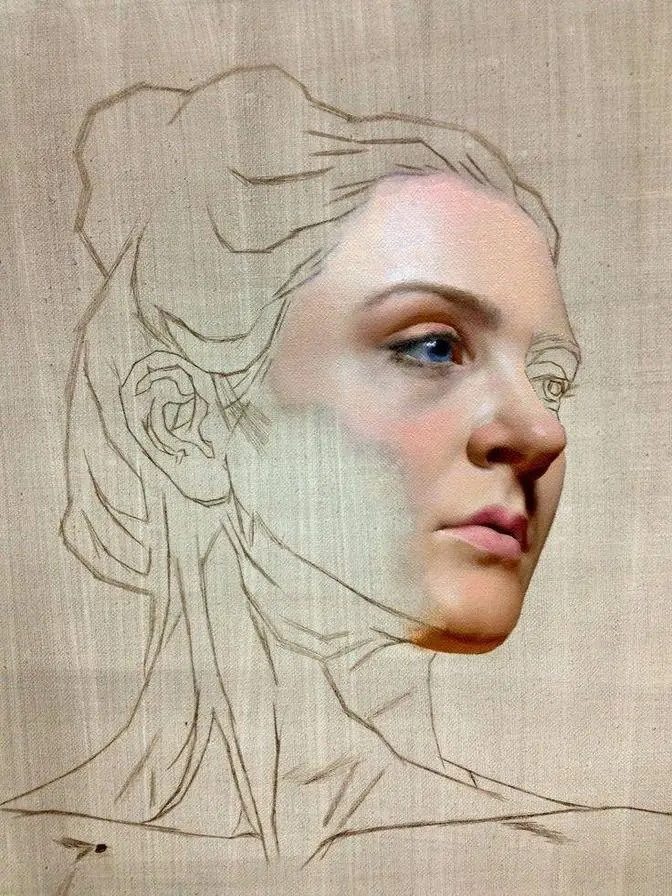
Today is day 142 of painting. I wasn't expecting this to be my last day, but I'm shaking really
bad and all I have left to paint is this 30, and then I'm done. I just spent the last 142 days
working on the most difficult painting of my life, and I'm about to tell you everything that I know
and everything that I learned. Be warned, the video narration was filmed intermittently,
so you are going to jump around the life cycle of like two perms. Last fall, I had one of my
favorite paintings, Under a God I Don't Believe In, displayed at ArtPrize in Grand Rapids, Michigan.
ArtPrize is the largest art competition in the entire world. The grand prize is $125,000,
and it is 40 minutes away from my home. Thousands of people saw my painting in person, and the
painting now has something stupid like 20 million views across social media. A lot of people were
rooting for my success in this competition, however I did not advance past round one of the
public vote, but ArtPrize is happening again this year, and I thought to give it another go. As I'm
becoming more ambitious with my work, I want to see if I can go toe-to-toe with the masters that
came before me. There's something so, I guess holy is the only word, when you sit before a piece of
artwork and it conquers an entire wall, and it wraps all the way around you, and you feel the
entire power of the beauty that you're just being bathed in. And I feel God in anything that's
bigger than me, and I want to see if I can create a piece of artwork that has that feeling. When I
was mentally preparing for this piece, I stumbled into these three paintings created by Gustav
Klimt, commissioned by the University of Vienna in the year 1900. And the way I can describe it is
think about the first time that you listened to your favorite album ever. It was truly like,
these are my favorite paintings ever created. And what's crazy to me is that these three paintings
were rejected by the university because it was too radical. The approach was too pessimistic,
so they eventually fell into Nazi possession. I think that they were stolen. They were kind of
painted in the Nazi aesthetic, in that Gustav Klimt is obviously very famous for his nudity
in his paintings, but the Nazis also used a lot of nudity in their eugenic propaganda,
because it kind of applied to their horrific worldview that they're trying to spread.
My art is very inspired by some pretty awful places. I promise, I'm not creating figurative
work in the same way that the Nazis liked it. You know, like, please. The last thing that I
need to get sorted is my canvas. This was all happening in mid-November 2023, because I needed
time for my supply orders to ship. But I took a day, and I took a canvas roll, and I rolled it
flat on the floor. And I kind of marked out the general size that I was looking to create. And
I landed on going nine and a half by four feet. And that is by far the biggest thing I've ever
set out to create. It's even bigger than, um, Under God I Don't Believe In. And when I finished
that painting, I was like, I'm never painting big again. Cut to me literally four months later.
Okay, so I've covered everything up to this point. Um, I guess all the hard work is over. Like,
I just need to paint it. I just need to. So I'd taken some pieces of paper, and I'd marked off
some rectangles in the same ratio as this painting. And I just took some watercolor,
and I slapped it on there, so that I could have some visual ideas of a composition, where I'd
push the light, and where I'd push the dark, and where I'd push the saturation, and figure out a
balance that was pleasing. After that, I started doing a bunch of figurative drawings to get
myself in a little bit more of a figurative state of mind. I was looking at a bunch of paintings
that I really enjoyed, and I googled, like, figurative poses, and I was just trying to
And then I started practicing putting some figures in the rectangular composition that I was using,
and I started taking reference photos of myself to practice altering reference imagery,
and putting it on its side, and making the figures appear weightless. But I ended up making
one composition that I was really thrilled with, and that gave me the confidence to be like,
okay, now it's time that I can go out and start taking reference photos that I'd actually use
in the final painting. This painting is going to feature a bunch of my friends, because I can go
out on Pinterest any day, and create a lovely drawing of a model. My paintings feel a lot more
heartfelt when I can look back at them, and know the life of the person that I captured. So at this
point, it was right before Christmas 2023, and I'd gathered with a bunch of my friends, and I'd
taken them aside one by one, and I started recording reference video. I was challenging
them to give me really funky poses, because I want to create a painting that looks weightless.
When a figure is off kilter standing, you're capable of creating something that feels
completely weightless and heavenly. And I'd gathered like 30 minutes of video references,
and what I did is, I clicked through each of the frames one by one, and once you put the reference
video on its side, and really put a lot of intention into finding something that's compelling,
you can find some really intriguing gestures to paint. A lot of the frames that I ended up choosing
were very blurry and shitty, and the reference photo process for this whole painting was
extraordinarily rotted, but I feel like if I don't know the detail of a nostril, or where exactly a
mouth ends, or where hands are supposed to be, rather than looking at static boring reference
photos, I look at the painting and push the paint around until you find the soul of that person.
I didn't record too much of this process because I was really in over my head, but I spent like a
week toying with everything and trying to construct a composition, and I'm glad to say that I landed
on something that I was pretty pleased with. The stretcher bars arrived. I worked with a brand
called Upper Canada Stretchers. They were really awesome to work with. Shout out guys! If you want
to sponsor me, like, I'm chill with that. They sent a care email with a delivery, and it said,
any stretcher bars over four feet long, we recommend that you apply a coat of water-based
varathane to help with warping. When you use wooden bars, humidity changes can really warp them,
and varathane just helps seal it all. I thought it was stupid, and I didn't need to do it, and I was
kind of pissed off the whole time because it was cold, it smelled bad, and I didn't know what I was
doing. But I did do it. The longest bars arrived in pieces, and I needed to bolt them together,
but that was really simple. But this was the first time that I was seeing the full scale of what I
was working with. Assembly was really easy. Actually, it only took me like 15 minutes,
and at this point, I was also a bit jostled by the fact that the stretcher frame didn't even
fit on my floor in my bedroom. This painting takes up an entire wall of my room, and my
bedroom now is traveling further and further away from a bedroom. It's now just becoming like
a mockery of an artist's studio. I'm also starting to learn how difficult it is to move this thing
around, and how I instantly just bang into everything. Stretching the canvas was definitely
the part of this entire process that I was most nervous for, because I was already about a month
of preparation in, and a thousand dollars down. The larger a canvas is, the more difficult it is
to stretch. There's so much material that I needed to stretch that I knew I needed to yank the ever
loving shit out of it, and I developed a new strategy for stretching a canvas I'd like to
share with you. So I started out as per usual, just driving in my little carpet tacks. I didn't
really know how to get it so tight, so you can kind of see me go through the thought process of
oh, what am I going to do? I started yanking it. I was on a fucking rowing machine, and baby,
it worked. I was yanking it so fiercely. I was yanking it like Crystal Versace's face tape,
that I even tore the canvas a little bit. Somehow, I still got rippling in the canvas on the edges,
and on the surface, the rippling was really bad, and I was really nervous about it. The first step
to tightening a canvas is that you want to apply water to the entire back of the surface of the
painting, and this is the most sound footage I've ever gotten to prove to you that you absolutely
need to do this. I applied the water, and the entire thing seized up. It was like a fucking
snare drum. Standardly, after you do this, you would take these little wedges, and you drive
them into your hinges of the painting, because they aren't nailed together. They're held together
by friction, so when you tap them in, it expands the joints, and it makes the frame just a little
bit bigger, which makes the canvas a little bit tighter. This process is called keying out your
canvas, but I have been really pleased with the tension of my painting, and I haven't needed to
do this yet, which is kind of crazy. We are now three days into the new year, and about 10 minutes
into this video, and we are finally seeing paint for the first time. This is going to end up being
an oil painting, and in order for that oil painting to be archival, I need to make sure that
I'm priming my surface properly. So I use acrylic paint. The rule that I follow in all of my oil
paintings is a layer of acrylic paint first, and then a layer of oil paint on top. So basically,
I need to do two paintings in one. The first couple layers of acrylic paint, I just used to
tone the canvas, and then I gridded up my sketch, and I gridded up the canvas, so I basically had
a scale copy to block in the composition with. With this painting, I didn't film every single
bit of rendering, because I use my phone to film, and I also use my phone to look at my
reference photos. So whenever I'm looking at a reference photo on my phone, I can't film. But
for this entire underpainting process, I was making sure of two things. First, I talked about
this a lot in my last video, but I needed to make sure that my painting surface was non-absorbent.
I wanted to make sure that the oil in the oil paint that goes on top of the acrylic underpainting
maintains all that juice inside of it, and the life doesn't get sucked out into the underpainting
underneath. And secondly, I was constantly stepping back and observing the painting,
so that the painting could tell me what it needs. And this whole process was pretty derivative of
what you'd expect. I did do a little bit of gridding in places that needed, like, a sickening
likeness, but I haven't told you what this painting is really about quite yet. Over the summer, I was
really struggling with insecurity, and self-worth, and understanding my existence, and around this
time, I thought up a question. And it goes like this. Imagine you are in a room with 100 people.
Somehow, everybody is assigned a number. Number one is the best person. Number 100 is the worst
person. What number do you think you would have, and why? I began asking this question to some close
friends, and co-workers, and family, and the conversations I had were profoundly impactful to me.
I got numbers across the whole spectrum, but what was more fascinating was when I asked people why.
Some people said that they did really good in school, and some people said that they were
really athletic, or that they were kind, or how closely they walked to God. Everybody's definition
of what a good person is was wildly different. I had people say that their God would never let
them place themselves above anyone else. I had people tell me that the moment someone declares
themselves as a one, that they're incapable of holding that title. I've had people reveal
crippling insecurities to me that I would have never expected of them. I think that this question
is powerful, because in an instant it simplifies your life to what really matters, and how you
stack up. This painting is titled One Through 100, and it is featuring a bunch of people in my life
displayed alongside their answer. I asked this question to everyone who sees this painting,
to look inside yourself, and what number would you really assign to that? I feature someone in this
painting named Greta, and I sat down with her this summer, and we had this conversation. Greta is
legitimately one of the most impressive people I know. She was not only the valedictorian of my
graduating class, but went on to an Ivy League, and is a star athlete, activist, and from my,
from my opinion, she is oppressively put together. But most of all, is a friend that I will cherish
my whole life. I receive nothing but kindness from her, and her heart always shines through.
When I asked for her number, she said 42. And that conversation I'm never gonna forget.
Moments of seeing this closely into someone, and trying to understand how they feel and think,
are so important to me. I hold so closely the moments where someone shows me a bit of their
heart, and this question is a vehicle to get there. I am so fascinated to hear what you all
think of it. What is your answer? What makes someone a one? What makes this question interesting
to you? Even if you don't think that you have anything important to say, I am still dying to
get opinions outside of the psychology I can muster alone. I think that you should carry this
question into your own life, because we can all be a little bit better at understanding the ones
we love. Okay, it is now January 20th, and the acrylic underpainting is all completed. And
this part went a lot slower than I was hoping, although if I knocked it out in like four days,
I don't think I would have had the time to notice and correct the things that weren't
working so well. The surface is very smooth from all of the layers and sanding I've been doing,
and it is now finally time to transition into oil painting. And this part is very exciting for me.
I've been preparing for this moment for months, and I'm feeling so invigorated for what the coming
weeks will become. And this is the part of the process that I'm most familiar with, so I'm ready
to lock the fuck in before disaster struck. Alright guys, it's been a week. My bad, I fell
horrendously ill. For the past seven days, I've been doing nothing but sitting in this bed,
looking at this painting, and feeling miserable because I'm not doing anything about it. I wanted
to have a project where it would capture me so thoroughly creatively that I'd be consumed by
nothing but myself and my own creativity. Rather than that, I feel like this project has been
consumed by setbacks where I'm either sick as hell, stuck in a room with a painting that I
kind of feel like I'm failing at, or I'm too intimidated to actually make any meaningful
progress. And I'm really ready to change that. I'm going to turn on some really good music,
and I hope that today is the start of a new beginning for this painting. Little did I know,
I was about to embark on the biggest grind of my life. People always comment about how
blown away they are at my patience, and I guess I am a bit of a patient artist. I mean, I kind of
have to be. But to make a painting like this, I wouldn't have been able to get through it without
significant strategies. Thinking about finishing the whole thing would get me nowhere. In fact,
if I had a moment where I lost sight of that day's objective, I was completely paralyzed from
making any progress. The only way that I was able to wake up every single day and work on this
painting was to understand that I ended the day closer to completion than when I started.
I didn't know how close, but at least that much closer. My routine every day was about an hour of
mixing paint in the morning, and a two hour session of painting in the afternoon or so.
Then I would take a break that sometimes became the rest of my day, but sometimes I would get a
second or third painting session in. And then two or three days a week I would spiral and get nothing
done and it was so miserable. It devolved into such a routine that I was having a really difficult
time understanding how close to done I was. I would work bit by bit until I realized that I
didn't know how to render anymore, and only that would let me know that I was done. The final
brush stroke on a cheek or an eye or a hand would never reveal itself to me until I set the brush
down and I didn't know what to do next. I really don't think that I cut any corners in this painting,
everything is painted to the best of my current ability. Working on a long form project like this
really rewired how I approach painting compared to when I could sit down in an afternoon and finish
a page of my sketchbook. It was so difficult for me to not get overwhelmed by all I have left to do
when I was working on everything as they compared to their surroundings. This is something that I'm
going to repeat throughout this entire video. You cannot make art like this unless you are
stepping back every 60 seconds to make sure that everything is going smoothly. I just finished my
first session on Simon and I was having such a good time. I feel like I was being very painterly
and I sat down for about two and a half hours and then I was like, okay I'm done with this session.
So I stood up and I was like, let me go to the bathroom and then I turned back around for one
last look before I left. Oh so it's bright yellow. So I'm gonna go in for another session and try to
mix a lot more purple-y colors into the paint. When you forget to step back and observe your
painting as a whole, you run into issues like this. This happened because I got too locked
into the nitty-gritty but also the gold underpainting I used contributed to Simon
looking kind of yellow. At every point of the painting that I could, I put a translucent barrier
of gold acrylic paint between my underpainting and the oil that I put on top. I've talked about
this in every single video I've made so far but this is one of my favorite details of my process
so please just let me gab. I'm talking about using a variety of surface finish in my work.
Varnishing videos on Instagram and TikTok always go so viral because it instantly transforms a
There are many reasons to varnish a painting. To protect your painting from the environment,
to keep your painting light fast, meaning sun exposure won't dull your painting,
and most egregious of them all, a varnish takes the surface of your painting and it unifies the
level of sheen. My favorite thing to do in my art is to layer different finishes of paint next to
and over top of each other. Matte paint next to shiny paint next to paint that I mixed metallic
color into. This is impeccably difficult to communicate online but as you walk around my
paintings and the light hits it from different angles, it transforms. One of my favorite examples
of this is when I was in the final stages of my painting sinking and I got this video and it
highlights all of the hard work that I put into varying the surface. I use a gold underpainting
where I can because the moments where it peeks through and kind of glimmers are some of my
favorite parts of the whole painting. I really love like the gold underpainting poking through,
I think it's just like gorgeous and magical. I handicap myself so intensely to get a surface
that I enjoy. Oil paint out of the tube is very thick and hard to spread around. Mixing in a
neoma gilp instantly transforms the paint to become smooth like butter. However to me,
mediums like these make oil paint look like a goddamn poly pocket. It is egregious you mix it
in and it dries and it looks like plastic and I hate it. I have refused to use mediums in my
practice because I hate the way that it looks so much. I far prefer the way that oil paint looks
when it dries straight out of the tube. Now oil paint from my understanding is a mixture of
powdered pigment and linseed oil. Now could you believe my shock when I realized that linseed oil
was also an oil painting medium that you can buy. You can mix it into your paint and it still
maintains that luxurious out of the tube finish but it doesn't look like play-doh. When I mix this
into my paint it thins down to something more usable. It makes the paint look a little bit more
shiny which aids in my exploration of the surface and it lengthens the drying time. Now that I'm
actually using mediums in my paintings I have to be conscious of the fat over lean rule. This is a
rule that all oil painters have heard about and it keeps your paintings archival for hundreds of
years. For me this means that with each subsequent layer of oil paint my mixtures become more and
more fatty with linseed oil. I've already said that I am vehemently against my paintings ever
being varnished so I've already sacrificed a bit of the lifetime of my paintings and I very much
can still believe that art is made to exist as it is in the present. How beautiful is it that
my paintings will age with me and probably look different in 60 years. If you are creating work
that is thoroughly unarchival I firmly believe that that is valid and beautiful. However in my
oil paintings I am trying to be as archival as possible while still maintaining the integrity
of how I want my paintings to look in the present. So I do follow fat over lean to an extent. If you
don't follow fat over lean your paintings risk cracking or falling off because they can't dry
properly or the top is too brittle. If you are too intimidated to start oil painting because you're
nervous that you don't know exactly how to follow this rule that is such a fucking waste just start
painting and you will learn along the way. Using linseed oil in this painting also helped me to
keep my paint alive on my palette for so much longer. For example the burnt umber that I use
is dry and hard to work with and the finish can be quite chalky and it always dries first on
my palette so the first thing that I always did was mix in about three drops of linseed oil.
This alone kept the paint alive an extra couple days and it never looked too matte on my painting.
At the end of each day I would take the wet paint on my handheld palette and mix it together and
dollop it on the side of my mixing palette. For the days after these mixtures were so helpful to
neutralize the mixtures that were too bright while also unifying the colors of my entire palette.
As these dollops would dry it would develop a skin and the paint inside would become more and
more thick every day. To wake the paint back up I would extract all of the wet usable paint from
the center, I would discard the skin, and mix a bit of linseed oil back into the usable paint.
By the end of this painting I think I probably still had paint alive on my palette that was
three months old. This process was pretty convenient because the older that the paint
was on my palette the more linseed oil it had in it which follows the fat over lean rule to a tee.
Hey team today is March 1st and I didn't even get out of bed today and it feels ridiculous to even
be complaining because my life is so easy right now and my only real responsibility is to be in
my bedroom and paint which is my favorite thing in the whole world and when I can't even do that
it makes me feel like such a failure but for some reason today it just felt impossible and
the end seems to just keep getting further and further away and I don't think I can do it
and I don't know what to do. Now that I'm definitely in the hardest stretch of this painting
it kind of reminds me of something that I would hear when I was a swimmer. I would compete in
all the distance events and as the sport became more competitive my coach told me to chop every
single race into four pieces. Usually athletes would zoom ahead in the first quarter, maintain
a competitive pace in quarter two, and by the third quarter all of my competitors would realize
that they were only halfway done and they would crash. What I was told was to take advantage of
this time when my competitors lost focus. For all of my events through the end of my senior year
I would queen the fuck out in the third leg and jump multiple spots up in the race and my
competitors didn't see it coming. I think that I'm in the third leg of this painting right now
and I need to pick up some steam or else this race oh it's over honey. Music really helped me
through this painting and I would like to take a moment to thank the albums that got me through.
While I work I'm constantly listening to albums. I know that some people can watch YouTube or their
favorite show while making art but that doesn't really work for me anymore. Joni Mitchell is
probably the leading folk artist from the 70s. I discovered her in December of 2021 where I
fell so fiercely in love. Her song Cactus Tree especially became my favorite song of all time
and a month after I first heard her she joined a collective of artists who removed their music
from Spotify to protest the platforming of Joe Rogan and his continual spread of COVID misinformation.
I cannot describe how much of a loss this was for me. I think that this is what it would be like for
a Swiftie if Taylor took all of her music off of their favorite platform. However in March of this
year more platforms began streaming Joe Rogan and the protest ended and Joni returned to Spotify.
This is finally my time to re-dive into her entire catalog. I use a platform that tracks my exact
number of streams called last.fm and within a month of Joni's return she became my most streamed
artist of 2024. The album Blue has been an obvious repeat for me but I had my first listen of Hegira
and I was absolutely blown away. One of the best albums ever and the title track I think is becoming
my favorite song ever over Cactus Tree now. You have permission to leave this video and go listen
to that song but please come back I have more music to talk about. By streams alone my most
listened to album this year has definitely been Suntub by ML Bush. I have listened to this album
front to back almost 40 times already. It kind of sounds to me like a dream pop version of Ethel
who actually goes outside and eats balanced meals. My favorite album releases this year have been the
new Mickey and Hooray for the Riff Raff. Just like a fantastic alternative R&B record and then yeah
yeah jump straight into country like a queen bitch. Not like beer girls guns and trucks country but
like soulful pensive healing and liberal country. And then I spent a week straight listening to
Dean Martin's Italian love songs. Yes I did. Yes I did. I dare you play some 50s and 60s jazz and try
not to have the most productive day of your life. Try it. Over on Instagram I asked what you guys
wanted to hear from this video and overwhelmingly people asked me to go absolutely ham on color
theory so I'm about to tell you about 80% of what I know. One thing that I love so much for some
reason is when a really warm light is bursting up through a portrait. The way that I think about it
is like this naturally when a person is in really bright light light gets caught bouncing between
the chin and the neck and it illuminates the skin and the transparency of the skin mixed with the
blood vessels underneath the skin warps the light to be more of a red and orange type of color to
my eye. This could be completely incorrect theory but when I think about portraiture this way I get
some pretty compelling results I think. I take this phenomenon that I see in nature and when I'm
reference photos I facilitate it with something bright and warm to reflect off of like putting
my models in a bright yellow shirt for it to bounce up on their face or one of my favorite
tools when I'm taking reference photos is this orange piece of cardboard that I painted. I place
it below my model and when the bright light hits it it reflects up onto the face and instantly the
portrait explodes with warmth. One of my other interests in art is atmosphere and when you look
at mountains there is kind of like this bluish haze and on foggy days this effect is seen on
objects much more close to you. I thought what if you collapsed this effect to the scale of a face
when I want something to recess into the back of a painting I shift the colors to be more blue
and if I want it to be even further back I make the colors even lighter and even more blue.
So if I was painting a portrait and someone has their chin lifted I would paint the chin with
warmer colors and as you travel up the length of the face the colors would shift to be slightly
more blue to communicate that the chin is closer to the viewer and that the top of the head is
receding into the depth of the painting. So I love the look of light traveling through skin which is
orange to my eye and I love the look of an atmospheric painting which is blue. What do you
know? Those are complementary colors and that is a color dynamic that you are going to see in
legitimately all of my recent work. Nothing will be as bright as the brightest orange or the brightest
blue. Sometimes I curve the atmosphere to be more green or the reflected light on the skin to be
more red but overall my interest in color lead me right to this warm cool balance. I find that
bright purples and yellows disrupt this balance so I curve all of those colors in my paintings
to be more of this gray type color but having a yellow gray or a purple gray can be used
This viewpoint on color is what I base most of my color theory off of in my work
and other than that when I'm volleying with a painting and trying to find the right colors
all of my work on the palette is pretty intuitive. I can't articulate all of what I'm thinking when
I'm painting because sometimes a color just feels right and I beg any person watching this video to
just follow that whim. Learning how to create engaging color dynamics is definitely something
that you learn most about in practice and in observation. One other thing is that when I'm
pre-mixing my colors for a painting session I no longer look at reference photos. Like if I'm
working on a very warm portrait I can think to push the shadows to be very cool while the reference
photos would make me turn the shadows maybe yellow and that would make the color dynamics of the
whole piece all wrong. If the colors complement each other on the palette then they're going to
look good on the painting and studying a reference photo too closely might make you lose sight of the
that are already there. Okay also when I'm thinking about the atmosphere I absolutely love the look
when everything is really hazy and angelic and everything looks like it kind of glows.
The way that I achieve this is by not painting sharp lines. If a bright shoulder is meeting a
dark background I paint a couple of mid-tones in between to transition between the two. This
does so many things. It makes the painting not look so static while creating atmosphere, movement,
and most of all glow. The way to really punch up this glowing effect is by maintaining saturation
through your mid-tones. Look at a lightsaber for example. The white blade is meeting the dark
background but the mid-tones in between are so saturated. If you want to make a bright shoulder
glow off of a dark background add some saturated mid-tones in between and step back. Dry brushing
atmosphere into this painting is one of the most helpful techniques I used. You can also be pretty
selective about moments of clarity so painting an eye or a mouth sharp can really help bring that
portrait out of its surroundings and very purposefully the sharp numbers pop out so much
in this painting. There's one other question that I wanted to cover from Instagram and someone asked
how does art affect your relationship with other people and I've been sitting with this one for a
while. What I can say is that it feels weird. I hope to be vulnerable with the work that I'm
creating and that involves creating work about my relationships. Some of the things that I'm saying
in my paintings would otherwise be buck wild to just tell them. When my work is about a specific
person or experience that other people shared with me I know that they will inevitably see my piece
and that they will have access to artist statements that allude to their involvement
and every time this goes undiscussed for me at least and I have to just continue navigating those
relationships as if nothing happened and I'm a very sensitive person and I spend a lot of time
in my own head reflecting on things that I think don't affect others as much as they affect me.
Small things can really make me spiral and honestly it makes me feel kind of weird that
other people can just deal with the shit that takes me a year and a half and three paintings
to work through. I don't want to ignore the fact that I still have agency when I go through to make
a painting about something but if I want to make art that feels real and current and pressing to me
oftentimes relationships get involved and that impact is hard for me to understand sometimes.
Sometimes it feels like I'm just putting the deepest parts of my notes app out into the world
like when I make art about stepping away from identifying as a man I know that some of my family
who don't support queer people will see this work. They still recognize me under my dead name and yet
they have access to the most intimate details about my experience and gender and we don't talk
about it but if you really look at my art then you'll know. Art doesn't wait for you to be ready
to talk about something and this is just something that I'm still getting used to. So today is Saturday
April 13th and yesterday I paid a visit to Grand Valley State University to see my friend Adia to
retake the final reference photos I need for this whole project and I took a step back and I looked
at this whole painting and now that I have all the reference photos I need and I really looked
at the whole thing I was like I'm actually quite close to being done. I think that Adia is done.
She's the first person I completed. I also think I can call Trent done. I just decided that I need
to spend like 20 minutes trying to add some glow to this bottom shoulder. Hannah and my grandpa are
both like 90% there. I think that Simon is mostly done. I just need another session on his face and
hair and the arm needs a lot of work especially the hand. I just started working on my mother
last week and she's only on layer one of oil paint right now but I'm really really excited to
really render this out and add a bunch of atmosphere and have some fun. I have probably spent
25 hours on the sky alone just adding layer after layer of paint in so much detail
and I'm mostly done with it all up here. I just want to maybe push the orange over here a little
bit more. Perry has been giving me a lot of trouble especially like this body mass here and like all
this connective tissue but once I get that rendered out I think that she'll be doing pretty
well. Greta has been really really confusing me but once I block in Adia right here I think that
it's really going to inform all the color relationships that are happening over there
and once Adia is blocked in there is oil paint on every inch of this canvas. I feel like I'm about
75% done with this painting right now and to be in the final lap
is it finally feels like maybe I can do it. From this point on I started to go crazy with this
project. I was probably at it like six or seven days a week. Reflecting on the entire process up
to this point I kind of have some mixed feelings. I was never really entirely in love with working
on it but then once I actually started going I realized that it wasn't that bad. Well actually
most of the time I was willing and ready to put the paintbrush down at any point while I was
working but I guess it wasn't as bad as I built it up to be in my head. At the same time I was still
like obsessed with this painting and it was the only thing I would look at and I would dream about
it and wake up with new epiphanies about light and color. I remember when I first started painting
in middle school and I would sit down and work on a piece in one day and during that time I would
kind of enter this like trance where I'd feel no time or hunger and I'd feel no urge to do
anything else until that piece was done. I'm so envious of that time in my creative journey and
I really need to reconnect with that and usually that means that it's time for a big change in my
creative practice like switching up my media or something but I love oil painting so much I don't
know. I've been kind of craving to get outside and do some work or maybe even get outside and do some
like observational type stuff but I never do observational work. The only time that I ever did
it was the month that I went to art school before I dropped out. My relationship with art continues
to evolve as I get more skilled but I'm wishing more and more to return to the point in my life
when I was ass but legitimately falling in love. I don't think I want to create something that's
this big again for a while. Also in like a business sense it's not the best idea to continue to make
art that legitimately no one can buy. After bringing this piece to art prize and if I don't
have a buyer I don't know what I'm gonna do with it. I'm kind of interested in selling it to a
museum but I don't really know how that works either so like if you have any connections feel
free to shoot me an email. I don't think I'll ever return to sitting down and making day-long
paintings because quite simply I just don't get ideas that often. If I have an idea that I'm
willing to bring to life I like to milk the idea for as much as it's worth while I'm getting
inspired for the next thing I'm going to go out to create. If the concept of this painting is
received well at all I'm kind of interested in going out and making individual portraits with
that person's number. I think that would be an interesting venture to give me more room for
creative exploration but also create work that I'm confident people can buy. The last thing I'd like
to talk about artistically is how freeing it is to not have to stick to reality when painting
something like this. Oftentimes I see artists place such suffocating rigidity on how realistic
they need their art to be. If I approach this painting wanting to create an entirely representational
and physically possible image I could not get away with half the shit that I'm pulling off now. By
breaking physics in the designs that I'm implementing I'm setting the standards for the physics that I
need to work around. You see throughout this painting that there's this like odd fabric or
wind or just flowy design. I don't know what this is but you're welcome to believe whatever you want.
This design dissolves into skin or odd geometric webbing and I don't know where it begins or ends
but I don't need to explain it because it's already painted in. I also use hyperreal lighting in this
painting. The reference material that I'm using explores a breadth of all different lighting
environments and I'm tasked with combining all of that into one cohesive scene. That is a nearly
impossible task at my current skill level so I used what I currently know about light and color
and created an entirely surreal environment. I pumped up the lighting relationships that I could
understand and forgave myself of the obligation of creating the delicate effects that I can't yet
observe. Not only that but I think that this painting is much more interesting because of it.
For example I decided to paint some sort of odd surreal spotlight onto Hannah. I thought that
this would look interesting in the composition but I realized while painting that she gave me
the lowest number which I find kind of interesting. When light bounces off of skin it reflects orange
so Hannah creates this kind of secondary light source in the center of the painting radiating
outwards. You can see this mostly on Addy but it informs the lighting of multiple people including
Trent and Carrie. After about five months of painting the final day really crept up on me.
I realized about halfway through that day's work that I didn't know how to improve almost anything
so I sat down for one final session where I addressed everything that I hadn't yet gotten to
and then I only had one thing left to paint. Today is day 142 of painting. I wasn't expecting
this to be my last day but I'm shaking really bad and all I have left to paint is this 30
and then I'm done. Okay so it's finally time for my favorite part of the entire video,
the final debrief. First off I am impeccably proud of myself. This is definitely the most
impressive thing that I've ever made but it was also the most technically challenging.
I started off this painting wanting to see if I could create a piece that holds the same
panoramic gravity as the masters who came before me and I'm walking away definitely recognizing
that they're masters for a reason. For creating this in my bedroom at 20 years old I think that
this is pretty impressive. I've definitely been blind to this painting for about four months now
so I really have no idea how successful I am at creating that overwhelming existential feeling
that I'm going for but my grandma was able to check it out in person and she was absolutely
gooped so I think that was a good sign. I'm really proud that I had the patience to bring this
painting to the full extent of my ability. I think that the surface is really well considered,
I think that the colors are very harmonious, and I think that every single figure is pretty
engaging. For me constructing the composition was definitely the most foreign part of this
entire process and I'm really proud of the flow I achieved. I think that when my eyes land on
this painting I know where to look next and it flows very easily from figure to figure.
On to the negatives. I think that some things in this painting don't really make much sense.
I think I did explain most of it away with my shattering of reality but Addie doesn't really
have legs. I think that they're curled up behind Simon here but I'm not really sure if that makes
sense either and the entire bottom half of my grandpa is completely non-existent. I can look
past these things but I do think that this painting would probably be better off if I
sorted all of that out from the beginning. I think that most of all I had a pretty
narrow concept of depth when I was constructing this painting. I knew that I wanted there to be
this like horizontal column of people but when I was creating this composition I instinctively
made every single thing follow the x-axis and the the y-axis is barely engaged and the z-axis is
completely non-existent like an arm traveling towards the viewer or something to break up the
predictability of this mass. And finally on to the concept of this painting. I've had a lot of time
to sit with this one through 100 question and figure out why I spent five months with one
question. I do not believe that this one through 100 hypothetical could exist as I propose it does
and I don't even think that it's even that ethical. If you have 100 people in a room
I don't think that even an omniscient being could categorically order everyone from best
to worst. The unique morals that guide someone are completely unique depending on who you ask
but I do believe that more than one version can be valid. At the same time I still stand by this
painting and the concept I painted it under. This question to me represents the connection
that I feel with the ones that I love. I am so fascinated with understanding the intricacies
and complexities of human emotion. When I have conversations with people I've found that I'm
pretty fierce at guiding the conversations into spaces that are challenging and real to make myself
understand better but to also prod and poke people to consider their emotions more thoroughly. This
painting kind of feels like a love letter to that part of myself and understanding that part of me
and cherishing it makes me feel like a lower number than what I started this painting feeling
as. Making art is expensive and if I want to continue I need to be able to support myself
so if you believe in what I'm doing and you want me to continue I have something for you to
consider. I made prints of this painting and if you want to check them out the first link in my
bio they turned out so stunning and all the proceeds go to me and the local small art shop
that I work with to get these printed. Art prize isn't until October of this year and if I score
a venue you're gonna be able to see this painting in person and vote for me but once I know I'll
definitely let you know on Instagram you guys can give me a follow at tailsdeckle underscore art.
I post a lot of fun stuff over there it's definitely worth it. What will I do next you
may ask? I got this jigsaw puzzle for Christmas two years ago and I haven't gotten to it yet
and if you look in the corner right here yes that's Karen puzzles yes it is. Now what do
you bitches know about Karen puzzles? All right we are here it is early in the morning we're all
about to run in like crazy but we'll see how this goes. What do you know about speed puzzling
competitions? I know a lot because Karen puzzles has about a dozen of the most highly produced
videos on her channel documenting her experience. I mean overall this is a very complicated event
with a lot of moving pieces. She's actually gone pretty viral on TikTok in the last month
and I'm so happy for her but never forget I was an OG. I was an OG.
Oh no way oh my god it's the New York one that we did the London one last year I loved this puzzle.
Thank you for watching this video if you want to continue to support me prints are
the top link in my bio all my other links are down there too like and subscribe and
if you want to see me continue my YouTube career let me know in the
comments what do you want to see next from me this is tails signing off