
Biblical Archaeology From the Ground Down: Finding the Lost City of Livias
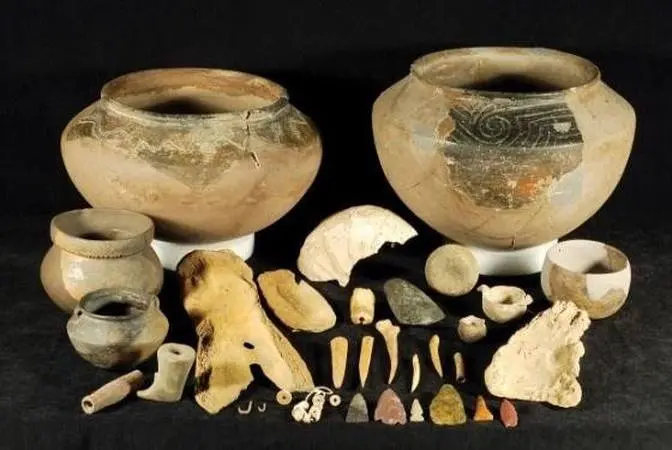
#Archaeology#archaeological artifacts
Good morning, people. My name is Dr. George Sparks and I have with me Dr. David Graves,
PhD. He got his degree from Aberdeen University in Scotland. Also, he has excavated at the, well,
influence of the Temple Mount and also in Shiloh on the Jordanian side,
where he was my supervisor. He has 35 years of experience in the Middle East. Also,
just a fantastic number of books that I encourage everybody to read and to purchase.
Today we're going to talk about a very unique discovery that Dr. Graves, along with his
cohort, the archaeologists, Dr. Tripling, and they were at Tell el-Hammam and what they actually did
is they bumped into, I'm not going to ruin it for you, I'm going to let him tell this story,
and he just got done presenting his paper at NEAS, Near Eastern Archaeological Society.
So, I heard about this and it's also on Facebook. So, what I did, I thought,
I said, Dr. Graves, would you come back to the program and present it without the archaeological
technicalities that might be above our heads? And he agreed. So, today I have Dr. Graves and he's
going to talk about this archaeological discovery and I want you to join us. Sponsored by Bible
Interact and this is Archaeology from the Ground Down. Welcome, Dr. Graves.
Good to be with you, George, again. Yes, we had an amazing time in Jordan excavating at a place
called Tell el-Hammam in the Jordan Valley. It's under the direction of Dr. Stephen Collins from
Trinity Southwest University, Veritas International University, where he teaches
archaeology at the Department of Antiquities of the Hashemite Kingdom of Jordan. So, I work under
the auspices of the Jordanians, as well as a university in the United States. I was not
associated with them, the university there. I did my degree, as you said, at the University of
Aberdeen in Scotland, my PhD work, and I was teaching at Liberty University in the States.
But I was at a conference and a friend of mine who took all the photographs, I was supposed to
go to another dig with him that year, and Mike Loudeny, he said, I'm going to a new dig this year
because we can't dig in Israel this season. Do you want to come and join us at Tell el-Hammam?
And I said, sure. I had no idea what it was. The first season we did some exploratory work,
it was a small team of about, I don't know, six or seven of us or eight to ten. It was very,
very small. The second season, we go back in 2006, and I discover a piece of pottery
underneath the acacia trees in an exposed corner of a building. I could tell that the
stones of the wall were large, so this wasn't Iron Age or Middle Bronze or Early Bronze.
This was probably Roman or Byzantine, and so I decided to explore this a little bit and find
out what the building was. So on one of our day trips, because we're not working every day,
we have the weekends off, which in Jordan is Friday and Saturday, we went up to the
site where into Madaba, a city in Jordan up on the plateau, and there's a church up there,
a Greek Orthodox Basilica of St. George that was built in the modern period, but it was built
over top of a Byzantine church that has a mosaic floor called the Madaba Map. It was built or it
was created in probably the 6th century AD, 527 to 565 AD, and I'm looking over this map,
this beautiful floor of this church that had been restored, and lo and behold, I see the Jordan
River. I know where that is. I see the city of Jericho. I know where that is. It's right directly
across from us, but on the map, there's actually a city on the map in the same location of where
we're excavating. So my thought is at the time, what are all the scholars talking about this
place? What do they name it? What are they identifying this site on the bottom of the map
with? So the next year, I go back and do my research and begin to examine things, and
I consult one of the books, this one here by Donar on the Madaba Map. It has all the sites listed,
and what are they calling it? One of the scholars says it's Livius. Actually, a number of the
scholars suggest that it's Livius. Donar does. Nelson Glick, Scott and I agree with them that
this is Livius, and we published on it in the Bible and Spade magazine, but the question is,
we know what the name of the city is, Livius, but what archaeological site do they associate
with the city? You see, those two things are different. The archaeological site and the
ancient site can be two different things. Well, all of the scholars continue to say,
it's the site behind me. In my head, you can see it right there. It's a beautiful
archaeological tell, 62 acres. It's huge. Everybody kept saying that the city of Livius
was a little tiny spot called Tell el-Rama, which is about a kilometer or two from us
down on the plain. Well, I thought, well, that just doesn't make sense. The city of Livius,
which was named after the emperor's wife, Olivia, and it was rebuilt by Herod Antipas.
Now, to give some historical context, Herod Antipas was the guy that beheaded John the Baptist
and put him in prison down on Macarus, which is just south of us by the Dead Sea, and wanted to
meet Jesus, but couldn't meet Jesus because Jesus was up in Galilee at the time, and he only meets
Jesus when he comes down to Jerusalem, and we're right across the valley from Jerusalem.
So I theorize that Herod Antipas was living at Livius, here at our site,
when he meets Jesus down in Jerusalem and has encounters with him and arrests John the Baptist
and beheads him and puts him in prison down at Macarus before beheading him.
This little tiny site, Tellerama, I didn't think it was Livius. It couldn't be. To be a royal city
such as Herod Antipas would have couldn't be that small. I call it a pimple on the back
of a camel. It's so small. Tellerama is 62 acres. Tellerama today is just a little
mound in the little city or a little village of Tellerama, or Rama itself, and it has a Muslim
cemetery on the top of it. So that was my first clue. I've identified the city, I think, of Livius.
My quest goes on to find out where it would lead me. So in 2007, we had a trip to Madaba,
and we visited the church, and lo and behold, I see that site called Livius. But then we go down
to a place called Mount Nebo. Now this is where Moses supposedly had gone up to view the promised
land and was buried and died someplace around Mount Nebo. His cemetery and his grave has never
been identified or discovered, but they put a church up there, and beside the church there's a
visitor's center, and inside the visitor's center there's a small museum that's got some pottery,
many of them similar to what we've identified and excavated at our site, which was interesting.
But then I spotted this Roman mile marker, and the mile marker had writing on it. Now mile markers
are, in the Roman period, every mile on a Roman road, they would put up a mile marker saying the
emperor's name, who built it, who commemorated it, and the mileage to the next mile marker to the next
major center. I mean, it's the same thing as we have with our road signs today. Well, this particular
Roman mile marker said it was six Roman miles from the Roman city of Eusbis to Livius. Well,
that gave me some indication as to where it was located. So I went back and did the research and
found where they discovered the Roman mile markers. The Franciscans had found them up on the
in the wadi leading from Eusbis down to our site. I walked the entire wadi myself,
GPSing it with my colleague Jatai Buff from the Jordanian Department of Antiquities, and we
located all the spots where the Roman mile markers had been identified. So one through twelve. So I
the sixth Roman mile marker, and lo and behold, on the ninth mile marker, I come across another
mile marker on the Roman road up in the wadi. It had no writing on it, but I've got it identified
on the Roman road. For the listening audience, can you tell us what a wadi is? Oh, a wadi is basically
a valley where the water would run down during the winter period when they would have floods
and the rain would run down through, and so it's a little valley that runs between a couple of
mountains. That's what we call a wadi. As a dried-up waterbed, when we walked through it,
there wasn't any water flowing, but they've dammed it down at Tel Kafran, just beside our site,
and they collect the water there and use the reservoir, the dam, for the available people.
So I go back to my library and I begin doing research on Livius, and I begin doing research on
the ancient writers and who was talking about Livius, and I found three people or three
references with a mention of Livius on them. Theodius says it was 12 Roman miles from Jericho.
Well, I knew where Jericho was, so I did my circle of 12 Roman miles from Jericho.
Eusebius in his Onomasticon has two references to Livius. Eusebius was an ancient writer,
five Roman miles from Tel Damrin, we knew where Tel Damrin was, and 12 Roman miles from Heshbon,
which was Eusebius, which is what the Roman mile marker said. He said it was 12 Roman miles,
and we have, of course, the sixth Roman mile marker. So I simply triangulated the three
sites using Google Maps after translating everything to Roman miles, because they're
different from imperial miles, and lo and behold, they all intersect exactly at Tel Hamam, and Tel
Rama is off the mark. So it can't be Tel Rama, it's Tel Hamam. So we've identified archaeologically
and using geographic indicators the ancient location of Livius. The next thing we do is
we begin to excavate that building that we discovered the first season, and lo and behold,
we discovered it was a 35 by 40 meter Roman bath complex. Initially, we didn't know what it was,
but we began doing excavations on it. Now the word Tel Hamam means the hill of the hot springs
or hot bath, and we have five hot springs we've located around our site. In fact,
they're still used today. They're capped and used for modern agricultural work on their plantations,
their banana plantations that are all around our site. So they're using it for farming.
One of them is right beside this building that we excavated, this Roman bath complex.
We also found a Roman tower on the Acropolis of the Tel, or down on the lower Tel, this building
of the Roman bath is down on the lower Tel. But we also find the Roman aqueducts that are running
up and behind our site. At Habassa, there's a Roman fortification up there. They're trying
protect all of the water. And this water is flowing from a cold spring up in the mountains
down to our site. And on Habassa, this little Tel across the road from us, there's five cisterns
holding over a million liters of water that was supplying a major city.
The next thing that I do is I was told that there's this beautiful mosaic just down the road
from us in one of the banana fields, and it has a beautiful mosaic from a church in it.
The problem was that they're growing marijuana in the banana fields, and they didn't want to
take us there. And so I was the only Westerner, I think, that has ever seen this and photographed it.
My guide, George, and I sneak into it. It's a Muslim cemetery now because they've dug down
through these beautiful mosaics. But I was able to get photographs and publish them in our article
on the re-examination of the location for the ancient city of Livius in 2011 in Levant Magazine.
So we have this beautiful chalice as a mosaic in the floor. So we know there's a church there.
Now in the 6th century, the time that the Immortable Map was created, we have a pilgrim
by the name of Eugeria from Spain, a Spanish pilgrim, and she's traveling the Middle East
looking at all the holy sites. And she stops and she goes up to Mount Nebo where we have this
Roman mile marker on display and the church there. And she asks one of the bishops down in Livius,
and he's the Bishop of Sodom, for information as to where she can go to find the grave of Moses.
And she records in her diary that she traveled up to Mount Nebo and she looked down into the valley
and she saw Livius and the land of the Sodomites. Now you can't see the south end of the Dead Sea
from Mount Nebo because some have suggested that Sodom was in the south end of the Dead Sea.
So she's looking from Mount Nebo and when you look down there you can clearly see,
tell Ohamam that I have identified as Livius, that she identified in the 6th century.
Okay, 6th century A.D.
A.D.
And what was the name of the bishop?
She describes in her memoirs, her diary, that she received the information from the Bishop of Sodom.
I believe that that's the church that we identified with that beautiful mosaic floor
as where the Bishop of Sodom was situated. I did my research on it and during that period
in the time of Palestina, it was under the auspices of the sea, the church sea of Sodom
up in the northern end of the Dead Sea. So we begin to excavate and we worked there for eight
seasons. We found the corner that was under the acacia tree where I found the pottery.
And so Dr. Stripling and I begin to go for what we call the known to the unknown.
We know where the corner is. We can see it.
So we go that way and we trace it in two different directions from the walls and we begin tracing it
along the edge of the wall itself and we trace it for 35 meters in one direction and 40 meters in
the other direction. We find the three corners. We do our calculations. We mark an X and we dig
and sure enough, there's the fourth corner. So we have our building, a beautiful building.
We excavated a number of squares. There's 59 squares total in the entire, the squares are
six meters by six meters. That's an official square. And we excavated 18 of the 59 squares.
We began finding pottery, beautiful pottery, whole vessels, everything from Hellenistic,
a couple of pieces of Hellenistic we published, all the way through early Roman, late Roman,
Byzantine, and Umayyad. And so this bath complex was excavated for a very long time.
We found one of the rooms, which is a beautiful plastered bathing room that had benches where you
could lay down and sit on. It had steps leading down into it. We found the water pipes that would
run to fill it, a plug to drain it, all plastered. We were able to excavate its entirety in one of
the rooms. And then a lot of pottery. We found, I've got 65 plates that have been published.
I published all of our pottery in the book that we've published with all of the details and
academic material, the preliminary reports on the Tell el-Hammam excavation project,
Roman, the Byzantine, and the Islamic period. We have a Byzantine lantern,
trefoil juglets, biconel juglets, spouted juglets, cooking pots. We have late Roman bag-shaped
storage jars. We have oil lamps, a lot of oil lamps, the candlestick-type oil lamps. We also
have some late Byzantine charnel-nose oil lamps. Now, the one that was really impressive to me was
the late Byzantine oil lamp. It's got an inscription on it in Greek. It's called a eulogia.
They were souvenirs that were manufactured in Jerusalem in the 5th to 8th century AD,
and they were used as souvenirs. The pilgrims would buy these and pick them up,
and they would travel until they came to a bath, and then they would throw them in the bath
like you would throw a coin into a wishing well. These were used to provide a eulogia,
a means of acquiring health and well-being. The Greek inscription on it that said,
Jesus' light shines for all. We found two of those. Now, the significance of this for us was
that it puts our sight on the Roman road from Jerusalem to Eusbis through the city of Livius,
because that's where the Roman road traveled. It puts our sight on the Roman road. The pilgrims
are traveling with this souvenir, dropping it into our bath complex for good luck.
Then we also found some early Islamic pear-shaped oil lamps, and then an inscription
on one of the inside of the walls of the building. We found an Islamic inscription,
and the Islamic inscription would read, By the name of Allah, by his prophet Muhammad.
So we knew it had been used all the way through to the Umayyad period. However, the site of the
city of Livius, we know, was destroyed in the 1st century. It was burnt by rebels,
according to the ancient writers, but it was also destroyed by an earthquake in AD 749.
So in the 8th century, it goes out of business, and that's where we run out of the pottery
from this bath complex that had been used for approximately eight centuries.
So that's our eight years of work at the site. The site itself had some beautiful architecture.
There were some rosette carved stones that were used as capitals, some half-pillars that
were used on the side of the building. We discovered arches for some of the rooms.
All of our research we submitted to an archaeological architect by the name of
Alain Rittmeier, and he drew a beautiful picture and reproduction of what we excavated.
It sounds like quite the adventure to actually be at an excavation, possibly
originally excavating for a much earlier time, maybe Middle Bronze, Iron Age, and then through
your efforts, you locate a Roman bath, and then also the Roman mile markers, the Madababab,
assist in identifying this as an ancient city called Livius, which Herod,
Antipas, was chronicled at being at that location. He was the Herod that wanted to meet Jesus,
and that had John the Baptist beheaded. You just don't know how things are going to slowly unravel
at an archaeological dig. It's like a giant puzzle that through academics and archaeology,
you're putting hard evidence to a theme of the past, where, oh, we can read about Livius,
but now you actually find it. Oh, you could say we can assume where Livius might be because
the Madabab map, and now you can identify it, and to be a part of that, I think would be fantastic.
Yeah, people ask us, you know, where's the rest of the city, which is a really good question.
The rest of the city had been built on top of the Middle Bronze and Late Bronze periods,
but a lot of that had been stripped off because of agriculture in the modern day,
and the modern city of Arauda, which was beside us. I believe that a lot of that was built on top
of the ancient city of Livius, and much of the building blocks. Oh, incidentally, we discovered
the spot, the location where they had been making the blocks, the building blocks for the city of
Livius. Are you talking about a mud brick or stone? Stone. It was cut out of the stone. The quarry
where they found these Herodian building stones that were cut, we found it. It's called Tel
Mishleha. I've heard that word before. What does that mean, Mishleha? Well, it's just, it's a
location down on the plain, a little bit, it's about a half a kilometer from us,
and there's actually a hot spring there that's not capped, but we found the mound of the,
and we saw the cuttings and the workings of the tools at the location where they were making the
building blocks in the Roman period, so that was really cool. And then, of course, we have the major
Roman fortification behind us, and then beside us at Tel Tehuna, there's an aqueduct running off
of that, so there's Roman stuff all around us with this major water aqueduct supplying water
for a major city that lays out all in front of this tel behind me, where there's a Roman
fortification on top. We also find another Roman, another Roman tower out on the plain. Basically,
it's on the east end of our site, and so we have the whole area being protected. Why? They're
protecting the water, people living there, protecting a major city. They have a perfect
view of the Jordan Valley for any enemies coming. In the 1st century through to the 8th century,
it's a happening place, and this, I believe, was the bath room itself, the bathing room itself,
but I think that Herod Antipas was laying in while he beheaded the prophet John the Baptist.
You're actually walking on in the vicinity of where this man would have been some 2,000 years
ago that is mentioned in the Gospel as beheading John the Baptist, which was a cousin of Jesus.
Josephus says that he was imprisoned down at Macarus before he was beheaded, so we have the
Bible confirming it, we have Josephus confirming it, and now we have the archaeological evidence
confirming it. Who's to say that he might have held some of these Roman items and they were
discarded? You don't know. That's probably bone-chilling, I think. You discover the location,
you're walking in the area where, in the past, this man did such a notorious thing
as killing John the Baptist. John the Baptist was a cousin to Jesus, and I just think that
the whole connection is very fantastic. I mean, it's a remarkable connection.
Here's another historical fact that people might not recognize. Herod Antipas wanted to meet Jesus.
Jesus calls him a fox. Jesus is in Galilee. Now, we need to understand a little bit about
history here. Herod Antipas was the governor not only of Perea, which is down in the Jordan Valley
area, but also of Galilee. But at that time, he was rebuilding and reconstructing his capital in
Galilee called Sepphoris. That's been excavated by James Strong and others. Because he was
excavating that particular capital up in Galilee, he was living down in Perea at Livyus during that
period of time, and that's why he couldn't meet Jesus. He had to wait until Jesus traveled down
to Jerusalem, which is across the valley, the Jordan Valley, from Tel Alamam, or Livyus,
before he could meet him and confront him and deal with—and that's why he's dealing with
John the Baptist down there, because John the Baptist is baptizing on the Jordan River,
which is just out on the plain from us. So all of the archaeology and geography
coincides and makes sense when you understand the Bible with geography and archaeology.
LAROUCHE It is fantastic, because you think that
when Mary, the mother of Jesus, was pregnant, she ventures and stays with Elizabeth. So you've got
this huge connection of family. In a way, you've got this connection also in that place that you're
staying. Here's this man. He wanted to meet Jesus. Jesus is actually talking about him.
John said that you shouldn't be marrying this woman because she was not your wife,
according to Jewish laws, I guess. And the whole connection is fantastic, because there's
just a connection with the Gospels, a connection with your location. That's remarkable.
LAROUCHE Well, I also deal with the city of Livyus in my book on the
cities of the New Testament, and Livyus is described in there and dealt with in some detail,
as well as my publication of our finds. The preliminary report is a little more technical.
This is a little more popular if somebody wants to look at the information. And I deal with every
single New Testament city that's mentioned in the New Testament. I deal with Livyus because
I think it's so important, even though it's not mentioned specifically in the New Testament.
All those cities, I think I've got something like 86 of them are dealt with in my book on
the cities of the New Testament. BINYAMIN APPELBAUM
Dr. Graves, I appreciate this time that we've had together, your adventures and excavation
with Dr. Stripling at Tel El Hamam. And at that location, you found Livyus,
the connection with Herod and John, and also Jesus and the events in the Gospels,
I just think is totally incredible. But we're out of time. Thank you so much.
LAROUCHE Great to be with you.