
Archaeology and the Exodus
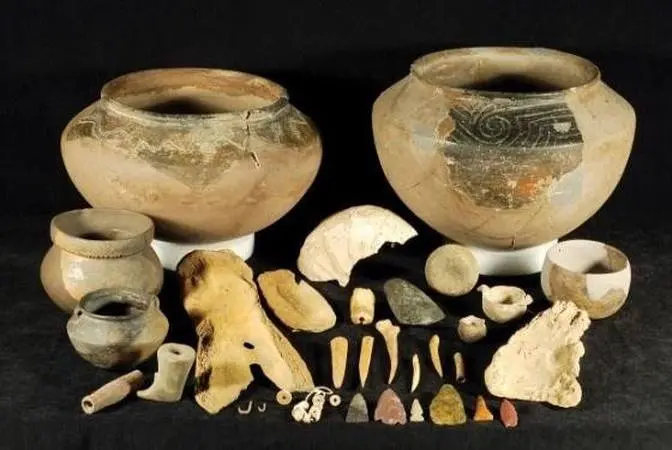
#Archaeology#archaeological artifacts
I'd like to welcome you again to another session.
This one is entitled Intro to Joseph in Egypt.
My name is George Sparks and I welcome you to this program.
It's going to be a number of different series in which we're going to talk about the introduction
first and then we're going to go into some academics about Joseph in Egypt, what the
Bible tells us, do we have any internal, external evidence, and then we're going to look at
the time period of Intro into the Exodus and then we go into an academic study of Exodus,
what can we find internally, externally through archaeology or the scriptures, and then we're
going to finally conclude it with an Intro into the Land of Canaan, the conquest and
the settlement patterns into the Land of Canaan.
Think of this as an education of slowly going through the time period of when the Hebrews
are in Egypt and as they leave Egypt and settle into the Land of Canaan.
So this particular one is the Intro of Joseph in Egypt.
We're going to actually start with the idea that Abraham is in Egypt and of course the
Pharaoh is interested in Sarah.
He believes that Sarah is actually Abraham's sister.
Abraham has not told him yet that she's actually his wife and the Egyptians have a real problem
because God strikes a plague on the Egyptians.
And then when the gig is up and Abraham finally tells the Pharaoh that, hey, she's really
my wife, the Pharaoh says, you know what, I think you guys need to leave the land.
So Abraham packs up his wife and his tribe, his kin's people, if you will, and they start
to journey out of the Land of Egypt.
Now if you read the text in Genesis, it says that Abraham journeys south.
Now if he goes south into Egypt, he's going to go further to Upper Egypt.
That's not the case.
We look up the word south, it's Hebrew, the word negev.
Negev is actually a geographical location at the northern part of the Sinai.
In other words, he's leaving the northern Nile Delta, which we would call the land of
Goshen later on in the text, and he's going to go through the Sinai area into the land
of Canaan, where we have later on the epic where Abraham and Lot separate and we have
the stories of Sodom and Gomorrah being fulfilled.
Now, interesting enough that we also have similar lifestyle representations of Abraham
in a story, an Egyptian story, in an Egyptian epic called the Tale of Sinawi.
Look it up.
I actually have a slide with it spelled S-I-N-U-H-E, the Tale of Sinawi.
It dates to about the same time period of the traditional date of Abraham, around 1900
B.C., and it talks about an individual who leaves the land of Egypt and he goes into
the Levant, the land of Canaan, and he becomes like a nomadic chieftain, living in tents,
and he moves place to place, raising livestock and commanding his fellow servants.
And they do different adventures together in that land of Canaan.
So if you will, take time, read the Tale of Sinawi and see what you think.
Does it compare to the epics of Abraham?
Maybe a little bit.
Now, the next thing we're going to talk about and look at is the land itself, because Abraham
journeys into the northern Nile Delta, which later is going to be invaded by some Asiatic
slash Semitics, Semites, and they're going to be called what we know as the Hyksos.
Asiatics in the northern Nile Delta, they begin to multiply and take over the territory.
But, as Abraham journeys into the land of Egypt, he doesn't stay long, but he's in that
territory.
Now, some scholars would suggest that this is a huge question.
What is a Pharaoh doing in the northern Nile Delta, you know, talking to Abraham and checking
out his wife?
Because we only have two time periods where we actually have, you could say, an influence
of the Pharaoh living or dwelling in the northern Nile Delta, and one is the Hyksos period,
which would have to place Abraham in the Hyksos period.
Some scholars, because of the chronology methods, would have great difficulty with that.
So you have the Hyksos period with a Pharaoh in the northern Nile Delta.
Your second choice is the 19th Dynasty, which is the time of, you could say, the Ramses.
So these are our chronologies for the time periods if you want to put a Pharaoh talking
to Abraham, as the Bible renders.
Now, Abraham leaves Egypt, so we have Abraham, and then Jacob, and finally Joseph, with their
nomadic tendencies and extended travels in their days, and they finally place themselves
passing through the Sinai Peninsula and into the land of Canaan and back into Egypt.
This is the patriarchal journey.
They bring with them these types of, new types of weaponry, if you will, now along this coastal
plain.
I'm going to interject one more thing, is that when you read in the biblical text different
wording about the trade route, it could be called the Way of the Sea during the Roman
period, the Via Maris.
It could also be called the Way of the Land of the Philistines during the Iron Age period
where the Philistines are inhabiting the five major cities that they are dwelling in, okay,
such as we read in the Book of Exodus.
For the Egyptians, it's called the Way of Horus.
All three, you could say, renderings, the Way of Horus, the Way of the Sea, the Via Maris,
the Land of the Philistines, it's all referring to the trade route that actually is along
the coastal plain through the land of Canaan, very close to the Mediterranean Sea.
Now, we have two theories of the Hyksos because Joseph technically is in the Hyksos period
when he dwells in that northern Nile Delta.
The first theory is that the Semites, the Semitic people, populate this northern Nile
Delta and the population grows and starts to overtake the land.
In other words, the Egyptians are slowly being pushed out because of population control of
these invading Asiatics.
Now, later on in the Book of Exodus, what is the first thing the Pharaoh does, his first
edict, the Pharaoh that knows not Joseph, he gives an edict that the children, the male
children of two years of age and under should be put to death.
So it seems like we have an act of population control, a fear of the overpopulations of
people that are not native Egyptians.
So the second theory is that it was an invasion of the Semitic people, which we call the Hyksos,
as it's chronicled by a historian of the Roman period whose name is Josephus.
Josephus tells about the invasions of the Hyksos in a secondhand method, if you will,
through the writings of a Hellenistic Egyptian priest called Manethos.
So Manethos says, at one time in the northern Nile Delta, it was overtaken by foreigners
and they controlled that territory and it was through the time period of the foreigners'
invasion and settlement that Joseph and the Hebrews later arrived.
Now I got a slide that actually is a drawing of the different types of weapons that the
Hyksos would be using.
In the slide you see part of a knife blade, and then you have a little type of hammer,
and towards the bottom you have a tomb, a Hyksos tomb.
So there are different types of weapons being used during the Hyksos period.
The Hyksos also may have introduced what we call the chariots.
As they migrated from Mesopotamia through the land of Canaan, they brought with them
the technologies of the chariot and they introduced that into the land of Egypt.
There's very little, if you will, very little evidence in archaeology that actually proves
that Joseph, the actual Joseph himself, was in Egypt.
Or very little archaeological proof for the Exodus.
Now I mean a people group.
But we can look at the text and see if there's any evidence, you could say external evidence
or internal evidence, that this actually occurred by what we read.
In other words, if somebody was actually there, they should be able to record these events
somewhat properly, disclosing the information of what happened at that particular time.
So we're going to be actually reading, and this will be your assignment if you will,
the Joseph story in Genesis chapter 37 and 50.
So later on when you have time tonight, open your Bibles and read Genesis chapter 37 and 50.
Now Joseph had a skill.
You know Joseph's skill was not just having dreams.
Everybody has dreams.
Joseph's skill was interpreting the dreams.
And remember what one of his first dreams was, is that he actually visioned 11 stars
plus the sun and the moon bowing down to him.
And it just so happens that Joseph had 11 brothers plus a father named Jacob and a mom.
So maybe the dream was symbolic that his family was bowing down to him.
Now if you have a dream like that and go and tell that dream to your brothers and sisters,
you could probably expect the same type of response that Joseph had.
His family was kind of upset with him.
So was his family going to bow down to him?
So Joseph has that particular type of dream.
So Joseph is not just a dreamer, but worse than that, he's his father's favorite son.
How do we know that he's his favorite son?
The Bible actually says Joseph was his father's favorite.
How do you think it makes his brothers feel when the Bible actually records that hey,
guess what, Joseph is his favorite.
His father actually gives him a coat of many colors.
And there's also plays that depict Joseph's tecticolor dream coat.
Really, when it talks about the coat of many colors, it means a coat of colored cloth,
a coat of colored cloth.
So Joseph goes to see his brothers in Dothan.
So he's going from, you could say, Hebron, where his father's at.
He's going all the way up to Dothan, chasing down his brothers.
And when his brothers finally see him, they say, hey, isn't this the dreamer of dreams?
The guy that says that we're going to bow down to him, and they say, let's kill him.
Well, they decide instead of killing him, they're going to actually put him in a well.
And when they put him in the well, some Ishmaelites come along,
and they decide to sell him to the Ishmaelites.
The Ishmaelites takes Joseph into Egypt.
And basically, this is where the story, the epic, begins in Egypt.
Now, what's interesting, though, is that this Joseph story,
as I was telling you, is also chronicled in Josephus,
about the Hyksos, who actually mentions this Egyptian priest called Manetos.
As far as Asiatics entering into the land of the Egyptians,
the northern Nile Delta, do we have evidence of this?
And we do.
In the tombs of Beni Hassan, the word Beni means son,
the sons of Hassan, location in upper Egypt,
where these are noble tombs, tombs of nomarchs.
A nomarch is kind of like a governor over territory.
So these are wealthy individuals, they're not blue bloods, but
they're wealthy individuals, governors for the pharaoh.
And they carved their tombs in a location called Beni Hassan,
showing the activity of that particular time period.
Now, in this particular tomb of Beni Hassan,
we have a wall fresco dating from around 1870 BC.
Once again, 1970, or 1900 BC,
puts us in a perfectly good time period equivalent to that of Abraham.
It depicts 15 pastoral nomadic Semitics entering into Egypt,
just like Abraham and Jacob would have done, and carrying in with them slaves,
just like you might think the Ishmaelite traders and
how they would have took Joseph into the land.
So, speaking of Joseph, Joseph was sold for 20 shekels of silver.
And this could be another type of indicator to the time period in which we're
looking.
According to Kenneth Kitchen, he compares this price of a slave.
As referred to in the famous Hammurabi Code of the 19th,
18th century BC, in which the value of a slave was around 20 shekels of silver.
So according to Kenneth Kitchen, this amount would actually place Joseph in
the right period, the right time, during the Middle Bronze Age period.
So Joseph is sold to the house of Potiphar, and he works hard and
he's successful, and he starts to rise in rank in Potiphar's house.
So at this time, he's in northern Egypt, he's dwelling in the land of Canaan,
and he's dwelling within the house of Potiphar, and he's starting to rise in rank.
So he knows what he's doing, and he's prosperous.
And in Genesis chapter 39 and 40,
it talks about that he was over the house of Potiphar.
And while he's in his house,
it seems like Potiphar's wife seems to take a liking to Joseph.
And she makes a move, but she's unsuccessful.
So she's a woman scorn, if you will, and she decides to tell those other
servants in the house that Joseph tried to rape her, and she struggled for
herself and got away, but in Joseph getting away from her and
her repelling Joseph from her, she rips off his garment.
So she shows the servants Joseph's garment, and
of course, Joseph is arrested and put in prison.
So while he's in jail, Joseph seems to meet some other inmates.
First of all, the cupbearer for the Pharaoh was there, and
also the baker for the Pharaoh was in prison.
And they both have these dreams, that the cupbearer was giving some juice or
what have you to the Pharaoh, the grape juice was in a cup, he gives it to the Pharaoh.
And we have some indications that things are taking place in three days.
And also, a number of days are included in the event of the baker's dream as well.
So Joseph is told these dreams first by the cupbearer.
And Joseph says, hey, guess what?
In three days, you're gonna be set free.
Wow, that's great news.
So the baker says, well, guess what?
How about my dream?
Well, sadly enough for the baker, Joseph says, in three days, you're gonna be hanged.
Well, these both come to pass.
But Joseph says, hey, to the cupbearer, he says, hey,
when you go to the Pharaoh, don't forget, tell him about me, that I interpret the dream.
In other words, he's saying, get me out of here.
The time passes, and they forget Joseph.
Until finally, one day, the Pharaoh himself has a dream,
that there were seven fat ears of corn, and they're eaten by fat, lean ears of corn.
Then he has a second dream, that there were seven fat cows that were eaten by
seven lean cows, so the Pharaoh calls his magicians.
But the magicians can't tell or interpret his dreams.
So finally, the cupbearer says, well, hey, Pharaoh, I remember this guy in prison,
and he interpreted my dream for me, maybe he can do the same for you.
So Joseph is called out of prison, and he's cleaned up, and
he's brought to the Pharaoh, and the Pharaoh tells him his dream.
And Joseph says, there's gonna be seven good years, followed by seven bad years.
So the next 14 years of the Egyptian economy is basically planned,
because of what Joseph says to the Pharaoh.
The Pharaoh then rewards Joseph, and says that he promotes him to kind of like
a visor, right directly underneath the Pharaoh himself.
And he places a gold chain around his neck, and also a seal ring on his finger.
Seal rings are actually very, very common, and so are gold necklaces.
They find some in tombs, but of the two, gold necklaces and
seal rings, we just have thousands of seal rings.
I also have one in my hand right here to show you,
because the camera can focus back on me, and we'll go back to the slides.
But here we have a seal ring, you can see, that's really not all that big.
Now you could wear it on a chain around your neck, and on the seal you have,
one side would be a scarab beetle, on the other side you have indications of
the position of the office of the individual who's actually wearing the seal.
So it says that not only does Joseph have a gold chain, and
now he's got a ring on his finger, but he gets to ride in a chariot right behind the Pharaoh.
That's another indication of the time period that we're in,
because the Hyksos bring the invention, if you will,
the technology of chariots into the land of Canaan.
Another indication of a Hyksos period is that the Pharaoh's in the northern Nile Delta.
And there's only certain periods, as we know,
that we have a Pharaoh living in the northern Nile Delta,
the Hyksos period, and later on, the 19th dynasty.
Now, what about Joseph's family?
Well, sadly enough, now Joseph's family is living in Canaan, and
his family is going hungry, so Israel's father sends his sons to go get grain in Egypt.
Except for the littlest one, Benjamin, he's staying at home because he's the sole
survivor of Israel's favorite wife, Rachel, who's also the mother of Joseph.
Now, both the Hebrew and the Arabic name of, you could say, Benjamin, or Ben-Yamin.
When you say Ben, it means son of, and then you say Yamin, that actually means the right.
So it means the right Ben-Yamin, it means the right hand of the father.
So the right hand was a position of honor.
So you have Joseph, who is supposedly dead, which was his father's favorite.
His next brother was Benjamin, and his name means his father's right hand.
Now, it's interesting also to put this note that when we get to, let's say, New Testament times,
we have scriptures that say the sheep will go to the right and the goats to the left.
It's an indication of power and authority, okay?
But we also have indications where Jesus will say,
you will see me coming at the right hand of my father.
A number of times in the Bible, it refers to the right hand as a place of, you could say, honor.
But what's interesting is when we look at little plaques made of terracotta,
sometimes carved out of lime, it shows an individual, a man or a woman, reclining on a
mattress, I mean, lying down. And they're actually reclined in these Middle Eastern cultures to eat.
We sit in our Roman culture, Greek culture, we like to sit around the table.
In the Middle Eastern cultures, they lie down.
So on these little plaques, they are reclining, and they're usually reclining on their left side.
So they're reclining on their left arm, and they're actually using their right hand,
if you will, to dip into a bowl and to eat.
Now, why would they do that?
Because your left hand would be unclean in the Near Eastern traditions,
because you're using that to cleanse yourself, your bodily functions,
and you use your right hand to greet people and also to eat.
So the right hand is clean, it's a position of honor, where the left hand is not.
So that's just a little memento on there.
So his sons, his brothers come into the land of Egypt, and they receive the grain.
But Joseph puts money back in the sack, and then they go back to their father,
and their father says, hey, what's the money doing back with the grain?
Aren't you supposed to use the money to pay for the grain?
But here it is back in the sack, and their father gets a little bit worried,
thinking like, what has his brothers been up to again?
Or are we in trouble of some sort?
Well, this next trip into Egypt, they got to leave their brother Benjamin, all right?
And the reason for that is, Benjamin is supposedly had taken a silver cup
off the table, the dining table of Joseph.
Now, we know that Joseph put the cup there in the sack of Benjamin,
so that would be discovered.
So he would have an excuse to keep Benjamin, and the rest of the family would show up later.
Guess what?
Once again, the gig is up.
Israel shows up, Joseph can't contain himself anymore,
and he reveals himself to his father and to his brothers,
and there's a great family reunion, all right?
So that's basically a little bit about the entering of Joseph in the land of Egypt,
and also the Hebrew people.
Now, they live in the region called Goshen,
because this is the location where the shepherds are kept.
The actual office or occupation of shepherd is unclean to an Egyptian,
because of the hair of the sheep and the goats,
and basically your Asiatics had beards and long hair.
Egyptians were clean shaving, they really didn't take on to that too well.
Interesting to note that in the text, it talks about how finally Israel passes away.
Israel passes away, and it says that Israel is mummified.
Jacob is mummified, he dies, and it says he's mummified for 40 days,
and there's a total of 70 days of mourning.
In Genesis chapter 50 and 11, it mentions,
we got some more slides to show you here.
There are seven days of mourning, a little coffin, a cacophagus.
It says in Genesis chapter 50 and 11, it says,
and when the inhabitants of the land, those of the Canaanites, saw the mourning,
it says that they believed this was a grievous mourning to the Egyptians,
wherefore they named this location Abel Miserium,
which means the land or little Egypt, the little territory of Egypt,
which is beyond the Jordan.
This is Genesis 50 and 11, where they take the body of Jacob.
Now, there's only two patriarchs that are actually mummified.
One is Israel, and the other, of course, is Joseph.
Joseph's body is left in Egypt.
He says, don't take my bones out until the prophecy is fulfilled,
and God promises that we are going to be taken out of the land.
Once we leave the land, don't forget to take my bones out of the land also.
Now, we have this archaeology in Egypt.
Did they find the house of Joseph?
This is an interesting epic, interesting, you could say,
evidence that has kind of hit the archaeological scene in the last couple of years.
Did they find the house in the tomb of Joseph?
Well, what do you think?
We're going to talk about it, and then you can look it up and decide for yourself.
In Stratum D2 of Tel El Daba, that's the location of Avaris,
the ancient capital where the Hyksos lived and possibly Joseph as well,
they found a very large villa, one of the ruins of a villa,
that they say is very similar to a four-room Israelite house.
Now, you could say a four-room house and not say Israelite,
but they kind of like want to label it an Israelite house to begin with.
So, it's about 10 by 12 meters width and of length, which was discovered.
Adjacent to it, there was a cemetery and there was a large tomb,
and in the large tomb, they found a broken statue of an Asiatic.
Now, this was also defaced, the statue was defaced,
and many scholars believe that when the Hyksos kingdom was overthrown,
the Egyptians came in and defaced the statue.
So, that leads us to the belief that maybe because of the color of the statue,
the way it looks, the design, it was very Asiatic.
Here you have an artist's reconstruction of the house and also the statue itself.
The headdress is very similar, the way they wear the headdress, very similar to Asiatics.
But, as we know, many Asiatics of the Hyksos realm entered into the land,
and many became, you could say, not many, but enough became of a high rank
that we can't exclusively say this could be Joseph's house,
but it does validate the epic of Joseph in the Bible.
The Hebrews and Asiatics were in the land in the Northern Isle Delta
and served Egyptians and rose in power.
Now, this is the end of the intro to Joseph.
Come with me again to the Joseph in Egypt epic, and we'll get more academic.
Thank you very much for your time.
Bible Interact is a group of Bible scholars and biblical archaeologists
who promote the Hebraic nature of Scripture and view the two Testaments as one unified message.
They explain how they use a first century approach to searching the Scriptures,
and they share their methods and discoveries for discussion and dialogue.
They invite your comments and participation on BibleInteract.tv,
where you can also find more teachings, self-study quizzes, webinars, and interviews.