
The Nazis Secret Mission into the Amazon
#Archaeology#archaeological artifacts
So, one of the most overlooked aspects of the history of the Second World War
is the interest that Nazi spies and scientists had in South America,
and especially in the Amazon. Prior to World War II, German scientists and spies were sent
all around the world looking for ancient artifacts and treasure to bring back to Berlin,
which supported the Nazis' Aryan race theory. This search sent them across the world,
from Central Europe, Greece, Scandinavia, Tibet in the Himalayas, the Middle East, and even Asia.
But most people don't realize that the Nazis were also in South America poking around in the Amazon,
and even had secret missions planned to study Tiwanaku and other sites across the Andes.
In an official sense, the Nazis were in South America on an ethnographic and ecological
research mission. But the real reasons behind their interest in South America,
and especially the Amazon, are much deeper, darker, and more mysterious than that.
But we have to start with the Annenerbe. The Annenerbe organization was created by
the Nazi Party in 1935, Annenerbe being the German word meaning ancestral heritage.
The founder of the organization was Heinrich Himmler, and was composed of world-renowned
German scientists from a variety of different specialties and backgrounds who were devoted
to Hitler's cause of studying the natural and ancient world through a lens that promoted
the superior Aryan race theory. Hitler's idea was that the Germans descended from a great Aryan race
who were actually responsible for the majority of major innovations which brought about civilization
including agriculture, art, and writing. But outside of Germany, of course, most of the world's
scholars opposed this idea. The eventual goal of Hitler's Aryan superiority theory was to establish
a new understanding of world history, one that established the German people as the central model
of man. The city at the center of this new world civilization would be the world's capital,
Germania, a revolutionized and transformed city of Berlin, which would be the center of knowledge
and education around the world, housing all of the world's most priceless artifacts and the hub of
new and advanced technology. This would be the center of Germany's empire, but first, Germany
needed to build the empire. Now, the goal of building an empire is to acquire foreign natural
resources to fuel the center of the nation, in this case being Germania. Germany began with
conquering Poland and putting the rich Polish coal mines and steel production facilities to work
supplying Germany's ever-growing military and industrial needs. Germany also solved its food
shortage crisis by harnessing Poland's plentiful grain and potato farms as well as its livestock.
They used Norway and France's iron ore for steel production. They used the region of Ukraine for
oil to fuel the German army as well as their fertile grain fields to feed the German people.
They extrapolated oil from Romania and Czechoslovakia and even metals from Greece.
Germany then began the invasion of oil-rich northern Africa, but the Nazis' real ambitions went
so much farther and much, much deeper than just conquering the territories and natural resources
around greater Europe and the Mediterranean. Himmler was fascinated by the idea of semi-mythological
artifacts that he thought could support the Aryan race theory. He was interested in the location of
the Ark of the Covenant and the Holy Grail. And yes, I know what you're thinking. These things
weren't just made up for the movies. These things actually happened. The Anunnabi organization
launched several expeditions around the world looking for old world cultural artifacts,
but their first expedition was actually down into the Amazon five years before the Second World War
began. We don't know exactly when the first mission began, but it was most likely sometime
in late 1935, which was shortly after the formation of the organization that summer.
The scientific aspects of the mission were planned out by SS member Otto Schultz-Kampfenkel
and was carried out within the Jari River region of the northeast Amazon. So little information is
understood of the mission's intentions and objectives that even information of the expedition's
ground leader, SS officer Joseph Greener, is sparse at best. His exact rank, background, education, and
previous achievements are almost entirely unknown. The only thing definitively known about him is that
he was a trusted officer serving under Himmler who was buried in a Nazi cemetery in the Amazon
after perishing during the expedition, following a 60-mile trek through the dense vegetation and
raging rivers. The only thing we know for certain about the expedition are its official objectives
given to the local government, which was to collect ecological and ethnographic scientific
information and data about the rainforest. In reality though, judging from the Anunerbe's later
missions, the expedition's real goal was to collect data on rubber farming operations in the region
and scouting areas for German occupation. As after the expedition, Schultz later proposed an idea to
Himmler for a German Guyana, replacing the existing French Guyana. The mission was launched just prior
to Germany's four-year rearmament plan beginning in 1936, which aimed to make Germany a self-sufficient
country. The rubber in the Amazon, if it could be harnessed by a German colony, could supply the
rubber demand for Germany's military and civilian needs, and importing rubber from a German outpost
in South America would be significantly cheaper than continuing to buy it from Asia. Furthermore,
a German foothold in South America may have eventually led to an attempt to control the Panama
Canal, and this is backed up by reports of German agents who had been caught collecting data on the
Now, these Germans were spies as well as they were scientists, so they were no doubt genuinely
interested in the scientific data and findings gathered during the expedition, granted in hopes
that their finds might produce some kind of evidence for their grand Aryan race theory.
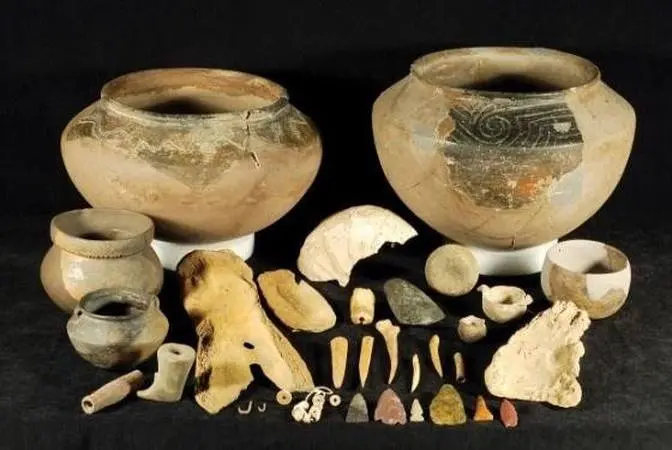
They gathered over 1,200 artifacts from the Aparaj, Wayana, and Wahapi tribes and sent the
artifacts back to Germany to be studied and put on display at Berlin's Ethnographic Museum. Although
not officially recorded, an unspoken interest that must have, at least in part, been at the
heart of the expedition was the hope that these explorers might come across information pertaining
to the location of either El Dorado or Percy Fawcett's Lost City of Z. Now, some may say this
is a stretch, but it isn't. This is exactly in line with the ambitions of South American explorers
just one decade prior, as Percy Fawcett had only gone missing looking for his Lost City of Z
just 10 years prior to the Nazi expedition into the Amazon. So, this was undoubtedly something
that was, if not in the front of these explorers' minds, at least on an unofficial sense, it was
definitely in the back of their minds and inspired the expedition. But Nazi explorers and scientists
were extremely secretive about their findings and discoveries. So, if any major archaeological
discovery was made, it was never disclosed to the public, the information was lost or destroyed.
The Nazis also had an interest in Tiwanaku, stemming back to the exploration and research
conducted by German architect and archaeologist Edmund Kiss, who visited Peru and Bolivia in
the 1920s. He refused to believe that the monumental stonework at Tiwanaku could have
been the result of the locals' indigenous native ancestors and posited that a lost master race must
have been responsible for these ancient ruins. This fascination later carried on to other sites
in Peru in and around Cusco such as Sacsayhuaman and Ollantaytambo. In the late 1930s and early
40s, Peru's German population was over 20,000, and the number of Peruvian Germans registered
and actively operating within the Nazi party was over 200 people at least. A Nazi flag was even
flown over the small Peruvian town of Pozuzo, and this was the base of espionage and data collecting
among Nazi operations within Peru. Ultimately though, like most explorers who braved the
wilds of the Amazon, the jungle conquered them. The brutal vegetation, unpredictable weather, and
dangerous rapids of the Jari River submitted the efforts of the German explorers, destroyed their
high-tech seaplane which was intended to embody the German technological superiority over this
wild land, and forced the inexperienced Germans to rely on dugout canoes built by natives and
indigenous guides which caused tensions and issues within the party due to the Nazis' disdain for
these quote-unquote primitive people and their hesitance to listen to native wisdom. And there is
actually still a monument standing to this day which marks the end of this Nazi expedition into
the Amazon. The swastika topped wooden cross that stands over the grave of SS officer Joseph Greener
which reads, Joseph Greener died here on February 1st 1936 in the service of German research. In all
likelihood, Greener probably died of malaria or a similar disease, although the officially recorded
reason is that he died to a fever. Although the expedition was not officially completed, the
surviving officer of the mission later suggested to Heinrich Himmler that they eventually pursue
conquering and establishing a new colony of German Guyana. This is the dead giveaway as to what the
mission's true goals were. But the Anunnabi organization's esoteric and mythological agenda
in the Amazon, whether they were looking for an ancient city or esoteric and semi-mythological
ancient artifacts, is still completely unrevealed. There is a reason why more than 400 years before
the Nazi expedition into the Amazon, the Spaniards called the Amazon the green hell. Of the 220
Spaniards and over 4,000 enslaved natives forced to embark on Oriana's expedition down the Amazon
River in 1541, after nearly a year in the jungle, only 43 men survived the journey, including Oriana.
But just four years later, Oriana would set out to chart the Amazon River a second time,
which was an attempt that he did not survive. Ultimately, every European attempt to master
the Amazon and ignore the way of the native Amazonian has been met with a dismal fate.
I'm Luke Haverns. If you'd like more videos covering the history and mysteries of places
all around the world, well, please like and subscribe for more.