
New Voting Laws In Swing States; Harris Finally Reveals Her Policies; Trump Policy To Take On BRICS
917 Video Views·Sep 9, 2024
Both candidates, VP Harris and President Trump, are gearing up for tomorrow's debate. Harris is taking the traditional approach to debate prep. Meanwhile President Trump thinks that, this approach won't work. He has his own way.
During the 2020 election, multiple states adopted temporary voting rules, due to the Covid-19 pandemic. So what are the new rules for this election, in the major swing states?
Elon Musk has made no bones about his support for the Second Amendment, even during a sensitive time when the campus shooting just happened.
Venezuela's opposition presidential candidate Edmundo Gonzalez had to leave his country and fly to Spain to seek asylum after challenging the election results.
Hello all you freedom-loving people.
Welcome to another episode of Front Page.
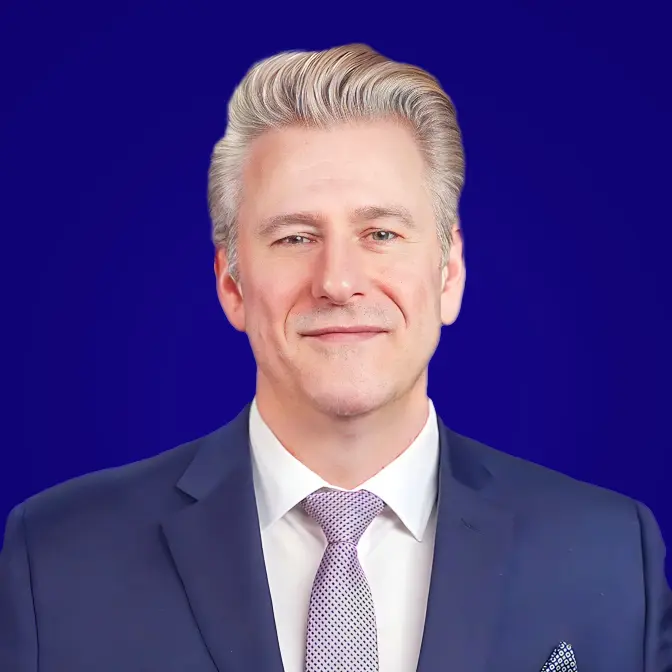
I'm your host, Scott Cameron Goulet.
Both candidates, VP Harris and President Trump,
are gearing up for tomorrow's debate.
Harris is taking the traditional approach to debate prep.
Meanwhile, President Trump thinks that this approach won't work.
He has his own way.
During the 2020 election,
multiple states adopted temporary voting rules due to the COVID-19 pandemic.
So what are the new rules for this election in the major swing states?
Venezuela's opposition presidential candidate Edmundo Gonzalez
had to leave his country and fly to Spain to seek asylum
after challenging their election results.
Elon Musk has made no bones about his support for the Second Amendment,
even during a sensitive time when the campus shooting just happened.
Okay, let's get into it.
Vice President Kamala Harris and President Trump
are actively preparing for the second round of presidential debates on Tuesday,
but they're preparing in very different ways.
Harris has been staying at a historic downtown Pittsburgh hotel
with her assistant since last Thursday.
They are focusing on how to prepare to give
to-the-point answers to questions in two minutes or less.
She has the Democratic consultant Felipe Reines,
who was a longtime aide to Hillary Clinton.
He's portraying President Trump in their preparations.
And Harris's campaign team announced on Friday
that Harris raised $361 million in campaign funds in August.
This has made it easier for her to use more of her time
to attend campaign events around the country without the effort of fundraising.
Since Harris hasn't participated in a debate in four years,
her aides have prepared 15 questions for her.
It's been reported that she intends to explain some of the differences
from what Biden has advocated in terms of domestic and economic policy,
but there will be no difference with Biden on foreign policy.
Meanwhile, President Trump chose to be on the road.
He's filling his campaign calendar to the brim.
He says that he doesn't have to specifically prepare for the debates.
There are no stand-ins, no sets, no play acting.
He said he'll know what he needs to do once he steps on the debate stage
at the National Constitution Center in Philadelphia.
That's the same attitude he took when he debated President Biden in June.
He said in a New Hampshire radio interview,
I have meetings on it, we talk about it, but there's not a lot you can do.
You either know the subject or not.
You either have good policy or not.
President Trump plans to let Harris speak first as he did during the debate with Biden.
President Trump said during the Hannity Town Hall,
I'll let him talk, I'm going to let her talk.
President Trump's aides say that he intends to put Harris on the defensive.
He's prepared to paint her as too liberal.
He will link her to Biden's economic record
and he will point out her flip-flopping on issues like the fracking ban.
President Trump will pay attention to some other details.
For example, he made the comment in a Saturday post on True Social
that the upcoming debate will not allow for adjustments in the nominee's height behind the podium.
He said that standing on a box is a form of cheating.
You are who you are.
It was determined.
Don't downplay the height issue.
It actually has potential significance.
Past elections have shown that taller candidates tend to win more votes.
Compared to President Trump, Harris is clearly at a height disadvantage.
She revealed her height earlier this year during an interview on Fox.
She said, I'm 5'4 and a quarter, sometimes 5'4 and a half.
Harris also said that with heels, which I always wear, I'm 5'7 and a half.
President Trump's own height has been variously reported as 6'2 and 6'3.
On Friday, President Trump received the endorsement of the nation's largest police union,
the Fraternal Order of Police.
President Trump has promised that when he wins in November,
he will sign legislation to strengthen police protections
and to crack down on Marxist prosecutors,
particularly the district attorneys in Philadelphia and Los Angeles.
President Trump has proposed that the government should increase police immunity
and reinstate proven crime control and prevention strategies,
and they also should implement the broken windows theory
and encourage police to conduct pat-downs and frisks as part of the law enforcement process.
President Trump is also proposing to create tougher penalties for crimes.
Examples include mandatory minimum sentences of 10 years for human traffickers,
life imprisonment for child traffickers, and the death penalty for police killers.
On Saturday, President Trump told supporters in Wisconsin
that he will impose a 100% tariff on goods from countries that abandon dollar-based trades.
He plans to make it too costly for countries to shift away from using the U.S. dollar.
This follows years of Joe Biden and Democrats
weakening the U.S. dollar on the international stage.
Saudi Arabia, United Arab Emirates, Egypt, Algeria, Argentina, Mexico, Nigeria,
and other nations want to join the BRICS alliance.
This is a direct threat to the dominance of the West and the U.S. dollar.
And today, Kamala Harris' campaign introduced the details of her plan.
It's called A New Way Forward, and Kamala called it an opportunity economy.
The Issues tab on Harris' campaign website reads,
Vice President Harris and Governor Walz are fighting for a new way forward
that protects our fundamental freedoms, strengthens our democracy, and ensures
every person has the opportunity not to just get by, but to get ahead.
The Vice President's policy platform addresses various issues.
However, it makes no mention of the topics that Harris has flip-flopped on,
but it makes frequent mention of President Joe Biden and their administration.
The page also emphasizes how VP Harris contrasts with President Trump.
The platform lays out her previously unveiled economic policy on corporate price gouging,
and touches on abortion access, civil rights, the border crisis, and gun control.
Elections in the U.S. are actually determined by the voting results in the several swing states.
That's why both candidates have been focusing their efforts primarily
on the seven swing states of Michigan, Nevada, Pennsylvania, Arizona,
Wisconsin, Georgia, and North Carolina.
The rules of the election in swing states in turn affect the outcome of the election.
After the 2020 election, many states are making changes to their election laws.
So let's take a look at the specific changes to voting rules in these seven swing states.
In Michigan, Michigan approved several pro-voter reforms in 2022.
That is, the state significantly increased access to voting.
Five of the 10 laws dealing with the implementation of the November general election
make it easier to mail in ballots.
Officials have also codified their system to allow online applications for absentee ballots.
In Nevada, in response to the COVID-19 pandemic,
Nevada state officials used emergency regulations to administer
early voting in the state during the 2020 election.
Officials sent mail-in ballots to all voters in the state.
This allowed third parties to collect ballots and count the absentee ballots received
after election day, but they were postmarked prior to election day.
In 2021, state democratic leaders made these temporary rules permanent.
That means that these changes will apply to this November's election.
In Pennsylvania, Pennsylvania may be one of the most critical states in this election.
As we've reported before, it's the state where successors from both parties
are investing the most money and time.
And the changes to Pennsylvania's election rules are not one way.
Voters will have significantly more access to the polls,
but those who choose to vote by mail may encounter some obstacles.
Democratic Governor Josh Shapiro created a new system
that automatically adds eligible residents to the voter rolls
when they get their driver's license or renew their visas.
However, if those who choose to vote by absentee ballot
do not submit their ballots in time, their ballots may be discarded.
During the 2020 general election,
vote-by-mail ballots were postmarked on the day of the election
and were still allowed to be counted up to three days after the election.
This year, however, mail-in ballots are required to be received by election day.
State law also requires voters to date the envelopes.
A state appeals court recently ruled that ballots with no dates
or incorrect dates on the envelopes cannot be counted.
In Wisconsin, Wisconsin's ballot rules are constantly changing.
Over the past few years, Wisconsin lawmakers have repeatedly attempted to pass laws
restricting the vote-by-mail process.
Democratic Governor Tony Evers, however, has since vetoed at least seven related bills.
In 2020, hundreds of absentee ballot drop boxes were set up in the state
in light of the ongoing COVID-19 pandemic.
A little more than a year later,
conservative justices on the state's Supreme Court ruled
that state law did not allow the use of ballot boxes,
and they banned them beginning in 2022.
Democrats regained control of the state's courts in 2023.
As a result, the court recently agreed to revisit the controversial ruling,
but no decision has yet been made.
In Arizona, the voting system is essentially the same as during the 2020 election.
One major change is that election officials will have more time to process mail-in ballots.
Due to high voter turnout and understaffing,
it may still take a few days for them to report on the status of a sufficient number of ballots.
Arizona is also experiencing a debate over mail-in voting.
Republicans in the legislature who have expressed concerns about voting integrity
have been seeking to tighten some voting laws.
But so far, Democratic Governor Katie Hobbs has all but blocked the bills.
A federal court struck down most of the restrictive parts of a law that was passed in 2022.
This included expanding the requirement to prove citizenship when voting.
The partially preserved law requires some voters to prove residency,
but a case challenging the law is still ongoing.
Another new law that was passed in 2022 also requires voters registration forms
to include a statement that voters registrations will be cancelled if
they permanently have moved out of the state after registering to vote in Arizona.
In North Carolina, access to voting has been tightened.
Voters will have to show a photo ID to vote in November.
This is a change that has occurred since 2020.
By law, voters must also include a copy of their ID
and the signature of a notary public or two witnesses when returning a mail-in ballot.
Another change regarding vote-by-mail ballots is the date that the ballot must be received.
Previously, ballots mailed in before Election Day were counted,
even if they were received three days late.
But this year, ballots must be received by Election Day.
According to the Voting Rights Lab,
North Carolina is now the most restrictive state in the nation for voting by mail.
The state also passed laws giving more power to partisan poll watchers at the polls
to more easily challenge mail-in or early voting ballots.
In Georgia, voting access has also been tightened.
Georgia has also introduced a growing number of laws that may restrict voting.
Many of these laws come in the wake of the 2020 election.
A 2021 law restricts the distribution of water and food to voters
who are standing in line at Georgia polling places.
The same law also restricted where ballot boxes could be placed.
Another bill that was passed in March of 2024
bans a type of vote counting machine that counts ballots by reading QR codes
or reading other marks that are left on the ballot by the calculator.
But that bill doesn't take effect until 2026.
Elon Musk was outspoken in announcing his support for the Second Amendment on Sunday.
Musk posted on his ex-account,
The right to bear arms is there to protect free speech
and stop a tyrannical government from taking your rights away.
That's why the first thing that all tyrants do is disarm the people,
just like Chavez did when he was first elected.
After that, no more real elections in Venezuela.
Musk was responding on Sunday to an interview clip of Democratic Georgia Senator Raphael Warnock.
This came just days after the tragic Georgia school shooting that killed four people.
Warnock was asked whether Vice President Kamala Harris
should support a mandatory gun buyback program.
Musk's stance this time is consistent with his previous attitude.
He has previously pledged his support for the Second Amendment.
Musk told CNBC in 2022,
I strongly believe that the right to bear arms
is an important safeguard against potential tyranny of government.
Historically, maintaining their power over the people
is why those in power did not allow public ownership of guns.
Edmundo Gonzalez, the Venezuelan opposition presidential candidate,
flew into Spain on Sunday to seek asylum.
The Maduro government issued an arrest warrant for Gonzalez last week.
Gonzalez and his wife arrived on Sunday near the Spanish capital, Madrid.
Venezuelan authorities charged Gonzalez with conspiracy and other offenses
and they issued a warrant for his arrest.
A week later, Gonzalez left Venezuela.
Josep Borrell, the European Union foreign policy chief,
said in a statement,
Today is a sad day for democracy in Venezuela.
In a democracy, no political leader should be forced to seek asylum in another country.
Despite the arrest warrant for Gonzalez,
Maduro had allowed him to leave the country,
which may mitigate some of the recent harsh international criticism of him.
Delce Rodriguez, the Venezuelan vice president,
said that the government decided to grant Gonzalez safe passage out of the country
just days after ordering his arrest.
They did this to help restore the country's political peace and tranquility.
Maria Mercado, the leader of the opposition,
said that Gonzalez fled to protect his freedom, integrity, and life.
Mercado also said that Gonzalez will continue to fight for the opposition in Spain
while she will continue to do so inside Venezuela.
And she vowed to have Gonzalez sworn in at the start of his next presidential term
on January 10, 2025.
And that's a wrap for this episode.
Thank you so much for your support of FrontPage.
Please remember that every like, comment, and share helps more people to see the truth.
If you haven't already, please subscribe.
And if you have already subscribed, we thank you.
But please double check to make sure that you're still subscribed
because some of our audience have reported
that they're somehow unsubscribed without their knowledge.
We've also heard that many of you don't get notifications of our videos anymore on YouTube.
So when you do subscribe on YouTube, please make sure to tap the notification bell as well.
Okay, this is our show for today.
Thank you so much for tuning in.
If you like what you heard, please don't forget to like this video
and share it with your friends and family because everybody deserves to know the truth.