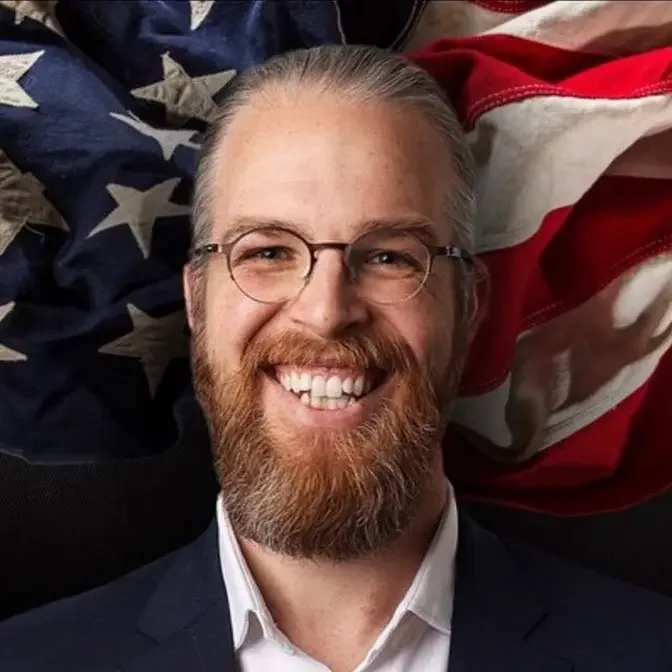
Join me for an important discussion with Jeffrey Smith, director of the Institute for Responsible Technology and one of the world's leading advocates against GM foods.
Ladies and gentlemen, welcome to Man in America. I'm your host Seth Hohaus. I'm sure that you're
familiar with Monsanto or Bayer Monsanto. It's a company that has killed a lot of people. They
have ties to Agent Orange. They're also the ones that are poisoning us through the corn you're
buying at your local supermarket that is full of glyphosate. Maybe you've been trying to avoid
these products. You've been eating organic or non-GMO. But I think it's really important that
we don't lose sight of the effect that these companies and these chemicals have had on
mankind. And so joining us today is a man named Jeffrey Smith, who is on the forefront of exposing
and fighting back against these big agendas. And the information that he's going to be presenting
today is mind-blowing. One of which is he's going to go through a slideshow that shows what's
happened since the introduction of GMO corn, soy, etc., and the chemical fertilizers, the glyphosate,
showing how those trend lines actually match up almost perfectly to rates of autism, depression,
Alzheimer's, heart disease, cancers, all kinds of stuff. It's mind-blowing. But even more crazy
than that that he'll be getting into is CRISPR technology and what he's calling GMO 2.0, which
is a ticking time bomb. So please enjoy the interview with my guest today, Jeffrey Smith.
Jeffrey, thank you so much for being here today. It's great to have you on the show.
I'm so excited about what we're about to jump into.
I am too. And before we jump into it, I just want to give Sherry Tenpenny a quick
shout out because I recently interviewed her and she said towards the end of it,
we're talking afterwards, she said, Seth, you have to interview my good friend Jeffrey Smith
because what he's talking about with GMOs and gene editing in the foods is one of the most,
if not the most important issue, but also one of the greatest threats to our future on this earth.
So that was the catalyst for being here today. So thank you, Sherry. And Jeffrey,
I'm looking forward to digging into this with you.
The good news is you have me. The bad news is it's true.
We're going to talk about something that's just so dangerous and ways that we can deal with it.
So I'm not going to be everyone like, you know, like death, disease, destruction, despair, goodbye.
Yeah, we don't need much more of that these days.
No, not these days.
So I guess I'll just hand it to you and where you want to start with this topic.
Sure. I've been the leading spokesperson on the health dangers of genetically engineered foods.
I've been doing this stuff for 28 years. I wrote the book Seeds of Deception and Genetic Roulette
and have five films and have traveled and spoken in 43 countries and testified all over, etc.
And my whole focus for so long was to convince consumers to avoid eating GMOs and that they
were dangerous. And we did a good job building a movement. We reached all over the planet,
about half the world's population now understand that GMO foods are not safe.
New GMOs, I call them GMO 2.0, have been introduced that are far more dangerous than anything,
not just far more dangerous than GMO 1.0, but far more dangerous than almost anything on the planet.
And the level of care and oversight is virtually missing. And we're going to talk about
how this generation is pivotal. And we could theoretically end biological evolution as we
know it, wipe out massive species, cause massive diseases. And what's being talked about that are
lies by companies like Bear, Monsanto and others, and what's being accepted by the governments that
But before we dive into that, I feel obligated because so many people come up to me all over
the world as I travel. You saved my life. You saved my family. You gave me information about
what to eat. And this disease went away and this disease went away. And I have a film that I did
called Secret Ingredients with Amy Hart and people who switched to organic diets get better from all
sorts of diseases and disorders. I feel obligated, Seth, to share for five minutes the
information, the practical information that people can take away for their own diet, and then we'll
save the planet. How about that? It's perfect. Cause a lot of times we'll end the show with
solutions. And I always try to touch on solutions because knowing the problem without knowing the
solutions only halfway there. And it can actually be sometimes worse than just not knowing the
problem at all. We're going to talk about a solution for the individual. And then afterwards,
we're going to talk about the solution for the planet and their same general technology,
but applied differently. It turns out that genetically modified organisms, most of them
have been designed not to die when sprayed with Roundup herbicide. Monsanto's patent on glyphosate,
which is the chief poison in Roundup, was going to be expired in 2000. So they created
genetically engineered Roundup ready seeds that could be sprayed with Roundup, not killing the
crops, but killing all of the other plant biodiversity they call weeds. The Roundup
infiltrates into the crop. We eat the food, we eat the Roundup. And so we have Roundup in our system
and we have GMOs, which by themselves have been linked to massive numbers of diseases and
disorders. So we have at least two toxins in the genetically engineered soy, corn, and then the
cottonseed oil, canola oil, and whatnot. So I'm going to share with you some correlational charts.
Now, I have to say that when I put a chart up, as I'm about to show you, with inflammatory
bowel disease increasing in the United States and the amount of glyphosate sprayed on soy and corn,
which means the amount of genetically engineered soy and corn there is, you're going to see a
correlation. It looks like they're flowing together. That doesn't prove anything.
Correlation doesn't prove causation. We have patient and clinical experience, individual reports,
animal feeding studies, plausible causative pathways. We have information from all these
different angles that explain not only does this Roundup or GMO probably cause or exacerbate that
disease, it's creating the precursors or the disease in animals. It's getting better in those
people that switch to organic. We can see the particular pathway that's causing it.
So what I'm about to show you is kind of overwhelming because it turns out that not
eating organic is one of the greatest problems you can have for your health. Because when you
eat organic, you avoid the GMOs. They're not allowed to contain GMOs. And you avoid the Roundup.
Now, Roundup is also sprayed on non-GMO crops like oats and wheat and lentils and beans to dry them
down before harvest. So even if you avoid GMOs, you still may be essentially drinking the Roundup.
And we're not going to take the time now, Seth, to share why exactly the GMO and the Roundup may
be related to these diseases. That's a different lecture. You can go on our site at
responsibletechnology.org and get all that geeky information. I just want to kind of like
let you know that if you suffer from any of these diseases or if anyone you know does,
the first step is to switch to organic and take notes and watch what happens.
Can you share the slide first, Seth? And this is inflammatory bowel disease. You'll see that
orange line. That's the amount of glyphosate applied to soy and corn. And it looks like
the two are very moving in parallel. Now, we're going to go through about 38 different slides
in the fastest you've ever seen a PowerPoint presentation go. So you're not even going to
have time to read the disease on the top. I'm just going to have you look at the chart to see
the relationship. And I'll name the disease. I'll mention it out loud. OK, next. Deaths from
obesity. Now, here we have just so you know, we have percentage of GMO soy and corn in the dark
line. We have amount of glyphosate applied. And in this is a few charts that have this trend line,
meaning if nothing new or introduced, that's where deaths from obesity would be.
So you could see the dramatic increase as a result or, in my opinion, as a result of the
GMOs and roundup. OK, let's fly through these. Anxiety. Next. Diabetes. There's a trend line
there. Next. Deaths from Alzheimer's. Next. Deaths from Parkinson's. Next. Deaths from hypertension.
Next. Autism in six year old. A near perfect correlation. Next. Insomnia. Next. Celiac
disease. Next. Hospitalization from acute kidney injury. Next. This is death from kidney failure.
Next. Kidney and pelvic cancer. Next. Liver cancer. Next. Liver and bile duct cancer. Next.
Thyroid cancer. Next. Death from leukemia. Next. Breast cancer. Next. Deaths from intestinal
infection. Next. Deaths from disorders of lipoprotein metabolism. Next. Peritonitis. Next.
Hepatitis C. Next. Dementia. Next. Deaths from senile dementia. Next. ADHD. Next. Schizophrenia.
Next. Suicide by overdose. Next. Congenital birth defects. This is the birth defect section. Next.
Congenital heart defects. Next. Newborn metabolic disorders. Next. Newborn genitourinary disorders.
Next. Skin disorders. Next. Newborns with lung conditions. Next. Newborn eye disorders. Next.
Newborn blood disorders related to the immune system. Next. Here we go. Anemia and lymph
disorders and age-adjusted deaths due to stroke. In the next slide, I interviewed 3,256 people,
actually surveyed that many, and asked them, what did you get better from when you switched
to non-GMO and largely organic foods? This is in a peer-reviewed published journal. And 85% said
they got better from digestive disorders, 60% fatigue, 55% obesity or overweight, 52% brain
fog and mood problems like anxiety and depression, about half food allergies, and it goes on.
Many of these overlap with what you just saw. Now, what you just saw earlier, I'll give you
an example. Insomnia. One-third of the people, over a thousand people got better from insomnia
from our survey. How is it that it's possible that GMOs and Roundup can keep you awake at night
except for worrying about it? It turns out it's easy to explain, as are many of these disorders.
People know what melatonin is. You take melatonin before you go to bed sometimes.
Melatonin is converted by serotonin, a happy chemical, very important. Serotonin is created
in the gut by a precursor called L-tryptophan. L-tryptophan is produced in the gut by the gut
bacteria. The little mechanism that produces the tryptophan is called the shikimate pathway,
which is blocked by glyphosate, which is found in Roundup. So if we went the other way,
we take Roundup, we stop the tryptophan, we stop the serotonin, we stop the melatonin,
we can't sleep. So we can relate all of those types of things with all the charts, but we're
because we have to get to something worse. So we can end the charts now, thank you,
Stefan. And I want to just say the easy takeaway is go organic. Go as close to 100% as you can.
Take a spreadsheet, put your mood on the left, put your energy level on the left,
all your symptoms, and in the column every day, 1 to 10, and the percentage of organic.
And in my film, Secret Ingredients, which I strongly recommend if you want to be highly
motivated, doctors there get real excited when their patients cheat and their symptoms come back,
and then they realize, oh, it really is the food, now I can't cheat. All right,
I had to get through that. Do you have any questions, Seth?
Well, I guess not necessarily a question, but just a realization, because when I looked at,
we eat mostly organic as much as possible. Sometimes even if you go to a nice high-end
restaurant, they're not always using organic, and you can't get away from that. But a lot of times
they're sourcing locally, which is the next best thing, I guess, from getting something from
overseas. But oftentimes, I looked at these things like Monsanto and the Roundup, and I looked at
those as being more cancer-causers. Like, okay, well, I'll avoid those, I'll avoid that stuff
because it causes cancer and it causes some problems. But what we just looked at there,
to me, it's like, oh my gosh, almost everything that's wrong with mankind physically now,
the obesity, the depression, the insomnia, the gut disorders, autism, obviously, we have
elements of big pharma. We have the vaccines with the heavy metals, and those certainly have a play,
have a part to play in this. But if you look at some of those charts, I mean, it wasn't just
like you could overlay a little bit and say, oh, okay, they're kind of following the same
trend line. You could see that it was exact. So when there was a spike, I'll just scroll through,
actually, I'll bring up an example. Let me find one that... Folks, how do you feel? Me, I feel
great. And one of the reasons I believe I feel better is because I take Balance of Nature's
Fruits and Veggies in a Capsule. They have an amazing story how this product was developed by
Dr. Douglas Howard. It's right there on their website. Balance of Nature receives over a
thousand success stories every single month. They have hundreds of thousands of customers who
purchased billions of capsules of their fruits and veggies over the past 20 years. You should
check it all out on their website. Their products are gluten-free and non-GMO, and they contain no
added sugars or synthetics. I think if you're looking for something to make you feel better
naturally, you should definitely give Balance of Nature a try. In fact, order today. Whether you
order online or call them direct, you must use a promo code, Seth, that's S-E-T-H. They get this
special offer of 35% off, plus $10 off any additional sets, plus free shipping and the
money-back guarantee. Call them at 800-2468-751 and use discount code, Seth, or order online at
balanceofnature.com and use discount code, Seth, to get 35% off. Earlier on, let me go back to
the beginning here. Here, for instance, this is insomnia, where you could see in 2003, there's a
then it doesn't go quite as much in 2004, and then back up in 2005. There's almost a direct
correlation you're seeing with this. Here, autism in six-year-olds.
Let me tell you the story behind this, because I know I'm delaying the apocalypse, but hang on
for a second. I interviewed Stephanie Senev, a senior researcher at MIT, and she's a brain whiz,
absolutely, and she was taking down all the information off all the data on autism, and she
said, I understood exactly why they have those particular symptoms and behaviors. I can't figure
out the environmental insult. She checked. She did a big data search on all of the evidence,
on all of the toxins she knew. Nothing fit hand in glove. She went to a lecture by another friend of
mine, Professor Emeritus Don Huber. He's an expert on glyphosate. He gave a lecture. She said to me,
she was sitting on the edge of her chair. It was like everything he said fit perfectly. She pulled
down all the data. It fit perfectly. She ran the numbers of autism, and she ran the numbers of
glyphosate, and it fit. She goes, well, wait a minute. If someone with autism is six years old,
they're not just presented with glyphosate that year. Let's take that year and the previous three
years of amount of glyphosate, and when she did that, the correlation was nearly perfect,
and I've interviewed her about this. She's written a peer-reviewed article. Virtually every single
physiological symptom for autism can be explained by glyphosate or its derivatives,
and it's not just cancer. I mean, glyphosate, if you look at the foundations of health,
glyphosate checks them all off. It blocks the ability to absorb minerals. It creates leaky gut.
It's an antibiotic. It kills the gut bacteria. It destroys mitochondria. It
blocks the neurotransmitters. It changes the hormones. It causes damage to the gut bacteria.
It causes changes and damage in the DNA. It blocks intercellular communication,
and I'm just getting started, and so it's like those are the foundations, which is why,
and we know more about glyphosate than we do GMOs, but when you put the two together,
it's like a double-barrel shotgun. So, just to answer the question that some people are
freaking out about, what if you can't get organic? Like you said, you go out to eat.
So, on our website, join the GMO-free community, and if you want to pay $25 a month and we can sure
use it, join the self-care advocacy community, and then you're going to know if you can't eat
by non-GMO, and you'll learn how, and avoid the products that have high levels of glyphosate
spray. We have the database of all the different foods that have been tested and their levels,
so you'll know, okay, can't have oats in the morning unless it's non-GMO and organic.
Non-GMO doesn't do it because oats are not genetically engineered. It's really organic
in terms of oats. So, it's all on the site. Go there, responsibletechnology.org,
and are we ready to jump into the nasty stuff? Yeah, because I mean, to me, this is apocalyptic
looking at those charts. It's like, oh my gosh, they're just like, it's like we're cockroaches
and they're just spraying us with this stuff to kill us. This is so solvable on an individual
level. Even rats that have been massively damaged by eight months of eating genetically engineered
soy, they switch them into non-GMO soy, and within a month, they're rebuilding their testicles and
liver and pancreas, right? It does work. The system can build itself. All right, so now,
with GMOs, the traditional ones like soy and corn, you took genes from other species,
put them in a gene gun, shot the gun into a plate of cells, millions of particles of
gold or tungsten coated by genes, hoping that some of them would get into the DNA,
and voila, you have a new organism that never existed in nature. You also have a massively
damaged DNA with all sorts of possible allergens or toxins or anti-nutrients being created.
Now, along comes GMO 2.0, the most popular of which is gene editing, the most popular of which
is CRISPR. So instead of putting a gene gun together and blasting it randomly,
you take this little genetic scissors, part of CRISPR, that cuts the DNA, and you take a
little molecular guy with a clipboard and a formula to say, cut here. And the two,
they join hands and they walk along the DNA and they cut where they're supposed to cut,
in the hopes that when the cell puts it back together, it'll look like what you want. It'll
have blocked a gene, it'll have created something new to attach them, and it turns out there's also
massive collateral damage. On our site, we have a six-minute animated journey into the DNA.
It's called Seven Reasons Why Gene Editing is Dangerous and Unpredictable, and it's clear.
In fact, the journal, I think it was Lancet, called it chromosomal mayhem, not with nature,
called it chromosomal mayhem, the results of CRISPR. Now, knowing that it's chromosomal mayhem,
you would expect that if someone wants to do a CRISPR gene edit of mushrooms and serve them to
people or lettuce or anything, that there'd be, whoa, dude, test it, make sure you haven't created
some death chemical. But the biotic industry convinced governments that gene editing was
precise, ignoring the research, safe, predictable, entirely lies, completely lies,
and have convinced the United States, Canada, Britain, India, Australia, Japan, Brazil,
Argentina, and now the Environmental Committee of the European Parliament just voted in favor of
deregulating gene editing, and it's going to the bigger assembly. Now, this means that you can
gene edit a food and put it on the market and never test it and never label it and never tell
anyone that it's been gene edited, and if you create it in nature, it becomes self-propagating,
and now it has fully contaminated the gene pool. Now, here's where it gets really interesting.
When I say you, well, not me, you mean Monsanto. Well, actually,
CRISPR labs now cost as little as less than $2,000, and it doesn't require a PhD
to mix the chemicals according to the instructions. You can create gene-edited foods
in the safety of your own home, and the most common one that people create are microorganisms,
and we are now facing a gene rush. You know what a gold rush is. Oh, there's gold in them,
their hills. Let's get it. There's gold in them, their DNA, and all of these entrepreneurs and
some well-meaning companies and some not-so-well-meaning companies want to get their
patented organism out there and get the money from it before the patent expires,
so mosquitoes and other insects, salmon and other fish, grass, trees, hornless cattle.
I mean, basically, if it has DNA, it's up for grabs, and if you think about it,
what's the result of changing the DNA in ways that we can't predict using a technology prone
to side effects and releasing them into the environment where it can never be recalled?
So that is what I think an Indigenous wise person was talking about in the early 90s
when he told a friend of mine that in this generation, in this century, humanity would
face the risk of ending biological evolution as we know it. We have arrived at that inevitable time
in technology and human civilization where we can easily and accidentally
redirect the streams of evolution for all time, and there's no one overseeing it saying,
maybe we shouldn't. Now, looking at that, our Institute for Responsible Technology,
responsibletechnology.org, has been very successful at educating consumers to avoid eating GMOs,
and we created the Tipping Point. I trained 1,500 people around the world and organized over
10,000 activists. It was a very successful move. I was on the road six to nine months a year
for 13 years straight. I can't envision a way that consumer choices in the supermarket
will protect the salmon and the mosquitoes and the grass and the bacteria and the cows.
It has to be laws. It has to be international treaties.
So looking at it as a strategist and an activist, I'm thinking, well, where do we go first?
And we decided to ask the question, what are the most dangerous GMOs to genetic? Would you
like to weigh in with a guess? What are the most dangerous GMOs?
Genetically modified organisms. If you were to genetically engineer a class or a species or a
kingdom, which one carry the greatest dangers? Well, I would think it would be something that
would spread the quickest and wild. Something where if you did something wrong or bad,
that it would be an organism that would very quickly...
That is one of the criteria that is true in this case, and the answer is microorganisms.
We know that they spread quickly. They can grow astronomically in the right conditions.
Now, microbes are amazing. They run the scene and they're the micro Jedi army that we don't pay
attention to. 80% of human diseases find their source in damage to the microbes living inside us.
There's a balanced community that we outsource up to 90% of our chemical and metabolic functions
to the microbes living inside us. We co-evolved with them. So it's so important that the microbiome
and the gut is established in a proper way for an infant. Consider what happens
to make that happen. Milk digesting bacteria come into the birth canal in the second trimester
on its own to inoculate the baby, to digest the milk. The first milk that comes takes out the
oxygen from the digestive tract to make it anaerobic so that the healthy bacteria will
survive. More microbes come from the milk. More microbes come from the nipple during breastfeeding
and a significant portion of the milk is indigestible by the infant. It's not designed
for the infant. It's to feed the microbes. If the infant gets sick, the salivary microbes feed back
through the nipple to the parent, to the mother, and it changes the formula for the milk while the
kid has the fever. And when the kid gets better, it changes back. I mean, it's incredible. If you
think about the importance of the microbes, we think that the rainforests are the lungs of the
planet. Wrong. Algae is. More than half of the oxygen comes from algae. And speaking of forests,
the mycorrhizal fungi shuttles nutrients between trees, keeping the forest healthy. The soil
bacteria, that's what causes the carbon cycle that draws down the carbon. It provides health
for the crops and all plants. And of course, the microbes inside us are mission critical for our
health. One of the reasons why microbiomes can do this is because they have big swap meets with
genes and they're flowing genes all around and adjusting to support the organisms that they're
inside of or the ecosystems where they live so that they can support it and be supported by it.
Now you genetically engineer a microbe, release it into the environment, and let's say that
survives and starts to replicate. We know it'll mutate, sure. We know it'll travel everywhere
and it'll start swapping its genes with other types of microorganisms. So you created something,
not knowing exactly what it was, and now it's in 10,000 different types of organisms and 100,000
ecosystems and in a million people. What could go wrong? What could go wrong was described in
the film, 16-minute film on our website called Don't Let the Gene Out of the Bottle,
16-minute film. And it describes a, almost there, keep going, keep going, right there,
don't let the gene out of the bottle. And in there, we talked to Elaine Ingham,
who tells the story, and I'm not going to spoil it for you, of a genetically engineered microbe,
which had it been released as planned, could have theoretically, worst case scenario,
ended terrestrial plant life. That sounds bad.
Yeah, I hate when that happens. There's another genetically engineered bacteria,
had it been released as planned, could have theoretically altered weather patterns.
Folks, perhaps you'd agree with me when I say that over the past five years,
the mainstream healthcare system's credibility has plummeted. Alternative healthcare systems
that aren't beholden to medical consensus or big pharma are on the rise. Sweetamine is time tested
and proven to boost your life with better health. It's one of the leading products that helps with
inflammation and daily aches and pains. Just because you get older, it doesn't mean you have
to feel old. And folks, did you know that most of the diseases that make people sick and die these
days are rooted in chronic inflammation, oftentimes due to glycine deficiency. So,
sweetamine is composed mainly of the amino acid glycine, the nutrient that the immune system
uses to regulate inflammation. So, with once daily sweetamine, most people feel the reduction in pain
after just a few days. So, I challenge you to the 12-day sweetamine challenge to fight inflammation
and take control of your health today. So, folks, buy sweetamine online at sweetamine.com or call
855-GET-SWEET. That's 855-438-7933. And make sure you use promo code Seth, S-E-T-H,
to get a nice discount on your purchase. Now, those were microbes doing what they
were intended to do only in more ecosystems outside the narrow focus of the scientist.
That doesn't even count their swapping the genes into the greater microbial community.
That's just two examples of near cataclysms potential. We don't know. We don't want to
find out. Now, here comes the interesting part. High schools are now using CRISPR,
assigning to students to create genetically engineered microorganisms. And they have a lot
of flexibility. Once they get into the lab, they can get microbes out of the nearby creek,
out of their own body, on their skin. They can create all sorts of target sequences for CRISPR
changing things up and down the DNA. And they don't. They're not going to control the release
of it. Once it gets in there, it'll be on their fingers. It'll be in their mouth.
It'll be in the environment. So, we're talking about millions of different types of genetically
engineered microorganisms produced in high school. Most will die. Some, not the kids,
the microorganisms, when they would get released. But some that survive might actually change the
nature of nature. And of course, you have the college students. You have companies that spread
genetically engineered bacteria on soil for remediation. And they're up to 43 million acres
right now of genetically engineered bacteria. That may grow exponentially because the biotech
industry is buying up all these companies that have natural microorganisms for remediation.
And what if they want to patent it and play with genes? And then you have companies that take
genetically engineered microbes, yeast, bacteria, algae, and use them as little factories. So, let's
put in a gene from the opium poppy and put it in a fermentation vat, put it into yeast, and let it
produce opioids. And then we'll purify it at the end and create a drug, or CBD, or vanilla, or
saffron, or whatever, an industrial chemical. This is called synthetic biology. Now, what if those
escape and it ends up in our gut? What happens if our gut bacteria pick up the gene that produces
the opioid? Except because bacteria swap genes, right? Now, we have yeast bacteria that we may
have a gut bacteria that produces opium or opioids. Or worse yet, let's say you take a pill
and it has a little naked DNA from the fermentation vat, the same DNA coding the
opioid. Now, you've just potentially inoculated your gut bacteria into a living opioid factory.
So, we have all these different things producing genetically engineered microorganisms.
And consider the regulation. None of the ones in academia are regulated in the United States,
pretty much. It's different in different countries. Let's just focus on the U.S.
None. You buy a CRISPR kit, use it in your basement, not regulated. Synthetic biology,
unregulated, virtually. I've seen what the USDA requires for a document for a company or the EPA
to release genetic engineered microbes, virtually useless. They don't check to see if it's going to
transfer to other ecosystems and what it might do in the gut. You know, you release it on the soil,
it's going to end up in someone's gut, infant's gut. It's going to end up in the mouth,
microbiome, et cetera, on the skin. And there's reasons to believe that it could completely
mess us up. Like when you release a microbe for the soil, there's a lot of competition and most
will die. So you build a little tank around it. Antimicrobials to kill other microbes,
antibiotic resistance so the roundup doesn't kill it. So now I have a little tank around it
and it can grow. But if the tank, forget about what it's used, maybe nitrogen fixation,
gets in our body and now a pathogen picks up the tank, little genetic tank. And that pathogen now
is killing off of other microbes and not killable by antibiotics. We're just setting the scene for
disasters. Now, a lot of your listeners know about gain of function. I don't have to reintroduce
it. And I'm in favor of banning gain of function. But there's one thing that those people who are
championing this are forgetting, and that is microbiology. And that is, it's not just the
pandemic pathogens, Seth. It's the common bacteria in our gut, the common bacteria in the water,
in the soil, in the air that we've relied on, that the ecosystems that our health have relied on
for millennia. If you change those, you risk collapsing ecosystems, creating new pandemics,
not from pathogens that you know about, but from systems that we rely on in the background.
And most of them have yet to be discovered. We've only identified 1% of the estimated trillion
microbes, and yet we're already messing them up. So that's the problem. We're going to talk about
solution and whatnot, but I've been speaking for a long time. I'm going to throw it over to you and
see what you got. Well, where my mind goes with this is the early experiments in developing the
atom bomb and nuclear fission, where even these scientists thought, if we do this,
what if we initiate this, whatever they're doing at that level, and it just doesn't stop?
What if they rip a hole in our reality or whatever would happen? It's frightening,
but this seems like it's similar to that. I really think that if you look at one of the
core problems of where our humanity is at right now, it's that there are certain people on Earth
that I think are either atheists or maybe they have some sort of dark practice, who knows,
but fundamentally, they think that they can play God. They think they can play God with
controlling how we think via control of social media and big tech, through what we can eat, etc.
And that is what scares me, because I think that history has shown us over and over and over again,
when man tries to play God, bad things happen. And this is what comes to mind when having this
discussion with you. I'm thinking, oh my goodness, this could be really, really bad.
I mean, it takes me to the place of the movie Interstellar. Very interesting, great sci-fi
movie, and they had this blight, right? That was what it was at that time. They had this blight
that wiped out all the crops on the entire Earth, and Earth became this big dust bowl,
and they had to go find ways to live in outer space. I feel like this is what could happen.
Someone could be cooking something up in their science class in their freshman year of school,
and who knows, they let it out, and maybe that thing right there is what causes corn to stop
growing in America. I mean, it just seems like it's absolutely serious. We're not just playing
with fire, it's like we're playing with an atom bomb, and we have no idea what's going to happen
with it. I agree. I've used the analogy, Seth, that no one would give an adolescent or an infant
a launch device for a missile or a detonation button for an atom bomb. So don't touch the red
button. But we don't think in terms of, oh, don't use the CRISPR and create something that might
cause an unstoppable biological chain reaction. It's a matter of education. What we're talking
about is logical and obvious once you think about it. Now, a lot of people don't think about it.
We have a microbiologist that works part-time on staff, and he said, call some of your friends
or contact some of your other microbiologists and ask them what they think about the potential
dangers of genetically engineered microbes for human and environmental health. And he contacted
five, and he said, they all said the same thing. I never thought about it. Right? Then I talked to
another friend who was talking to scientists, and he said, oh, I met a scientist, very prominent
microbiologist doing gene work, and he says, I don't see any problem with releasing genetically
engineered microbes. I said, get him on the phone. So we had an hour-long discussion,
and by the end of the hour, he was entirely on my side. He said, I agree with you now 100%.
I don't think any genetically engineered microorganisms should be allowed to be
released anywhere on the planet. Now, he spent decades doing microbiology,
but it wasn't until just looking at some of these, what I consider obvious, but are obviously not
obvious, ways of looking at systems and the potential here for bringing down those systems.
So I'm about to describe for you where I think I would go if I had the money.
When I say if I had the money, you know, I was able to operate Institute for Responsible
Technology on basically fumes for decades, because we were creating the template of
information that was picked up by everyone. You know, my book became the world's best-selling
book on GMOs. The Secret Ingredients became the most popular thing. When I showed Genetic Roulette
movie, it was seen by 2 million people in a few weeks. And so we were just putting information
out. Knowledge has organizing power, and we were also organizing and training and whatnot,
but it didn't cost a lot of money. But stopping this is a lot of money. And frankly, we don't have
it. So I'm going to tell you the plan, and I'm going to say anyone can take this plan and implement
it, or can give us a bunch of money. In fact, we even need a little money just to keep the lights
on so I can keep doing podcasts at this point, because we're out of money. So help. If you'd
like to contribute, go to responsibletechnology.org. If you're a healthcare practitioner,
we have a whole program for you and your patients. And we have also another group that's
self-care advocates where we curated the best of our materials from the last 20 years.
We have a lot of stuff. We have videos and whatever. In the self-care advocate program,
there's the film Secret Ingredients that I've been talking about. There's a 90-day lifestyle
upgrade with 84 videos to help you get up that curve so that you can eat organic and live an
organic lifestyle easier and with less money other than otherwise, because you're talking
about people who've figured it out. All that's on there. How to eat in restaurants. What about
GMO 1.0? What about GMO 2.0? It's all there. We've made it inexpensive. We just want to get
that word out. And then what I would do if I had the money is I would develop the science so that
it was ironclad. And we have an article that we're writing. And it's very exciting, all the
different scientists that are participating. And it's really demonstrating a lot of risks that I
had never even considered. I would also note that we need to get this out to popular culture.
Documentaries, docuseries, podcasts. How about that? Social media. Just inoculate popular culture.
But there's a shortcut. And there are groups out there that need a healthy microbiome
to be successful. And they don't know that the microbiome is under attack.
So healthcare practitioners, those that know that the microbiome is so important,
they love and want to protect it. They don't realize what you just heard today.
So we want the healthcare movement to support the call for no GMO microbes released. We want
the regenerative agriculture movement to rely on the microbes in the soil for their success.
For those that are interested in drawing down carbon, no matter where you are in that thing,
you want the soil to create that carbon cycle. If you want to continue to have life on earth,
then there's a success there we want to maintain. We need the microbes to do that.
Oceans rely on microorganisms for their survival. Forests, every environmental organization
needs the micro-Jedi army to do its stuff. They don't know it's being threatened. So
if we had the money, we would go to the champions in each of those and say,
have you considered? And I went to the functional medicine champions, Jeff Bland, Tom O'Brien,
Joe Pizzorno, people that some people know. And I told them about what we're doing and they went,
oh my God, I had no idea. Jeff Bland, who started functional medicine, I have a little website
video on him in the healthcare practitioner hub. And he goes, I have to say, I have a mea culpa.
I'm sorry. I never really thought about it until you sat down and told me about it. And now I
realize that we could be creating problems that are unfixable, unfixable. So it just takes
conveying to these leaders and then helping them craft, customize, and focus their message to their
movement. Now we're sitting on a movement of movements and popular culture and academia.
And then we focus that engine on national laws and international treaties. And we do it quickly.
And we do it internationally. You don't stop microorganisms in one country and say,
okay, we're safe. Everyone knows that by now, or you haven't been alive lately.
So that's what I would do if someone came along and said, okay, I'm going to fund the Institute
for Responsible Technology. And that's what I'm going to talk about as long as we have
small numbers of donors coming. I'll just keep talking about it until we get the big bucks.
Or I'm saying, here's all of our information, all the videos, all the white papers,
all the thousands of materials. Anyone can have it. And I'll be on your board. I'll consult,
or you can do it on your own. This needs to be addressed. And the reason I know about it is
because I've been sitting in this seat, sort of the leading spokesperson, talking to the scientists,
traveling around the world, aware of this technology more than almost anyone.
Because scientists, even the scientists that are against GMOs, they focus on their areas.
I talk to all of them. I compile it into books and movies. So I happen to be
sitting in this vantage point. So it's easy for me to see it. And it's not rocket science. Biology
is far more complicated. But just to pull back and see it and go, oh my God, just through simple,
inexpensive gene editing, we can end biological evolution as we know it. And we can do it really
quickly with microorganisms. Let's convene sensible decision makers. Let's inoculate
collective consciousness. Let's use the fact that collective consciousness is not linear or local,
but can jump forward and create leaps of understanding, which has been happening
randomly in the past. Let's orchestrate it and engineer it and get the critical mass of people,
not from fear and not from anger and desperation. Let's take the attitude that is needed here.
The attitude is we need to protect nature. We need to be the stewards of nature. We need to
be the stewards of the DNA. That we have now, for the first time in human civilization,
been given the ability for any individual to affect all living beings and all future generations.
That level of potential power, horizontal, all living beings, vertical through time,
all future generations, it's never been in our hands. And we're not equipped to handle it.
So we, as a group consciousness, need to shift and go, whoa, this is not something we want to
play with. And that's going to be a shift. It's going to happen with enough individuals getting
it, enough individuals listening to things like this, getting it out in popular culture,
getting it out in movement of movements, getting it out in academia. And then it'll become obvious.
It'll become so obvious, like don't give the kid the detonation device. It's stupid. It's obvious.
Oh, he's never going to touch it. No, he's going to touch it. He's going to look at it and think
about it and have a bad day. So this is something that we want not only obvious, we want to
institutionalize the safety. And because it's so easy to convey, Seth, 20 minutes ago,
30 minutes ago, people got it. They got it. It's not this hard thing to convey.
And that is one of our greatest assets. The fact that we've come out of a pandemic
is another one of our great assets because everyone's aware of the damage that microorganisms
can do and the stupidity of playing with DNA in ways that can escape and will escape.
So this turns out to be the perfect time and the most necessary time to step up,
to protect all living beings and all future generations. So I encourage, I'll just say it
one last time, because I haven't been good at raising money and it shows, which is why I had
to lay off my staff this month and cut myself into part time. And so we're just sitting here saying,
okay, we've got the begging bowl and we're here asking for your support at
responsibletechnology.org and we'd love for you to be on our team to protect nature now.
Well, I'll make sure your website is in the description. I also, I really encourage people
at a minimum to go check it out, buy the book, watch some of the videos. One of the next things
I'm going to be watching is a little documentary, Don't Let the Gene Out of the Bottle. Education
is power with this. And you're right. The greatest advantage to this is it's not some overly complex
thing. It's like, let's gain a function. How does that tie to this? And this is really, really
simple. There's some simple analogies that help people understand. I now understand it. I now
understand the threat of CRISPR technology is actually not necessarily some evil mad scientist
cooking up something in a lab. It's the high schooler that accidentally does something and then
coughs and it puts something out there and then wipes it on the school bus seat and it spreads.
And before you know it, our crops are dying or all bees have died or whatever it is. And so
I think education is power with this. If people want to support, again, the website,
responsibletechnology.org, that's where they can donate to support money. Obviously, it's really
important for funding these activities, getting more information out there. If someone doesn't
want to support that or they can't, they can share this interview. They can go to your website.
They can share the link. They can post it. They can send it to their local school board, etc.
It's really important. Jeffrey, I appreciate the time that you've put in even sitting here with
me today. Also, I appreciate all that you've done to raise awareness about this. It's incredibly
important. It makes me even more motivated to get my garden set up and get the nice, homemade,
organic food and everything really churning. It's highly important. So thank you again for
coming here. And I just appreciate what you're doing. Thank you. And I want to end by saying,
I speak at a lot of medical conferences and I've convinced tens of thousands of physicians to
prescribe non-GMO diets. The results are amazing in organic diets. And one of the things that I've
learned more and more about, sometimes there's a strong diagnosis or prognosis that's not very
good. You may die or whatever. And it turns into a blessing where it's like the person goes,
oh my God, my life's at risk here. I need to change my beliefs, change my decisions,
change my actions. And now they have a new life and now they emerge blessed and transformed
because the system that was working before was not in their favor. And now they're facing an
existential threat and now they need a new system. My hope is that this information and this
technology and the risk and its risk and existential threat on the planet will be like
the blessing of the prognosis or diagnosis that changes humanity's belief system, decisions,
and actions. And that we wake up and that this becomes part of that. And all of that you're doing
and all that other people are doing are part of that same alchemical feast that's doing it.
This has a particular angle, like this is pretty right here in your face right now. So I think that
I'm actually optimistic, very optimistic that this is going to end up being a positive thing
because the system we have isn't working. We need a new system and this is a wake up call.
I'm in the same boat as you. I certainly agree.
Jeffrey, thanks again for coming on. It's been great speaking with you.
Thank you so much. Folks, how do you feel?
Me? I feel great. And one of the reasons I believe I feel better is because I take Balance of Nature's
fruits and veggies in a capsule. They have an amazing story how this product was developed by
Dr. Douglas Howard. It's right there on their website. Balance of Nature receives over a
thousand success stories every single month. They have hundreds of thousands of customers
who've purchased billions of capsules of their fruits and veggies over the past 20 years.
You should check it all out on their website. Their products are gluten-free and non-GMO,
and they contain no added sugars or synthetics. I think if you're looking for something to make
you feel better naturally, you should definitely give Balance of Nature a try. In fact, order today.
Whether you order online or call them direct, you must use the promo code Seth. That's S-E-T-H.
They get the special offer of 35% off plus $10 off any additional sets plus
free shipping and the money back guarantee. So call them at 800-2468-751 and use discount code
Seth or order online at balanceofnature.com and use discount code Seth to get 35% off.