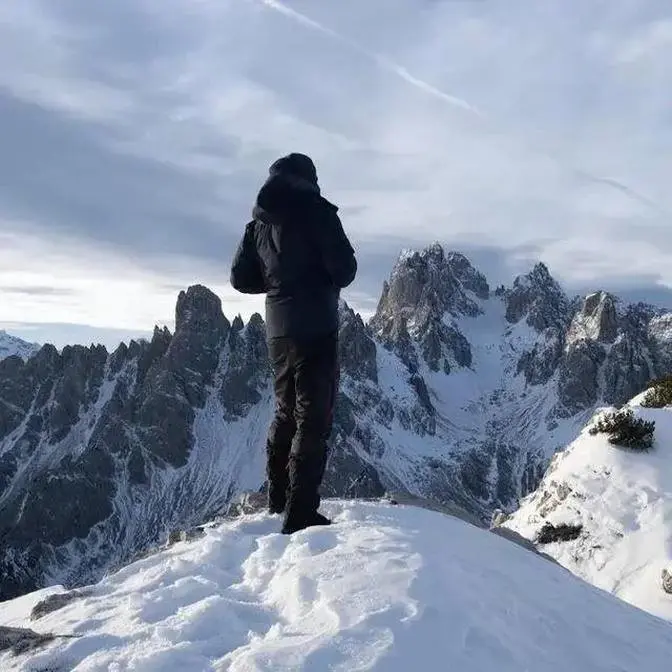
The new Sigma 10-18mm f2.8 is a serious competitor to Fuji's 10-24mm. I put it through it's paces shooting landscapes with in northern Norway. Thanks to @SigmaPortugal for letting me borrow it.
If you’d like to join me for a landscape photography workshop, my 2025 trips are already open. Check my website for more information https://www.andymumford.com/workshops/
If you're interested in purchasing any of the gear I use in this video, and you enjoy my videos, please consider supporting my work by clicking on the affiliate links below.
this is a sigma tin8 f2.8 for the Fuji X
Mount and I've just come back from using
it for two weeks in lton where I pr
through its Paces as a landscape
photography lens I've been using the
Fuji XF 10 to 24 as my landscape lens
since I switched to the system almost
eight years ago now it's a great lens
and I've really loved using it but it
does have one floor and that's the fact
that it's an F4 lens which means that
when I want to shoot Astro or something
like the Aurora then I need another lens
with a faster maximum aperture now Fuji
do have the h16 mm f2.8 but that's an
absolutely massive heavy lens and it
also requires specialized filter system
and so when Sigma announced this I was
really curious as from the specs it
looks like a good replacement for the 10
to 24 and with a constant f2.8 aperture
it should have the capacity to double as
an astro lens as well as being really
small and light so thanks to Portugal
for Lending me this lens to test it out
for this review and if you've seen my
channel before you'll know that I'm I'm
not really interested in the technical
aspects of Photography I'm not a
technical photographer my reviews are
based on what the lens is like from a
practical point of view so I'm
interested in things like the weight the
build the ease of use and of course the
image quality at the settings that I
most most often use for when I'm
shooting Landscapes so this is an
ultrawide Zoom a really useful lens for
shooting Landscapes as it allows you to
create really epic Grand scenix where
you can compose the whole of the scene
from the foreground to Mountains and the
sky beyond that 10 mm is really very
wide it's 15 mm equivalent on a full
frame and that is really very wide you
can see the difference here between 10
mm and then something like 13 mm on the
VR and here you have the lower 9 mm now
the reason I'm comparing it with those
two lenses in particular is because
they're what I've been using for Aurora
and asers for the past couple of years
because they have the faster aperture
now at the other end of the zoom it is
only 18 mm which isn't as long as a 24
on the 10 to 24 and 24 mm is a focal
lens that I do use a lot so it could
mean a lot more lens changes and things
like that but for me that's an
acceptable trade-off to keep the lens so
small and light and it does also reach
the widest focal length of mid-range
zooms like the 16 to 55 or the 16 to 80
so with that overlap you're never really
going to be missing anything in any
particular focal length which is
something that I did find occasionally
happened when I went to the USA and I
just had the 8 mm Prime and the 16 to 80
occasionally I found myself wanting
something in between so having a zoom
lens really does help with that so it's
a really small lens considerably smaller
than the 10 to 24 and a lot smaller than
something like the 16 it's actually not
that much bigger than the 8 mm Prime and
AD just 260 g it's only a tiny bit
heavier and quite a bit lighter than the
1024 which makes it a really convenient
lens for carrying around or for hiking
in the mountains when you really want to
keep the weight low now it is an almost
completely plastic construction so for
sure it is light but it's not going to
be as tough as a 10 to 24 which I've
used for about seven years now and it
still feels as good as new of course it
doesn't have the premium feel of a metal
lens but it does still feel pretty nice
to use there's nothing flimsy or fragile
about it and over the two weeks I was in
Lon and we were out shooting in almost
hurricane conditions driving rains we
had blizzards next to the ocean and I
never had any issues with it performing
now it's not actually classed as being
weatherproof because while there is a
seal between the camera body and lens
the rings around the leg lens are not
sealed as I said though I've used it in
some pretty harsh conditions and some
pretty nasty weather and it was fine now
there are two rings uh Focus ring and
zoom ring both of which have a nice
level of resistance it's one of the bug
beers that I have with quite a lot of
Fuji lenses is that the focus ring in
particular is very loose which makes
manual focusing really quite fiddly and
hard to be precise Focus ring here is
nice got a good level resistance and I
was able to get quite precise
adjustments when I was manually focusing
for the Aurora now there is no apertur
ring at all so aperture adjustments have
to be made on the camera body itself and
that might take a little bit of getting
used to if you're used to making all of
your adjustments on the lens it's uh
with with other fui lenses the Rings are
all plastic you don't get the rubber
grips of the 10 to 24 but they are still
really easy to operate with gloves on
they just don't feel quite as nice un
likee the 1024 which has a completely
internal Zoom this actually extends
through the zoom range a little bit and
it's reversed too so when it's closed up
it's actually at 18 mm at the long end
of the zoom range and it extends
outwards as you zoom out to to the to
the wide focal length and that's pretty
much it for the exterior of the lens
it's pretty minimal it has no buttons
and that means that there's no ois
activation button because this lens
doesn't have
stabilization now how important that is
to will really depend on how important
on on your usage many of Fuji's latest
generation of cameras do have stabiliz
stabilization built into the bodies and
wide angle lenses are generally the
lenses where stabilization matters less
unlike telephotos but it is something to
bear in mind particularly if you're
shooting with one of Fugi cameras like
the XPR or the xt30 which aren't
stabilized now there I don't really have
that much to say about focus it is an
autofocus lens and I found it worked
fine with the xt5 but as a landscape
photography shooter I very rarely put
autofocus to any serious test so this
probably isn't the review uh if
autofocus is what you're interested in
on this lens it does have a really close
minimum Focus distance of 11.6 CM Which
is less than half of that of the 10 to
24 all right let's have a look at what
you can expect from the images that this
lens produces now as I said in the
introduction I'm not really going to
dive deeply into sharpness charts at
every aperture and every focal length
what's important to me and the things
that I really want to know is how it's
going to perform for Landscapes at
around f7.1 which is where lenses tend
to perform better at both ends of the
zoom and how sharp it is wide open for
Astro and Aurora shots so I'm going to
start by having a look at a few edited
images now I will look at some unedited
raw files later but it's always
interesting for me to look at some some
of the some of the edited images because
it just gives you an idea of what you
can expect from the image quality that
the lens is going to produce after I've
kind of after I run it through editing
obviously the better the origin the
better the sharpness the better the
performance of the lens then the more
quality you're going to be able to get
out of it during processing so this I
mean this looks really quite nice if we
look around in the center you can see
this is shot at 12 mm at um
f64 uh it's not really really really
sharp I think something like the 8 mm
Prime is sharper but it's still
certainly sharp enough if we look at all
the detail in the center and on the
mountain back there this is another
image this one shot a little bit wider
at aperture 6.4 again and yeah I mean
this is still sharp it's going right
down into the corners there there's
there's quite a lot of detail that's
being pulled out and as I said this has
been sharpened uh but these looks nice
the ice looks nice when we go through
the center here it looks really really
good plenty of detail there lots of
detail in the shadows and in this
mountain obviously this has a lot of sky
in it so we're not going to see any
detail in the corners and let's just
have another look at another aperture at
7.1 again 10 mm this is a half second
but it's taken on a tripod and yeah
there is a lot of detail coming in here
I think as we get further back to the
mountains that's not as high detail
there but we are they are quite a long
way away through quite a bit of
atmospheric Haze but all these trees
here there's plenty of detail it's
resolving really quite nicely and the
detail just goes all the way down into
the corners here so in terms of what the
images look like once you've edited
edited them that's really really quite
nice I just want to have a a look at
this last one this is an aurora shot
although the Aurora by this point was
fading um this is where I managed to get
into Focus focusing for the Aurora is a
little bit challenging so I wanted to
have a look at this one because this was
where the focus was really nailed you
can see here this is it ISO
201500 and it's wide open at just under
13 mm so yes there is noise here from
the from the Sens of performance because
it's high ISO and there's very very very
low light here but you can still see
that it is pulling out a fair bit of
detail in these fence posts here and
when we look at the stars there's very
little comma here going up into the
corner they look quite nicely defined
quite sharp it really does look quite
nice now what I'd like to do is compare
it with the 10 to 24 so you can see here
on the left we've got the sigma 10 mm
f7.1 uh one over 125 and on the right
we've got the Fuji XF 1024 the the new
version uh the exact same settings and
you can see that the uh that the Fuji is
a little darker little a little bit more
contrasty I think that becomes apparent
when you look at the street here because
these were taken just Seconds Apart
little bit darker um in terms of the
exposure let's have a look zoom in and
look at the
detail so this is at 100% And there's
really very little difference there very
little at all in the centers I would
say I mean I could look at this one and
say this one looks sharper and then I
look over here and this one looks
sharper
and when you can't really tell when it's
very hard to tell I mean looking here at
this this detail around where the where
the Pain's faking off this looks a
little bit more detailed here and in
this cabling but it they're so similar
that it really really is very very hard
to tell and uh aperture F 7.1 6.4 as you
all have seen in the images that I
showed previously that's basically where
I'm going to shoot all of my lenscapes
it's where I'm going to expect uh
maximum depth of field on an apsc sensor
and where the lens is going to perform
very very sharply as we look down into
the corner here then you can see the
quality in both lenses does drop off
just the detail around this number
here I think that the uh the sigma looks
at a tiny little bit sharper in that
bottom left corner there but it's hard
to tell let's go over to the other
side just looking at high high detail
areas like
this not a lot of difference
uh little bit more detail in the uh in
the patterns on the sigma but they're so
similar that it really is very hard to
tell when we look in the top right I
think actually the the Fuji has a little
bit more detail there so on balance
looking at these two let's just look I
don't think there's a lot of detail in
the top left because it's Sky
there uh yeah not really much difference
at all but on balance looking at these
two side by side at this aperture at the
same focal length then the sigma
performs really really well compared
with the uh with the Fuji xf10 to 24 I
don't really see much difference at all
it's a little bit brighter and if we
look at Distortion obviously both of
these lenses are corrected with the
Lightroom profiles but there's very
little Distortion here if we look at the
vertical and horizontal lines there's no
pincushion Distortion all of the lines
are very straight and I would say the
sigma performs really well here okay
this is zoomed in to 18 mm which is the
end of the zoom on the and the same on
the uh on the Fuji obviously the Fuji
can go all the way to 24 mm but just to
make the comparison Fair I've kind of uh
I've shut it at 18 mm now let's just
zoom in and have a
look now I would expect the Fuji to
perform better here because it's kind of
in the middle of its focal range whereas
with the sigma it's right at the end and
that's where lenses do tend to drop off
a little bit but actually again looking
at the left looking at the detail in
this plant here it is very similar but
really really not that different I would
say the sigma is possibly a tiny little
bit sharper here let's have a look at
some of the cabling down
here very little difference here and we
go right way into the corner looking at
some of the writing on this sign I think
maybe the uh the Fuji is performing
slightly slightly better there a little
bit contrasty a little bit sharper in
detail but not a huge amount into the
top just looking at this plastic crate
here possibly slightly more slightly
better in the sigma and then going over
to the right side of the image just have
a look at the detail in these
tiles very little difference but if I
you know I would say possibly the Fuji
is shading it
here I don't know looking at that
number I think this this particular
Corner in the fuil lens maybe isn't
quite as sharp um so again very little
to choose between the lenses at both at
both ends of the focal lens for the
sigma and I don't think you're going to
be losing anything at all with the sigma
over the Fuji 10 to 24 and just one last
image now I want to have a look at the
sigma wide open at f2.8 now I would
almost never shoot with the with the
lens wide open the only time that I
would be doing that is if I was shooting
Aurora or Astro as we saw earlier the
lens certainly won't perform as well you
can see here it's kind of sharp in the
center there it's okay but as we get
into the Corner if you look at these
numbers here it really does start to
drop off quite a lot and does get really
quite soft in the corners so if you
really want to be shooting this quite a
lot uh wide open looking at the grass
and the roof and the detail it it it
falls off very very quickly there and
I'm sure it's going to be the same in
the other
Corner uh yep I don't think it's quite
as bad it's maybe a little bit sharper
on the right side on the left side I
don't know if that's my copy but the
center is relatively acceptable and
certainly going even down to these
cables that's okay and running these
through some sharpening software like
topas AI I'm going to be able to get it
to perform better the corners aren't
great as a landscape photographer that's
not something that's really important to
me because I'm not going to be shooting
at f2.8 but it is something to bear in
mind I really like this lens a lot for
Landscapes it performs pretty much as
well as a 1024 and I do really like how
small and light it is as well as the
fact that it is acceptable as an Aur for
Aurora shots it's not super tough but I
have used it in some pretty rough
conditions and and it managed quite well
so I didn't never really felt
uncomfortable using it and so like all
things it's about compromises and if you
feel the fact that the compact size the
lightness and fast aperture make up for
things like the lack of stabilization
and the weather ceiling then it's very
much worth investing in for me I've got
some trips this year where weight is
going to be really important I've got a
hiking trip coming up in Patagonia and
then a Sailing Boat Trip in Greenland
where weight is going to be really
limited and so I'm definitely going to
be taking Along on those trips as my
wide angle lens and I suspect that it
will pretty much replace the 1024 most
of the time
now and uh that's pretty much it for
this video I hope it's been useful and I
hope it's been interesting if you've got
any questions at all just drop me a
comment below and I will get back to you
and of course if you've enjoyed the
video I've got plenty of landscape and
Fugi related content on the channel so
you know like subscribe and all that
kind of stuff and if you enjoy my
photography and you'd like to join me on
a workshop My 2025 tours are just
opening now and I'd love to have you
come along I'll be heading to Japan to
Namibia to Patagonia to the Iceland
Highlands to Greenland the dolomites
Madera and we'll also be doing a tour in
the US Southwest you can find full
details on all of my workshops on the
website so please check that out and
drop me a line if you have any questions
at all and as ever good luck with all
your photography take care and thanks
for watching see
[Music]
you