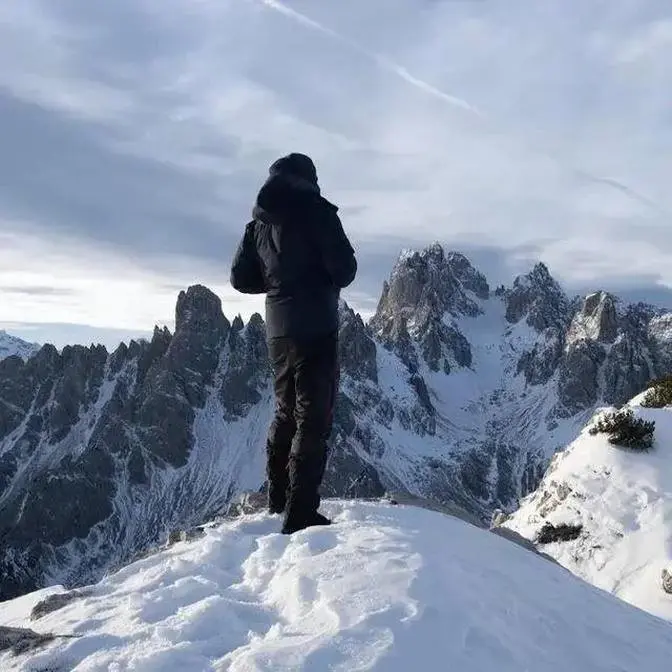
Why is a super telephoto essential to landscape photography? In this video I look at what a telephoto lens, and more specifically, a telephoto with a longer reach like a 100-400mm gives you photographically that you can't find with any other lens
Chapters 0:00 Introduction 0:41 Why A Telephoto is Essential 2:04 Subtraction 3:55 Creating Scale 4:50 Compression 5:33 Isolating Distant Scenes 7:17 Abstracts 7:59 Wildlife Crossover 9:53 The Downside
If you’d like to join me for a landscape photography workshop, there are still some places left on my 2025 workshops and I'm now opening waiting lists for 2026. Check my website for more information https://www.andymumford.com/workshops/
If you're interested in purchasing any of the gear I use in this video, and you enjoy my videos, please consider supporting my work by clicking on the affiliate links below.
so back in 2006 when I bought my first
digital camera I was convinced that a
wide angle was the only lens I'd need
for Landscapes but pretty soon it became
obvious that telephoto lens was every
bit as useful and when I look at my
images in Lightroom typically on any
trip more than half a shot with a
telephoto and the longer I've been doing
photography The more I've become just a
little bit obsessed with reach and being
able to really punch into a scene and
reduce it down to its absolute Essential
Elements and for that quite often a reg
telephoto lens something like a 7200 mm
isn't really enough you really need to
move into the 100 to 400 MM range but
what does that kind of focal length
bring to landscape
[Music]
photography so let's start with why a
telephoto lens is essential a wide angle
is great it gives you an epic widescreen
View of the scene from the foreground
immediately in front of the camera
flowing through the image but a white
angle will show all of the scene that's
everything that's in front of you and
sometimes that's not necessarily what
the scene is about maybe that loses the
essence of a scene with so much in the
frame and then sometimes a wide angle
includes elements you might want to
leave out wide angle images are
dependent on there being an interesting
foreground and so in places where where
the foreground is just something like
dirt or grass or snow Elements which
really add nothing to an image then a
wide angle lens isn't the best choice
and on top of that a wide angle makes
distant mountains or things like rock
Stacks or subjects and things like that
much smaller in the frame to the point
that they can lose their impact white
angle compositions are almost always
more inherently complicated because they
include more elements in the image in
the frame whereas a telephoto lens will
generally include far fewer elements
singling out just a small part of the
view rather than taking everything in
and often that's exactly what I want to
do in photography as it life the most
important mathematics is subtraction
subtract all that is distracting and
unnecessary until only the essential
remains this is a quote and it's a theme
that I'm going to refer back to multiple
times during this video subtraction or
reducing an image down to its Essential
Elements works because our minds prefer
simple images with less information to
digest less data for our minds to
process there's a Clarity and simplicity
about images with fewer elements and by
removing or subtracting so much the kind
of stuff like foregrounds and skies or
the midg grounds that a wide angle lens
always includes telephotos give us that
Simplicity and reduces scene down to its
Essential Elements and the more reach we
have the more we can play around with
removing elements and creating some form
of Simplicity and minimalism so let's
have a look at what that means in
practice in this image of susus FL in
Namibia the sky is included but it
really adds nothing to the image and if
anything it detracts from it the focus
here is on the tree and the color of the
dunes and by removing the sky we remove
an element that dilutes the scene and
distracts from what the image is really
about also removing the sky creates an
intimacy in the images it makes the
scene feel closer and her eyes don't
wander out the top of the frame which
really enhances the shape the color and
the hard divisions of light and Shadow
it's the same thing with foregrounds
quite often I find myself in places
where the foreground really doesn't give
anything to an image here are some more
images of Namibia where the foreground
here is just this dry Dusty old riverbed
it's just gravel and too much of that in
an image creates a really heavy section
at the bottom of the frame which is just
wasted space and that again detracts
from the image by diluting the scene
with an element that distracts your
attention away from the subject of the
image another aspect of being able to
punch really deep into a scene and cut
out the SC
means you can kind of create an sort of
imaginary scale what that means is that
when you cut off the top of a dune or
waterfall what happens is that that
activates people's imagination because
if we can't see the top of the waterfall
in our minds it could be incredibly high
and this feeling is strengthened when
you have a small element in front of it
like a figure or a tree so you have this
almost contradictory feelings of an
intimate image with the top of the frame
being closed off but at the same time
you have this perceived scale that is
created in the in the imagination
because we can't see the top of the
waterfall or the Dune or the glacier in
this image then we can imagine it going
on infinitely off the top of the frame
now I couldn't have sh all of these
images with a 7200 mm I really needed a
longer focal length to be able to punch
this deep into the scene and remove the
top of the dunes to remove the sky one
of the things the tel aoto lenses are
great for are giving the feeling of
compression and what that means is that
the distances between the different
elements in a scene like the ridges on a
mountain here feel as though they're
being compressed together this creates
really nice layers and a sense of depth
and three-dimensionality in an image and
the more you can punch into that the
longer the telephoto lens is then the
stronger that feeling of compression is
going to be this works really well in
hazy or Misty scenes but you can do it
in any scene where there are layers of
landscape and by removing things like
foregrounds the kind of stuff that you
automatically include when you shoot
with wider focal lenses the distract the
eye then the stronger the feeling of
compression is going to be another thing
that these kind of focal lengths do is
allow you to take tiny parts of a
massive scene to create images a good
example of that is here in the mountains
of the Nami brand we're having really
long reach on the telephoto lens allowed
me to pull very distant scenes much
closer this is a massive wide open
landscape where everything is very far
away and if you shoot these scenes even
with a regular telephoto something like
a 7200 mm meter it's going to include so
much more skying foreground that
elements like the trees and the Rocks
would become insignificantly smaller in
the scene using a really long focal
length I was able to pick out small
parts of the scene and highlight the way
the landscape and light were interacting
now shooting small parts of the scene
like many of the ones I've shown in this
video it's very easy for the images to
seem flat but it's important to try to
give the images depth which I've talked
about in quite a few videos before but
in these images it comes from the
contrast of light and Shadow
the Shadows create a negative space
which really pulls your eye towards the
lit parts of the scene here are some
other examples from Greenland where I
used a very long lens to isolate tiny
parts of the scene again including more
sky or more ocean would have diluted the
image and just acted as a distraction
and the scenes I was shooting were very
far away and so we come back again to
the concept of subtraction and removing
redundant elements from the scene until
only the essential remains
[Music]
[Music]
another thing you can do is create
abstracts from the landscape punching
deep into a scene to focus on lines or
shapes looking for things like repeated
patterns and removing everything else
from the scene again reducing it to its
absolutely essential elements this is
always harder than it looks you really
need to look for strong patterns or
lines of color things that can support a
whole image and then remove everything
else from the frame that interferes with
that because these images can be so
minimal it's important that there are no
other elements that are distracting and
diminish the shapes or lines that you're
trying to highlight and again the longer
the focal length the more you can
isolate these patterns and finally this
last one is technically not really about
landscape photography but over the last
few years I've increasingly found myself
in places where although I'm there to
shoot Landscapes there's also Wildlife
as well back when I first started uh
wildlife and Landscape were two very
separate disciplines that require
different equipment but over time we've
seen cameras with higher resolution
become increasingly faster and have the
kind of speed that you need for shooting
Wildlife as well as having better higher
ISO performance and then if you combine
this with a focal length of 100 to 400
mm or 200 to 600 mm those lens getting
cheaper and smaller and I see more and
more crossover between the disciplines
with people now having cameras and
lenses that are high performing for both
Landscapes and Wild Life and being
interested in shooting both now I went
to Greenland because I wanted to
experience the place and see the
glaciers and the icebergs and photograph
that but I was also super happy to have
this encounter with the polar bear and
having 100 to 400 mm lens which I taken
to to give me the reach to pull the
distant Iceberg closer it was also the
perfect lens to be able to capture this
incredible polar bear
[Music]
sighting and more and more I find myself
in places where as well as landscape
there's also wildlife and for wildlife
images you really need a lens that will
give a couple of things it's rare that
you'll be particularly close to a wild
animal so you really need a lens that's
got the reach to make sure that the
animal isn't just a tiny small element
in the frame where a background or the
surroundings completely dominate it and
you really want to be able to show
Behavior or capture some kind of
connection between the photographer and
the animal and again having a long focal
length really enables you to to do that
so some years ago on this channel I made
a review of the two essential lenses I
thought you needed for landscape
photography which was basically a a
wide-angle zoom and a telephoto Zoom but
since I made that my photography has
expanded quite a lot and now I go
everywhere with a mid-range or standard
Zoom as well but more and more I find
something like 100400 mm is absolutely
essential on pretty much every trip that
I do so that means do you take two
telephoto lenses along well I think if
you're shooting with full frame losing
that 70 to 100 mm range assuming you're
taking something like a 24 to7 77 and
100 to 400 it isn't really an issue
you're not going to be missing anything
in my case with a Fuji system and taking
something like a 16 to 50 then I have a
big gap between 50 mm and 100 mm in an
area that I do tend to shoot a lot of
images but taking two telephoto lenses
is a little excessive so it's something
that I've learned to live with so if I
need something slightly wider than 100
millim then I can shoot it as a panorama
now it's also a reason why I don't take
my gfx on every single trip the longest
lens there is 100 to 200 mm with a 1.4
times teleconverter and so often when I
use that it just doesn't give me the
reach that I want so I have to crop into
a scene and so yeah I've reached a point
where 100 400 mm is an absolutely
essential lens for my photography and I
know for trips that I've got coming up
this year it's going to be one of the
first lenses that I put into my pack so
that's it for this video hope it's been
interesting I hope it's been useful
apologize for my voice I've got a little
bit of a cold so I'm a little bit Croy
at the moment but if You' enjoyed the
video please like Please Subscribe if
you're not subscribed to the channel it
really does help a lot and if you enjoy
my photography and you'd like to join me
on a workshop we've just announced the
2026 workshops we've got some amazing
trips to places like Utah to Namibia to
Botswana to Japan we're going to madira
you can find full information on all of
my workshops on my website so check that
out and drop me a line if there's
anything that you're interested in and
as ever good luck with all your
photography and I'll see you next time
take care