
Старость – не повод грустить
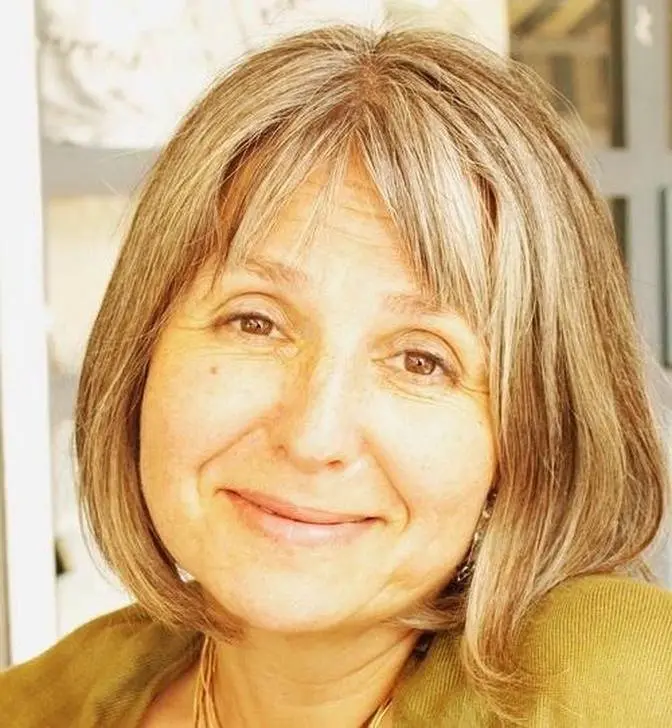
69 просмотры видео·22 окт. 2023 г.
Дорогие друзья, сегодня я хочу поговорить с вами о старении. Наверняка эта тема всех нас волнует на каком-то этапе жизни. Недавно прочитала статью в журнале Эпок под длинным названием: «Могут ли наши представления о старении определять, как долго мы будем жить?» Статья научная, написала её Ракефет Тавор, моя коллега, которая ведёт страницу Наука в журнале Эпок. Ракефет рассказывает об исследовании профессора Бекки Леви, которая смогла досконально исследовать процессы старения, побывала и в Японии – стране с самой длинной продолжительностью жизни в мире.
Old age is not a reason to be sad.
Dear friends, today I want to talk to you about aging.
Surely this topic concerns all of you, all of us at some stage of life.
I recently read an article in the Epoch magazine under the long title
Can our ideas about aging determine how long we will live?
The article is scientific. It was written by my colleague Rakavet Tavor,
who runs a page in the Epoch magazine.
Rakavet talks about the research of Professor Becky Levy,
who was able to thoroughly study the aging process.
She also visited Japan, the country with the longest life expectancy in the world.
During her doctoral studies in psychology at Harvard University,
Becky Levy won a scholarship
that allowed her to study for a whole semester in Tokyo.
It was very important for her to find in Japanese culture
what could help people in the Western world to learn about the aging process.
She probably learned the most important thing there,
the attitude towards the elderly.
It was not like in the United States.
Becky Levy learned that in Japan there is a national holiday of honoring the elderly.
Many of the elderly and seniors are considered famous in Japan,
but they are not the real stars, I omit the word rock,
which are constantly shown on TV shows.
These discoveries made her think.
Is it possible that our attitude to old age affects the biology of the aging process?
What she observed around her at home is fear of old age.
Rare elderly people feel more or less calm in old age,
but in general, old age does not please people,
and its rapprochement is depressing.
I see a similar picture in Israel.
In Japan, on the contrary, old age is accepted and recognized traditionally.
Thanks to such a tradition, the life expectancy there is longer than anywhere else.
After returning to the United States, and fortunately for Becky,
she meets a study conducted in 1975
by a group of scientists from the University of Miami
in the city of Oxford in the northeast of the United States.
The researchers, led by Professor Robert Edgeley,
surveyed the adult population of the city.
They contacted all residents over the age of 50
and accompanied them for the next 20 years,
tracking all the changes that naturally occurred during these years of life.
Becky Levy and her group were particularly interested in the part of the study
where Professor Edgeley asked the respondents
how they experience the aging process they go through.
The respondents were offered to evaluate their condition by saying,
or vice versa.
Today I am as happy as I was when I was young.
From the answers of the elderly,
Levy was able to determine which of them had a positive view, and which was negative.
Levy turned to the data of the National Death Index,
the Ministry of Health and Social Services of the American government,
and extracted data on the death of the participants in the study of Professor Edgeley.
She received data on the death of 660 subjects.
Thus, Levy was able to link the representation of the person experiencing his old age
with their data on the age of death.
It turned out that the beliefs of the respondents about their old age
influenced the duration of their life.
Those who at a younger age had positive beliefs about old age
lived on average 7.5 years longer than those who had negative beliefs.
In 2002, Professor Levy studied the data of the study
conducted in the same city as Oxford
and found that positive thinking
has a long-term effect on physical activity during the period of aging.
During the 20 years of observation,
researchers asked about their ability to perform various physical activities,
such as climbing and going down the stairs on their own,
walking at a distance of about 800 meters,
and working from home, such as washing floors or cleaning the snow in the yard.
The respondents also reported about leaving the house for public events
and about their work full working day.
Thus, the Levy team was able to find out
about the speed of physical aging of the respondents over many years.
The results were unexpected.
The speed of aging of people with negative beliefs about old age
was more than twice as fast
compared to the speed of aging of people with positive beliefs.
An American nun named Madonna Buder,
at the age of 50,
with all the conditions and expectations,
decided to start a career as a triathlon athlete.
At the age of 55,
she took part in the Iron Man competitions for the first time in her life
and has since participated in more than 300 triathlon competitions,
including 45 Iron Man competitions.
Later, she was nicknamed the Iron Nun.
At the age of 82, she broke the world record.
She is the oldest person ever to complete the entire distance of the competition.
When Professor Levy met Madonna Buder,
she asked her to list the first associations that come to mind
when she thinks about an elderly person.
Buder quickly replied,
wisdom, pleasure and opportunities.
Buder also said that she learned her firm belief
in the multiplicity of human possibilities
from her grandmother.
The study confirms Buder's belief in the possibilities of man,
showing that our beliefs not only affect physiological processes in old age,
but also have a similar effect
on our cognitive state throughout life.
In 2016, a group of researchers from Trinity College in Dublin, Ireland,
studied how the idea of aging affects cognitive functions,
especially speech and memory.
They used data from approximately 6,000 Irish people
aged 50 years and older.
The subject was offered a test
in which they were asked to name as many animals as possible in one minute.
Two years later, the researchers repeated the test.
It turned out that the speech ability of those
who at the beginning of the study presented a positive belief in old age
even improved.
In the second test,
the participants with positive beliefs
on average managed to name more species of animals.
For people with negative beliefs about old age,
the test result turned out to be much worse.
Irish researchers wanted to understand
what is the most significant element of positive beliefs
that led to an improvement in the speech ability of the subjects.
Is this related to the expectation of a person of processes
to which he or she will soon be subjected,
degradation of all functions, and so on?
Maybe this is related to the feeling of control of a person over the process of aging.
Maybe it is related to the awareness of the process of aging.
When the researchers analyzed the influence of each of these factors,
they found that the feeling of control of a person over the process of aging
is the most important component.
In other words,
the one who believes that he controls his mind, body and soul
will progress in a cognitive relationship,
despite his age,
while the one who feels insecure
or feels that his abilities are decreasing
will not only not progress,
but his state will deteriorate relatively quickly.
Professor Levy wanted to check
whether different beliefs can affect the risk of dementia or Alzheimer's disease.
It is known that in the case of dementia and Alzheimer's disease,
a genetic component plays a role,
which occurs in different variants.
Most of us have this gene in a version known as Epsilon-3,
which does not affect the risk of dementia at all.
However, the variant known as Epsilon-4
occurs in about 15% of the population
and increases the risk of dementia.
Levy wanted to check
whether the idea of aging can prevent diseases among carriers of a dangerous gene.
She conducted a study in 2018,
in which 4,750 people aged 60 and older took part,
the state of health of which was assessed during the four-year period.
At the beginning of the study,
all participants talked about their idea of aging.
They took a sample of saliva for the Epsilon-3 and Epsilon-4 genes.
Of all those tested,
those who had a positive conviction of aging,
dementia developed at 2.6%,
those who had a negative conviction at 4.6%.
Among the carriers of the Epsilon-4 version,
who had a positive conviction,
about 2.7% fell ill,
and among the carriers of the same dangerous version
with a negative conviction,
about 6.1%.
Professor Levy writes in her book
the violation of the age code.
Although biology predisposed these people to dementia,
many of them did not develop this disease,
and partly this is probably due to the protection
provided by their positive convictions about their age.
That is, it can be concluded
that the convictions of a person affect the depth of their cells.
In her book, Becca Levy lists 14 false misconceptions
that make life difficult for a person.
The misconception that our memory with age is necessarily deteriorating.
Professor Levy writes
Many people think that our memory inevitably deteriorates.
But the point is not that at later stages of life,
memory deteriorates.
We know that there are many different types of memory,
and some of them remain stable.
For example, procedural memory,
which is reflected in the ability to ride a bicycle
or perform other actions.
And some even improve in old age.
For example, in many elderly people,
the vocabulary reserve continues to grow.
We also know that there are many elderly people
who have excellent memory.
In addition to memory,
Professor Levy describes in detail
in the book many cognitive functions
that improve over the years.
For example, the ability to perceive
different points of view at the same time.
The ability to resolve interpersonal conflicts.
And the ability to think about thoughts,
which is metacognition.
In her book, she presents research
that refutes misconceptions
associated with reducing cognitive functions in adults,
as well as the mistaken opinion
that they are unable to learn anew.
The conclusions are decisive.
Elderly people can not only acquire new complex skills,
but it is also desirable for them to do so,
because training processes of this type
strengthen and develop the brain.
Elderly people with positive ideas about old age,
who challenge and return
to studying the French language
they learned in high school
or go to study new dance movements,
will see an accelerated growth of neurons in their brain,
says Professor Levy.
The flexibility of the brain allows it to continue to grow
even in old age.
Neurons can form new connections
between themselves and age.
Another important misconception
is associated with the mental state of adults.
It is believed that many of them
suffer from mental disorders
that are not treated.
In fact, with this belief,
Becky Levy came to this field of research.
In this field of research, she writes,
When I just finished college,
I really wanted to work
in a psychiatric hospital in Boston,
but the only available vacancy
was the geriatric department.
I was very disappointed,
I thought that I would never want such a job,
that it would be a very depressing job,
because elderly people will probably suffer a lot
and there will be no way to help them.
Nevertheless, Becky Levy decided to try
to work in the department for two weeks,
and to her surprise,
she really enjoyed working there.
She writes,
I saw many patients whose condition improved
and they reintegrated into society.
One of the most common stereotypes about aging,
both among the general public
and in the medical community,
is that mental health problems,
especially depression,
are common among elderly people
and that this is a normal part of the aging process.
But the research actually shows
that if you look at different age groups
and the frequency of depression
or anxiety in each of them,
you will see that among the older age groups
the risk is lower.
Of course, there are quite a few such cases,
but the risk is relatively small.
For example, a group of researchers
from the University of California in 2017
discovered that,
contrary to the physical and mental functions
that tend to gradually degrade,
starting from the age of 20,
when it comes to mental health,
there is actually a tendency
to constantly improve mental health
over the next few years of age.
Professor Levy wants to raise awareness
about these qualities,
which are improving over the years
and which really protect
the mental health of adults.
She writes,
for example, they have a relatively good ability
to resolve disputes,
to find solutions in major conflicts,
for example, political,
because in old age,
wisdom grows.
The ability to analyze the course of life
and the ability to analyze
what is happening to them appears.
They are able to clearly see
different stages of their lives
and learn from them.
So there are many skills
that improve in old age
and can help us.
Another important misconception
that Professor Levy mentions in her book
is the idea that adults
are not able to recover from physical injuries.
The study she conducted in 2012
showed that in the case of rehabilitation after injury,
positive old-age beliefs
can definitely help.
Among about 600 subjects
aged 70 and older,
whom she observed for 10 years,
the probability of complete recovery from injuries
was 44% higher among those
who had positive beliefs
compared to those
who had negative beliefs.
The conclusion is that
our concepts
have a huge impact
on our mental and physical health.
Note, not a small impact,
but a huge one.
We are surrounded by negative information
about the deterioration of everything and everyone.
Negative information is flowing.
And what can we do about it all?
Professor Becca Levy says
not to accept it.
And I agree with her decision.
I wholeheartedly agree.