
New Zealand's Forgotten Volcanic Tsunami; Healy Seamount's Destructive Eruption
Oct 22, 2023
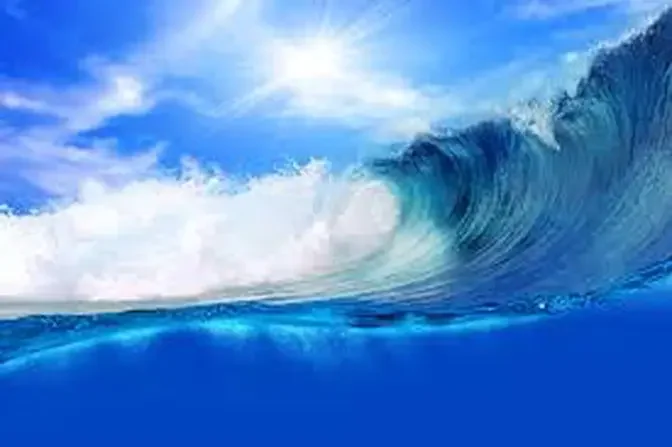
Once, in the past, in New Zealand, there was a destructive wall of water that damaged or
destroyed numerous coastal settlements and boats.
As a tall tsunami struck much of the North Island, areas up to a kilometer inland were
inundated with water, causing significant destruction.
And yet, this tsunami was not caused by a major earthquake, but rather a distant volcanic
eruption.
While what I am describing might sound initially like the climactic caldera forming eruption
from Tonga's Hunga Tonga Hunga Haapai volcano on January 15th, 2022, this is not the case.
And no, this ancient tsunami was not from an earlier caldera forming eruption of the
same volcano theorized to have occurred around 1100 CE.
As while Hunga Tonga Hunga Haapai, or at least the remnants of that volcano, is 1936 kilometers
away from one shirling on New Zealand's Doubtless Bay, the source of the separate tsunami we
are talking about was a volcano about 4 times closer at 514 kilometers distant.
As, sometime in the early 15th century, a large section of a deep and out of sight volcano
known as the Healy Seamount collapsed into a caldera, causing a widespread tsunami to
be generated.
This tsunami had at least a height of 4 meters or 13 feet, likely triple this height in select
areas where the near coastal topography below sea level was just right.
It would go on to hit the entire northern coastline of New Zealand's North Island,
and even parts of the South Island.
According to the Maori, this wiped out several communities, including the entirety of a town
on Deervil Island.
Then, over the next several days to weeks, a massive raft of floating pumice inundated
regional coastlines, causing billions of tons of pumice to accumulate across regional islands
such as White Island, but also the North Island and even Chatham Island.
Today, this pumice deposit serves as an important marker on the North Island, being altogether
known as the Lysels Pumice.
According to some scientists, the destruction created by this event, which might have involved
multiple tsunami waves, was so severe that it may have triggered a mass migration of
the native Maori, where they as a whole moved further inland.
The Lysels Pumice, somewhat like the 2022 Hangatanga-Hangahaapai Volcano tsunami, was
generated by a primarily submarine volcano losing more than 1,000 feet in height, leaving
a massive 4 kilometer wide and 140 meter or 460 foot deep depression in the ground known
as a caldera.
While the climactic eruption of Hangatanga left behind a caldera of almost the same dimensions,
that eruption occurred at shallower depths of near sea level, eventually resulting in
the reduction in height of one section of that volcano by 750 meters or 2,460 feet.
In the case of the Hili Seamount, its eruption circa 1415 occurred out of sight and out
of mind at a depth of 500 meters or 1,640 feet below sea level, meaning that no one
at the time would have known a catastrophic event was ongoing until it was too late, as
what used to be a tall submarine volcanic cone completely collapsed losing 1,144 meters
or 3,753 feet in height.
The eruption in question had a dacite to rhyolite composition, suggesting a magma mixing event
may have triggered this eruption, ejecting a total of 12.5 cubic kilometers of tephra
in an eruption assigned a volcanic explosivity index of a 6.
While the Hili Seamount has not produced a large eruption since its caldera forming event,
this still active volcano can teach us an important lesson, as although the scale of
destruction it created was unusually large, in all likelihood the volcanic tsunami it
generated was not an isolated event in the context of regional volcanoes.
These two other caldera forming eruptions occurred in New Zealand's Kermadec island
chain during the Holocene period, both of which presumably also created large scale
tsunamis.
This occurred at Makali Island via a 100 cubic kilometer eruption in 5264 BCE, and at the
Raoul volcano in 193 BCE via a 28.8 cubic kilometer eruption.
What I am trying to prove via this video is that we need to monitor and learn more about
submarine volcanoes, as although they are out of sight and out of mind and hard to access,
they can sometimes be just as destructive as a famously deadly land volcano.
As a final note, I would like to thank my new YouTube channel member Cynthia Lynch for
supporting this channel.