
Il Sogno Americano di Norman Rockwell
Hi everyone and welcome back to my channel!
For those who don't know me, I'm Ari
and please subscribe and activate the bell
because here, on this channel, we talk about art.
Before introducing you to the artist we're talking about today
I want to show you the first tarot of the season, so to speak
because this is a deck of cards of the artists' tarot cards
and so now I'm going to do a random, mysterious drawing
and let's see what fate has in store for us today.
I feel like an old lady at the table.
Anyway, today's lucky card is that of Yayoi Kusama
and it says,
your soul is composed of the same dots of the universe.
I continue to advise you to distinguish yourself from your reflection.
And finally, as inspiration, it says,
show them your hallucinations,
which leaves me a little perplexed.
Perplexed!
It leaves me a little scared
Anyway, tell me what you think about it,
what you got from these pearls of wisdom of Yayoi.
And now let's start the video!
Very often, as spectators, we perceive the artist as someone
who knows more than normal people,
as a seer who has a third eye
and who, from the top of his position,
gives us his vision, unreachable by us mortals.
Well, today I bring you an artist
who demonstrates how funny this myth is,
an artist who never wanted to define himself as such
and who, on the contrary, has sought in his life
to reach such a goal.
An eternal perfectionist and huge fan of Rembrandt,
a songstress who, with her illustrations,
brought to life the Saturday Evening Post,
a master of the age of gold in illustration.
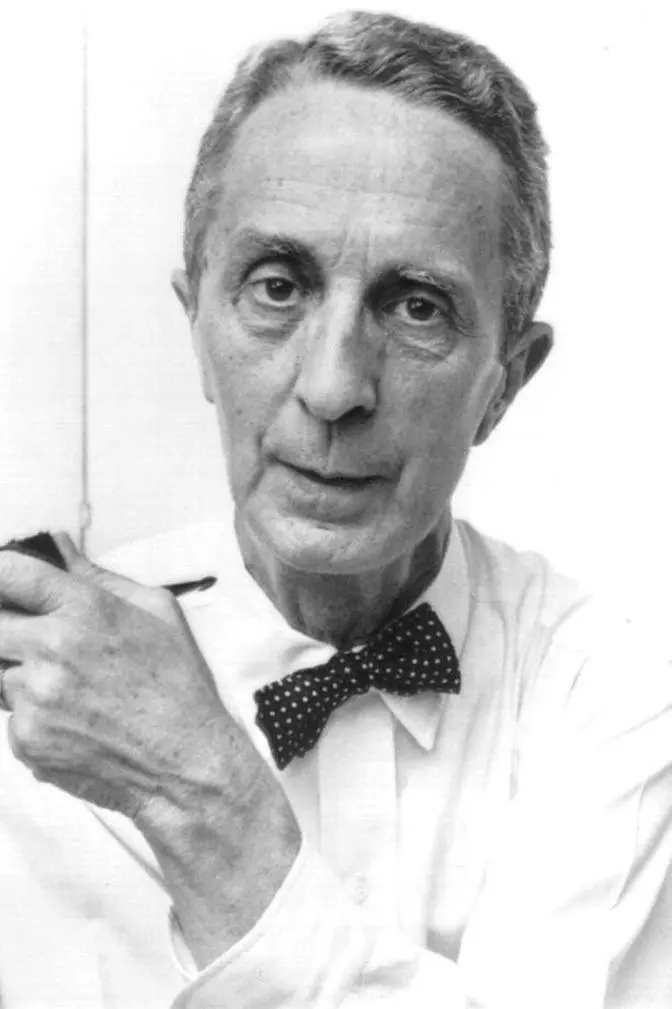
I'm talking about Norman Rockwell.
America, a young nation that made the dream its mission.
An American dream that is a golden fable,
a people of hobbits who live the peace and simplicity of every day
and who, through the style of Rockwell,
assumes the perfection of a house of dolls.
It is with this perfection that the fragility of the characters
so idyllic that it can be porcelain.
It is enough to touch them with a finger to shake their world,
which, as new,
needs to tighten traditions,
make them its own and not leave them anymore.
Because it is known that if you give up the grip of the land,
the still raw roots could be eradicated,
forgotten, swept away by the wind.
Rockwell frames the vintage reality in which he lives
and makes it a brand.
A brand made of exasperated and theatrical expressions
and emotions that go beyond the unreasonable.
It infects us with laughter and shock, drama and cheerful songs,
between an ad for Coca-Cola and another for Kellogg's cereals,
transmitting the addiction to the new prosperity of the 50s,
like a real fever
that takes up space between the lenses of young women,
the rubicondi noses of the paterfamilias
and that does not even spare the euphoric cheeks of the little ones.
This is a fundamental feature of Norman Rockwell.
Each frame is a little card,
just as the American spirit wants to appear,
composed of the four freedoms that Roosevelt decants,
made of progress and virtue,
perfectionism from the first portrait of Tacchino Arrosto
to Dolce,
indulging in comical jokes,
because allowing yourself to appear a little more goofy
allows you to forget the most hollow thoughts
and makes everyone happier.
Rockwell's style communicates warmth to us,
a family talent,
the same feeling we feel
when we open an old photo album
or when we watch the film La Vita è Meravigliosa.
Rockwell's secret element is tolerance,
ironically the same that he never had for himself as an artist.
It is a story that tells itself by itself,
that unfolds in front of your eyes,
while remaining still.
The expressions turn into an apparent enthusiasm,
a deep sadness in the span of a few seconds,
exalting the depth of the temporal emotions.
The expressions turn into an apparent enthusiasm,
a deep sadness in the span of a few seconds,
exalting the depth of the temporal emotions.
Rockwell gives you the impression of a superficiality that he maintains,
to then seal under the skin
something that is quite other than superficial.
The messages are not reproaches,
but windows that show the naive will
with which we make certain choices.
In every frame there is a fundamental event
that is at its apex.
It can be a tragic discovery by a child
or the departure of a young man
who wants to make his parents proud.
There is no malice,
only the desire to be heard.
This thought is typical of Norman Rockwell,
he makes us perceive it between the canvas,
in the unpainted, in the ethereal silence.
These emotional outbursts,
between reassuring moments and dark moments,
are exactly the signature of Rockwell.
In them he describes the noisy shortcomings of his life.
He describes a stolen childhood,
spent alone in gray New York,
giving way to the child who runs in the thoughtless countryside.
He paints the demotivation in himself,
the desire to be up to his expectations,
ironizing on the stupid insecurities typically human.
This is why what he paints is called romantic realism,
because it is the dream of the reality he would like to live.
And it is so that through his painting
Rockwell exalts his American dream.
Then something changes,
colorful lights, laughs,
and then silence.
Heat, wealth and joy still echo,
but silence prevails.
And so, those who before were portraits of innocence and thoughtlessness,
of nostalgia and simple life,
make us perceive the times that change,
the politics that mixes.
Ruby Bridges, who crosses the school courtyard,
and Norman, who breaks the line
between what Americans want to see and be,
and reality.
With him, war becomes personal,
it becomes the gaze of those who are powerless before events,
it becomes the story rewritten by a lost village,
lived by those who stay at home,
and tries to de-dramatize
even when every memory of warmth and peace
is put at risk.
It becomes a new memory,
a memory of union in difficulty,
of support and forgiveness in fragility.
It becomes the courage to still smile,
despite everything,
and give new meaning to one's American dream.
I hope you liked this artist,
and even if he never wanted to call himself an artist
and define himself as such,
I think he is really a master of the age of gold, of illustration.
So if you liked it, congratulations to Norman Rockwell and pat pat to me,
and let me know below in the comments what you think,
what other artists you think are similar to what he depicts,
to how his style develops.
And if you want to know more,
obviously in the description you will find all the links to learn more.
Remember to share and spread the word on social media,
and see you at the next artist!