
The King Who Kidnapped The Pope _ King Phillip IV
11 Video Views·Oct 4, 2023
What's up guys, it's Oli from History Profiles and today's video will be about
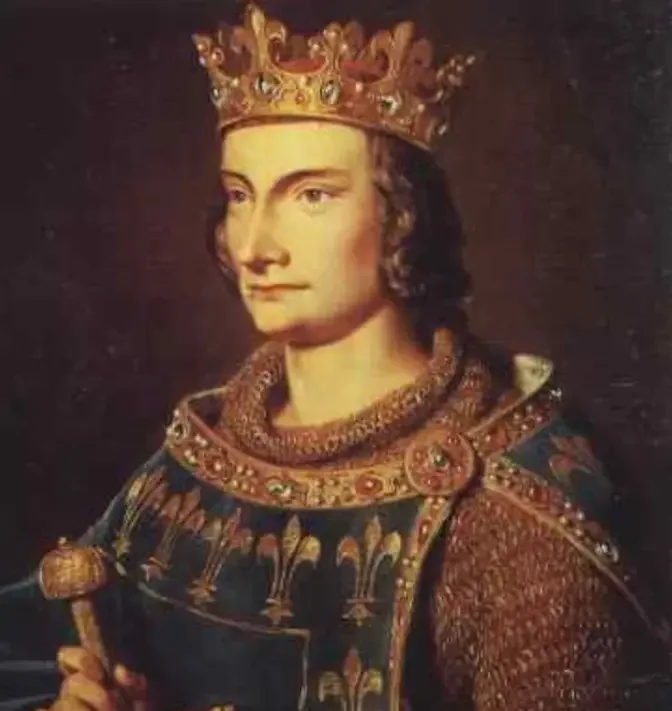
King Philip IV of France. He did many questionable things in his life, some would say they were
mad but you make that decision for yourself. Anyway, let's get into the video.
Philip was born in April 1268. His father was Philip III and his mother was Isabella
of Aragon. He was the second of four sons, born to his mother and father. His father
was the heir to the French throne at the time of his birth, as his grandfather was still
king, and he was King Louis IX. In August 1270, when Philip was just two years
old, his grandfather died while crusading. His father then became king. Soon after, his
mother died after falling from a horse. Also, one of his younger brothers died shortly
after. In May 1276, Philip's older brother Louis died. He was only eight years old.
Philip's younger life was no doubt full of death and despair. However, he was now
the heir to the French crown. His character is described as reserved. This
is possibly due to the death of many close family members from a young age. As he grew
up, he was known as Philip the Fair, being tall, fine-featured and he was also blonde.
When he was sixteen, he was knighted and then married Joanne of Navarre. Philip's father
would die in 1285 and he would then become king. In his first years as king, he would
try to organise the administration of the realm and how it was governed. He would try
to reform the monarchy to make it more powerful. However, a war began with England in 1294,
which started a ten-year conflict, which strained Philip's resources. The war against King
Edward I of England won him no lands and in the end, in 1303, a peace treaty was signed
and Philip's daughter Isabella would become betrothed to Edward's son, Edward II. This
new alliance would allow the two kingdoms to make peace.
Philip still had an eye in will. After the fighting with England had stopped, he made
plans to crush the Flemings. He assembled an army of 2,500 noblemen-at-arms and 4,000
infantry soldiers. These men would be very well armoured. This army was summoned as there
was an uprising in Flanders. The French and Flemish armies engaged in battle and to everyone's
surprise, the French army was crushed. However, Philip forced Flanders to accept a harsh peace
treaty as Flanders still knew France's military might was far superior.
Philip also had problems with Pope Boniface VIII. This was as his wars and hostilities
with England were getting in the way in the plans of a crusade. The Pope would intervene
and would always try to promote peace in order to further his own agenda. However, the Pope
supported Philip's attack against the Flemings, but many people were growing suspicious of
the Pope, as he had strange curiosities about the immortality of the soul and he himself
questioned it when he was meant to be God's representative on earth. There were also stories
that he plotted the death of the Pope before him in order to get on the papal throne. Philip
had not dismissed these stories completely and may have seen truth in them. In 1301,
Philip ordered the arrest of Bernard Sasset, the Bishop of Palmiers, as spies had told
him he was a traitor. The Pope protested and ordered that King Philip should send the Bishop
to Rome. This not only insulted the King, but he also recognised that this Pope thought
his authority was greater even in matters of France, where the King's word was law.
The Pope would use his influence to summon the French clergy, who were high up official
members of the Catholic Church operating in France. The clergy and the Pope would have
a meeting regarding how Philip was governing his kingdom and to discuss the state of the
French Church. Philip allowed the Bishop Bernard Sasset to go to Rome, even though he was a
suspected traitor. However, the Pope's order that the French clergy should also go to Rome
was met with opposition from the King and his retainers. The Pope sent a declaration
stating his universal supremacy, basically saying he was above any king and any man and
that no one could top his authority. King Philip was furious and he burned a papal bull,
which in essence is a decree in the form of a document. Philip was enraged at the Pope
and would have his revenge for his insults. In 1302, he assembled bishops and nobles in
order to condemn the Pope and try him for his actions. Philip would have his vengeance,
but he would do it legally so there was less of a chance of an uprising from the people.
There was no unanimous decision, but Philip pledged that the Pope should be judged due
to his words of heresy and criminal and immoral deeds and that the law could judge any man.
Philip summoned his agent, Guillaume de Nogaret, for one of the most important missions of
his life. That was to arrest the Pope in the ancient town in which he resided, called Analvi.
Guillaume would make his way to Italy and with the help of a spy in Florentine, he gathered
a band of warriors and adventurers who all had something in common. They were all enemies
of Gaetani. This was the Pope Boniface's family name. Guillaume's strongest ally in
this mission would become Schiara Colonna, who had a bitter feud with the members of
the Gaetani and what better way to win this feud than to depose the member of their family
who had become the Pope. 1,600 men had assembled and they made their way to Anagi, the Pope's
birthplace. On the 7th of September, 1303, the men stormed into the town. The men swarmed
into the Pope's estate and arrested him. Schiara wished to kill him then and there,
but Guillaume had orders from King Philip to take him back to France alive to be tried
for his actions. While the Pope was a prisoner, Guillaume and Schiara would demand that the
Pope resign and he said, I would sooner die. In response, Schiara slapped the Pope hard.
One of the most powerful men in the world was now a prisoner under the authority of
King Philip, the King of France. The arrest of the Pope however, would not last
long at all. On the 9th of September, just two days later, there was an uprising of
the townspeople in support of the Pope. The whole town would arm themselves with whatever
weapon they owned and would charge towards Guillaume and Schiara's men. They then had
no choice but to retreat. The Pope was freed by the common people of Anagi. He then made
his way back to Rome, but died soon after. After this saga, Philip would begin his suppression
of the Knights Templar. The Knights Templar were a Catholic military order that were popular
throughout Christendom, as they were one of the most skilled fighting units during the
Crusades. However, the order had grown so large, that as well as protecting pilgrims
in the East, they also engaged in banking and other business related activities in order
to acquire wealth for the order. Philip was in debt to the Knights Templar and would try
to escape this debt. As part of the Knights Templar organisation existed in France, he
would try the Knights Templar for heresy in order to free himself of his debts.
On October 13th 1307, hundreds of Templars in France were arrested and then tortured
into confessing heresy. The Knights Templar originally only answered to the Pope. However,
with Pope Boniface dead and the new Pope being Pope Clement V, who was previously the Archbishop
of Lyon and also was a personal friend of King Philip, allowed the organisation to disband
in France. Pope Clement allowed Philip to deal with the trials and his forced confessions
were taken as evidence. Many Templars were then burnt at the stake and consumed by the
flames. In March 1314, Philip had the last Grand Master
of the Temple burned at the stake. Soon after, Pope Clement V died from a horrible disease
thought to be lupus. Eight months after the death of the last Grand Master of the Templars,
King Philip had a cerebral stroke while hunting and died a few weeks later on the 29th of
November in the year 1314. All over Europe, Pope Clement and Philip's
death was spoken of. They said they were struck down by God as retribution for the destruction
of the Knights Templar. Within 14 years, Philip's throne passed quickly through his sons, who
all died young, without producing any male heirs. By 1328, his line was extinguished
and the throne passed to the line of his brother.
So do you think that God punished King Philip for the kidnap of Pope Boniface and destroying
the Knights Templar? Let me know in the comments section down below and make sure to like,
subscribe and share and I'll see you next week for another video.