Technology for Humanity
Gan Jing World is dedicated to promote kindness, respect, and trust among people. Our non-addictive content prioritizes meaningful information, while upholding freedom of speech and user privacy.
Explore
SUBSCRIBE
Sign In
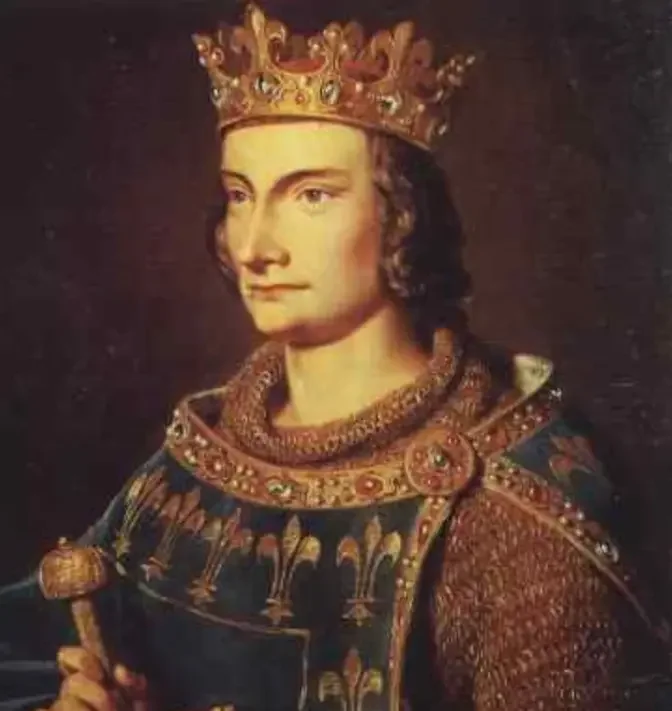
Philip IV of France
Follow
7
followers
·
78
content items
Philip IV (April–June 1268 – 29 November 1314), called Philip the Fair (French: Philippe le Bel), was King of France from 1285 to 1314. By virtue of his marriage with Joan I of Navarre, he was also King of Navarre as Philip I from 1284 to 1305, as well as Count of Champagne. Although Philip was known to be handsome, hence the epithet le Bel, his rigid, autocratic, imposing, and inflexible personality gained him (from friend and foe alike) other nicknames, such as the Iron King (French: le Roi de fer). His fierce opponent Bernard Saisset, bishop of Pamiers, said of him: "He is neither man nor beast. He is a statue." Philip, seeking to reduce the wealth and power of the nobility and clergy, relied instead on skillful civil servants, such as Guillaume de Nogaret and Enguerrand de Marigny, to govern the kingdom. The king, who sought an uncontested monarchy, compelled his vassals by wars and restricted their feudal privileges, paving the way for the transformation of France from a feudal country to a centralized early modern state. Internationally, Philip’s ambitions made him highly influential in European affairs, and for much of his reign he sought to place his relatives on foreign thrones. Princes from his house ruled in Hungary, and he tried and failed to make another relative the Holy Roman Emperor.
Philip IV (April–June 1268 – 29 November 1314), called Philip the Fair (French: Philippe le Bel), was King of France from 1285 to 1314. By virtue of his marriage with Joan I of Navarre, he was also King of Navarre as Philip I from 1284 to 1305, as well as Count of Champagne. Although Philip was known to be handsome, hence the epithet le Bel, his rigid, autocratic, imposing, and inflexible personality gained him (from friend and foe alike) other nicknames, such as the Iron King (French: le Roi de fer). His fierce opponent Bernard Saisset, bishop of Pamiers, said of him: "He is neither man nor beast. He is a statue." Philip, seeking to reduce the wealth and power of the nobility and clergy, relied instead on skillful civil servants, such as Guillaume de Nogaret and Enguerrand de Marigny, to govern the kingdom. The king, who sought an uncontested monarchy, compelled his vassals by wars and restricted their feudal privileges, paving the way for the transformation of France from a feudal country to a centralized early modern state. Internationally, Philip’s ambitions made him highly influential in European affairs, and for much of his reign he sought to place his relatives on foreign thrones. Princes from his house ruled in Hungary, and he tried and failed to make another relative the Holy Roman Emperor.
Follow
Loading…
Loading…
Home
Shorts
Create
Topics
Library
Videos from Philip IV of France
The proclamation of Joanna and Philip in Brussels (La Corona Partida)
Joanna and Philip, the new Queen and King of Castile
Joanna of Castile stands up to Philip the Fair (Isabel s03e13)
Records of Joanna's ravings (Isabel s03e13)
Trying to save Joanna of Castile (Isabel s03e13)
Philip the Fair and Margaret of Austria fight about Joanna (Isabel s03e13)
_Joanna is mad_ (Isabel s03e13)
Joanna of Castile's ravings (Isabel s03e12)
Joanna of Castile's reunion with her son Charles (Isabel s03e12)
Joanna of Castile's jealous outburst (Isabel s03e12)
Joanna of Castile returns to Flanders (Isabel s03e12)
Home
Videos
Shorts
Articles
Followers
Loading…
Loading…
Videos
Queen Isabella says goodbye to her daughter Joanna (Isabel s03e11)
Joanna of Castile's outbursts against her parents (Isabel s03e11)
_They called her the Mad_ (Isabel s03e11)
Philip the Fair's letter to Joanna of Castile (Isabela s03e11)