
Knights Templar - Part 7_ Why Did Philip IV of France Target the Templars_
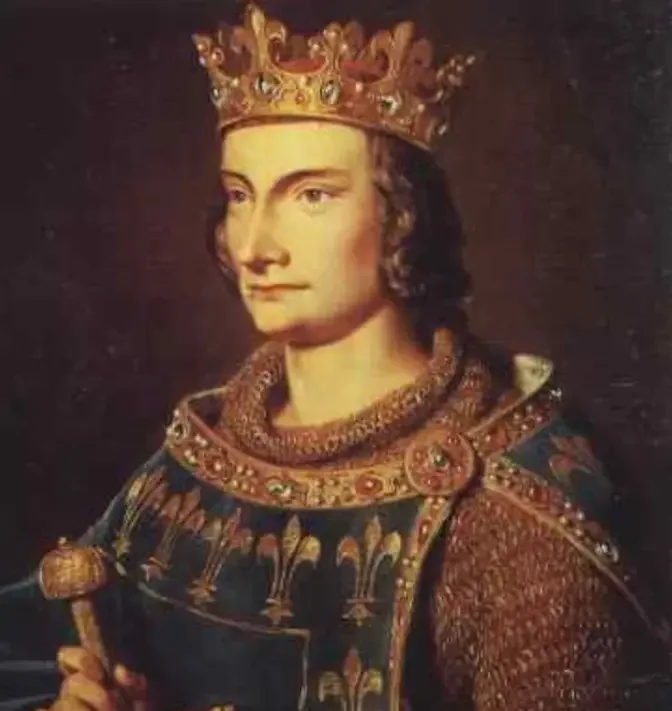
Oct 7, 2023
So, the Knights Templar were innocent of the charges leveled against them by King Philip
IV of France.
So the question remains, why did Philip IV of France attack this most pious and respected
of Christian religious orders?
Malcolm Barber has argued that Philip's extreme financial difficulties led him to
target the Templars.
Barber has pointed out that virtually any groups which either stood in the way of Philip's
financial goals or provided him with the potential of large amounts of property for
confiscation were inevitably assaulted by Philip, such as the Jews, the Templars, and
various wealthy citizens.
Outside of France, popular contemporary opinion held that Philip was after the Templars'
money.
Indeed, there is no question that Philip's coffers were greatly augmented by confiscated
Templar wealth.
Philip IV's regime was constantly under threat from his neighbors.
On top of that, his prestige had suffered since other kings, such as Edward I of England
and various rulers of Spain, had been involved in Crusades, while Philip, who came from a
long line of Crusaders, had not fulfilled his vow to rescue the Holy Land.
It is not surprising, then, that Philip and his ministers were particularly sensitive
to any hint of heresy.
As they were eager to prove themselves supremely pious, the piety of the Templars and their
sacrifices for the Holy Land were embarrassing for Philip, who had refused so far to venture
on Crusade.
This alone may have been enough to prompt Philip to target the Templars.
An example of Philip's wrath is found in the story of Marguerite Poireté, a laywoman
from northeastern France.
Her book The Mirror of Simple Souls explored God's relationship to the human soul.
Since she was not of the clergy and had written in the vernacular rather than Latin, her work
raised suspicion of heresy, and she was examined by Church authorities.
The Church declared all of her writing to be sound Catholic doctrine.
However, shortly thereafter, Marguerite was again accused of heresy by clergy under Philip's
jurisdiction.
Despite the Church's approval of her book, the bishops of Cambrai, Calens-sur-Marne,
and William of Paris, who also had been put in charge of the Templars' case, all declared
her a heretic.
She was promptly executed by the secular French authorities.
Despite her execution by the French crown, Marguerite's writings remained in good standing
with the Catholic Church.
In 1927, her book was published under the Outre-Imprimatur seal of the papacy, and it
is still read today in many Catholic circles.
If the Church had approved of Marguerite's teachings, why had Philip IV's regime condemned
her?
Quite simply, Philip wanted to be seen as the most pious authority in Europe.
This was the same king who would not shy from arresting bishops, even the Pope himself.
The reality is that Philip wanted to be seen as setting the standard of Christian authority.
He wanted to be the ruler of the Church.
In addition to coveting the Templars' wealth and land, contemporaries saw another motive
for Philip IV's arrest of the military order.
We've already noted Philip's embarrassment at being one of the only important rulers
in Europe who had not participated in a crusade.
The fact is that Philip hoped very much to lead a crusade, which would eclipse the achievements
of his fellow kings.
It's interesting that when King James II of Aragon heard about Philip's arrest of
the Templars, he viewed it as a plot by the French king to take over the whole crusade
movement.
James believed that Philip intended, by seizing control of the Templars, to clear the way
for the establishment of a new military order, under the direct control of the French crown.
James felt that Philip hoped to actually gain control of all of the Templar land outside
of France, thus making the French crown a super-kingdom within Europe that superseded
all other royal authority.
It's easy to see why James II of Aragon would believe this.
Philip had already shown himself a monarch of excessive ambition.
It's no surprise that all over Europe, kings opposed the disillusion of the Templars, not
only because they believed the Templars innocent, but also because they saw the whole thing
as an elaborate power play on the part of Philip IV.
Incidentally, Philip failed to gain control of the Templar land outside of France, most
of which went to the Hospitallers, or back to the original donors.
This leads us to a more general motivation of Philip's in harassing the Templars.
Quite simply, Philip didn't like the independence of the Templars.
He hated the idea of an international military power with land inside of France that was
not answerable to the king of France.
Philip had a similar attitude toward the papacy.
He bullied the popes throughout his reign and sought to make the papacy a mere extension
of French royal power.
For decades, the Templars had been integral to the French administration, performing many
important duties for the French king.
But King Philip IV resented this independent religious organization being involved with
the crown's affairs.
He wanted to replace the Templars with his own people, who owed everything to him.
History gives us a fairly clear understanding of just what Philip IV was trying to accomplish
in attacking the obviously orthodox Knights Templar.
Whether or not the charges were true was of no consequence to Philip.
This explains why he used his army to prevent debate over the matter at Vienne.
Quite simply, Philip wanted to increase his own power and wealth, and he thought by stealing
from and murdering the Templars, he could do just that.
Unlike previous French kings, whose genuine piety had led them to embrace the Templars,
Philip was corrupt, power-hungry, hypocritical.
For him, religion was nothing but a pretension designed to sway public opinion.
It's no surprise that despite all his talk, Philip contributed absolutely nothing to the
crusade movement.
One of the few satisfying aspects of the Templars' trial is that Jacques de Molloy proved a prophet
when he announced from the pyre that King Philip IV would soon suffer for his injustices
against the godly Templars.
This video draws on the research of Helen Nicholson in her book, The Knights Templar.