
The English Civil War | A Level History
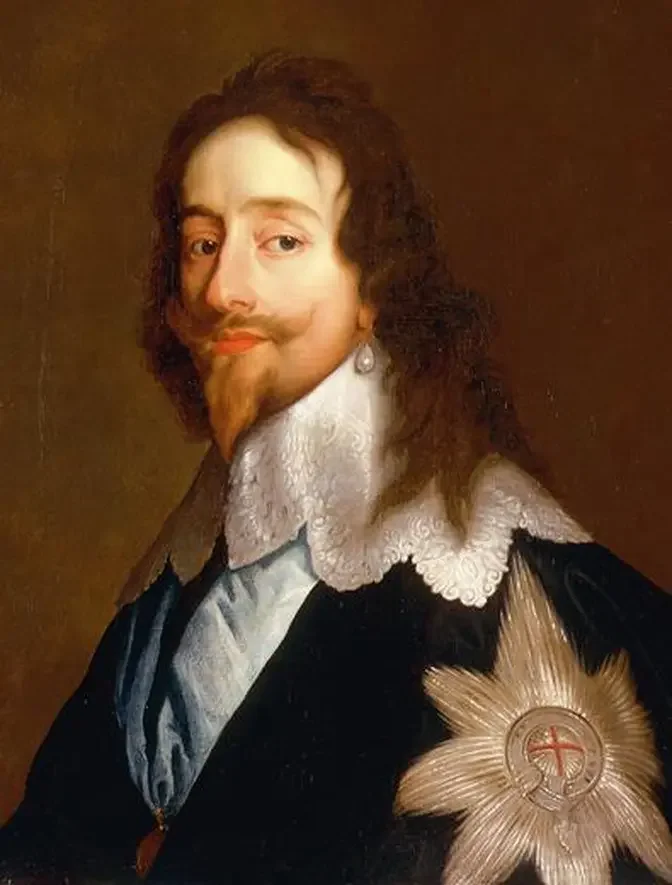
In this lesson we're going to look at some of the events during the First English Civil
War, but we're going to focus a little bit more on some of the historiographical aspects
of the conflict. So we're going to focus on, for example, why it was the case that the
Royalists were defeated in the English Civil War, and why the Parliamentarians actually
ultimately win. There are a few reasons why this is the case, some of these being strategic
reasons, some of these being particularly related to the personalities of the leaders
involved, but some of them also relate to geographical reasons. The reason why, for
example, the Parliamentarians won can be chalked up to ultimately being the fact that they
had control of London, and that came with it a number of very significant advantages.
So spoiler alerts on that one. But ultimately that's what we're going to do in this lesson
and we're going to cover. In the previous lesson we examined the events leading up to
the outbreak of the First English Civil War. Remember there are ultimately two, but the
main one that we're going to focus on is the first one. And the reasons for this date
as early as the early beginnings of the Stuart period, but really we're thinking about the
outbreak of the First English Civil War. We're looking at the short Parliament, the long
Parliament, and then looking at the events going through the Irish Rebellion. We're looking
at the Five Members incident, for example, and then we look at the fact that Charles
would then flee London to Hampton Court and both sides begin to raise military forces.
So this lesson, as I've said, is going to examine the Civil War itself, as well as the
reasons for the Royalists' defeat in the conflict. Let's think about the Royalists in the First
Civil War. We know just from a basic spoiler alert perspective that the First Civil War
ends with a Royalist defeat and a detaining of Charles I. And the reasons for this, the
reasons why, ultimately hinge on the strengths of the Parliamentarians, as well as the weaknesses
of the Royalist forces. Due to the fact that the Royalists were unable to access London,
as well as to access the south and east of England, really where the most prominent amounts
of riches lay, and really where a lot of the most ripe agricultural areas lay, they were
unable to control also the most heavily densely populated regions. So London, for example,
being very densely populated. Not having access to London meant that they were unable
to utilise the strong militia forces that had been trained as early as the 1630s within
London. So these militia forces would ultimately side with the Parliamentarians and be on the
side of the Parliamentarians, creating a significant advantage for the Parliamentarians. So just
giving a little bit of context, some historical evidence for you here, by the year of 1643,
the militia that existed within London had numbered around 20,000. So quite a significant
fighting force and quite a significant fighting force in the sense that they were also very
well trained. All of these things contribute quite significantly to the Royalist defeat.
In terms of, from a financial perspective, there is a lot of limitations on the Royalists
as well. Firstly, their essentially late to the party attempts to be able to raise a certain
amount of taxation, and also for the fact that they were unable to access loans from
the City of London Merchants. City of London Merchants allowed the loaning of revenue to
the Parliamentarians. This, of course, gave them a certain degree of advantages over the
Royalists, because that is a vein of finances that they were able to tap, that the Royalists
were essentially unable to tap. In addition to this, we have the fact that the Royalists
were limited to the amount of support that they were able to get from abroad. They were
able to get some support from abroad, we'll see this in a second, but for the most part,
because the control of the Navy was under the auspices of Parliament, they were unable
to, they basically had access, sorry, to major ports, and Charles wasn't able to get much
support from the continent. So there was some support, it was relatively small in terms
of numbers, and also relatively ineffective in terms of the impact that it would have
over the conflict itself. We'll see that there was support from Holland, and also some support
from Ireland. So the support from Holland comes from Henrietta Maria, again bringing
forces from Holland in 1643. She was able to land on the Yorkshire coast, and this was
the only real support that Charles and Henrietta Maria got from the continent, from Europe
itself. But in addition to this, they were able to conclude a secession treaty with the
Irish Confederates. This was also done in the year of 1643, and it meant that they had
access to a certain amount of force from Ireland. So again, this is a success on the
part of the Royalists, but the numbers that were actually, ultimately came from Ireland
were very, very small, and they were very, very ineffectual in comparison to the military
might that was beginning to grow on the side of the Parliamentarians. So let's think about
some of the military history relating to the English Civil War. So for the Royalists, there
were a number of key victories. The problem with these key victories is the fact that
Charles was unable to capitalise on any of these key victories. There were opportunities
at key points during this conflict for, potentially, the Royalist forces to march on London and
to try and potentially get an early and swift victory. But again, these were not capitalised
on. So for example, in 1642, there was the opportunity to march on London following the
Battle of Edge Hill. Now, the Battle of Edge Hill was ultimately inconclusive as to the
true victors. Both sides claimed that they had won the Battle of Edge Hill. But essentially,
while there was potentially the opportunity to march on London, the fact that it was inconclusive
in terms of who won, it was inconclusive in terms of who actually dealt the larger blow
to the other side, it meant that it shattered the perception in both sides of the conflict
that there was going to be a swift victory at all within the Civil War. It really very
clearly made it very clear on the part of the Royalists and the Parliamentarians that
this was not going to be a swift victory at all. In addition to this particular battle,
the Battle of Edge Hill, there were also very cautious tactics on the part of some
of the Parliamentarian commanders. So for example, the Earl of Manchester meant essentially
that they were unable to gain a significant victory in the Battle of Newbury, despite
the fact that they had outnumbered the Royalists two to one. So essentially, the Royalists
were able to gain victory in the Second Battle of Newbury, despite being outnumbered two
to one. One of the reasons for this was a cautious outlook on the part of the Earl of
Manchester. Now, the reason why this is the case is because even though the Parliamentarians
had a significant advantage, both geographically and both in terms of financial amounts of
money that they had, and also the amount of trained military they had, there was still
division between the various commanders within the Parliamentarian forces as to whether or
not they should push the Royalists to capitulation, or whether they should seek some kind of settlement
and some kind of negotiation. Parliamentarians were able to gain advantages in certain key
battles as well, so let's not just assume that this was victory on one side. They defeated
Charles and the Irish provisions at the Battle of Nantwich in January of 1644, again showing
that the Irish provision were not particularly very effective, despite the fact that they
came over from Ireland. So, even though Charles was successful in getting some forces from
Holland and some forces from Ireland, the Irish provision, as an example here, were
defeated at the Battle of Nantwich and essentially were knocked out of the context in its entirety.
In the same year, so in July of 1644, they were able to gain victory in the Battle of
Marston Moor. Again, this was with support from the Scots in terms of Parliamentarian
support. So, both sides were utilising the support of others, but again, two victories
on the part of the Parliamentarians. Thinking more then about the ways in which the Royalists
were able to be defeated by the Parliamentarians, you have to think about the financial troubles
that Charles was under. Just like the majority of his reign, there were financial troubles
and these plagued his ability to gain any kind of victory or any kind of stronghold
against the Parliamentarians in the English Civil War. By 1644, all of the traditional
levies that were used to gain any kind of financial advantage had run dry by Charles.
Now, what Parliament was able to do was implement effective taxation to fund the conflict, but
they also had access to the City of London Merchant Loans. Again, this put them at a
significant advantage in terms of financial abilities. It wouldn't be until 1644 that
Charles would agree and actually accept that this was something that he would have to do
himself, and so the institution of an excise tax would take place in 1644. But this was,
as we know, a few years after the outbreak of the Civil War even takes place. So, in
terms of financial troubles and in terms of trying to claw back some kind of financial
advantage, Charles was really fighting on the back foot for the majority of the conflict
in relation to being able to fund the conflict. Overall, Parliament was able to raise more
revenue than the Royalists and this gave them a considerable advantage. They were able to
raise more revenue due to the fact that they had access to the larger population, to the
more wealthy population, also to the fact that they had access to the City of London
Merchants. Coupling this with the fact that the political leadership of Parliament was
relatively strong during this period, at least up until the death of John Pym, they
had gained legitimacy as well from the fact that they were acting under the auspices of
Parliament, and this again put a relative disadvantage to the Royalists in the conflict.
The fact that they were able to control London as well meant that they were put at a
significant advantage too. It should be noted, I should note that even though we are
talking about all of the advantages that the Parliamentarians had compared to all of the
disadvantages that the Royalists had, there was still division between members of the
Parliamentarian forces, as I mentioned briefly when we looked at the cautious actions of
the Earl of Manchester. So the divisions among the Parliamentarians tend to fall along
two particular sides. You had the Peace Faction on the one hand who wanted to essentially
see negotiations take place and a settlement take place between the Royalists and the
Parliamentarians. And then on the other hand you had the War Party who wanted to see a
defeat of the Royalists, and instead of trying to negotiate a settlement with Charles,
they wanted to impose a settlement against Charles. They wanted to essentially tell
Charles what Charles had to do and not let Charles do any kind of negotiations.
As a result of these divisions, there would be a certain amount of disdain for the
ineffective commanders. So people like the Earl of Manchester, who were more aligned
with the Peace Faction, who remained relatively cautious in terms of their military
tactics. And so as a result of this, Oliver Cromwell would introduce in 1644
something known as the Self-Denying Ordinance. Now what the Self-Denying
Ordinance essentially did was force any member of Parliament or member of the
House of Lords, any peer, to resign their military commands. And the aim of this
was to essentially remove anybody who was part of this Peace Faction and part
of this cautious attitude from the ranks of the military, and allow the military
to actually operate along more of a footing that was aligned with that of the
War Party. So the Self-Denying Ordinance would be restricted ever so slightly
in April of 1645, when some members of Parliament were allowed to be reappointed
to their military provisions, to their military posts. But there were still
revisions to the Ordinance as a result of this, and it was essentially effective
ensuring that the divisions between the two sides did not make it to the front
line. So there were still divisions in between the more moderate
parliamentarians who wanted to see a negotiation, and the more radical
parliamentarians who wanted to impose a settlement on Charles, but they
essentially wanted to make sure that this division did not go and stretch as far
as the front lines itself, because this would essentially cause problems
for the parliamentarians in terms of trying to win the Civil War itself.
The final thing I want to touch on in this lesson is the impact of a new model
army that gets introduced by the parliamentarians. In February of 1645
a new model army is created by Ordinance. Now the reason why this is something
that is worth raising in a lesson is because it was incredibly effective
in terms of the nature of the fighting force in question. So, for example,
it was a single national force of 21,000 soldiers. They were all very well paid
and they all had possessed a certain amount of discipline, so they were all
incredibly well disciplined. They also had an intelligence department, which is
relatively new at the time, which was responsible for gathering information
about the enemy. And this was, of course, going to provide a significant
advantage. And because this was a relatively new idea within military
strategy, it was taken for granted at how important and how impactful
this would actually be, to the point where we have intelligence departments
within militaries even to this day. Now, the new model army would
essentially be a very strong fighting force, but the next lesson we'll do is
look at still some of the divisions that begin to take shape between
members of the parliamentarian forces and the sort of radical factions that
begin to rise and grow in popularity during this period as well.