
Opposition to Personal Rule | A Level History
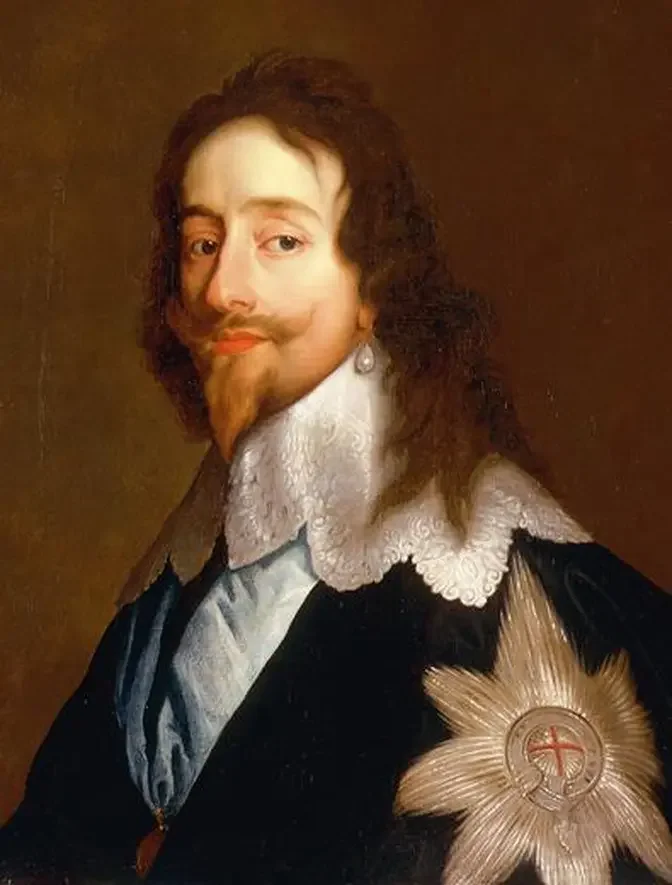
Over the last few lessons we've been talking about a number of reforms that took place
under Charles I, including this period of personal rule that we've been talking about
from around 1629 to 1640. Well in this lesson what we're going to do is talk about opposition
to the sort of personal rule era and the further tensions and conflicts that began to take
place with Parliament before we ultimately get the outbreak of the English Civil War
and the revolution in a couple of lessons time. So specifically we looked at this period
of personal rule and we also looked at the specific religious reforms that were made
during this period. So this period was a period of financial reforms as well as religious
reforms and also a number of changes that were made to foreign policy which we'll talk
about in a couple of minutes. And effectively what we're going to do here is talk about
how Parliament began to oppose this period of personal rule and how this increased tensions
further between Charles I and his Parliaments. So we're going to look at the concept of
Charles' financial reforms, we're going to look at the opposition to the financial reforms
and then we'll look at some of the consequences that stemmed from this opposition. So when
it comes to financial reforms we've been talking in the past few lessons, effectively since
the start of this series of lessons, on one of the key aims that the monarch has when
it comes to calling their Parliament during this period and that is the raising of revenue,
the financial aspect of Parliament. And there's always a back and forth that seems to take
place between the various monarchs and Parliaments when it comes to the raising of revenue. This
happened under James I and it's also happened under Charles I. And it should be noted that
Parliament was very hesitant to provide Charles with any kind of additional funding at this
point during this period of personal rule. And so what Charles had to do was, instead
of having to go to Parliament to request any kind of funding, additional finances, he had
to rely on other methods to raise revenue. And with the help of the Attorney General,
William Noye, he made a number of different reforms to increase his revenue and to increase
the amount of money he had available to him. First of all he saved around half a million
per annum by ending the conflict with Spain. And this was done in 1630 with the Treaty
of Madrid. As we already know, war is very, very costly, it's very, very expensive. And
so one of the quickest ways of being able to save more money and to have more disposable
income available to him, Charles simply decided to end the conflicts with Spain and saved
up to half a million per annum. The next thing he did was the utilisation of the taxation
we call tonnage and poundage. And this raised up to £358,000. Again, at the time this was
a substantial sum. Charles also began to issue monopolies in return for a particular fee.
This was a practice that had begun, or at least was popularised under James I and was
restricted slightly under James and Charles, but then Charles had decided to issue more
monopolies. And in return for issuing monopolies for certain industries, for certain companies,
they would pay Charles a handsome fee and therefore raise revenue that way. And then
finally we have the concept of the tax on ship money, which is something we're going
to talk about in a second. So when we're talking about the concept of ship money, this was
a tax that was levied on coastal countries to pay for the navy. And while this was something
that most monarchs did, including Charles, where Charles was different was that he issued
it as an annual tax and charged it against all countries. So this method actually was
very useful because it managed to raise Charles around £200,000 per annum per year between
the years 1634 to 1640. So a substantial sum was raised over this period through this method.
Now, when it comes to opposition to financial reforms, we can note several examples where
we can see opposition take place. So, for example, in 1629 Richard Chambers refused
to pay the taxation of tonnage and poundage since he argued that it disproportionately
impacted those working in trade like him. And as a result of this disdain towards
the disdain of knighthood, so this was an ancient levy that was based on an act from
1278, we see an uprising that was attempted by Sir David Foulis. So we can see here we
have two different examples of financial opposition to financial reforms. We have the refusal
to pay tonnage and poundage by merchant Richard Chambers in 1629 because it was disproportionate
according to him. And we also see an ancient levy based on an Act of Parliament from 1278
leading to the attempted uprising by Sir David Foulis. And this uprising was in 1634. So
we can see that we have opposition to multiple different areas of financial reforms and financial
policy that Charles had enacted. And we can see that this had led to an uprising in 1634.
Moreover, we could talk about John Hampton, who was a Puritan who challenged the levy
on ship money, which was something we just talked about a couple of minutes ago. And
he did this in 1636 and he sought to challenge it within the court system using the judiciary
as a method by which to challenge this financial reform by Charles. And while the courts
did rule in favour of Charles in 1637, so ultimately against John Hampton, it did nevertheless
show that there was a considerable disdain for the ship money levy that had existed under
Charles. So even though the courts ruled in favour of Charles and Charles ultimately won
that particular case, it did still show that the general populace was ultimately against
the concept of the ship money levy. Finally, we have evidence of opposition, if you will,
through the taxpayer strike. Now this was in 1639 and it was a refusal to pay the tax
on the ship money. So again, just like the court case that we just looked at was a very
good indicator of the kind of disdain that people had for this particular levy, so was
the 1639 taxpayer strike. And it was partly because of this strike that Charles decided
to recall Parliament in 1640 and ultimately we have the recalling of Parliament in 1640
and ultimately further tensions began to increase. Now in the next lesson what we're going to
do is talk about relationships between the other areas of the realm, if you will, so
Scotland and Ireland for example, and then we're going to talk about the short and long
parliaments. Then we'll be diving into the outbreak and ultimately the series of events
that took place during the English Civil War.