
Queen Victoria: The Misunderstood Monarch
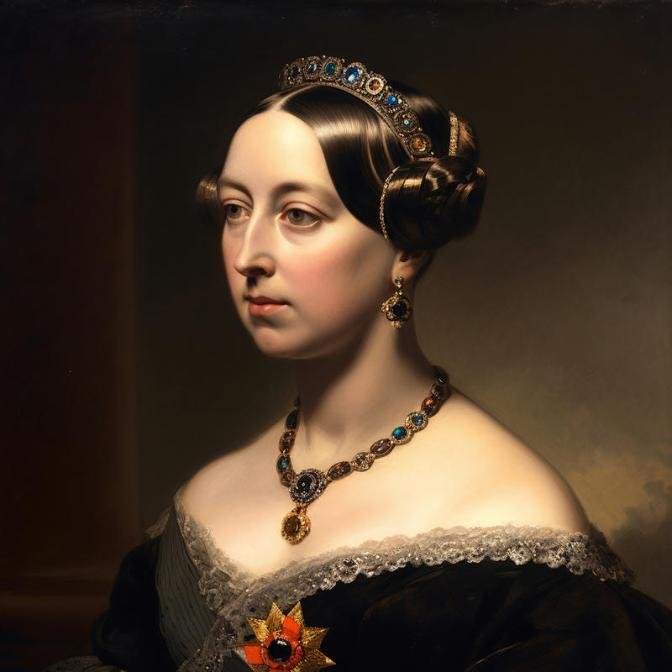
Queen Victoria ruled over Great Britain for 63 years, and she is still remembered as being
one of the most influential monarchs in history.
When it comes to the life of Queen Victoria, biographers are actually very lucky because
she wrote journals and letters documenting her daily life from the time she was a teenage
girl all the way through to her death.
Therefore, we know exactly what she was experiencing in her own words.
However, when she was close to death, she asked her daughter Beatrice to edit and rewrite
many of her journals and destroy much of the original text that might offend members of
her family.
After her death, her children took it upon themselves to burn certain chunks of her life
that they were embarrassed of.
Because of that, we have the image of her that her children wanted us to see.
A woman who was known as the Widow of Windsor, and spent her entire life mourning the death
of her husband.
But her life was far more interesting than she's often given credit for.
Victoria's grandfather was George III, who was the reigning King of England during her
youth.
Her father was Prince Edward, the Duke of Kent, and her mother, Victoria of Saxe-Colburg-Salfield,
was born in Germany before she became the Duchess of Kent.
Prince Edward would have become the next King, but he died when Victoria was very young,
leaving her to be the only legitimate heir to the throne.
Victoria grew up knowing that one day she would become the next Queen of England.
At the time, women were never trusted with their own finances.
To make matters worse, the Duchess of Kent only spoke German, but she was expected to
raise an English Queen.
So a man named John Conroy was appointed as the Comptroller over the lives of Victoria
and her mother.
Conroy took his duty much further than just being an accountant.
He was an opportunist who saw this as a chance to have a powerful position in the government,
and pushed for control over the way Victoria was raised.
In a lot of ways, he became almost like a talent agent for a child star.
From an outsider's perspective, it would seem that young Victoria had the perfect life.
She was raised in the beautiful home of Kensington Palace, with toys, clothes, servants, and
vacations abroad.
But in her journals, Victoria often wrote that she had a very unhappy childhood.
Together with her mother, Conroy created strict rules known as the Kensington System.
The main goal of its design was to make Victoria weak and completely incapable of doing anything
on her own.
She was always in the company of a chaperone wherever she went.
Instead of going to school, she had a governess to tutor her, and she was never allowed to
play with other children.
This was an extremely lonely life, and she desperately wanted to make friends.
Conroy and Victoria's mother hoped that if they broke the princess down enough, they
could turn her into a puppet that was easy to control.
As a teenager, Conroy arranged for a tour on a train so that Victoria could see every
major city in the UK.
She was forced to try and memorize every single person's name and title at every dinner
party.
Considering these dinner parties were massive, her task was always going to be a failure.
Conroy would reprimand her, saying that she was too stupid to be queen.
Needless to say, the demands and the constant onslaught of insults made her miserable.
In 1835, she was visiting the town of Ramsgate, and she became very ill with typhoid fever.
Conroy accused her of being lazy and a liar.
He said that she was faking her illness in order to get out of the tour.
But she truly was sick, and she was lying in bed in a hotel.
John Conroy burst into that hotel room with a piece of paper in hand.
He said that she would be a horrible queen, and demanded that she sign away her power
to him so that he could be her personal secretary.
This would have made him king by proxy, because he would have had absolute power over all
of her affairs.
She was just 16 years old at the time, and she'd spent her entire life being broken
down to feel completely worthless.
But she still had the strength to say no to this.
When she was 18, Victoria was awoken in the middle of the night by her mother, and she
learned that her grandfather was dead.
She came downstairs to find the Archbishop of Canterbury kneeling in front of her, and
just like that, she was the Queen of Great Britain.
On the day of Queen Victoria's coronation, the Prime Minister, Lord Melbourne, was so
moved by the beauty of the ceremony that he had tears in his eyes.
He congratulated her, and told her that she was going to do a wonderful job.
He looked at her with fatherly pride, which was something that she had never experienced
in her life.
Victoria knew that she could trust him.
The Prime Minister became her new father figure, and her very first friend.
They would spend a lot of time together, doing jigsaw puzzles and taking long walks.
She often wrote that his sense of humor was her favorite thing about him, and that it
would often make her laugh.
However, in public, she was forced to put on a serious face.
After becoming Queen, Victoria moved into Buckingham Palace, and she decided to never
speak to her mother or Lord Conroy again.
Their plan to control her had completely backfired.
She hated both of them, and was glad to finally have her independence.
However, that did not stop Lord Conroy from continuing to try and slither his way back
into power.
Victoria approached Lord Melbourne, claiming that the Queen promised him a pension of £3,000
a year, as well as a title, some land, and a seat in court.
Melbourne gave in to Conroy's demands.
After hearing about his lies, Victoria dismissed Lord Conroy, but he continued to work for
the Duchess of Kent while they plotted their next move.
When Lord Melbourne's time as Prime Minister was over, and he was voted out of office,
Victoria was devastated.
She wrote about it in her journals, with so much drama, it was almost as if he had died.
Robert Peel became the next Prime Minister, and he treated her like a stupid girl, just
like John Conroy had.
He was part of the Tory political party, so he demanded that Victoria dismiss her ladies
in waiting, because they were members of the Whig Party.
Victoria's bedchamber maids were her dearest friends, so she was outraged at the suggestion
that she should fire them over politics.
She flat out refused to continue to obey Peel's orders.
After all, she was the Queen, so he didn't really have any rights to make demands of
her.
Victoria was so frustrated that he could not control her, that he actually resigned from
being Prime Minister.
This incident became known as the Bedchamber Crisis.
The German Throne Even though Victoria's mother and John Conroy
were no longer on speaking terms with her, they were still trying to give more power
to the German part of the family.
They instructed Prince Albert, her first cousin, to court her, with the plot to get their family
more control over the throne.
Victoria had only met Albert once before, and by the time they were both 20 years old,
she was shocked at how handsome he'd grown up to be.
She ran home to write in her journal about how attractive he was, and how her heart was
pounding.
Victoria had no idea that her mother had planned this clandestine meeting with Albert, but
they truly did fall in love with one another.
She was head over heels in love, and as the Queen, she was the one to ask Albert to marry
her.
In her diary, there are so many intimate details about their honeymoon, that it might as well
be a romance novel.
Victoria became pregnant just a month after her wedding.
She was in constant pain, and very hormonal.
She struggled a lot with pregnancy, and she was extremely critical of herself.
Falling into a serious depression, Victoria would write in her diary about how guilty
she felt every time she lost her temper.
She would often write that her husband was perfect, and she hated herself for being anything
but sweet and loving towards him at all times.
Little did the Queen know that this was all part of an extension of Conroy and the Duchess
of Kent's Kensington plan.
Albert's German family instructed him to keep getting her pregnant, so that she would
remain weak, and never have time to truly learn how to rule on her own.
She wrote that pregnancy made her miserable, but they had a total of nine children together.
Unfortunately, Victoria did not like her kids very much.
Motherhood was simply something she was not ready for, and she suffered from a lot of
postpartum depression.
For all of those years, she stated she had a loneliness and a tendency to cry.
It is what every lady suffers with, more or less, and what I, during my first confinements,
suffered dreadfully with.
Victoria's life is about to get a whole lot more tragic, and what would a biographics
video be without plenty of tragedy?
But before we get into that, let me take a moment to tell you about Squarespace, who
make these long videos possible.
Squarespace empowers dreamers, makers, doers, and gives them the tools to bring their creative
ideas to life.
Squarespace make it easy, too.
They have an all-in-one platform so you can claim a domain, build a website, and even
sell online.
No fussing around, getting that domain from one website, bringing it to another, working
out how to sell something, or whatever.
It's all neat and tidy on Squarespace.
In fact, I've got a personal anecdote here.
I'm working on a website with them right now.
I had a domain, bought it somewhere else, had to transfer it over.
It was relatively easy with Squarespace, but just buy your own domain on Squarespace.
Trust me, that would be easier.
Plus that website you make won't look too shabby, either.
And by that, I mean it's going to look amazing.
It's going to look amazing, it's going to look amazing, it's going to look amazing,
it's going to look amazing, it's going to look amazing, it's going to look amazing,
it's going to look amazing, it's going to look amazing, it's going to look amazing.
Let's get to that tragedy, shall we?
In the year 1861, Queen Victoria's mother died of cancer.
Despite all the drama that had gone on between the two of them, she regretted not spending
more time with her mother.
She realized that John Conroy was the true villain here, and she regretted not taking
action to repair their relationship sooner.
That same year, her husband, Albert, also died.
She was 42 years old, and suddenly, the closest people in her life were gone.
After his death, she continued to sleep next to a picture of him, and had the servants
lay out his clothes on the bed every morning, even though he wouldn't be there to get
dressed.
Whenever someone asked her to make a decision, she would accidentally say, I'll have to
ask Albert, as if she had forgotten or was in denial about his death.
Victoria already struggled with mental illness, but these deaths made it far worse.
People whispered that she may have inherited the Hanoverian madness.
After all, there was so much inbreeding going on in that part of her family, that it shouldn't
be surprising that all of them were known for being a bit nuts.
She dressed in black at all times, and acted completely melodramatic.
She wrote letters on paper with a black border, to signify that she was in mourning.
Instead of staying in Buckingham Palace, she went on long holidays in Germany.
In her diary, she wrote that she wished she could have a normal life, and she could live
in Germany with Albert, without having to be Queen.
At this point, everyone began to call her the Widow of Windsor.
For the rest of her life, Victoria wore black every single day.
She went on one of the longest periods of mourning in history.
People thought that this was tragically romantic, so they became fascinated with death.
Suddenly, it was fashionable to enjoy spooky and creepy things, and this inspired a great
deal of amazing culture during the Victorian era.
Most people think that this is where her story ends, and that she remained a very sad and
serious woman for the rest of her days.
But the reality is that she was able to heal, and she learned to love her life once again.
The Queen After returning to the United Kingdom, Victoria
met a Scottish man named John Brown when she was 45 years old.
Brown had been Prince Albert's assistant whenever he visited Scotland, so he was there
to pay his respects.
Instead of seeing her just as the Queen, he could see that Victoria was an incredibly
lonely woman, and all she really needed in her life was a friend.
The two of them would get into long conversations, where she poured out all of the feelings that
she had kept secret, or just only written in her diaries for a very long time.
Brown had a lot of sympathy for her, and became devoted to serving her.
He swore that he would never leave her side, and he'd take care of her every need.
The greatest gift John Brown gave her was his personality.
He was loud, he was rude, and he was almost always drunk.
He would drink whiskey, slipping some into Victoria's drink, saying,
Don't stay thirsty.
No one had made Victoria laugh so much in years, and she absolutely loved it.
The two became best friends, and even possibly lovers.
If Brown disagreed with something he did, he would yell,
Woman, what are you doing?
Onlookers were shocked at his level of disrespect, but she actually enjoyed it very much.
No one had ever dared to talk to her like that, or treat her like a normal person.
Her entire life, everyone had treated her like she was weak and stupid.
But John Brown knew how smart and strong she truly was, so he held her to a higher standard.
Their friendship lifted her spirit out of her depression, and she was the happiest she'd
been in a very long time.
All her life, Victoria was writing in her journals every single day, and she was an
avid reader.
She made a decision to do something that no other monarch had ever done before.
Become an author.
Queen Victoria published a book called Leaves from the Journal of Our Lives in the Highlands,
which was full of excerpts from her own personal journal about her friendship with John Brown,
and how he changed her life.
It became a bestseller, and sold over 100,000 copies.
She even gave a dedication to John Brown's muscular legs, which peaked out of his kilt.
Her kids were embarrassed, but then again, any kid would feel embarrassed if their mother
wrote about those things, and then published them.
After her death, Victoria's daughter Beatrice deleted all mention of John Brown when she
was rewriting Victoria's journals, because their relationship was considered to be a
truly humiliating stain on the royal family.
But of course, she could not erase him from history.
Queen Victoria had commissioned statues to be made in John Brown's honor, and plenty
of people had witnessed them together when he was alive.
Victoria and John held hands together, and hugged one another in public, and of course,
there was also the book she published about their friendship.
There is also a rumor that they were secretly lovers.
Victoria made sure they slept in conjoining bedrooms, and her children called him Mama's
lover.
On his deathbed, the Queen's personal chaplain, Reverend Norman McLeod, confessed that he
married Queen Victoria and John Brown in a secret ceremony.
Years later, we would learn that he gave her his mother's engagement ring.
Tragically, though, she outlived Brown, too, even though he was several years younger than
her.
He died at age 56, so she lost yet another man in her life that she truly loved.
In 1997, a movie called Mrs. Brown was made to dramatize their love story.
Despite the evidence, there are still historians who refuse to believe that Queen Victoria would
marry a commoner like John Brown.
And if she had, they think she would have been brave enough to let the world know, instead
of keeping it a secret.
Unfortunately, we never know all the details, because they have been lost forever.
As we mentioned before, Queen Victoria was incapable of running a government on her own,
and she was known for being a bit of a rocker.
The decisions she made were usually based on her personal preferences, rather than politics.
Prime Minister Gladstone was very serious, and he didn't have any sense of humor at
all.
Of course, Victoria hated him.
They would write nasty letters back and forth to one another, even though they both lived
in Buckingham Palace, and could have easily spoken to one another face to face.
The next Prime Minister, Disraeli, had a much better sense of humor, and treated her with
respect.
Disraeli lovingly called her the Fairy Queen, and gave her the title Empress of India.
Queen Victoria had never been to India in her entire life, but after being given the
title, she set out to learn as much about the country as she possibly could.
She hired a tutor named Abdul Karim, so that she could learn to speak the Indian language,
Hindustani.
In her notebooks, she took notes every time she asked him how to say flirtatious or dirty
things.
Abdul Karim became her new favorite servant, and he was given the title of the Munshi,
or the Teacher.
Victoria allowed him to go with her everywhere, even when she was on holiday.
Compared to the loud John Brown, the people in Queen Victoria's court were actually
relieved that her new favorite servant was at least soft-spoken, and a real gentleman.
They saw this as a huge improvement.
However, Karim soon began to get showered with gifts, and gained a lot more privileges.
Plenty of people were concerned that Victoria was going to be taken advantage of, and that
she was making poor decisions.
After all, being a good tutor didn't exactly qualify Karim to become someone who held a
position of power.
But the moment anyone questioned anything to do with Karim, she would accuse them of
being racist.
Abdul Karim was always getting sick, and it turned out that he had gonorrhea.
But, of course, if the royal physician got frustrated, Victoria would pull the race card
once again.
He came with her on vacation to the Riviera, and the newspapers described him as a servant.
She wrote a letter to the newspaper, and demanded that they retract their last story, and submit
a correction.
Abdul Karim was an educated gentleman, and her Indian secretary.
While she was incredibly eccentric, there is no doubt that once anyone became Queen
Victoria's friend, she was fiercely loyal, and made sure they lived their best life.
Death At 81 years old, Queen Victoria planned for
her death, and when she had a hemorrhagic stroke, they knew how to prepare for her funeral.
Throughout her life, Queen Victoria had been given precious jewels, but they meant nothing
to her in those final days.
She told her doctors that what she wanted was a number of sentimental items with her
in her coffin.
First was Albert's dressing gown, which she had in her bedroom all those years.
Next were the photos of the children, as well as the locks of their hair that she had collected
from their first haircuts.
She requested to have a framed photograph of John Brown in her hands, laying over her
heart.
On her finger, she wore an engagement ring that belonged to John Brown's mother.
Queen Victoria's funeral took place on February 2, 1901.
Despite it being in the middle of winter, thousands of people showed up to mourn, and
it became one of the largest funerals in history.
She never led the country through war, or ever made any substantial improvements in
politics, but people loved her all the same.
So many Prime Ministers came and went during Victoria's reign, but they have been all
but forgotten.
You could say that they were some of the first true influences.
Everything they did caused a ripple effect for the rest of society, and Queen Victoria
was no exception.
In fact, her life was so colourful that, when we think of the Victorian era, we truly do
get a very vivid image of that time period in our minds.
The clothes, the style, the attitude of the people.
They were just like the Queen, serious on the outside, and wild on the inside.
It's deliciously romantic, and yet very dark at the same time.
That time period is still popular to this day, and Queen Victoria is going to be remembered
as one of the most impactful figures in history.