
Queen Victoria's Grandchildren - Part 3 of 3
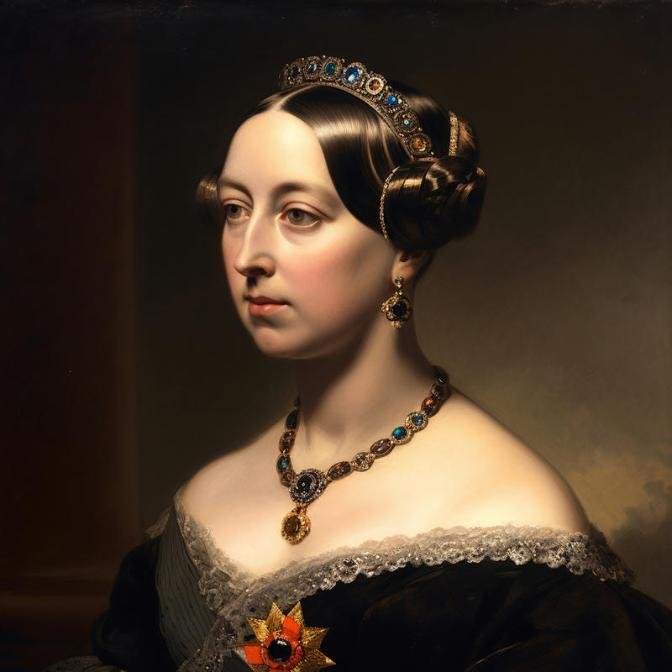
Queen Victoria's Grandchildren
Part 3. The Children of Helena, Arthur, Leopold and Beatrice
The Children of Helena
Helena married Prince Christian of Schleswig-Holstein
and the couple lived and raised their children in the UK.
The children attended schools rather than being educated by private tutors
as was traditional for royal children.
Christian attended Wellington College and was captain of the cricket team.
He played a single first-class match at the highest level of the sport.
He then became an army officer.
He served in the Ashanti War in modern-day Ghana
as well as the Second Boer War in South Africa.
There he contracted malaria and died at the age of 33.
Albert followed his paternal lineage and served in the Prussian Army.
In World War I he was excused by his cousin Emperor Wilhelm
from fighting against their British family.
At 51 he succeeded his childless cousin as Duke of Schleswig-Holstein.
Albert never married but fathered one illegitimate daughter, Valerie Marie.
The baby was given to Albert's Jewish friends to raise.
The name of her mother was never revealed
but Albert told his sisters that she had been a woman of high noble birth.
Shortly before his death he wrote to his daughter and revealed his paternity.
Helena Victoria followed her mother's example and was active in philanthropy.
During World War I she founded the YWCA Women's Auxiliary Force
and arranged entertainments for British troops in France.
She never married and lived with her sister Marie-Louise.
During World War II their London home was damaged in a German air raid.
Helena attended the wedding of her cousin Princess Elizabeth
and died a few months later at 77.
Marie-Louise wed Prince Arébet of Anhalt
but the marriage was never consummated and rumors of his homosexuality circled.
Their marriage was annulled after nine years.
Marie-Louise never remarried.
She lived with her sister Helena Victoria and was also active in charity work
including Queen Mary's Dollhouse which showcased the work of British craftsmen.
She founded a girls' club which served as a hospital during World War I and a nursing home.
She attended four coronations, wrote a book about it and lived to be 84.
In 1876 Princess Helena gave birth to a son, Harold, who died at eight days old.
The following year she gave birth to a stillborn son.
Louise married Scotsman John Campbell, Marquess of Lorne and Duke of Argyle
but the couple had an unhappy marriage and no children,
possibly because Lorne was more interested in his male lovers than his wife.
The Children of Arthur
Arthur married Princess Louise Margaret of Prussia.
They had a happy family life and did a great deal of traveling with Arthur's military career.
They spent two years in India and the youngest daughter accompanied her parents to Canada
when Arthur was appointed Governor General.
Margaret and her younger sister Patricia were great beauties and hot commodities on the European marriage market.
The family traveled to Portugal to meet the sons of King Carlos I.
Then traveled on to Egypt.
In Cairo they met Gustav, grandson of the King of Sweden.
Margaret and Gustav fell in love at first sight and were married.
The couple were very much in love and Margaret was happy in Sweden,
learning the language, customs and history with enthusiasm.
They had five children that Margaret raised with caring and devotion.
During World War I she did a great deal for Sweden, organizing supply drives,
a sewing society that made underwear for troops, and training women to farm.
She aided families in tracing soldiers missing in action and advocated for prisoners of war.
Margaret had a positive attitude toward Sweden becoming a democracy
and influenced her husband's acceptance, preserving the Swedish monarchy.
While pregnant with her sixth child, Margaret died suddenly of sepsis at the age of 38.
She was deeply mourned by her family and the Swedish people.
The Prime Minister said that a ray of sunshine has gone out.
Her widower later married Queen Victoria's great-granddaughter Louise Mountbatten.
He became King Gustav VI Adolf in 1950.
Margaret's grandson is the current King of Sweden, Karl XVI Gustav,
and her granddaughter is the current Queen of Denmark, Margareta II.
Arthur was the first of many royals to be educated at Eton College.
He then attended Sandhurst Military College and joined the army.
He was stationed in South Africa following the Second Boer War.
During World War I he served as aide-de-camp to his first cousin, King George V.
He married Princess Alexandra, the daughter of his cousin Louis, and had one son.
As one of the more senior male members of the British royal family residing in the UK,
he undertook many royal duties and charity work.
He also went on a diplomatic mission to Japan and met Emperor Meiji.
He died at 55.
Patricia got her name because she was born on St. Patrick's Day.
When she was 25, her father was appointed Governor-General of Canada
and she traveled the country extensively with her parents.
The princess was very popular in Canada and appeared on the One Dollar Note issued in 1917.
She was named Colonel-in-Chief of Princess Patricia's Canadian Light Infantry
for which she designed the badge and colors.
As one of the great beauties of the era who was still single at 33,
Patricia's marriage was the subject of great speculation.
She was matched with several foreign royals including the King of Spain,
the Prince Royal of Portugal, and the Russian Tsar's younger brother.
But she decided to marry for love to a commoner, Naval Commander Alexander Ramsey.
Her Canadian regiment attended the wedding and played their march for her.
The couple had one son and enjoyed traveling especially to tropical locations.
Patricia was also an accomplished watercolor artist.
She died in 1974, aged 87.
Leopold was a hemophiliac and had a hard time finding a suitable princess who was willing to marry him.
Princess Helena of Wydeck-Pyrmont finally agreed.
While expecting their second child, Leopold's health took a turn for the worse
and he went to the south of France to recover.
There he took a tumble and died of a brain hemorrhage at age 30.
His two children grew up without their father.
Alice married Prince Alexander of Teck, brother of Queen Mary, her cousin George V's wife.
The couple lived in England and had three children.
Their two sons suffered from hemophilia and the youngest, Maurice, died at five months old.
At the outbreak of World War I, the family gave up their German titles and changed their name to Cambridge.
They served as Governor General and Viceroy of South Africa from 1924 to 1931.
While away, their son, Rupert, died in a car crash at the age of 21.
During World War II, Alexander was named Governor General of Canada and served for six years.
The couple's three grandchildren lived with them to escape the threat of bombing in the UK.
Alice served the war effort in Canada by sponsoring various women's military and nursing organizations.
Alexander died in 1957 and Alice lived the rest of her life at Kensington Palace.
She died in 1981 at the age of 97 and was the last surviving grandchild of Queen Victoria.
Charles Edward
Kaiser Wilhelm took an interest in his young fatherless cousin and Charles Edward was known as the Emperor's seventh son.
When Alfred, Duke of Saxe-Coburg and Gotha's son, pre-deceased him,
Wilhelm proposed that the dukedom should go to Charles Edward, who inherited the throne in 1900 at the age of 16.
He was interested in the new inventions, zeppelins and airplanes and supported the aircraft industry in Gotha.
He married Princess Victoria Adelaide of Schleswig-Holstein, handpicked for him by Wilhelm.
They had five children.
Their daughter, Sibylla, was the mother of the current king of Sweden, Karl XVI Gustav.
At the outbreak of World War I, Charles Edward sided with Kaiser Wilhelm, who had done so much for him and served in the German army.
He broke off relations with his British family and his title of Prince of the United Kingdom was removed.
During the German Revolution of 1918, the Duchy of Saxe-Coburg and Gotha was abolished and he lost his throne.
He supported Hitler and joined the Nazi party in hope that they would restore his throne.
He went on a diplomatic mission to Japan and spied for Hitler at the funeral of his cousin, George V.
Three of Charles Edward's sons fought in World War II and one was killed in a plane crash.
Following the defeat of the Nazis, Charles Edward was imprisoned and put on trial for war crimes.
He was sentenced to pay heavy fines, which left him impoverished.
In 1954, he died of cancer at the age of 69.
Queen Victoria's youngest child married the handsome Prince Henry of Battenberg and the couple were devoted to each other.
Beatrice was also deeply devoted to her selfish and demanding mother, which frustrated her husband and often left her children feeling ignored.
They frequently acted up in school in desperate pleas for attention.
Beatrice was a carrier of the gene for hemophilia, which caused much tragedy in the royal family.
Alexander joined the navy at 16. At 24, he left the navy and joined the army.
He fought in World War I and earned many honors and decorations.
He and his brothers changed their German name, Battenberg, to Mountbatten, and Alexander was created Marquess of Chrisbrook.
He married Lady Irene Dennison and the couple had one daughter, Iris.
As he had inherited very little and received no state allowance, Alexander became the first British royal to hold down a regular job.
He began as an entry-level clerk, but worked his way up to director of Lieber Brothers Manufacturing.
At the outbreak of World War II, despite being in his 50s, Alexander joined the air force and served as a flight lieutenant.
He lived to be 76.
Victoria Eugenie was first noticed by King Alfonso XIII of Spain at a state dinner at Buckingham Palace, and they began a courtship.
Alfonso's mother tried to persuade him against Victoria for fear that she might pass hemophilia onto their children, but the king would not be dissuaded and the couple were wed.
During the royal procession following the wedding, an anarchist threw a bomb at their carriage in an attempt to assassinate the king and queen.
They escaped injury, but her wedding dress was stained with the blood of a guard who had been riding beside the carriage.
When their eldest son Alfonso was circumcised, the baby bled excessively and it was clear that he had hemophilia.
The king resented his wife for passing the disease onto their children and their relationship deteriorated.
He was frequently unfaithful to her and became a notorious womanizer.
They had seven children, two of whom suffered from the blood disorder and died young.
Alfonso at 31 and Gonzalo at 19.
Both bled to death following car crashes.
The queen escaped her unhappy marriage by devoting herself to charitable works for the sick and poor.
Spain became a republic in 1931 and in order to avoid civil war, the royal family went into exile in Italy.
Victoria Eugenie and Alfonso finally called it quits on their miserable marriage and separated.
During World War II, she was forced to leave Italy because of her allied leanings.
She lived the rest of her life in Switzerland and died in 1969 at age 81.
In 1975, following the death of dictator Francisco Franco, Victoria Eugenie's grandson was reinstated as Juan Carlos I, king of Spain.
His son is the current king Felipe VI of Spain.
Leopold, like his uncle and namesake, suffered from hemophilia.
Despite his ill health, he joined the army.
During World War I, he was excused from active service and worked in the war office.
At 32, he injured his hip and required surgery, but he bled out and died during the operation.
Maurice was four years old when his father died while fighting in the Ashanti War in modern-day Ghana.
He was a lieutenant in World War I and was killed in action in Belgium.
His commander said,
So there you have it, all 42 of Queen Victoria's grandchildren.
If you enjoyed this video, please like, subscribe, comment your thoughts, and check out my other royal history videos.
If you really want to help, please consider supporting me on Patreon. A link is in the description.
Thank you for watching!