
The PAINFUL Death Of Prince Albert - Queen Victoria's Husband
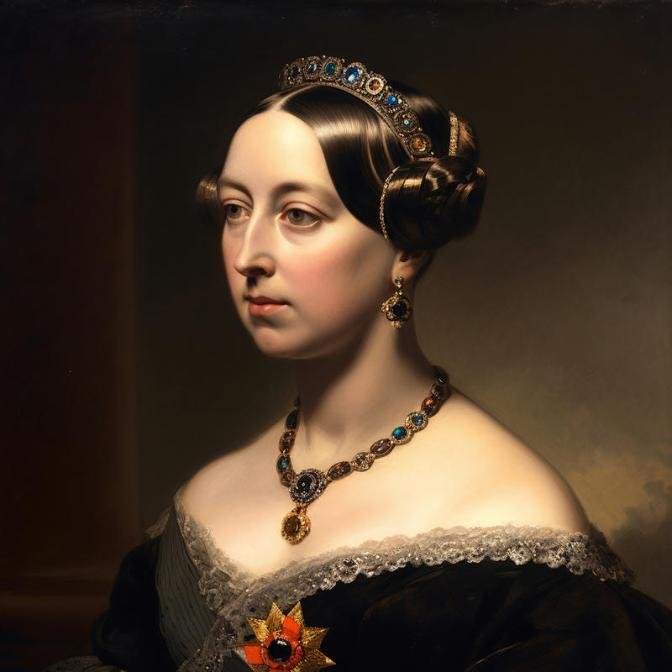
Throughout her life Queen Victoria had a significant amount of tragedy and upset. She would lose
her husband at a very young age, and she would never be the same after the death of Prince
Albert. Victoria spent the rest of her life wearing black after Albert's death at the
age of 42, and she would be in mourning her whole life. She wished her husband would be
there by her side throughout her long reign, but this was not the case. It was inside of
Windsor Castle that Prince Albert took his last breath, and he throughout his life had
suffered greatly from ill health. Doctors at the time stated that it was typhoid fever
that killed the Prince consort, but he was not a very well man, even when he married
Queen Victoria.
Join us today to look at the death of Queen Victoria's husband, and as always to support
our channel, please make sure to subscribe.
Throughout his life Prince Albert was not very well. His death at a young age could
have been caused by the fact his body was slowly worn down, and he did at the time
have serious gastric issues that medicine could not treat. But he was a man who worked
incredibly hard throughout his life and time as a consort, and he would work long into
the evenings to help Victoria govern and rule. Life with the Queen would cause Albert even
more stress, and she believed that he was a hypochondriac who was regularly complaining
of being ill, but his bouts of poor health would get him down.
As a child Albert suffered from many colds that would linger and would affect his lungs
and his speech. A German soldier would say how whilst doing exercise he got tired very
quickly and often looked on the verge of collapse. But this specific doctor also documented Albert's
chronic stomach issues, and when he was a teenager he said that Albert was not physically
strong and that his tiredness was also very apparent.
When Albert came to visit Queen Victoria for the first time in 1836, he could not even
stay awake, and he actually fell asleep at the dinner table whilst they were eating and
the guests were not enamoured by the fact he could not stay awake whilst holding a conversation.
He would as a child also have problems with toothache, inflamed gums and sore throats,
and he also suffered with bouts of dizziness and would often faint.
He also got rather seasick, and doctors were worried that his ability to combat illness
and disease was so poor that any measly illness that was going around in the 19th century
would finish him off. His doctor would say that, if Albert ever falls sick of a low fever
then you will lose him. These words were ominous as the prince from a young age moaned about
his ability to walk, and also he suffered with rheumatism.
His life with Victoria would not help his problems, as the Queen was a woman who was
impervious to the cold, and she was known for this. Her royal palaces even in winter
were often freezing cold, and she was a lot hardier than her husband was. Victoria would
demand a constant stream of fresh air to come into the palaces, meaning that it was often
very drafty, and this was not good for Albert's health. He did complain about this, and he
was forced to sit in the cold rooms of the large palaces, and he would be awake early
in the morning wrapped in a rug to try and keep warm. He did not like the cold, and this
was no good for his health, and he was often walking around the palaces in a large coat,
and he also wore a wig for his balding hair as he wanted to keep his head warm.
He continued to experience stomach problems, and Victoria would notice this, and Albert
claimed he had been born with chronic stomach issues. He believed that it would be this
which would eventually kill him, but he would eat his meals very quickly, and also rush
his food, meaning he bloated often, and would also have indigestion. In his thirties he
did grow larger, and he became more depressed, but his life was devoted entirely to his wife
who was a queen. He could do nothing for himself, but he did enjoy time at Balmoral,
but he would not relax away from work, and he never voiced his true feelings of frustration
and how he was feeling. But he would also hide how poorly he was, as he did not want
his wife to see him in this way, and Victoria herself was not the best with dealing with
his poor health. Victoria would dismiss lots of his bouts of illness, and Albert would
get a lot of the queen's sharper side, especially when she suffered with post-natal
depression, and they would argue quite a bit. Albert was a man who worried about his family,
and the stress of government did not help, and he also had bouts of insomnia, and he
would in 1853 contract measles. He caught this from one of his children, and was for
some time very ill. This may have caused inflammation of the brain, but across Britain at the time
there was some hostility towards a consort. Britain was involved in the Crimean War, and
many across the nation suspected that he was a Russian spy, which added to more stress
to Albert's life, as Albert was more than aware of these accusations. But he continued
to contract serious illnesses which were brought on by the amount of work he was doing. He
claimed that I never remember having so much work as I have had lately, and he was worn
out by the business he was having to do. Victoria just told him to get on with it,
but Albert said he was very different to his wife, and he was much more placid. In the
1850s he was still suffering with stomach cramps, and as 1861 came around he was very
depressed and was very down. He contemplated that his death was coming, but he believed
that he had typhoid fever, and that his symptoms matched up with this. Today it's possible
that Albert would have been diagnosed with Crohn's disease, and there was some suggestion
at the time he was also suffering from tuberculosis which had caused problems with his stomach.
Crohn's symptoms can be made worse through stress, and in 1861 Albert was at his wits
end. Victoria's mother had died, and Victoria was grief stricken. There were many pieces
of gossip about his son, the heir, and his antics involving many other women. His cousin
also died which added to his problems. At the time Crohn's was not well known, and
there were no treatments or ailments to make this better. But it would be in December 1861
when things went very wrong. William Jenner the Royal Doctor on the 9th December would
diagnose him with typhoid fever as Albert was very ill, but within 5 days the Prince
Consort would be dead. He was inside of the Blue Room at Windsor Castle when he died.
Alongside him were his wife, Queen Victoria and 5 of their children. He was just at the
time 42, and in his final moments his fever got very intense and his hands and face went
darker. The doctors also said there were spots on his abdomen, and his final days were incredibly
tough and Albert suffered greatly. He would be sick a lot and was very delirious, and
in the days before his death he got very breathless. Queen Victoria was told he would get past
this, but every day she saw her beloved husband getting weaker and complaining more. Many
had said for some time that the Prince did not look well, and that he was very ill. He
would continue to work until it was impossible for him to do so, but the public sentiment
following his death changed, and there was a huge amount of sympathy for the monarchy
with Albert's death. Victoria would never be the same, and she would spend the rest
of her life in mourning for her husband, and the rooms that he frequented inside the palace
were left as they were. Victoria would also make sure that hot water was taken to his
room every morning, and that the towels were changed as if he was still alive.
Prince Albert's funeral would take place on the 23rd December 1861 inside of St George's
Chapel. Following this he was left inside of the Royal Vault for some time, until the
Royal Mausoleum at Frogmore was made and finished. Then his remains were moved, and Victoria
would be interred with him later on. She would create a number of memorials and monuments
for her husband, including the Concert Hall, the Royal Albert Hall.
After the death of Queen Victoria's husband, the Queen was never the same. He was in poor
health a lot of his life, and he was key to the running of government and the country.
Albert was a charitable man who wanted to change education across the country, but he
was a consort for the woman who at the time would become the longest reigning British
monarch. He was well suited to this job, but his health did suffer with him dying very
early at the age of 42.
Thanks for watching. To support our channel, please make sure to subscribe. Once again,
thank you so much for watching.