
Charles I and Parliament | A Level History
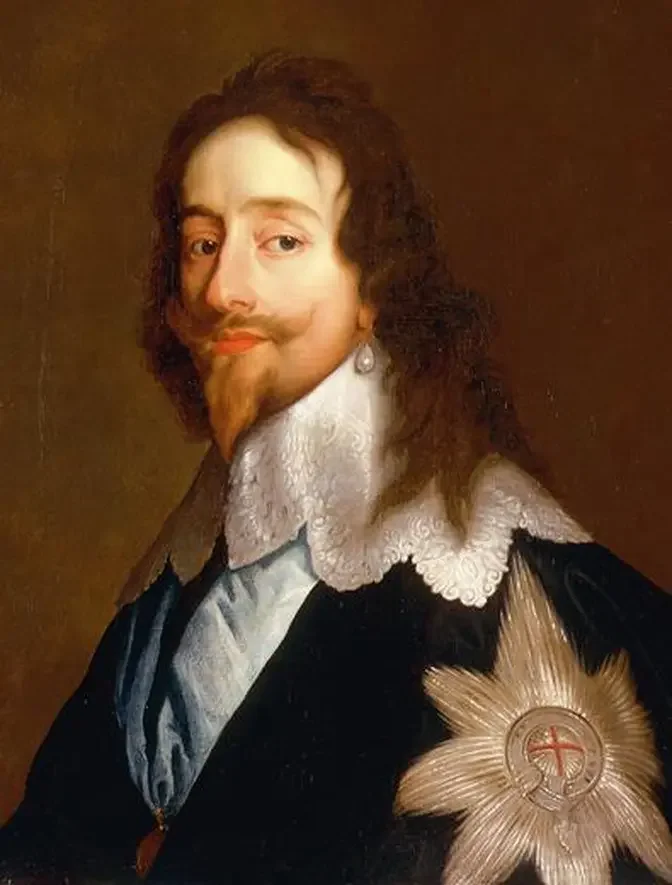
What I want to do in this lesson is talk about the relationship between Charles I and his various parliaments.
Now we've been talking about the general tensions that have been accumulating over the period of James' reign as well as Charles' reign
in terms of finances and in terms of foreign policy and also religious policy.
But now we're going to talk specifically about the relationship between Charles and his various parliaments.
Now when it comes to early relations early on in his reigns, the first parliaments began in the reign of Charles I between 1625 and 1626.
So this was the period of the first of the parliaments and it was dominated with a number of policy issues.
Now there was the issue of the Duke of Buckingham, who you remember was the commander-in-chief of the armed forces,
who was repeatedly attacked by Parliament and supported by Charles.
So we see tensions straight away beginning here. So tensions rising, if you will, on this issue.
Now we also have, tangentially related to this, the issue of funding conflicts abroad, the Thirty Years' War for example.
Now wars are obviously very expensive and there were disagreements between Charles and Parliament relating to the funding of conflicts abroad.
Parliament disagreed with Charles' right to collect taxes as tonnage and poundage.
So this is something that we talked about in the lesson on finances.
Parliament blocked the right of the monarch to raise and collect taxes by way of tonnage and poundage.
Something that was actually quite unprecedented at the time.
Charles then had enough effectively of Parliament at this point and dissolved it in 1626 and issued a forced loan.
So this Parliament was a particularly short Parliament. So we have a very short Parliament at this period.
Continuing this, Buckingham caused conflict following a Protestant rebellion at La Rochelle in 1627.
At this period, when around 3,000 English soldiers died and Buckingham was extensively blamed.
Buckingham took the blame, or at least he may not have wanted to take the blame, however the blame was assigned to him.
And Charles wanted to continue the war but in doing so they dissolved Parliament in 1628.
So we see another very short instance of Parliament being dissolved.
Now specifically the 1628 Parliament related to the tensions as they began to spill over effectively when we're talking about the attacking and impeaching of the Duke of Buckingham.
Charles demanded that Parliament not attack or impeach Buckingham in any way.
And Charles called this Parliament in 1628 because he wanted to send more troops to La Rochelle.
But Parliament insisted that their grievances were heard and these were specifically grievances relating to Buckingham.
So we have a bit of an impasse at this point. Charles wanted to send more troops abroad.
They wanted to send more troops away and Parliament wanted to have their grievances heard specifically relating to the Duke of Buckingham.
However Charles demanded that Parliament do not reference or even talk about the Duke of Buckingham or attack or impeach him in any way.
Something that was not a popular idea by Parliament.
And this brings us to the issue of the Petition of Right.
Now we've talked about the Petition of Right in an earlier lesson.
And the Petition of Right effectively was a prepared document by a number of MPs including Sir John Elliot, Sir Edward Coke and Sir Thomas Wentworth.
They prepared a document and sent this to Charles I.
Now this document made a number of pleas to the monarch to avoid and to stop doing a number of these practices.
So they argued that the Petition of Right effectively argued that there should be no imprisonment without trial.
So there has to be a trial for there to be imprisonment.
The king should not tax without the consent of Parliament.
Now this is something that of course when Parliament did not want to issue a tax of tonnage and poundage or grant this to Charles,
the issue of forced loans was the main problem.
So forced loans was the issue here.
Because if you remember Charles dissolved Parliament and issued a number of forced loans in order to try and raise funds for particular conflicts.
Specifically the Thirty Years War.
The Petition of Right also argued that there should be no martial law.
There should be no martial law which is effectively law that is imposed by military law effectively.
And then the fourth issue is that Charles should not demand forced loans against its citizens.
Again this relates to the issue of consent of taxation and it also relates to a specific issue of the forced loans themselves.
And while being initially reluctant to sign or to agree to the Petition of Right, Charles did eventually agree to the petition.
And while this did ease relations between the king and Parliament.
So this is an example of Parliament getting their way.
This is an example of Parliament getting their way.
Something that is quite important.
While this did ease relations between Parliament and the king, when Parliament went back to attacking Buckingham again, Charles swiftly dissolved the Parliament again.
So we have another example of an impasse that exists here between Parliament and the king.
This is always specifically related to the Duke of Buckingham.
So let's think about the final breakdown in relations.
In August of 1628 Buckingham was assassinated.
Charles recalled Parliament in January 1629.
But instead of attacking Buckingham, Parliament began to attack Charles for his methods of collection and his religion.
Remember back to the last video if you need a refresher on the religious aspects of these tensions.
And by March of 1629, so let's just make this very clear, March of 1629, they had issued three resolutions.
And these included the denouncement of Charles' Arminian advisors.
So this is again a religious issue.
We have a denouncement of the use of tonnage and poundage as a tax collection.
This is a financial issue.
And then there was a final declaration that those who actually paid this tax that was collected, the tonnage and poundage, were quote-unquote enemies of the people.
Again, this is another example of a financial issue.
So we can see how, even though we were talking about these different issues in different videos, we're talking about finances, we're talking about religion, we're talking about the relationship with Parliament.
These were all actually very closely related and interlinked issues that all led to the further breakdown of relationship between Charles and his Parliaments.
Charles tried to adjourn Parliament before the resolutions could be read.
However, Eliot and a number of other MPs held the Speaker's Chair to allow the resolutions to be passed.
In response, Charles formally dissolved Parliament and arrested Eliot with a number of other MPs and allies.
So we see the relationship between Parliament and Charles go from being tense and among a number of disagreements to downright hostile, where you have the King arresting a number of MPs and dissolving Parliament in response.
Now in the next few lessons we're going to start to talk about the period of personal rule and then we'll talk about how the breakdown of the monarchical authority began to take place with the English Revolution and the English Civil War.