
Johann Nepomuk von Poissl (1783-1865) - Athalia 'Ihr weintet meinen Schmerz'
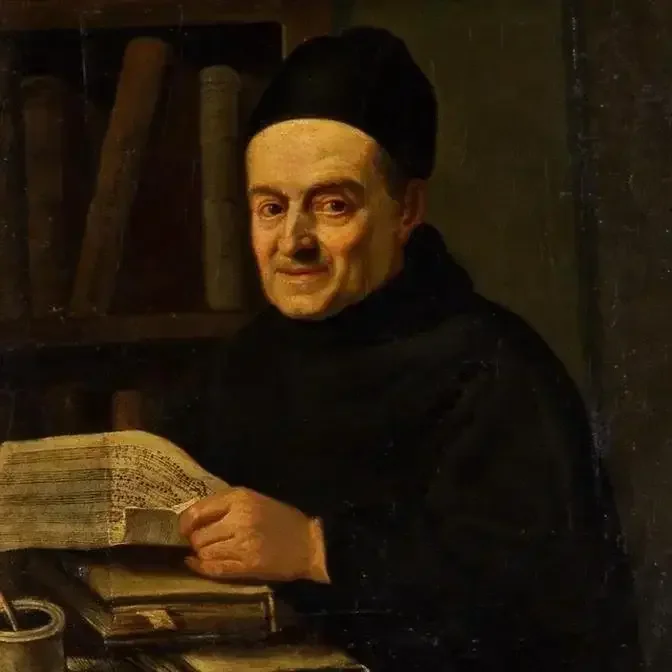
★ Follow music ► https://www.instagram.com/reciclassicat/
Composer: Johann Nepomuk von Poissl (1783-1865)
Work: Athalia 'Ihr weintet meinen Schmerz'
Performers: Isοlde Sіebert (soprano); SWF Symphony Orchestra; Klaus Dοnath (conductor)
Painting: Johann Jakob Frey (1813-1865) - Italienische Landschaft (1857)
Image in high resolution: https://flic.kr/p/2iZZU3K
Further info: https://www.amazon.com/Virtuoso-Operatic-Soprano-Obbligato-Clarinet/dp/B001HGSGKW
Listen free: https://open.spotify.com/album/21TpwRzq2cfevcRPJoGYJH
---
Johann Nepomuk von Poissl
(Haukenzell, 15 February 1783 - Munich, 17 August 1865)
German composer. He came from a south German aristocratic family and in 1805 settled in Munich where he studied composition with Danzi and Abbé Vogler. With Danzi’s encouragement and support (and perhaps assisted by his own aristocratic background), Poissl had his first stage work, the Singspiel Die Opernprobe, staged at the Munich Hofoper in 1806, though the work made little impression. Probably influenced by Danzi’s through-composed German grand opera Iphigenie in Aulis (1807), Poissl turned his attention to grand opera with continuous music, the genre to which all but two of his subsequent operas belong. His next two operas, Antigonus (in German) and Ottaviano in Sicilia (in Italian), both to librettos adapted by the composer from Metastasio, enjoyed considerable local success; according to Weber, Ottaviano was greeted ‘with almost unparalleled enthusiasm’. However, his Singspiel Aucassin und Nicolette, produced the following year, was coolly received and Poissl returned to grand opera, determined to retrieve his reputation. With his tragic opera Athalia he gained the acclaim he sought. The Münchner Theaterjournal hailed its appearance as marking ‘the longed-for era of a national art, the creation of a national artistic model which we have so far lacked’. The Allgemeine musikalische Zeitung concurred, believing that in this work Poissl had discovered the style of a truly national opera. During the next few years Athalia was performed in most of the major German theatres. Poissl quickly produced another opera along similar lines, Der Wettkampf zu Olympia, which was highly praised and widely staged. This was the high point of Poissl’s operatic career. Of his later operas, Nittetis, La rappresaglia and Die Prinzessin von Provence were moderately successful, and the first performance of Der Untersberg, in 1829, was well received, but a clique was formed against it at the third performance and it was soon withdrawn. This disappointment may have played a part in deterring Poissl from further operatic efforts for more than a decade; but the direction of his artistic output may also have been affected by personal misfortunes at that time. During those years his first wife and four grown children of the marriage died, and shortly afterwards he lost three infant children of a second marriage. These events may have prompted his growing preoccupation with the composition of sacred music. His church music, much of which was for unaccompanied voices, included a setting of Psalm xcv, a Stabat mater and a Miserere; but his major work was the cantata/oratorio Der Erntetag (1835), for which he wrote both words and music. One writer of the time considered it to surpass all his works except Athalia and to confirm his ‘worthy place among the best German composers of the present day’. In 1843 he returned to operatic composition for the last time with Zaide, but this roused little interest. Poissl spent most of his life in financial difficulties; these were temporarily relieved when, in 1823, he was made superintendant of court music (Hofmusik Intendant) in Munich, and director of the court theatre (Hoftheater Intendant) in 1824. In 1833 he lost his position at the theatre, though he had two further short spells in that position in 1846 and 1848; in 1847 he was obliged to relinquish his post as Hofmusik Intendant, and he was appointed to the titular honour of first chamberlain (Oberkammerer). His last years were again darkened by financial worries. When he died at the age of 82 his music had sunk into almost total oblivion. #ClassicalMusic