
Comforting French-Style Beef Stew from Jacques Pépin | KQED
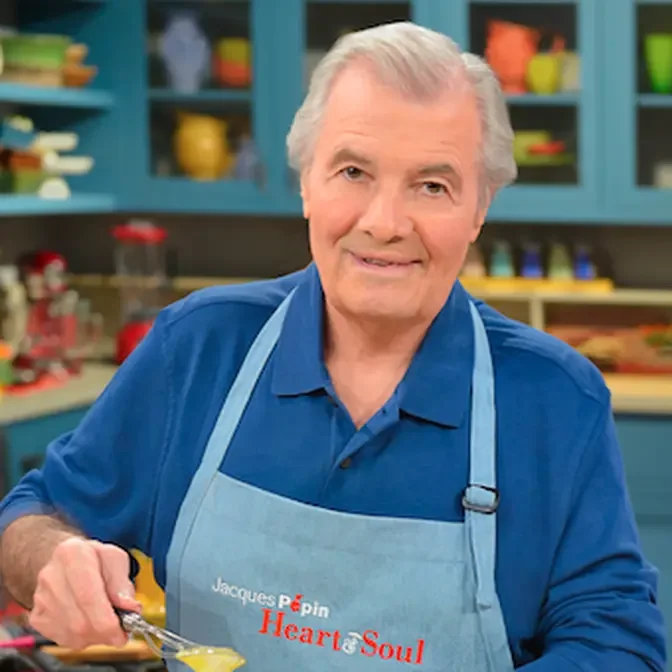
82 Video Views·Feb 20, 2023
You know in cold weather, in full winter, I like to do those very classic
old French dish we call d'oeuvres type of stew. And this is one of those that we're going to do
today. A kind of very comforting hearty meal, you know, thing you do at home. You can do that ahead
too. And we do that with a piece of meat which I have here that we are going to marinate in red wine.
And the marination in red wine is very important. It can be done in different ways.
In that case here, I'm going to talk to you about that piece of meat in a little while. As you can
see, it's a very lean piece of meat. And the first thing that we want to do is to put it to brown
into that pressure cooker. And again, I will explain the use of the pressure cooker before.
When you take it out of the liquid, you know, dry it out. You can dry it out with your hand this way
or with a paper towel. And we want to put it in there to brown, you know. And now,
what I have here, I'm going to show it to you, is a mixture of carrot, onion,
black peppercorn, herb, and so forth. This is what we call the marinade, you know. In France,
what we call the marinade is when you have enough liquid so that the whole thing is encased into
liquid. Instead of a maceration where you have only a little bit of liquid, like if you macerate
fruit with a bit of granmarni or whatever, it's just moist. This is the marinade. And that will
tenderize the meat. We have all kinds of vegetables. So this, we are going to eventually put it in
there. But for the time being, I wanted to show you where that piece of meat comes from.
It can come from the butcher just as I have it here, which is called cryovac. That is in a plastic
where all the air has been sucked out of it. And this is a piece of beef from the shoulder,
you know, what we call the under blade. It's a very, very good piece of meat, actually,
and quite tender. In our type of cooking, what we want to do is to remove the fat from it. And here,
as you see, there is a layer of fat. And under the layer of fat, you have a layer of what we call
the silver skin. You can even remove some of the silver skin, but it's not really necessary
there because this is not fat. It's really sinew. And it gives, you see that, what we call
the silver skin. And that will give some gelatin to the mixture also. You can remove a little bit
of it on this side also. So that piece here is on your shoulder, where you have that big shoulder
blade, you know, that's just underneath. And that piece is also used by the butcher as what we call
the butcher steak. If I cut it across, you have a type of steak, which in New York and on the
West Coast also is usually called the chicken steak. So what we do, we take this, put it to
marinate, and there is different way that it can be placed this way. You can do it hot or cold.
And what I have here, I have onion, I have garlic, I have carrot, I have oregano, thyme, cracked
pepper, cracked black pepper, and of course, fresh bay leaf. And here I have a bit of dark soy sauce,
I have red wine vinegar, a bit of balsamic vinegar, and of course, red wine. You know, and I have a
wine here from Cahors, which is the southwest of France, a very deep, rich wine, which is made with
Malbec grape, you know, M-A-L-B-E-C, it's a different type of grape, a bit similar to the
Cabernet Sauvignon. So we're going to put all of that together. Now, if you really are in a hurry,
what you can do is to take all of those ingredients here with the liquid, bring it to a boil, and put
it boiling hot right on top of the meat. That's what we call a hot marinade. And the hot marinade
is going to permeate right through the meat faster than the cold one. If you have time,
as I have here, you take your time and you just put it cold on top of it and leave it overnight.
Actually, you can even leave it a couple of days, you know, it's fine. We put no salt on it. So what
we do, carrot, the carrot, the onion, a head of garlic, a whole head of garlic, you can heat it up
on the side to separate your clove, they go all over the place, of course, but you don't need to
take the paper out of it. Just put that in there. I'll bring that in the center now. We have this,
this, and that. You know, we do venison this way. Venison is very good this way. A bit more carrot,
the bay leaf, and those are fresh bay laurel here that we dry out in the microwave oven. You know,
it's very good to do your dry herb this way. A bit of deep balsamic vinegar. We want a lot of
acidity in there, you know. Regular vinegar, a bit of soy sauce, which will give me some color
and a bit of intensity of taste also. I have enough here. And finally, my red wine, you know.
You want to marinate it. Remember that by the time we finish cooking this, most of the alcohol will
be evaporated. So that again, you can cover it with a piece of plastic wrap directly inside,
you know, so that you have no oxidation in between. And that can macerate for a couple of
days, you know. So what we have here, a third piece of meat starting browning very nicely here.
And as you can see here, I'm doing that in a pressure cooker. The pressure cooker is a very
nifty piece of equipment, you know. What I have here is a gauge. The pressure will push that gauge
up and you will have different colors. It goes from yellow, light orange, dark orange. The higher
the pressure, the higher it goes. And what it does actually, it concentrates, it applies pressure
directly on top of the liquid. As you know, at atmospheric pressure at sea level, there is enough
pressure on the water. The water will boil at 100 degrees centigrade or 212 Fahrenheit. That is,
there is a certain resistance from the air. As you go in the mountain, the higher you go,
the less pressure there is on it. You lose about one degree every 500 feet. So by the time I'm in
Colorado Springs or a place like this, 8,000 feet, I've lost 16 degrees. That is, the water will boil
16 degrees lower than 212, which at some point when you cook things like beets or beans,
there is not enough heat and the glucose and certain fiber in the beets doesn't cook,
so it has to cook forever. That does the reverse. It applies so much pressure
that it has to come to about 300 degrees before the water starts to boil. So it cooks very fast
and it breaks down the fiber. It's very good. What we do here, after it's browned all around,
we put that in. Remember that it's a very lean piece of meat. You have to follow the instruction.
We close it here and I put it. Not all of them have that little gadget. This is a little gadget
going to release the pressure in it and some of it, they all work exactly the same way,
but in a slightly different fashion. So look at the manufacturer instruction.
And what I have here, of course, I have another one with the pressure going on here.
And what I'm going to do now, because this is cooked enough, I'm going to start depressurizing
it. So I move that thing and the pressure will start coming out. And during that time,
we're going to work on our dessert. I have some absolutely gorgeous
strawberry here. And it's a very, very easy recipe to do. But I have, those are big berry,
which are dipped into a jam. What I use, you have to use a jam with end of pectin. That is
a coagulating element in it to hold it. And that's what I use currant jelly. I have currant jelly
here. If you don't have currant jelly, you can use even a strawberry or a raspberry. But in full
summer, if you have a bit of problem, if it's very hot, you're going to keep that outside.
I would advise you to mix a little bit of plant gelatin in your jam so that it coagulates more
around the berry. All you do is to dip your berry so that it's coated all around. And you have to be
absolutely sure that you have a very cold plate to put it on top. See, that plate is very cold.
I put it on top. And when I lift it up, you can notice there is a little pool of the jam,
which is left around. But this is the principle. It's easy to do. See, there is a different way
of glazing berries. You can glaze it with sugar, like a caramel. And you dip it, what we call a
sugar, to the break stage. That is, it's almost like a caramel, but it's white. At that point,
it forms a shell of sugar on the outside. Another way of glazing it is to put egg white. Dip your
berry into egg white and have to roll them in sugar until it's saturated. That's another way.
And this is the third way. This is basically, in my opinion, the best way of doing it. And the
kids love that with the jam outside. You can vary your jam. So we can decorate this with a little
bit of, with some cookie if you want. It would be very nice. And even a little bit of edible flowers
may be nice around. And you can really do a stunningly beautiful plate with this.
To do that piece of beef well, you have to have the right cut of meat.
And the right cut of meat is actually the piece of shoulder that we use today, the under blade,
a piece of the chuck, again, in the shoulder area, or a piece of the chunk. All that are going to be
very gelatinous, nice piece of meat you want to add. Don't buy a piece of top round. More expensive
and it's going to be dry. Be sure, again, that that little button is totally down,
totally depressurized, you know. So otherwise it can be, first you cannot open it otherwise,
and it can be dangerous. All the pressure cooker work on the same principle, you know.
So what we have here, we have a very, oh, I can feel a very tender piece of meat. Yes,
I have to remove it with this because it can break. So it's brave. But I say it goes so,
it does such a moist piece of meat here, you know. And of course it reduced a great deal.
What we want to do, even though we remove basically all the fat, we want to strain this,
you know. That I would use, even put it in another stock or to put,
get all my juice out of that, press that a little bit, you know.
And look if there is any fat on top of this. If there is any fat, and here we have cleaned it up
a lot. You press it on one side and try to remove it, you know, as much as we can. We want a very,
very lean piece, very, very lean sauce. But remember that was very lean to start with.
So what we do, there is basically nothing on top. I'm going to bring that here and we are going to
re-boil that piece of meat. I'm going to re-boil this in there and prepare our vegetable now. I
have a very concentrated juice here, quite good. So what we have here as garnish to go with our
veal, we have the pearl onion, we have tiny baby carrot, we have potato and we have onion,
we have mushroom. Those mushroom, I just washed them and I'm going to put them to cook right away
because this is the only thing which is raw. These have been blanched about 10 minutes,
so they're just slightly firm. The carrot have been blanched a few minutes too and the onion.
So what we want to do first is to bring that to a boil. You want to test it
for seasoning, you know. I think I need a bit of cracked pepper in there,
be very good. And we want to thicken the sauce slightly. And to thicken the sauce, we're going
to use a starch here. And this is, we use a potato starch. You can use arrowroot or potato starch.
Any of this, if you use cornstarch, it tends to be a bit too gooey, you know. So that's good.
Remember that the starch has to be diluted. You can put a bit of water, a bit of stock.
In that case, because we use wine, we want to use this. Again, you know, the starch is what
we call pure starch. It doesn't have to cook. It thickens almost right away. Remember that you
cannot put rough starch into a hot sauce. Otherwise, the protein will coagulate and
you will have nice little dumplings all over the place. So what we want to have here. See,
you pour a little bit and you look. It will thicken on contact. If you like it here,
you stop. Maybe a dash more. That's about it here. Sometime at the end of a roast like that,
I put a little splash of raw wine at the end, just to give it a zip, you know.
Then we put the rest of our garnish, because that will have with the red wine sauce. And that
basically would heat up, you know, for a while, for about four, five minutes, just to get it hot.
And if you have to keep this ahead, of course, what you would want to do
is to cover it, keep it in a warm oven or whatever. You know that type of meat in France,
we used to eat that with a spoon. There is certain type of dish which we have braised a long time
like that. And it was served, certain type of game that served like this with them with a spoon,
because they are so cooked. And it's very good. This one happened to be quite cooked too.
So what we want to do here is to slice a few pieces that you have there, you know. And you
can see in the middle of that roast here, that long line of gelatin. This is the center of that
particular muscle that I say we have on the shoulder. And with that, as I say, we do the steak
that we call chicken steak. Very tender piece of meat and very moist.
My father would love that. This is the type of dish that he was crazy about.
We're going to present this. You know, in type of home cooking, it's a nice idea very often to
present a dish in this way, cutting some of the piece of meat, you know, and presenting the whole
thing in the dining room with the rest of it uncut there. It's a classic type of bourgeoisie,
if you want, way of serving in France. That we have gotten away a bit from because of
nouvelle cuisine and serving everything on plate. So I have my garnish here, which could be,
of course, warm a bit longer. Remember that we have very low fat in it, because all we have
a tablespoon of fat at the beginning to make it to brown the meat, you know.
This would be your perfect Sunday dinner, you know, with a bunch of friends. And remember,
try to do that recipe with venison, which would be also a classic way of handling that.
I think we need a bit more of the juice around this. You see a nice, beautiful
color of the red wine sauce, you know, the intensity of that type of wine that we have here.
On the Maidoc, choose your wine, you know. You will notice that some of the wine sometimes
will lose a lot of color in the cooking, and it's because the pigment in the skin
sometimes disappears as it cooks. As you see here, I have a nice, rich, dark color. A little bit,
maybe, of green on top to finish it up. And here is our estouffade or dope the buff in red wine.
We're going to start our meal with a salad composé, that is a composed salad.
And what I want to start with is to put some pecan here in water to bring them to a boil and
moisten the pecan, because we want to crystallize them with a little bit of sugar and cayenne.
And when they get wet like that, it works out better. So they have to come back to a boil,
that's about it, but you can see the difference already in the color of the water here.
So what we do here, very simply, I put them back in there. I put a little bit of oil there, and I
have a canola oil, like a teaspoon, you know, just a touch. A little dash of salt, and then cayenne,
and you'd be surprised, you know, that may seem like a lot of cayenne, and it is, but when you
cook the cayenne dry like this, it loses a lot of the hotness. This is the principle of the Cajun
cooking, you know, when you put your, and sugar, of course, when you put your cayenne directly on
the fish and sauté it, you lose a lot of the hotness of the fish. So what we want to do here
is to sauté it until it caramelizes. We want to have a nice crystallized caramelized. I'm going
to put that on low so it doesn't go too fast. Then I'm going to work on the salad. You can use
any type of salad you want, but look what we have here. I have what we call here curly endive.
We call that frisee in French, and the frisee means curly, you know, it's the same thing.
What you want to do is to pick up the whitest possible salad. You know, when I was a kid,
my father used to plant his salad when they were grown and spreading out. The more they spread,
the more they get exposed to photosynthesis and turn green. He would bring his salad together
like that and attach them with a string and the whole thing will turn white. Or you put a flower
pot on top of your salad and the whole thing turns nice and white, a bit like they do with the
cauliflowers. So what I want to do here is basically remove a little bit of the part which is a bit too
green outside, you know, this way, and then fold them and cut this in about two inches, you know.
Piece like this, and put that to wash in there. The same thing here. Of course, if there is any
damaged part, remove it, you know, like this part here. And that's it. I can even use
the green of the salad sometimes even in soup. You know, we do that very often. It's a bit bitter,
you know, so certain type of soup goes well with it. I have to sauté that so it doesn't burn.
And now when you wash your salad, this is the bottom part of my salad spinner,
you wash them directly in there. It's important to have enough water so that whatever you shake
in your salad, if there is any dirt, it falls to the bottom. So don't wash your salad in that much
water. You have to have water under the salad. After you wash it good, you have to lift it up
from the salad so that it doesn't do the mistake of pouring directly in there because if there is
any dirt, it goes back right into it. So that's what we do here. And that's it. I use the base
of my salad spinner here. So I can put that back in it and spin it. This is a terrific invention,
I tell you, because one of the most biggest problem with salad people is not spinning enough.
What happens if it's not spinning enough? You have like two or three tablespoons of water
left in the salad and that destroys the sauce that you make with it, the seasoning, you know.
So here it's very dry and you can see I have quite a lot of water that I extruded from here.
So I have that here and what we want to do is our dressing. This is burning nicely here.
So what we have to do, I think they are crystallized enough. I'll put them here.
When that happens, you know, this is the way I wanted them anyway. I like them nice and dark,
you know. So we put our dressing, a little bit of sherry vinegar,
regular vinegar and here I have hazelnut or walnut oil. Those are very flavored oils. So
that dressing will be done with a tablespoon and a half of walnut oil and about two teaspoons
of vinegar, a dash of salt and some pepper in it. I'm ready to toss my salad soon and I can put it
in there. I mean for four, I need about four cups, which would be about this. And then in addition
to that, we are putting an apple in there and that apple, I want to cut it into little strips.
Remember that the same type of salad used to be done, what we used to call
Waldorf salad. So I cut three slices here, three slices on the other side. I leave the skin.
I just wash those apples. It's a nice way of cutting it this way. So I have the core left,
pack that up together and cut it into strips.
And I will have a lot of texture in that salad. This, remember that I said that the Waldorf
salad used to be binded with mayonnaise and here it is a much lighter example of
an interpretation of all dishes in a modern way. I will have the texture of this, the texture of
the salad, then the texture of the caramelized apple. Caramelized, that is, I have the sugar,
the sugar turn into a caramel, a crunchy texture. That's what we call caramelized. If you want to
do this ahead, you know, if you do it ahead, then your best bet to put that in a little bowl with a
dash of citric acid, that is lemon juice on top of it to prevent discoloration here. That's what
I have here. You can toss this, that will prevent your discoloration. And now I can toss my salad,
have my dressing in the bottom. And we want also to put a little bit of cheese in there.
Now, you know, you don't have to put the cheese if you don't want, but it's a nice addition to it,
you know, at the end of the meal. So you have your arrangement of green, depending on how much
green you want. I tend to use my finger, that would be more than enough for one. And we put some
apple on top of it, you know, give it the crunch and so forth. Of course, a little bunch of our
caramelized or over caramelized pecan, just put it so that the nice size shows, you know, the best.
This is a great order to do those little pecans. And finally, if you want a little piece of can,
this is a goat cheese that you can crumble a little bit on top. You don't need much,
half an ounce of cheese or so that you have there. And now we have our beautiful first course,
which is our salad compote. It is not often nowadays, you know, that we do those long
simmering type of dish, like that Dove de Boeuf we did today. And it seems that I put so much
wine in it. And I did, I put about two and a half cups, which is less than a bottle. A bottle of
wine is three cups. And for, you know, a group of six or eight is not that much. Remember that it's
done in a very modern way. The Dove classically had a great deal of lard, what we call lard in
France, which is really bacon. We had pig's feet. I mean, it was very, very rich. And here we pick
up a very lean piece of meat. We even defatted the sauce at the end. So we have a nice,
lean dish, you know, with it, with a very intense taste, great for a cold winter day.
And of course, our salad to start, we have all kinds of different crunch, different taste,
different color in that salad, which make it quite interesting and exciting. And you cannot
miss with the finish of those glazed strawberry. Year round, you know, you can do the same thing
with slice of orange that you glaze with, let's say, an apricot sauce. And the kids love it. And
with that, we want a glass of wine. And the same wine that we use to cook our Dove in it,
the Cahors wine from the southwest of France, a very deep, strong, very intense flavor wine,
which is made from the Malbec, M-A-L-B-E-C, you know, that type of grape that we have in
the southwest of France. Enjoy that meal, just as I enjoy making it for you and do it for your
friend. Happy cooking.