
Mother Teresa: Good or Evil?
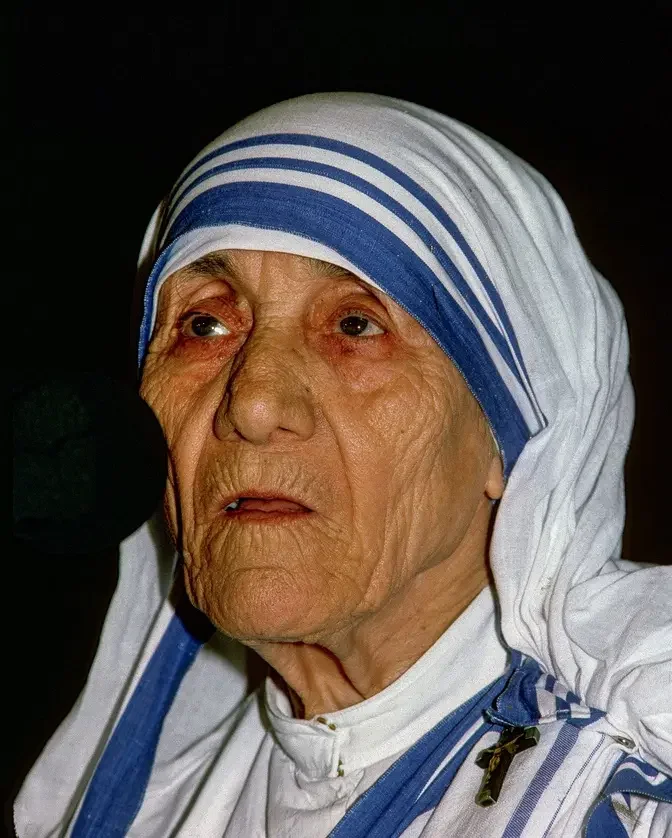
3 Video Views·Dec 30, 2022
Number 14 Who was Mother Teresa?
Mother Teresa was a Roman Catholic nun and missionary who founded an international
congregation dedicated to helping the poor, sick and dying. She's often remembered as one
of the greatest humanitarians of the 20th century. She was awarded a Nobel Peace Prize in 1979 and,
in 2016, the Catholic Church canonized her as Saint Teresa of Calcutta. Indeed, many descriptions of
Mother Teresa's work and legacy present her as a beacon of hope for those suffering or in need.
Nevertheless, there are a number of controversies regarding the care provided by her congregation
and the donations it received. Some of the criticism is aimed at Mother Teresa herself,
with allegations of hypocrisy and questions regarding the motivation behind her charity.
Today's video was requested by SearchX. If you have any other topics you'd like to learn about,
subscribe & let us know in the comments section below
Number 13 Early Life Mother Teresa was born Agnes Gonja,
on August the 26th, 1910, to devout Catholic parents of Albanian descent. She was baptized
the following day, which she would later refer to as her true birthday. She was born in North Macedonia
at a time when the region was part of the Ottoman Empire. Teresa became fascinated with the lives
of missionaries from a young age. By her early teens, Teresa knew that she would dedicate herself
to religious life. At 18, she joined a congregation called the Sisters of Loreto and moved to Ireland.
She took her first religious vows at age 21 and the name Teresa, after the patron saint
of missionaries. Mother was a title given to her upon taking her solemn vows, in 1937.
Teresa moved to Calcutta, India, and, for 20 years, taught at a Loreto convent school
dedicated to teaching girls from the poorest families.
Number 12 Call Within the Call
By the 1940s, Teresa had become increasingly more distraught by the poverty surrounding her.
The Bengal Famine of 1943 had brought death, disease and misery to Calcutta. In September
1946, she experienced what she described as a call within the call that would change her life
forever. Mother Teresa was on a train bound for a retreat at the foothills of the Himalayas when,
according to her, she received a message from Christ. Teresa was reportedly ordered to leave
the convent and help the poor while living among them. In 1948, she started missionary work in the
After six months of basic medical training, Teresa ventured into the slums alone, with the
intention of helping those in need. Teresa founded a school where she would tend to the poor and
hungry. The first year was reportedly hard as she had to beg for food and supplies while fighting
off loneliness, doubt and the temptation of returning to the comforts of convent life.
It was this experience that reportedly strengthened her resolve through the burden
of poverty. She was eventually joined by a group of young women and a religious community group
dedicated to helping the poorest of the poor. Number 11 Crisis of Faith
In 2003, Mother Teresa's private correspondence was published and it detailed a crisis of faith
she'd experienced for over five decades of her life. In letters to her confidants,
she expressed doubts about the existence of God and the pain she'd felt over her lack of faith.
Teresa wrote that even deep down there is nothing but emptiness and darkness. She would ask her
confidants to destroy the letters out of concerns of how they might influence other people. After
the reveal of Mother Teresa's letters, public perception on her legacy changed. Some saw her
as a hypocrite while others saw her as more humanized. Her doubts and troubles were likened
to those experienced by Christ on the cross, wondering why he'd been forsaken by God.
Number 10 Missionaries of Charity In 1950, Mother Teresa was allowed by
the Vatican to form a congregation that would be known as the Missionaries of Charity. She'd also
gotten support from Indian officials and was able to open her first hospice in 1952. What
followed were leprosy outreach clinics offering food, medication and dressings. Then, the
congregation opened a home for orphans and homeless youth. The Missionaries of Charity
steadily grew, attracting new recruits and worldwide donations. The congregation expanded
their charity efforts throughout India and beyond. During the 1970s, there were already
houses and foundations in the US as well as many other countries in Europe, Africa and Asia. Her
congregation had begun with 13 members and had grown exponentially under her guidance. By 1997,
the year of Teresa's death, the Missionaries of Charity had over 4,000 sisters and 300 brothers
who operated over 600 schools, missions and shelters in more than 120 countries. The
congregation was still operational after Teresa's death. Its members continued to vow chastity,
poverty, obedience and to offer free service to the world's poorest.
Number 9 Alleged Forced Conversions For many of those who followed her work,
Mother Teresa remains the saint of the gutters, an inspiration and a symbol of quintessential
Catholic values. Yet, there are others who question the motivation behind her charity work.
One of Mother Teresa's most vocal critics was author Christopher Hitchens, who called her a
fanatic, a fundamentalist and a fraud. He alleges that Mother Teresa would encourage those in her
congregation to secretly baptize the dying, regardless of their individual religions.
Nuns were to pretend that they were cooling off a patient's head with a wet cloth and quietly speak
the necessary words. This was allegedly done to Muslims and Hindus who were unaware of the
religious implications of a Christian baptism. Hindus in her adopted country have also alleged
that she was stealthily trying to convert the poor to Catholicism. One author has described
the behavior as preying on the weak, as a way of harvesting souls for Jesus.
Number 8 Global Charity Work As the missionaries of charity
congregation grew so did Mother Teresa's international reach. In her own words,
by blood I am Albanian, by citizenship an Indian, by faith I am a Catholic nun,
as to my calling I belong to the world, as to my heart I belong entirely to the heart of Jesus.
After founding and expanding her organization, Teresa would personally travel to areas where
she believed people were suffering most. In 1982, during the siege of Beirut, she
brokered a temporary ceasefire between Palestinian guerrillas and the Israeli army. In doing so,
Teresa and Red Cross workers managed to rescue 37 children, trapped in a hospital on the front
line of the war zone. This wasn't the only instance of her international charity work.
Teresa traveled to assist the hungry in Ethiopia, earthquake victims in Armenia and radiation
sufferers in Chernobyl. Number 7 Use of Donations
The missionaries of charity, at one point, received donations amounting to millions of
dollars but no one knows for sure how that money was spent. German magazine Stern estimated that
less than 7% was used for charity. Author and physician Arup Chatterjee, who'd briefly worked
in one of Teresa's homes, investigated the financial practices of her congregation. He
alleges that most of the funds were directed towards missionary work, thus challenging Teresa's
reputation as a helper of the poor. Among others, he offers the example of facilities run by the
missionaries of charity in Papua New Guinea. Chatterjee alleges that they were void of
He points out that, in Calcutta, circa 1998, the missionaries of charity didn't rank among the
largest charity organizations. To this day, the congregation has refused to provide even the
slightest balance of how the money from donations was used. In 2017, investigative journalist Gianluigi
Nuzzi published accounting documents from the Vatican Bank. Funds held in Mother Teresa's name
or on behalf of her congregation amounted to billions, making her the institution's biggest
client. Taking out significant sums would've undoubtedly put the bank at risk, thus casting
further doubts on the purpose of Teresa's charity. Number 6 Connections with Controversial Figures
Mother Teresa accepted millions of dollars from high-profile fraudster Charles Keating,
who'd even lent her his private jet when she visited the US. She reportedly received donations
from Francois Popadok Duvalier, a Haitian dictator who ran one of the bloodiest regimes
the country has ever seen. When Indian Prime Minister Indira Gandhi suspended civil liberties
in 1975, Mother Teresa made approving comments about the measure, which was known as the
emergency. She cited happier people, less strikes and more jobs, even though the press was censored
and widespread atrocities were carried out. She spoke in favor of Lucio Gelli's nomination for the
Nobel Prize in Literature. Gelli was the head of an Italian Masonic lodge, tied to cases of
These connections to controversial figures are sometimes cited as a testament of Mother Teresa's
corruptible character. Number 5 Recognition and Distinctions
Mother Teresa became a global icon through her charity work and earned numerous awards and
distinctions. In the 1960s, the missionaries of charity were given the Decree of Praise
by Pope Paul VI. She was awarded the Nobel Peace Prize in 1979 and asked that the cost
of the laureate's banquet be donated to the poor in India instead. The following year, Mother Teresa
was given the Bharat Ratna, or the Jewel of India, the highest distinction given to a civilian.
In the US, she received the Order of Merit in the early 1980s and was made an honorary citizen
in 1996. These are only a few of the many ways in which Mother Teresa was recognized around the
world. Number 4 Controversial Stances
Some of Mother Teresa's critics have proposed that she used the pretense of helping the poor
to fuel a cult that promoted and glorified suffering. In an infamous 1981 conference,
she claimed that it's beautiful for the poor to accept their lot and that the suffering of poor
people helps the world. Perhaps the most fervent critiques target her stance against abortion,
divorce or contraception. Within this context, it's viewed as a continuation of the very same
issues Teresa's charity was supposed to help with. Teresa even used her Nobel acceptance speech
as a platform for an anti-abortion message, which drew further reactions from her critics.
Number 3 Canonization Mother Teresa's health started declining
in the 1980s and she started suffering from heart problems. After a second heart attack,
she received an artificial pacemaker. Believing that she was under attack by the devil, the
Archbishop of Calcutta ordered a priest to perform an exorcism on her, with Teresa's permission.
She resigned as head of the Missionaries of Charity in March 1997 and died in September
of that same year, at age 87. After her passing, the Catholic Church began a process called
beatification. It's one of the steps towards canonization, in which Teresa was declared in
heaven and referred to as blessed. In 2002, the Vatican recognized a miracle related to Mother
Teresa that had allegedly taken place on the one-year anniversary of her passing. An Indian
woman named Monica Besra had reportedly healed a tumor in her abdomen by applying a locket
containing Teresa's picture. Besra claimed that a beam of light had come down and healed her tumor.
A second miracle attributed to Teresa was recognized by Pope Francis in 2015. It involved
the healing of a Brazilian man with multiple brain tumors. In 2016, during a ceremony held
at the Vatican, which was witnessed by tens of thousands, Mother Teresa was canonized by Pope
Francis as Saint Teresa of Calcutta. Number 2 Image Created by Catholic Church
A comprehensive 2013 study from the University of Montreal examined 96% of the literature on
Mother Teresa and challenged her legacy. Her image is described as a successful media campaign led by
the Catholic Church. Along with promoting the religion and earning new followers, it was also
meant to draw attention away from the ecclesiastical scandals. One potential argument in this direction
comes from the family of Monica Besra, the woman claiming she'd experienced the first Mother Teresa
miracle. Her husband and the medical staff have maintained that months of treatment had been the
source of her recovery. Her husband called the miracle a hoax. Besra herself claimed that a nun
from the Missionaries of Charity had confiscated her medical records. There was no comment from
the congregation then under fresh leadership regarding the allegations. Number 1 Charity
Mission Conditions The criticism that most often falls on Mother Teresa and the Missionaries of
Charity has to do with the quality of care they provided. The main point of this argument is that
they essentially let poor people die and didn't give them treatment despite earning millions in
Teresa herself referred to her facilities as houses of the dying. Some of the sisters and
volunteers had no medical training and were incapable of distinguishing between curable
and incurable patients. This increased the risk of people who could've otherwise survived
contracting fatal infections. Needles were rinsed with warm water while those suffering from
transmissible diseases weren't isolated. The little medicine available was stored for months
and even used past its expiration date. People suffering from terminal cancer, who were in great
pain, were often only given aspirin. One journalist compared the conditions of some missions in India
to those from Nazi concentration camps. Mother Teresa believed that the suffering of the poor
was a form of divine glory and not a burden. She favored them feeling wanted and at peace with God
to medical treatment. However, when she was suffering from heart problems, she was treated
with a pacemaker in a modern hospital. Her critics saw it as a form of hypocrisy while her supporters
viewed it as a necessity as it allowed her to keep doing important work. Thanks for watching!
Which side of the argument do you favor? Was Mother Teresa good or evil?
Let us know in the comments section below!