
LIVE: How Americans Will Make it Through, Even When All Seems Lost
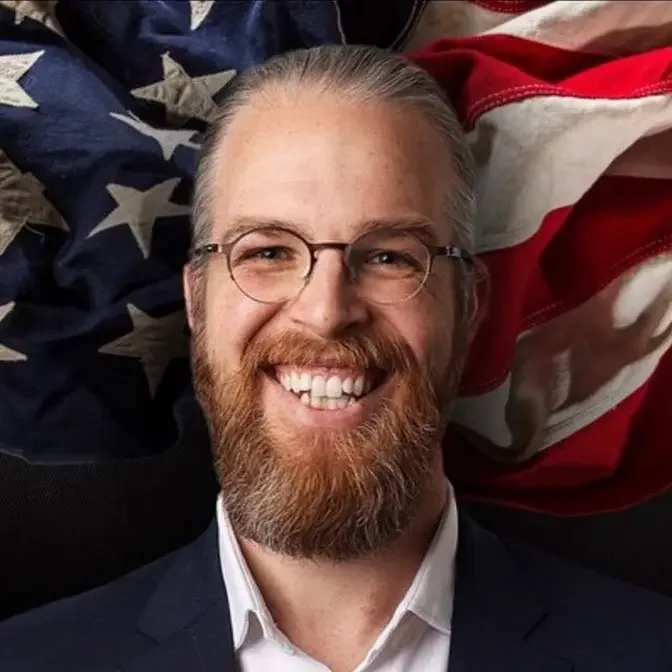
2 Video Views·Mar 23, 2021
Connect with me here:
Web: https://mia.news/
Telegram: https://t.me/maninamerica
SafeChat: https://safechat.com/channel/27767132...
Gab: https://gab.com/ManInAmerica
Hey, welcome everyone. It's so good to see you. So we'll start off with getting a few things,
some conversation going. One quick thing, Kate, I'm hearing an echo of myself. Thank you. Everyone
say hello to Kate. She keeps everything together. Sometimes I call her the deep Kate,
the shadow government here at home. So you can't pull that out. Okay.
All right. Welcome, everyone. Yeah, I guess let's start off with our typical of asking where's
everyone at? I see Penny from Toronto. Welcome. Joel from Austin. MAGA 2020, you're here. I missed
you last time. So good to have you here. I love seeing you over on SafeChat. Good morning, Mr.
Man. Lisa. Glad to have you for your first time here live. Philadelphia, Ohio. Ohio in the house,
O-H-I-O. Tennessee. Julie from Alaska. Montana. Great to have you. Calgary. All right. Nice to
have you. Dude Dave from Florida. I'm jealous of you all in Florida for a lot of reasons.
Amy from Seattle. I'm not jealous of you in Seattle. All right. Marilyn, Deanna from Sacramento.
Marianne from California. I see a lot of folks from California here. Colorado and Lithuania.
Yes. More international folks coming. Wonderful. Ross in Wisconsin. Ross, yes. Thank you. I got
your email. I'm going to respond to you about that. Thank you for that. Blue Clarity. Cleveland,
Ohio. Yes. Boston, Arizona. I saw someone put a little donut. I'm not sure if you all saw the
news, how Duncan is giving free donuts to people that got the vaccines, which even though the
vaccines, they have the COVID overall shows a higher increase of mortality because of obesity,
yet you get free donuts. Anyway, we'll get into that. Japan, Tony. Great to have you from Japan.
Let me ask you all, who watched, oh, wow. Jury from South Africa, Cape Town.
Oh, you're right. It was Krispy Kreme. Thank you. Question though, who all watched the Lionheart
video? I have to say that Lionheart was, that was one of my favorite videos that we've done.
It was such a pleasure to work. I guess anything with President Trump like that,
that just shows his real, his character. Yeah. It's just amazing. He's left so much inspiration
for us and he'll continue to give us more. Yeah. You all seen, you watched it, loved it.
You loved it. And then actually thanks to Mr. Lin Wood, a patriot I have a lot of respect for,
he shared it to his crowd. So we got a lot of people that ended up watching that video,
which I thought was just incredible. I was so happy with that. And we're just going to keep
going. We're going to keep going. Yeah. Joanna, we, yeah, she said that she saw it through Lin
Wood as well. And Lionheart just seemed like that was the right, the right name for that.
What the, the heart of a lion. So thank you everyone. Also, thank you for sharing it.
Just a quick reminder, as you see the pop up there, if you haven't subscribed,
please do to my channel here. And if you haven't clicked the little notify button also do that
because I'm not sure if YouTube likes me very much. I seem to be a little bit of a radical to
them. So I think that they put a little work into making sure that I don't get, you know,
get my videos out to folks. So if you try to click on the little notification bell,
you'll make sure that you're, you get the notifications properly. Oh, thank you for
sharing on safe chat. Yeah. And also yes, a UNSN 88. Don't forget the thumbs up. Yes.
Liking the video is the one thing you can also do to help the video spread.
Cause the more you like it, YouTube sees that and they then will help share it.
Hey, I agree. YouTube isn't our friend. I'll say a quick thing about YouTube.
We just sent out our first mass email after we were censored on another platform.
But one thing we mentioned there is why we use YouTube. And the thing is, is that
YouTube is still gives the widest, widest audience. And at this point, there's still a
lot of people in America and around the world that need to, I think, learn more about the truth of
what's happening in our country and understand better where the future is going. So while we
still make sure that we upload everything on bit shoot and rumble, and I really support those
platforms a lot, YouTube is a place for us to grow and reach more people. So, Rawlings, Marsha,
thank you for the comment. God bless you. Love your show. Thank you so much. I appreciate that.
All right. So let's get in. Let's get into things. There's a few topics I'm going to get into today.
Obviously the big one, which is what you see in the thumbnail and the headline is kind of more
the second half. I want to first start off with an article that I read recently. So I, I'm a
subscriber to the Epoch Times. I will actually, I'll tell you, cause some people have asked, but
just a little, nothing to hide. I used to work for the Epoch Times. I was, I have immense respect
for that media company. I haven't been there, gosh, since 2015, but I was actually when I moved
to New York in 2008 and started working there in 2008. Back at that time, I think I was one of
maybe six full-time people in New York. So I've witnessed that, that media company grow from almost
its very beginnings. That's why I can, obviously I don't, I can recommend it because I believe in it.
And that's why I will talk about it because I trust it. I know it's not easy to know which media
you can trust. But the Epoch Times is definitely, it's a media company that I still know a lot of
folks that are over there. I have no more, I have no affiliation with them anymore. I feel very
honored for the opportunity I had to work there, but it's something that I will talk about a lot
because one thing about the Epoch Times is they were, it was founded by a lot of people that had
actually escaped communism. Many of them had escaped communism in China, Vietnam, different
parts of Europe. And these are, these are people that understand the threat of communism and they
understand the threat of censorship and how communist regimes take hold of the media
and the propaganda machine. So they are so dedicated to fighting against that censorship and
fighting to get the truth out there. So you'll see me, I won't be talking about them too much, but
they're one of the places I regularly go to. And if you haven't subscribed to the newspaper,
there's just something nice about reading a newsprint. It doesn't have the stress and the
energy of reading social media or even reading through an app. So, okay, the article I want to
talk about is actually the front page article in this paper. This was last edition, not this most
recent one before that. It's called Tactics to Force Self-Censorship Sweeping America. And
this is a really important topic for us to discuss because we can see what's happening
with the censorship. You can see that, right, you know, on one side of things, there you go,
there's the actual article we're discussing, but on one side of things, you've got, you know, even,
you know, Trump being removed from Twitter, for instance, right? That's censorship. You see
people being deplatformed all the time. You see they're, you know, they're making calls,
even to go after the cable news networks. So there's all these things happening at the broader
scale. And it seems very, it almost comes across as like every angle you look, there's these things
that are happening. And so what this article goes into, which I want to talk about is self-censorship
and what plays into that and how it's actually part of their design to confuse us. And a big
part of how the self-censorship works is that when they are creating these rules for what's being
censored, they intentionally don't define what it is, right? So if you look at YouTube, for instance,
they have censorship policies against hate speech. Amazon recently implemented new policies,
right? They're sort of removing books that they consider hate speech. Now, what is hate speech?
I mean, your guess is as good as mine. Is it, you know, calling someone a racist name? Is it
questioning a gender? Or is it, you know, saying something about a politician you don't like?
And that's intentional. So what they've done is that they have intentionally taken it and
blurred the lines. Because what happens is that when you don't know what you can't say,
you end up censoring yourself even more. And that's how they do it. Like this is what's
this is a new tactic. This is what's been deployed in so many of the communist regimes before,
right? Like in China, for instance, when Mao was crushing and, you know, through communism,
just destroying and gutting China, one of the rules that they were passing was they were saying
you have to take care of the rightists and the counter-revolutionaries, right? And so that order
would come from the top. A lot of times, even at the top, they weren't even clear on what that
meant. And so the order would pass down through the system. So it starts at this level and goes
down, it spreads out to more local levels. So by the time that order gets brought down to local
levels, all they know is that they have to get rid of the counter-revolutionaries and the rightists,
but they're not defined. And so even at the local level, they become fearful of not doing enough.
So they end up overreacting and overreaching. And everyone becomes so scared of being grouped into
what it is as being a counter-revolutionary or rightist that they just stopped acting. They
freeze, right? And so that's what we're seeing here in America. So what's happened is that the
reaction of the radical left, I don't even like saying the left, because I think that the people
on the left are feeling the same stress and feeling the same concerns over censorship. I think it's
that radical end of things that if you say the wrong thing, they just pounce. And there's so
much anger and aggression, right? As an example, the banjo player for Mumford & Sons, a group I
listened to or used to listen to when I was younger, he actually kind of stepped down and
he says he's taking a break away. But because he had, I think he had tweeted something about how
he was reading Andy Ngo's book about Antifa. And of course, so because Andy has, if you're not
familiar with him, he's been someone who's really gone up hard against Antifa and exposed Antifa.
So of course he's been labeled as a right-wing extremist and all these different things.
And so this banjo player just was talking about reading his book. The reaction, the outrage to
that was so incredible that his fans got so upset with him that he actually stepped down because of
that. Because he was reading a book, right? And so what is this doing to us? It's making people look
at that. And this is also one of the ways that this censorship works, is that you don't know
who the next target is, right? So even this is some younger band member that you wouldn't normally
think of as being someone, he's not some, right, quote-unquote right-wing extremist, but even that
guy can be taken down. And so this is exactly how this censorship works, is that they're making
people afraid to speak out because they're not even sure if what they're going to say is hate speech,
right? It's almost like these days say that, you know, you see someone that meets an African-American
person, and they may not even know how to address the person for fear of offending them,
right? And I think that's exactly what happens, is that we get really caught up and really unable to
even speak out of this fear. And there was a, one of the stories that I really enjoyed in this article
was a story of this woman who actually was a very strong liberal. She worked at a liberal arts
college, and she was noticing that they had introduced this new education on how they're
training the staff on race. And one of the things that they were training them to do
was to speak, basically to speak differently to the different races. And more specifically,
it was, you should talk to white people this way and talk to everybody else this way, okay? And
they interviewed her. Peter Sfab was the author of the article, and he interviewed her.
And what she said was that she realized that she felt uncomfortable, and she was looking at it,
she felt, well, wait, isn't that the definition of racism? That I'm now talking to the white
person differently than the black person, right? And even you see happening on college campuses
now, they've got, you know, school, they have graduation ceremonies for the colored folk,
but not the white folk. They're separated. So how is that any different than the segregation
that was happening in the early last century? And so this is what you have happening. So she
spoke out against this. And what was interesting is that, and this is also how this plays out,
because she was talking to some of her friends that worked also there, and they were, you know,
quiet behind closed doors. They were having this discussion, and they were sharing their
thoughts about how they thought the same thing. And they were having similar feelings as her.
So she's the one that actually spoke out about it, but no one else did. And everyone else
basically turned their backs on her as soon as she put herself out there. And they stopped
even responding to her text messages and all this. And so, you know, she, I commend her for
stepping away from that career, but that's what's happening, right? This is the level of self
censorship that, like, if you look at her, for example, it's like, why does the government need
to impose censorship if this woman's own friends are going to impose the censorship? And the idea
is that you get to a point where we become so afraid to talk that we end up censoring ourselves.
And there's a, the article ends with a conclusion, right? So what's the solution? What do we do?
And there's one quote I want to reference in there, and then I want to finish with a little
more of the conclusion. So one of the quotes that was referenced in the book was from a
judge, and the judge's name was Learned Hand, an interesting name, which he gave,
this was at a speech, a Spirit of Liberty speech in 1944. He said, liberty lies in the hearts of
men and women. When it dies there, no constitution, no law, no court can even do much to help it.
And that, that's powerful. That's so powerful because there's a lot of discussion right now
of returning to the spirit of 1776 and the value of the constitution. What he says there is it's so
true. If we allow that spirit in ourselves to die, no constitution is going to protect that,
right? Nothing external is going to protect that. So maintain that spirit in ourselves
is so important, and that's where we get back to the spirit of 1776. Think about this, ask yourself,
when you think of, say, the Patriot movie, you know, Mel Gibson or some of the other movies you've
seen, what were these people doing, right? When the American, when the people here in America,
when they understood tyranny and chose to revolt against it, I mean, these were farmers,
they're grabbing everything. They're grabbing a pitchfork, they're grabbing, you know, a musket
with a bayonet, and they're even probably picking up rocks to go fight these people. They put
everything on the line to fight for their freedom. And yet now we're at a place where
you might have someone that believes so strong in 1776, yet he's afraid to tweet about
Cardi B and his real opinion on that because he's afraid of being canceled on Twitter.
It's like, so where, how have we gone from there to here, right? So that's, that's the real
question. So I think that where this article ends at, and where I really, really want to focus on,
is that, and this is the foundation of our country in so much of what I want to talk about,
God has given us all free will. That free will can never be taken away from us,
but we can give it away. And that's one of the keys, is that no one can take away our own ability
to react to our circumstances. They can, you know, say throw us in a gulag or, you know, lock us up,
but we can still choose to try our best to react that way, right? So our free will cannot be taken
away. But as you see in that article, for a lot of people, they've chosen to give it away,
right? But I do think that a lot of Americans, actually, I think the majority of Americans,
do still have that spirit in them. I really do believe that. And kind of transitioning a little
bit, a little more on the positive note, what does that look like? Like, well, if more Americans
choose to exercise their free will, well, how about this? How about the fact that CNN, this is a report
that just came out in the Washington Post, in the last year, CNN, especially since Trump left
office, they have lost nearly half of their primetime viewership, right? Nearly half. I think
it was 49% of their primetime viewership has disappeared. New York Times has lost 17% of its
audience. MSNBC, I believe it was 26 or 27% of their audience. This is showing us something,
right? I also know from folks over at, for instance, the Epoch Times, they're growing.
They're growing so much, right? A lot of the other media, Gateway Pundit, National Pulse,
these other media are growing. And so what this shows us, to me, this is so encouraging because
people are choosing, people are showing with their own, where they put their eyes,
where they tune in, that they're waking up to things. And I think that with CNN, which is,
that's like the best news I've had in a while. I'm not a big fan of CNN.
Maybe you are, I don't want to offend you, but I'm not a fan of CNN. But the fact that they've
lost almost half their audience, and even, I think he had already stepped down, Zucker,
who was in charge, had even talked about that Trump was the newsmaker. And Trump even said
once he's out of the office, these cable networks, and they're going to, exactly,
they're going to crash. And it's kind of funny because even the Washington Post, in that article,
they admit even how much they've lost in traffic. And they've kind of said, well,
you know, Trump was kind of right. This is the one thing he was right about, which,
of course, they have to have their angle on it. But this is encouraging. And to add to that,
I'm not sure if you've seen the news recently, but it looks like the plan is,
within the next couple of months, that Trump is starting his own social media platform,
which I think that's incredible. I'm so excited about that. And maybe he gets into TV eventually,
which I would love to be part of that. Maybe that would be possible. I'd be honored.
But the fact that he's starting his own social media platform, this is incredible,
because the people are choosing. We keep going back to, we the people, we the people.
Right? There you go. Even Politico hates Trump. They're talking about how he's hinting at
launching his own social media platform. And so these are the great things that are actually,
that are happening, that do bring me a lot of hope. Because if you look at where the censorship
is happening, what's censorship, coupled with lies and this big messy sandwich of CNN, New York
Times special. But what's happening is that they're getting this out across their own media
platforms. And it's through social media is where these things are spreading. And the other news is
having a harder and harder time. I've experienced it as a content creator. I know that the Epoch
Times was completely demonetized from YouTube, all their channels. It's happened to a lot of
other people. They've been kicked off of Twitter. So the fact that you've got Trump that is doing
this, to me, that just brings me so much hope. So much hope. But again, I think that it comes down
to the God's given us free will to choose. And I think when enough people choose, that's what
turns these situations around. So I want to, I'm going to bridge into the next part of the subject
now. And I know that there's some ups and downs. There are some positive news, but I'm not sure
how you feel or what your experiences are. But I know for me, it just seems like overall that
though there's are, like I said, some good things that overall, there's still just a lot of
frightening things that are happening every day. You know, turn the TV on. Actually, that's not
true. I don't turn the TV on these days, but every day I look at what's happening. And it seems like
one more great thing that Trump did is being undone. Every day I look at these, the people that
this radical agenda seem, you know, set to destroy the country, more brazen with their actions, more
bold with their lies. And every day it does feel like this great country, this great free country
is taking one more step towards tyranny, right? Whether it's HR1, which has a lot of us frightened,
a lot of Second Amendment-type things, the new one-party system that's really forming. And
I think that it's tough. It's tough sometimes. That's just the reality. It's tough to have hope
with this happening. I think especially the more you know, you know, the saying,
ignorance is bliss, I guess until it's not, and then you're in a bad place. But the more you know,
the more you understand what's really happening. And it's a hard cross to bear, to use that saying.
And look, I'm overall, I'm a pretty happy person. I'm a pretty positive person. Most people who know
me would say that. It actually used to get me into trouble, right? I'll tell you a quick story. When
I was in high school, freshman year of high school, I used to be a bigger kid. I ate too much
and wasn't as active as I should have been. But I played football, and I was a lineman. And I would
go to practices, and I was always smiling. So I got the nickname of Smiley. And the seniors,
you know, the varsity team, these big brutes, it became their game to see during practice,
who could hit me so hard I wouldn't get back up smiling, right? So they would pull some play,
and the big rhinoceros fullback would just lay me out. But I'd always get back up smiling,
right? And they'd say, hey, Smiley, he's got back up. He's still Smiley, right? So again,
I like to say I'm a pretty positive person. But when I look back at how things were then,
it's easy to look back at that and think, gosh, you know, getting the wind knocked out of me
and still smiling, that's easy. But when I look at what's happening now and still try to smile,
when I hear or see a video of Kamala Harris laughing at whether she's going to go
visit the border facilities, how can I smile at that? Not today.
And I have a hard time finding humor in that, being able to smile. Or, you know, when I actually
look at what was leaked that shows the actual situation at the border facilities, and I see
what's happening now. Joe Biden has worked to dismantle a slew of Trump-era immigration policies,
including the automatic deportation of unaccompanied minors. But just months after
taking office, his administration is now facing the country's biggest immigration surge
in over 20 years. In February alone, the number of child migrants increased by more than 60 percent
compared to the previous month. Both Democrats and Republican lawmakers have blamed Biden for
the influx, with some accusing the president of sowing chaos with his naive immigration stance.
And so, and this is just, that's just the tip of the iceberg. And so when you see these things,
it's just hard to pick your head up sometimes. But then I remind myself, I can walk outside
my own front door, breathe fresh air, go on a walk, and relax in nature. I can do that.
Or I can go in my backyard and I can plant a garden and grow vegetables for my family.
I can do that. Or heck, I can even make a YouTube video that's criticizing the government
and the thought police don't show up my front door. At least not yet. Right? So there still
is a lot to be thankful for. But I think that when we're looking at how do we move forward,
I think there have been so many histories left for us. Because if you look back in history,
gosh, look what humankind has been through. Look what the human race and the human spirit
has endured. We've been through multiple massive wars. Look what's happened under the communist
regimes. You have the cultural revolution in China, under Mao, where children were literally
turning their parents over to be executed in front of the schools because their parents were
talking about something that was maybe anti-revolutionary. You had the people that
went through Pol Pot and Khmer Rouge, whole families being slaughtered. You had Nazi Germany
and people that have gotten through these things. Now, granted, a lot of people didn't make it
through. But our human race did, and we're still here. And I think that there are a lot of lessons
for us to pull from their experiences. And there's one person's story I want to talk a little bit
about that I've mentioned to him before. Viktor Frankl. He wrote a book, which again, I highly
recommend you read it. It's not that long of a book. It's called Man's Search for Meaning.
And I believe that you can even find the PDF online for free, so you're not giving Comrade
Bezos any of your money buying it through Amazon. So, Viktor Frankl, Man's Search for Meaning. So,
his story is amazing for a few reasons, and what it has left us to understand.
He was born in 1905 in Vienna, and he was one of three children. His family, he lived through the
First World War, through starvation, the threats, barely getting through, strengthened their spirits.
He lived through that. At a very young age, he became obsessed with psychology. But not just
psychology, he became particularly interested in the merger of psychology and philosophy,
and specifically with how understanding your meaning or your purpose through, I guess, philosophy
would be used in conjunction with psychology to help you find meaning and get through. And he was
particularly interested in suicide prevention. Even when he was 15, he was already lecturing on
this, and he set up these small youth camps, basically, where he was counseling. And through
his effort, even at a young age, they saw dramatic decreases in suicide in schools, specifically.
So, his life's work became focused on, really, how to help people get through the most dire of
situations and still find a will to live, okay? So, as he grew up, he got married to a beautiful
woman. They fell pregnant. This is just as the things were starting to really worsen in Europe
with the Nazis. Their first child was never born. They were forced to undergo an abortion. It was
by the Nazis. And even when he talked about his child, he talked about the child as his mental
child. It was the death of his mental child. But he still kept going. Eventually, almost his entire
family were placed into concentration camps. And even within the concentration camps, he set up
little organizations to help new inmates coming in and help these inmates cope with what they're
going to face and help, basically, increase their will to live. A lot of them ended up committing
suicide in these camps. They lost all will to live. Because what would happen is that these
men would come in. These were doctors, psychologists, successful business people,
mothers raising beautiful families. They come in and they're stripped of everything.
He even talks about how even their own hair was taken from them. And so they all become these
shadows of their former selves. And that was part of the process. It was psychologically breaking
them and removing that for them. So he got to, and I think it was God's plan for him,
to take his life's work of understanding how to help people that are in dire situations to get
through. He was given one of the greatest opportunities on earth to carry out his work
and to learn about his work. And so what he did is he started working with these different inmates
and helping them and started understanding what it was that was helping them to get through and
what it was that was not. And it ended up leading them to die. And a few of the characteristics,
a few of the things he said were so important that almost what would actually dictate whether
they would live or die was their attitude. It was humor, optimism, but fundamentally,
it was whether or not they could keep a strong will to live. And one of the quotes from his book
that I found very moving was talking about specifically how they died less from lack of food
or medicine than from lack of hope or lack of something to live for. And I just think that's
such a powerful thing to think about because this is where Victor really merged his work because
he was understanding how to have them find meaning, right? And a big part of that was these men felt
like they lost everything, that they lost every freedom. But the one thing that he was constantly
reinforcing was that they never lost their own free will, right? And that own free will they had,
which is their God-given will, to choose how they would react to their situation. They couldn't
change a situation, but they could choose how they would react to that situation, right? So they could
choose whether they could still want to focus on hope. And he helped people find their meaning,
what was the thing that they lived their lives for. For Victor, it was two things. It was the
love of his wife. He constantly focused and thought about the love of his wife and seeing his wife
once they were free. And how something that strong for him, that's what kept him going. And the other
thing that kept him going was his passion for his life's work and how he saw that even within the
he's working on this. Actually, when he first went into Auschwitz, he had the parts of the
original manuscript for his book hidden in his coat when he went into Auschwitz. So after Victor
left Auschwitz, he was separated from his family. He was separated from his wife and his mother and
his brother. He eventually went down to a few different camps down in Bavaria. And April 27,
1945, the United States troops showed up at the camp and they released him. A very powerful scene
in the book. Within a couple of days, he went immediately back up towards Auschwitz to reunite
with his wife and found out that his wife, mother, and brother were all murdered in Auschwitz. So
that was obviously a hard blow to him, but he kept going. He was still carried. He ended up
remarrying. And he has devoted himself to understanding the human spirit and teaching
and mentoring and helping people and developing ways of looking at this. And that was his purpose
that carried him through. It was a higher purpose. Actually, at one point, there was a student that
asked him, you know, what is the meaning of life as you see it? And his response, which he had
written down, was the meaning of life is to help others find the meaning in their life, which is
very powerful. So this transitions into the very last thing I want to talk about. And this is a
little more personal. This is my own personal experience with this. Now, I can't say that I've
suffered even a thousandth of what he may have gone through, but I want to share my own experience of
my own finding of meaning and realizing this. So my older brother, Chris, passed away in 2015.
If you would have met him, yeah, there you go. So most people thought we were twins.
And he was just, he was my best friend. He lived in New York with me for, gosh,
over 10 years. And he would call me up and go, hey, bro, let's go get some milkshakes together.
Or he was just, gosh, he was just an incredible person for me. And, you know, really was my best
friend. I could say that with all of my heart. And he was diagnosed with cancer. So what happened is,
it kind of builds a story. So he was feeling sick and was having chest pains and just having
trouble breathing. And he ended up going into the ER. And the ER, they looked at his vitals,
and there was this really, really rough shape. And they ended up draining instantly. He had all
this fluid in his chest, right? So they drained three liters of fluid from his chest cavity.
But the reason that fluid was there is because he had a massive tumor that had grown over his
left lung and his heart. And so when they drained the fluid, what happened was that his, basically,
the tumor stopped his heart. It collapsed his left lung, and it sent him into cardiac arrest.
And he, basically, they had to keep him alive through CPR for 15 minutes. And then it was
another 15 minutes to do what we call the ECMO. It's like an external heart machine that they
hook up to you. And the doctors basically said that he would never wake up, right? Because it
was about a 30-minute massive brain injury. And when this first happened, when this was first
starting, he went into the ER with his wife. I was in Hong Kong at that time. I was there
on a business trip. I was in some really high-end restaurant. I was trying to sell a diamond. That
was something I was also doing. I was sitting with a client, and I got these text messages from his
wife, my sister-in-law. And she said, look, it's touch and go. And so I literally, the next day,
packed up everything, took the next flight straight from Hong Kong. I got off the flight,
got off the airport, JFK. I went straight to the hospital. This was my bag from Hong Kong.
I went straight to the hospital. And I didn't go home. I didn't set foot in my apartment
for three months. Because what happened is that it was so severe, what happened to him. So
ignoring the cancer, he had this traumatic brain injury. Everything was going wrong. He was going
through massive seizures. The whole thing just kept compounding and compounding. His kidneys
started failing. But the doctors at one point, they pulled us all into this room. And this was
all the bigwigs. It was the head of the neurology, the head of the heart division, all the big shots.
Because he was this very special case there. And they took us in with palliative care. And if you
understand palliative care, so palliative care is the people that you bring in when you're at
the stage of basically unplugging somebody. It's the transitioning to death. And they were saying,
look, with this kind of a brain injury, he's not going to make it. He's not going to wake up. Right
he's in medically induced coma. And if we stop that, he's just going to have seizures. And so I
asked him, I said, well, do you think that there's a 1% chance of him waking up? And they said,
okay, yeah, maybe 1% chance. I said, okay, that's all I need to know. Because all I care about,
I'm going to focus all of my energy on that 1%. And I don't even want to hear
about the other 99%. And they almost thought I was, yeah, I think they thought I was naive.
Like, oh, this guy is just, you know, he's just going to get his hopes up. They kept trying to
convince me to change my opinion on things, but I refused to. I refused to. So what happened over
the course of the next, gosh, well, as I mentioned, I was there for three months straight because he
required 24-hour cares. My mom, when she flew in, it was mostly my mom and his wife and I just
took turns. We had a lot of friends that were supporting us. We just took turns, right? We
literally, we had probably for the first six months, we had someone by his side 24 hours a day,
even at night. So sometimes I'd take the night shift. And that's him in this hospital room once
he had woken up. But when it was at its worst, and it was probably two or three months in,
I was sleeping in the lobby. I took some chairs and I just made a little thing in the corner.
And I just put a sleeping bag on the floor. And that was my bedroom, basically. So I slept in
the lobby. I just put an eye mask on so I wouldn't be woken up by the lights. But I went through a
feeling because everything was so just intense. It was getting a trach because this was happening,
this was happening, seizures and this, and the kidneys are failing. It was just, it was absolutely
nonstop. And I felt like I had nothing. All the things I used to do to distract myself in life,
going to watch a movie, going out into a park, going out to eat, I didn't have any of that.
I was living day in and day out in a hospital. I had to be the strong one. Everyone else,
it just seemed like it was just falling apart. I had to try my best to be the strong one in the
middle, which I was a middle child and that was often as a role that I played. But everything
seemed was just taken from me. And it's an incredible feeling. I almost felt like I was
in some sort of prison camp. That was the best way to describe that feeling because I had nothing
anymore. What's amazing though, with that experience is that when I truly got to that
rock bottom of feeling like I had nothing, I felt like everything was taken away.
Even my apartment, I couldn't work, everything. Everything was taken away. But that's when I
realized that the one thing that can't be taken away is my faith. And that was one of the most
powerful experiences that I've ever gone through. And it really defined my soul because
they could take everything away. But that's what I realized is that I still had my own free will
to believe in God. And that could not be taken away from me. And that even if I lost my life,
that still carries through. And that was one of the most powerful experiences for me because
it really helped me understand, with so many other things that life brought,
it really helped me understand that all of us have that and we can find it. And it goes back
to again with Viktor Frankl, that our own free will that God gave us that cannot be taken away.
So that's the emotional ending for you. But that's really what I kind of coming back to is
looking at all these lessons and looking at we have so much to be thankful for. We live in a
free country. We have our families. And I believe so strongly that us finding our own free will,
our own spirit of 1776 is what's going to get our country through this.
All right. There's the end of my long monologue. Thank you all for listening. I do want to spend
some time looking at some questions. This is my favorite part, actually, is I like just to
have a chat with you. So if there's any questions you want to have, you want to pop up. Thank you.
Just thank you for your comments overall. Angelique, thank you very much. You have an
amazing story. Kat, this is biblical. Trump gave us the key. Kat Wheeler, he woke us up. It's up to
us to turn that key. I agree, Kat. And I believe that that's actually a lot of what we made the
Lionheart video. That's what we were trying to look at was the fact that Trump woke us up. He
woke the whole world up with what he was saying. And he's given us so much to work with to unlock
what's happening in our country. And he's still supporting us. He is still involved. Thank you,
Kat. Ginnia, sorry if I pronounced your name wrong. Fight against critical race theory. Yes.
For those of you that did see or didn't see, we did a live interview on Thursday with a woman
that started an organization that was counteracting the radical agenda in schools. And
a really important point. Ron DeSantis is doing a great job with this. This is something we have
to do on the local level. And we're going to continue to focus on that. So thank you. Joel,
I'm so sorry about your brother, Seth. Thank you. I don't even trust the medical industry anymore.
Controlled by big pharma. Yes. I won't say too much on here. A lot of people are wondering.
There's a lot of thoughts on the pandemic and the vaccines. And my suggestion for anybody,
just do your own research. I also don't trust what the kind of big pharma propaganda will keep
putting out there. I go to Rumble. I look at DuckDuckGo. I really do my own research on those
things. And I have a lot of opinions on that. They're just my own opinions. I want to start
doing more interviews off of YouTube with folks that have exposed things to talk about some of
those issues. But I agree. Reagan. CCP is exploiting everything. They funded BLM. Yes.
Actually, one of the folks I want to interview, Trevor Loudon. Both Jan Jekielek and Josh Phillip
over at the Epoch Times have interviewed him. And he talked specifically about this. So there's
two or three primary organizations that were very, very behind the BLM riots. And they are directly,
openly communist organizations, which are openly working together with the Chinese Communist Party.
So if you trace these things, you can, as I've said before, all roads lead to China. I agree.
I agree. Jan Jekielek. So your brother is with you today here on earth. I think, yeah, I think that,
well, actually, there's the, you might recognize that picture now, right? That's the picture I
showed you there. So he's always with us. He ended up, unfortunately, after an 18-month battle,
the cancer came back. So he had made a lot of progress. And I think, you know, we took him out
of the hospital, had a lot of miracles. But at the end, it just, you know, God had a different plan
for him. So I think that he's now, maybe he's my silent co-host on Man in America. But he's always
with me in the screen. Rawlings. Evil never wins. God wins. I agree. I think that there are times
when it looks like the evil is winning, and that's part of the tactic of the evil, is to make you
think it's won, make you think it's already won. God wins. I think that's one of the best two words
that we can focus on right now. And God wins, and those who follow God will win. And as a country,
if we can follow God, our country will win. I agree. Thank you. Don. They're now joining all
minorities against white people now. Asians, it's clear race had nothing to do with the shooting.
It literally blamed Trump. Yeah. Yes, I agree. And actually, what I see happening with this is that
I'm concerned that now what they're leading to, especially with some of this, the Asian stuff,
even if you look at, actually, most of the Asian shootings and violence aren't
whites against Asians, it's black against Asians. But what I'm concerned about is what they're doing
with this is that they eventually will probably get to the point where you can't even talk bad
about China. That's where I see some of these things going, right? Because that's always what
it will lead to, is that you can no longer criticize the government. Well, it's not about
the U.S. government. It's about China. And so I'm concerned that they're now spreading out against
this and they're going to make it so that, you know, criticizing China, now they're blaming
Trump because he said it was called the China virus. They're going to say that, oh, you can't
criticize China because that's racist. So, Angelique, God works in amazing ways, even if we
don't see the good in our storms. I agree. Yeah. And sometimes you don't see until the storm passes
when you look behind you and you see what it did. Because even with my brother, terrible experience,
and I would never want to go through it again, but it really made me who I am today. And I
probably wouldn't be doing this if that wouldn't have happened. So we never know. We never know
what our future holds or what God's plan is. I think it's where faith comes in. Fizzy Bath.
We play your video in my shop every hour we are open. We've had bricks thrown through our shop.
We don't care. Bless you, Man America. Wow. Thank you. Thank you. I really appreciate that.
Thank you for staying strong and not caving in to that. Gosh, that's incredible. Fizzy Bath,
if you have a website, I think that maybe, I forget if you've emailed before, but if you can
send us your website, I'd love to, if you have an online website, I'd love to share it with some of
the folks on social media so they can help support you. That's what we're here for.
Meg, still not sure China virus actually means COVID-19. I agree completely. Even when he was
talking about the invisible enemy, I think that it was really pointed at China and communism
specifically. I think that, and actually you can see that in the original video,
The Plot to Steal America that we did. It was really specifically saying, look, the real virus
isn't this thing that's invading our bodies. It's the communist virus that's invading our minds and
our souls. Judith, I joined you with many others. Prayers daily. Thank you. Gosh, thank you.
All right. Well, I think that now is a good time to wrap up. I thought it was going to be
maybe half an hour, but I went over, so I'll have to figure that out. Cat Wheeler,
communism is the disease. Gosh, I agree. I saw there's a sign, someone put up,
what is it? It said that communism is the disease and COVID-19 is how it spreads.
I really like that. So one final thing I'll say in addition is to thank you,
everyone, for coming. But on Thursday, because we go live on Tuesdays and Thursdays,
Thursday, we're doing a really special interview with an expert on China and specifically
something that I would call China's darkest and bloodiest secret of right now. So it's going to
be an interview that's kind of doing a deep dive into just the true evil nature of the Chinese
Communist Party in a way that perhaps many of you are not aware of. I know that I was completely
shocked when I learned what was happening. So just look for the, I'll be promoting it on social media.
Again, thanks for tuning in. Remember, if you can like, subscribe, hit that little bell,
a little check mark bell. If you want to sign up for our newsletter, which we've now got active,
right now it's www.mia.news. You can go on there and sign up for that. Again, thank you,
everyone. I really enjoy being able to talk with you all, and I really appreciate you taking time
out of your day to sit down and come together like this. I think there's still a lot of hope
for us all, and just the response that I've gotten from this just gives me so much hope.
So thank you. Have a great week. I'm excited to see you all on Thursday. I hope you'll join us.
And yeah, and also thank you to Kate for keeping this whole thing together.