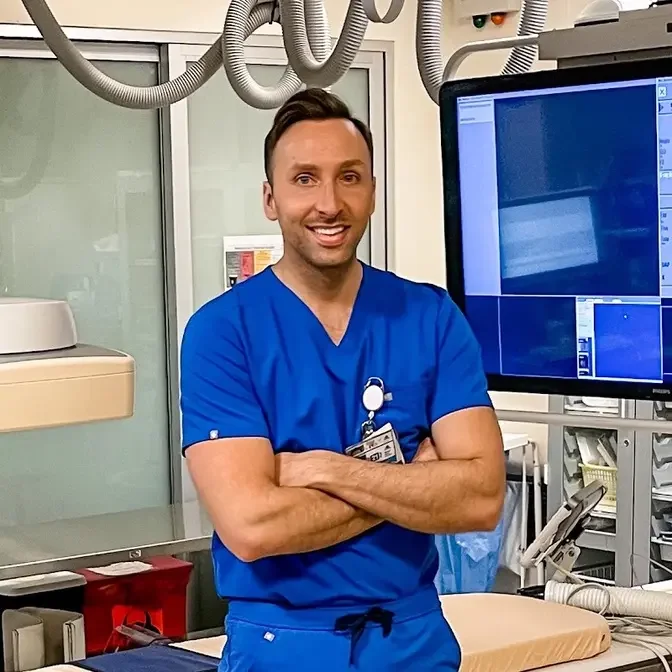
Student Loans & Student Debt are some of the biggest topics that we, as medical professionals, like to not ever think about. However, it is very important to talk about student debt, research student debt and student loans, and develop a strategy to attacking them, and paying them off. There are many ways to pay of student loans and I touch on a few options in this video. I really wanted to make this video to help educate young professionals on how to manage and pay off your loans. Maybe this will help someone start digging into some research about their own student loan debt and figure out a way to pay it off. Enjoy!
All right everybody, welcome back to the channel. For those of you who are new around here and just
tuning in for the first time, my name is Michael aka Dr. Cellini and I'm an interventional
radiologist based out of New Jersey. You probably saw by the title that I lost $250,000 and that's
partly true. I didn't lose it per se but I did go in debt for $250,000 and you probably know why if
you've been around my channel for a little bit now. So on today's video we're going to be talking
about student debt and student loans and more specifically medical student debt. And make sure
you watch till the end because I will be talking about my student debt and how I plan on paying it
off now that I am an attending physician. So let's get into the video. All right so before I get into
this video I just want to give a quick disclaimer because this is not financial advice. Do not take
all this information completely as it is. I just did a little bit of research. This is what I think.
This is my process of handling student loans. This is not financial advice. Do not take financial
advice from some random guy on YouTube. Do your own research. So with that being said let's get
into the video. All right so now that we got that disclaimer out of the way let's go ahead and talk
a little bit about student debt and like I said more specifically on medical student debt. I'm
going to read a few statistics here that I found on educationdata.org. So this says as of 2021
76 to 89% of medical school graduates leave school with an average debt of $215,900 and that only
includes medical school debt. So if you add a little undergraduate debt on top of that medical
school debt the average debt for med students including undergrad debt is $241,000 which is
ironic because that is very close to the amount of debt that I have. And if you dig a little further
on this data it's actually more interesting because the average debt has almost doubled
in the last 20 years and for some reason the salaries of physicians have either stayed the
same or even decreased over time. And also reimbursement rates have been going down year
after year and physicians are working twice sometimes three times as hard for the same amount
of money or even less money. So you can see how this just isn't panning out already but we knew
that right. Furthermore this website has a list of the highest debt per school so they listed the
highest amount of debt for the students graduating down to the lowest but ironically you'll notice
something about these schools with the medical students graduating with the most debt. A lot of
them are osteopathic med schools or DO schools which is what I went to. That's also very ironic
because DO schools are very much pushing for primary care physicians and training the next
generation of primary care rural medicine physicians. But it's even more ironic because
those specialties family med primary care specialties rural medicine those specialties
make the least out of any specialty in medicine and these schools that are promoting going into
those specialties are charging you the most. Does it really add up? No it doesn't. And another
interesting fact I noted while reading this is that the average length of time it takes for
physicians to pay off their loans after graduating medical school finishing residency and becoming an
attending physician is 13 years. 13 years after becoming an attending physician is how long it
takes for the average doctor to pay off their debt. That seems problematic to me but again we
knew that right fly in the air. So why then does it take physicians 13 years to pay off their loans
when we know that they make a pretty decent living. I thought about it for a little bit and
this is what I came up with. Many physicians don't make as much as other physicians and what I mean
by that is say a neurosurgeon makes quite a bit more money than a primary care physician sometimes
three four times five times more than a primary care physician and there's a pretty wide gap
between sub-specialized physicians and non-sub-specialized physicians. You know it kind of
makes sense because sub-specialized physicians like myself go through a lot more training sometimes
twice as much training in some instances than the non-sub-specialized doctors and I see how there's
a gap in those salaries and I understand why it takes longer for someone who makes a lower salary
compared to a high-paying sub-specialist to pay off those loans. The second reason I came up with
why it takes physicians so long to pay off their loans is something we in the business like to call
delayed gratification. Any physician knows what this means. We basically spend our entire 20s,
we spend our early 30s making no money, living paycheck to paycheck, eating crackers in the
hospital, working our butts off for 10 years like myself. When it's all said and done you finally
get that first big paycheck and what do you want to do? You want to go out and buy something. Like
how many times have you seen a physician when they first finish their residency go out and buy like
a brand new $90,000 Porsche because they can. That's very frowned upon and I don't think you
should do that. I don't recommend you do that but that's why they do that is because they've
essentially been pushed down for so long that once they finally have access to money for the
first time in their lives for a lot of them they finally go out there and spend it. And when you
buy something like that and you start spending that high income very quickly you run out of
money to pay for your student loans and that's why it takes longer to pay them off. Going along with
that a lot of physicians weren't really taught anything in med school or during their pre-medical
science courses on how to manage their money and a lot of physicians are not smart with their money
because of that. And to generalize a little bit more most people in medicine whether it be doctors,
PAs, nurses, pharmacists, etc. never got taught anything about money either so I think all these
things kind of come together and are reasons why it takes physicians for instance so long to pay
off their loans. So now let's get into a little bit about my loans. So fortunately I was a collegiate
athlete and had a scholarship to college which means I didn't have to pay any tuition while I
was there. However I did do some post-baccalaureate courses my pre-med courses before going to med
school and I obviously had to pay a little money for those but it was at an in-state school and
luckily the tuition was super cheap in Georgia. I probably ended up paying like $10,000 or $12,000.
It was less than $15,000 for sure but the overwhelming bulk of my student loan debt
comes from medical school as you probably guessed by watching this video. So my total is somewhere
around $250,000. That's why I lost $250,000. That I'll never get back but it was worth it and I'll
tell you why later. The good thing about being well there's not really anything good about being
in debt $250,000 but when you finish med school at least you're making good money. You can start
paying that debt off right? Not quite. So let's do a little calculation here to explain what I'm
talking about. So say you have a loan balance of $250,000 at say seven percent interest like
many government loans are and say your loan term is around 30 years which it may be less it may be
more but for this example we're going to use 30 years. These are all just rough numbers. Don't
come at me and be like oh most government loans are 10 years mine's 12 year term blah blah just
just go with it here. These are rough numbers okay just for demonstration purposes. So say we
have a $250,000 loan at a seven percent interest rate for a 30 year term. All said and done that
comes out to $598,000 at the end of those 30 years. Thank you interest and if you divide that by 12
over 30 years it comes out to $1,663 a month and given the fact that some loan terms are actually
like 10 years from the government it may actually be substantially higher than this but we're going
to use $1,663 for this example. When you're in residency can you afford a $1,663 loan payment
every single month? Let's find out. Now during my radiology residency for example most residents
made anywhere from $55,000 to $62,000 so we'll just cut it in the middle somewhere and make it
$60,000 to make it even. So let's take $60,000 divide it by 12 and it comes out to $5,000 a
month. So say we pay a little less than 30% and that comes out to around $3,600 a month post-tax
money. So I made $3,600 a month in residency. Let's go ahead and talk about my expenses. We'll
subtract from that $1,500 of rent is what I paid in North Carolina while I was in residency. So say
I had anywhere from another $500 to $700 of expenses including interest and all that stuff.
So let's ballpark it and say $2,200 to $2,500 I paid in expenses including rent and everything
all said and done. So let's subtract that from $3,600 and it gives you anywhere from $1,100 to
$1,400 a month extra after expenses. So if you had $1,100 to $1,400 left over after all your expenses
how then would you be expected to pay $1,663 every single month for your student loan payment? And
the short answer is you probably wouldn't. So luckily there are other routes you can take to
lower your monthly payment and this is what I did while I was in residency because I sure as heck
couldn't afford $1,600 a month extra on top of everything I was doing. And what about during the
first few years of residency when Adriana wasn't living in North Carolina with me and I wanted to
take a flight to New York to go see her? There's no way I could pay my loan. So obviously I chose a
different path and we're going to talk about it now. So luckily there are alternatives to paying
these high monthly payments. There are other ways you can reduce your monthly payments which is what
I ended up choosing. So what did I end up choosing? I chose the PSLF with IDR route. What'd he say?
The Public Service Loan Forgiveness or PSLF and the Income Driven Repayment or IDR. I used both of
those simultaneously and we're going to talk about them briefly so you know what the heck I'm talking
about. So let's talk about the Income Driven Repayment Plan or the IDR first. So the Income
Driven Repayment Plan is something you can do when your loans are higher than what you can afford.
So I'll read you the definition off of the student aid website studentaid.gov for more information.
An Income Driven Repayment Plan sets your monthly student loan payment at an amount that is intended
to be affordable based on your income and family size. There are four different types of IDR. Repay
which is the revised pay-as-you-earn payment plan. There is the pay or the pay-as-you-earn repayment
plan. There is the income-based repayment plan which is what I did and there is the income
contingent repayment plan. So I did the IBR or the income-based repayment plan because some of my
loans didn't qualify. They were a bit older since I'm a bit older and I was a non-traditional student
so I ended up paying 15% of my income divided by 12 and I paid that per month and ended up coming
out to like $150 per month while I was in residency which was completely affordable compared
to like $1,663 right. So obviously you'll have to do your own research to see if one of these plans
is right for you but the reason I did it is because I actually went to a very long residency program.
So those four options are basically a way to lower your payment if you cannot meet the payment
requirements to pay those large sums of money like pretty much anybody in residency. So I did that
and then I also paired it with the PSLF track or the Public Service Loan Forgiveness track and I'll
go into that a little bit here. So again I'll read you the data from studentaid.gov. So if you are
employed by a U.S. federal, state, local, or tribal government or non-profit organization you might be
eligible for the Public Service Loan Forgiveness program. So the PSLF program forgives the remaining
balance on your direct loans after you have made 120 qualifying monthly payments under qualifying
repayment plan while working full-time for a qualifying employer. Got all that? So basically
what this says is you have to work full-time. You have to make 120 payments or 10 years worth
of payments every single month on time for the correct amount. You have to recertify every single
year. You have to continue to work for a non-profit or federal hospital. After that 10 years are up you
can say goodbye to that remaining balance your loans because the government will refund it
supposedly. It doesn't really have a good track record so far because I think for the most part
a lot of people screw it up and don't work for these non-profit organizations but luckily pretty
much anybody who does a residency is working at a non-profit hospital and therefore you qualify
because almost all academic hospitals where you do your residency at or your training qualify for
these non-profit exemptions. So I did the Income Driven Repayment Plan plus the Public Service Loan
Forgiveness track and it's a way to keep your payments low for 10 years mostly while you're
in training and at the end of those 10 years you can have the remaining balance of your loans
forgiven by the government if you meet all those requirements and again you have to do your own
research because it is very important and I remember when I was first finishing med school
and I was like oh my god I have to like figure all this stuff out and I read so much I went down like
a super deep rabbit hole because I was like I am not screwing this up I'm not paying off this debt
I'm having it forgiven and I'm gonna do whatever it takes and that's kind of what you have to do
and as physicians and anybody in medicine we're not really for the most part interested in learning
this stuff because it's not very exciting it's pretty dry and boring but it's important for you
to just read it know it know it cold because it'll benefit you going forward. So the reason I did this
Income Driven Repayment Plan plus the PSLF is because I was in a long residency. My residency
was six years long that's six years of paying a low payment per month and then at the end of those
six years my payment would bump up to the 15% of my attending physician salary which substantially
increases from the $150 payment I was making in residency but nonetheless you can afford it as an
attending physician because the way they calculate these monthly payments is based off your prior
year tax return so essentially my new physician salary wouldn't be included until year seven
which means I would only have to pay the three years of it instead of four but nonetheless I'll
do a calculation for you so you know exactly what I'm talking about. So say I finished residency
and I've got a job making $400,000 divide that by 12 that equals around $33,000 per month pre-tax
multiply that by 10% and that comes out to $3,333 per month over a three-year period which comes out
to $120,000 if you add that $120,000 to the pennies you paid in residency over six years
say it's $150 a month times 12 times 6 equals $10,000 that's like nothing compared to what
you're paying now ends up being around $130,000 if you see if you owe $250,000 like me and you
end up paying $130,000 that means you get $120,000 forgiven by the government at the end of your 10
years and that's pretty much a win in my book again like I said you really need to do your own
research because this isn't as easy as you think it is unless you actually spend time digging through
it reading it and understanding it there's little nuances like for instance I had to file separately
from my wife during residency because I made no money she was a working physician assistant
working two jobs making way more money than I did and if I were to file jointly on my tax return
her income would be included in that income-based repayment plan obviously we didn't want that so we
had to file separately which increased our taxes but in the long term it actually saved us money
and this is just one of the few downsides to doing these income-based repayment plans and there are
some downsides but in the interest of time I'm not going to get into them basically some of them
include increased debt longer repayment plans etc etc you can do your own research on those so I was
all geared towards doing this six-year IDR plus PSLF and then I got the opportunity to join a
private practice and everything I just did for the past six years has been completely thrown out the
window because now I work for a private practice or a for-profit organization not a non-profit
hospital we're contracted through the hospital and I don't work for the hospital I work for the
private practice and most private practices are not non-profit so I no longer qualify for the
public service loan forgiveness because I don't work for a non-profit hospital so what do I do
now well if you've seen my video up here I did academics versus private practice and I weighed
the options I really did and it turns out if I were to stay in academics my salary wouldn't be
as high as it is in private practice and yes I could have stayed and worked at an academic
institution working for a non-profit hospital for those three years which would save me $130,000
that would be forgiven by the government however I would make more than $130,000 over those three
years working in private practice because the private practice salary is much higher in some
instances than academia so basically everything I did for six years has been thrown out the window
but that's okay because this is my plan going forward what I plan on doing is refinancing my
$250,000 in student loans for you the lower interest rate which is way lower than the
seven seven point eight percent I'm paying to the government right now a lot of companies like SoFi
and forgot these other ones there's so many companies out there that will refinance your
loans and they give you pretty good interest rates sometimes in the two to three percent range
which is significantly better than the seven to seven point eight percent paying to the government
especially when you're dealing with such a large sum of money so essentially in the next month or
so I'm going to refinance my loan start paying them off at a lower interest rate and my goal
is to pay them off between two to three years and I'm not kind of giving myself a timeline because
I know I can pay them off because I'm fortunate enough to have a higher salary now I made money
from this side job on YouTube and all that stuff so I know I can pay them off but I'm allotting
myself a little wiggle room because you never know what kind of investment is going to come
across your desk that you may need some capital for so that's pretty much it hope you all learned
something on this student loan breakdown here again I want you all to do your own research
because this stuff is pretty in-depth and it's easy to get lost if you don't pay attention
so I really really really strongly encourage you all to go to at least like studentaid.gov
learn something talk to somebody there's other good companies out there that you can actually
pay for that'll give you some good advice that I've come across I don't know any off the top of
my head but they're out there and I'm not going to give them a free shout out all right so that
officially concludes this video on student debt and how I lost $250,000 hope you all enjoyed this
video if you want to see more videos like this let me know in the comments below if you have
any questions about student debt also let me know in the comments and I'll probably do more
financially related videos as they pertain to medicine because I think it's important for us
physicians and anybody in the medical field to pay attention to finances because that's not
something we're taught about in school so make sure you subscribe to my channel like this video
share it and follow me on instagram and tiktok if you don't already and I'll see you all on the next
video bye