RaDonda Vaught, a former Vanderbilt nurse, was criminally prosecuted for a fatal drug error in 2017, was convicted of gross neglect of an impaired adult and negligent homicide after a three-day trial in Nashville, Tennessee. Vaught faces three to six years in prison for neglect and one to two years for negligent homicide as a defendant with no prior convictions. Vaught's trial has been closely watched by nurses and medical professionals across the U.S., many of whom worry it could set a precedent of criminalizing medical mistakes. Medical errors are generally handled by professional licensing boards or civil courts, and criminal prosecutions like Vaught's case are exceedingly rare. Did this case just change healthcare forever? Let me know what you think in the comments below!
*None of this is meant to be construed as investment advice, it's for entertainment purposes only. Links above include affiliate commission or referrals. I'm part of an affiliate network and I receive compensation from partnering websites. The video is accurate as of the posting date but may not be accurate in the future.
Criminally charged nurse for a medical error.
Welcome back to the channel, everybody.
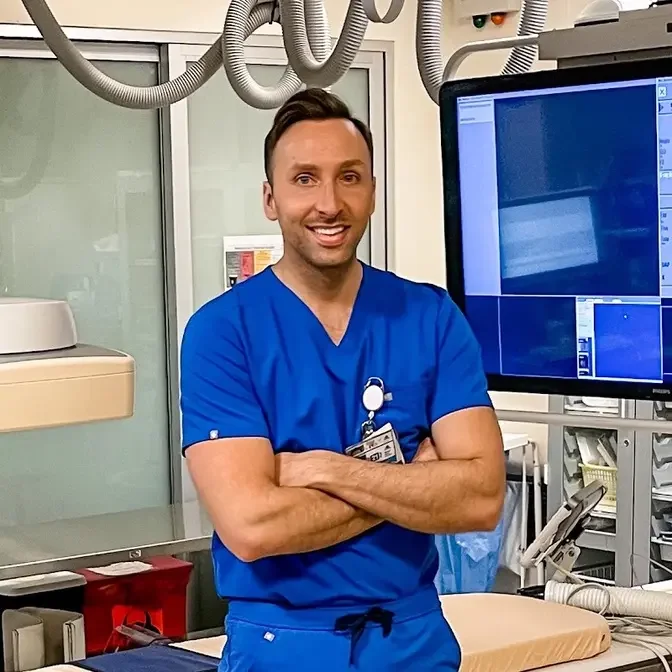
For those of you who are new around here, my name is Michael, aka Dr.
Cellini, and I'm a board certified diagnostic and interventional radiologist.
Now, you may have seen my previous video in which I did a deep dive
on the Redonda Vought case.
And if you haven't seen it, you can go ahead and hit a link up here.
Watch it. You'll learn everything you need to know about the case.
And I guess you can jump in right here after you finish watching that video first.
But if you don't feel like watching that video,
I'll do a quick little summary because I'm nice.
Basically, Redonda Vought is a former nurse at Vanderbilt Medical Center
who administered an incorrect drug to a patient that ultimately resulted
in the patient's death.
She was ordered to give Versed and instead overrode the Pyxis system
and grabbed Vecuronium instead, which is a powerful paralytic
which was administered to the patient instead of Versed.
And like I mentioned prior, it ultimately resulted in the patient's demise.
And again, if that wasn't a good enough summary, go watch the video
I did prior and it'll give you all the facts.
So the result of her case was that she was charged with criminally
negligent homicide and gross negligence of an impaired adult.
With that sentence, which was quite a hefty sentence, might I add,
she was facing possibly three to six years of jail time,
losing her nursing license, et cetera, et cetera.
She finally had her sentencing hearing last week, and it turned out pretty good.
And almost to everybody's surprise, those charges were essentially
cut way down and she was given three years of probation.
Now, she did still lose her nursing license, but the judge basically said
that there's no way she can make this mistake again
since she's never going to practice as a nurse again,
but gave her three months probation, which may actually be cut down shorter.
So basically, she went from three to seven years
sentencing for negligent homicide to three years of probation,
which is a win on her account.
And it's also a win for every health care workers, especially nurses.
The reason it's such a win, and again, I mentioned this in my prior video,
is that this was a medical case.
This was not a criminal case.
And when you start charging medical professionals with criminal charges,
it starts to get a little dicey.
But again, I'm not going to reiterate everything I talked about
in the prior video, so go watch that if you have any questions.
The goal of today's video is to basically watch her first interview
that she's given publicly since her sentencing.
I just kind of see what she has to say.
And I wanted to see this.
I haven't watched it yet. Discuss it with you all.
Let me know in the comments what you think.
So let's go ahead and get into it.
And before we get into this video, go ahead and click the link
in my description box to Webull.
You get two free stocks as soon as you sign up.
And if you add your bank account and deposit one cent or more,
you get four additional free stocks.
I think that's a pretty good deal.
So click the link in my description.
All right. So I'll leave a link to this video, of course,
in the description box below.
You can watch it, peruse it at your leisure.
But we're going to get into it right now.
There's a sense of peace here.
A sense of hope.
It seems to me that she is doing quite well now,
just relaxing and feeding her.
I guess she lives on a farm now or she did already,
but she's probably a little less anxious than she was before the sentencing,
which totally get it.
Do you feel like you were a scapegoat?
I think the whole world feels like I was a scapegoat.
There's a fine line between blame and responsibility.
Nothing is done in a vacuum.
So I totally agree with that.
And I mentioned this on my prior video that I keep alluding to,
that a lot of people did feel like she was a scapegoat.
And I know she felt that, too.
She was basically the scapegoat for the whole error that happened.
And there were more people involved than just her.
Threw her under the bus, kind of, and the district attorneys went after her.
So it was a very weird situation altogether.
And it really was just like she was the scapegoat for all of this.
For the past five years, Redonda Vaught has faced the fight of her life.
A former intensive care unit nurse who, in 2017,
accidentally gave the wrong drug to a patient, Charlene Murphy,
causing her to lose her life.
It is crazy that this took five years.
Like five years to get to this point.
So she's had to think about this every day for five years.
And I know what you're going to think, like, oh, the family suffered more.
And of course they did.
So they have probably moved on.
And Redonda Vaught has to just go through Groundhog Day over and over with this until now.
We went from healthcare heroes to sacrificial lambs.
The nationwide fight for change from the frontline workers, fearing they could be next.
So that was the biggest thing, right?
So this could have been any of us, essentially.
So any nurse could have made a medication error.
And I know, obviously, she missed a lot of checks and balances along this whole process
and made this error on her own doing.
But it could have very much been anybody.
So maybe not making that many errors and maybe not overriding everything.
But you could still inject the wrong medication inadvertently as an accident.
And it would just be that, an accident.
But now this trial was basically opening up the door for healthcare workers to be criminally prosecuted.
Which is a huge precedent that nobody wanted.
When did you realize something went wrong?
It wasn't until she had been brought back to our unit as an intensive care patient.
And a code had been called in the PET scan area where she was.
So it was a PET scan.
So let's just back up here.
I'm still confused why they did a PET scan as an inpatient.
It's very odd to me.
But nonetheless, I'll just go with that.
But the other thing that concerns me is that she wasn't monitored during this PET scan.
And giving any sort of anxiolytic medication or sedative, the patient needs to be monitored.
And they weren't.
Which means this patient was essentially not breathing for the entire course of the PET scan.
Which is pretty long, 15 minutes maybe.
And the code wasn't called until far afterwards.
And again, I don't want to beat a dead horse here.
I want to focus on her talking about her case.
When you saw the vial and you read what was on the vial, what goes through your head?
Your heart goes through the floor.
You just, you can't even imagine.
So that's what people who aren't in the healthcare field really need to realize.
We as healthcare workers are ultimately just trying to do our job and take care of the patient so that they get better.
Never to harm them.
So when you do something like this, it weighs on you more than you can possibly imagine.
And only those who are in healthcare will understand that.
Vanderbilt fired Redonda, but what came next shook her to her core.
After multiple investigations, her nursing license revoked.
And the National District Attorney charged Redonda with reckless homicide and abuse of an impaired adult in 2019.
Those words.
Reckless.
Reckless homicide.
The District Attorney really did go after her here.
And we keep mentioning this, that she was a scapegoat.
But it was two years later, they just laid the hammer down on her and reopened this case.
And it's still to this day, nobody's talking about how Vanderbilt Medical Center paid off the family of Charlene Murphy.
And they just get away scot-free.
And the District Attorney was allegedly working for the hospital.
There's some sort of weird connection there.
So all this is still a little fishy.
And I guess we'll really never know the real story.
We had had to use the override function to obtain medications.
This was like a normal part of your routine having to hit override.
Oh, you couldn't obtain an IV fluid without hitting the override button.
So that's an important part of this case because people say she should have never overrode the system or whatnot.
But there was clearly something wrong at Vanderbilt Medical Center where she worked, where they had to do this consistently.
And that's part of the reason why she made this error to begin with.
So she had to override it and get the wrong medication out.
Which, when you override the system, you're already setting yourself up for failure if you don't pick the right medication.
Again, I'm not saying what she did was correct.
And she obviously made an error that did happen.
I'm just saying there's a lot of stuff that led up to that error and allowed it to happen.
It's like the Swiss cheese effect.
Vaughn admitted she was distracted that day because she was escorting a trainee.
Anytime you have an additional responsibility, that responsibility can be distracting.
I allowed myself to split my focus.
That's very true too.
So she had a trainee following her and anytime you have a resident or a med student under you and you're trying to talk to them,
they're asking you a million different questions.
It kind of throws you off your game a little bit because you're not in your routine.
So again, distracts you, override the system, set yourself up for errors.
Attorneys argued that her fatal mistake was made possible by systemic errors involving the hospital's pharmacy,
which allowed nurses to routinely override safeguards.
So many things had to line up incorrectly for this error to have happened and my actions were not alone in that.
See, that's Tia there.
Again, there were a lot of people involved in this and she was somehow the only one that's even tried under all of this.
It's very odd.
Neither the medical center nor anyone else associated with it faced criminal consequences for the incident.
ABC News reached out to Vanderbilt Medical Center, but they declined to comment.
Surprise, surprise.
Following a federal investigation, the hospital submitted a corrective plan of action to address some of the findings included in the report.
Who's responsible in what happened here?
I mean, nobody wants to point a finger. That's not what you're supposed to do in healthcare.
Except they pointed the finger directly at her.
In March of this year, the jury returned a guilty verdict on the lesser charge of criminally negligent homicide and on the abuse charge.
Redonda faced up to eight years in prison.
Oh, so I was wrong. Up to eight years in prison.
Criminally charged nurse for a medical error.
Just a little scary. Just a little dicey.
Nobody liked that precedent that they were setting.
And again, I talked about this in my video, which I keep saying that over and over again, so I apologize.
But who wants to go into healthcare knowing you could be criminally charged with medical error?
Let's not forget that Redonda's freedom is at stake.
It really is the straw that broke the camel's back after everything nurses have been through the last two plus years.
Now to be charged criminally and convicted, why would anybody want to be a nurse now?
They're kind of saying exactly what I'm saying.
That's the thing though.
So even though, so say you're a nurse, for instance, and you make a medical error.
Maybe you don't kill the patient, but can you still be criminally charged now for that error?
That was what this whole thing was about.
Singling one healthcare worker out when there are a lot of people involved in a patient's care and charging them criminally, scary.
A firestorm spread across the country.
A Change.org petition calling for clemency for Vought garnered more than 200,000 signatures.
The American Nursing Association saying it was deeply distressed by this verdict
and the harmful ramifications of criminalizing the honest reporting of mistakes.
All this a spark in an already vulnerable healthcare system on the brink of collapse.
That's what a lot of people don't understand is.
So healthcare is so tumultuous currently after this whole pandemic.
And then now nobody's a healthcare hero anymore.
And everybody's against healthcare worker and the wide disparities against the vaccine and all this stuff.
It's so tumultuous.
And then you throw this in here.
It's just making our profession even more stressful than it already is in the current environment.
And that's why everybody is up in arms about this verdict originally.
And I agree.
We'll spend an entire 12 hour shift not going to the bathroom, not eating, not drinking enough water.
You get to the end of the day and you're just mentally, emotionally, and physically exhausted.
The system is set up to make it easy for us to make a mistake like this.
That's what I keep saying.
It's very much a systemic issue.
Again, I do not condone this error.
I think it's a huge mistake.
And obviously she is at fault for it.
But the system allows this kind of stuff to happen.
I don't want to live in a world where if I go to a hospital,
the nurses and doctors that are going to be taking care of me would be afraid to speak up if they made a mistake.
That's the other thing too that I mentioned in the prior video.
Now with someone being criminally charged for a medical error,
do you really think people would speak up if they committed an error or saw someone commit medical error?
I don't think so.
And it just ultimately doesn't allow for a safe environment for patients and all of healthcare.
We forgive her.
My mother-in-law would want her to be forgiven.
And jail time is not an option to me for her.
That's actually very moving for a family member to say that.
They truly forgive her.
They know it was a mistake.
And for them to prosecute her even further against the family's wishes makes you think of some sort of ulterior motive.
Redonda Vaught was sentenced to three years supervised probation.
ABC News reached out to the family of Charlene Murphy and they declined an interview at this time.
I will always carry her with me.
And if I can affect a positive change, I'm going to do that.
Alright, so that officially concludes this video.
I'm curious to see what you all think in the comments about this final verdict of just probation
instead of eight years in prison for homicide charges.
I think it's quite a good result and it's good for healthcare as a whole.
Again, I do not condone this mistake.
But I think it's important that we shed light on this topic of how easy it is to make mistakes
given how the current healthcare environment is set up.
So as always, make sure you subscribe to my channel.
Follow me on TikTok and Instagram if you don't already.
And as always, I'll see you all on the next video.
Bye!