Here are the top 10 ways how and why doctors lie. Curious to see what you all think of them, and if any of them sound familiar...
00:51 - Work Hours 02:34 - Medical Records 03:52 - Billing 05:10 - Evaluations 06:18 - Mental Health 07:40 - Fake it til you make it 08:54 - Lying to Patients 10:03 - Lying to other Doctors 11:08 - Lying to ourselves 12:14 - Lying on Death Certificates 13:27 - Why do doctors lie?
*None of this is meant to be construed as investment advice, it's for entertainment purposes only. Links above include affiliate commission or referrals. I'm part of an affiliate network and I receive compensation from partnering websites. The video is accurate as of the posting date but may not be accurate in the future.
Doctors are trained to lie and they get away with it.
Welcome back to the channel, everybody. For those of you who are new around here,
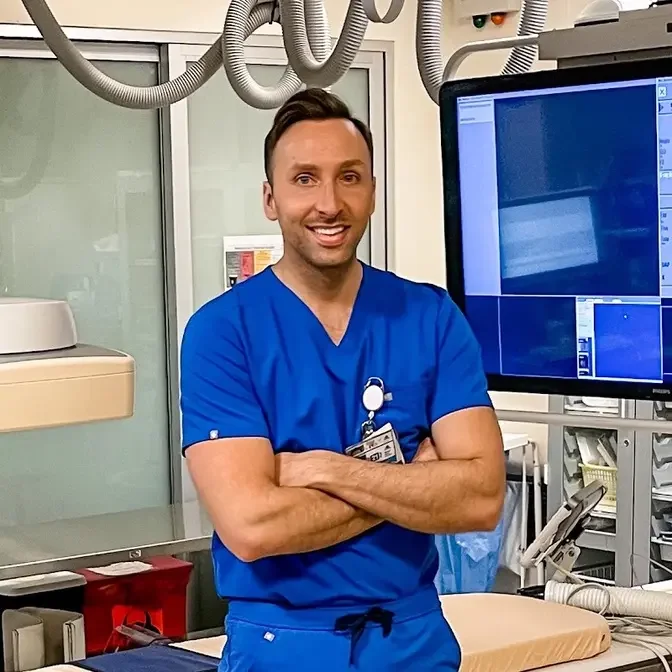
my name is Michael, aka Dr. Chalini, and I'm a board-certified diagnostic and
interventional radiologist. As usual, I've come across yet another interesting
slash provocative article that I want to share with you all.
This article talks about 10 ways doctors are trained to lie and why they do it.
I'm curious to see what this author, Pamela Weibel, has to say about this.
So let's go ahead and get on into it. Let's go.
Okay, so like I said, this article talks about 10 ways that doctors lie.
My goal of this video is to talk about those 10 reasons why doctors lie,
and then give you the real deal on each one of those.
I'll tell you if it's legit, sort of legit, not true at all.
And as usual, I'll sprinkle my wisdom along the way.
And by the way, I'll have a link to this article in the description box below.
So let's get into the first way doctors lie.
Number one, doctors lie about work hours.
Okay, so she's coming in hot off the jump here.
And unfortunately, I'm going to have to agree with her.
We do lie about work hours, but it's for a good reason.
You see, in residency, we can't work more than 80 hours a week, averaged over a few weeks.
The catch here is the averaged over four weeks part.
So you can work 100 hours one week, 70 hours the next week,
100 hours the next week, and then 30 or 40 hours the next week.
As long as it averages 80 hours a week, you're golden.
And we have to document our duty hours every single week in residency.
But just because we document them doesn't mean we document them truthfully.
The problem is that in medicine,
most residencies are designed for the residents to work over 80 hours per week,
with the exception of dermatology or even radiology.
And sometimes certain fields may work longer than 80 hours, like say surgery.
They may work 100 hours per week every single week in residency.
But even though we are working longer than 80 hours a week, we still lie about it.
And there are multiple reasons for this.
For one, a lot of residency programs are designed this way,
and they're designed to functions with residents working a lot of hours.
I'm not saying this is a good thing, but it happens.
Two, you lie about your work hours because you don't want your program to get in trouble.
If you start having duty hour violations over and over,
the higher-ups will kind of take notice and maybe audit your program.
They may even place your program on probation.
And if your program continues to violate duty work hour restrictions,
then the program may close completely,
which obviously means you don't have a residency anymore.
And also your program's reputation could be tarnished,
which means now ultimately your CV is tarnished.
Which is why this whole process is messed up, and that's why we lie on our work hours.
In fact, a lot of us are even told to lie on our work hours during residency.
Off the record, of course.
The second way doctors lie is that they lie on medical records.
I'm listening.
The article states here that rushed visits lead
docs to falsify records by checking items in EMR that were never done.
For example, like writing within normal limits, or WNL, for a physical exam finding.
And the joke of this article is that the WNL stands for
we never looked.
I've never actually heard that before.
But realistically, how can you complete a physical exam
within the 15 minutes you're allowed to spend with patients,
since we are constantly moving patients in and out of the office in order to meet demands?
Well, the short answer is you don't.
So a lot of doctors will just kind of fudge the physical exam
because you don't have time to do a full physical exam.
But you have to do a full physical exam in order to bill for the visit.
But you also don't always have to do a full physical exam depending on the visit,
which is why doctors kind of fudge it.
It's a weird thing.
It's just documentation stuff.
And obviously, I'm not advocating that you should fudge the physical exam findings,
or that you shouldn't do a complete physical because you should.
And if you say that you did and you didn't, that's technically fraud.
I'm just saying it happens.
And this article is saying it as well.
And again, the reason why doctors are taking these shortcuts
is because of the increased demands placed on them.
So like I said, I do actually agree with this one,
that doctors do lie on the medical records, especially on physical exams.
But I definitely don't think you should do it.
Document what you actually do and do your physical exam.
The number three thing doctors lie on is billing.
Oh man, these just keep getting better, huh?
Let's read what the author has here.
Packing medical records with items never done allows for upcoding
to higher level visits and increased reimbursements, plus productivity income.
We had lectures in our hospital on how to code properly
to basically commit insurance fraud.
Doctors who lie get paid more and work less.
This is kind of similar to the whole
not charting your physical exam thing that we just talked about.
However, upcoding in line about the patient visit
is certainly a little fraudulent, to say the least.
And if you don't know what upcoding is,
it's basically like how you can upcode a charge on a patient's visit
depending on how complicated it was
or how long you spent with the patient discussing the procedure
or their medical course.
I'm not going to go too much into the weeds on this
because to be transparent, I don't really do this kind of stuff
because we just don't do that in radiology.
I don't bill for my time based on how much time I spend with patients.
I don't see patients in the clinic, so this doesn't really apply to me,
and that's why I don't know a lot about it.
But there is a science about how to bill
and how to code correctly for your patient interactions,
but you definitely shouldn't lie about it because that's fraud.
Is the little extra coin you get from fraudulently documenting worth it?
Most certainly not.
You worked way too hard for this.
The number four way doctors lie is on their residency evaluations.
Ooh, this is oh so true.
Let's see what the article says about this.
After we complained about working conditions,
we are coached on how to respond on our proctored survey
so our program would not lose accreditation.
I know this is illegal.
If I refuse to comply, I risk retaliation.
This is pretty accurate, and this kind of goes with the previous lies.
Here's the problem.
Again, we are grading our program.
Any bad grade or negative remark that we put on our residency survey
will be scrutinized by the Graduate Medical Education Committee,
and if the accusations are harsh enough,
they may put the program on probation or risk accreditation altogether.
So who wants their program to lose accreditation?
Obviously nobody, because again, like we talked about, your CV.
Do we want to have an asterisk by our program that it lost accreditation
or be known as going to a program that lost their accreditation?
It looks bad on you, the doctor,
which is why this is one of those unwritten things in medicine
where we don't mention the negatives about our program.
We just don't talk about it.
Just keep our head down and get through it
because you don't want your program to be affected by your negative remarks.
And I would like to reiterate here,
this is not how it should be.
Number five.
Doctors lie about their mental health.
Another dead-on statement.
Physicians lie on applications for hospital credentialing
and medical board licensing when asked about mental health status
or other mental health conditions.
It's almost like physicians aren't allowed to get psychiatric help if they need it
because obtaining a license afterwards would be so challenging.
The article mentions one doctor encounter.
After reading about one woman's journey through hell
after being honest on application questions,
I sought care an hour away.
I drove an hour in the other direction to nervously fill prescriptions for antidepressants.
I required several meds to stop thinking about suicide all day, every day.
My suicidal thoughts were 100% of my work.
This is insane.
And this is one of those underlying reasons why a lot of physicians have issues
and there's a high suicide rate amongst physicians.
Because if we do mention it or do talk about it,
it just makes our lives more challenging for licensing and so on.
So why even talk about it?
Just shove it under the rug.
Maybe it'll go away.
Which is the absolute opposite of what you should do.
But really though, are physicians not allowed to have mental health conditions?
Are they supposed to hide it?
The good thing though is people like my friend Dr. Jay Goodman,
who is a psychiatry resident,
is pushing this whole normalization of physicians taking antidepressants
or approaching their mental health head on.
And you may have seen him on TikTok or Instagram and all that stuff.
But realistically though, physicians are human.
The last thing we need to do is force our docs to hide their mental illnesses
because they are fearful that the medical licensing board will find out.
The number six way doctors lie is about their own self-confidence.
Per the author, we live in a fake-it-till-you-make-it culture in medicine.
New doctors are practicing medicine with poor supervision and poor teaching
and then pretend to have all the answers.
The author states here that I watched colleagues often act and speak very confidently
even when they didn't know what they were talking about.
And I somewhat agree with this.
I have actually seen this.
I do think the fake-it-till-you-make-it type culture exists in medical training.
But the extent of this culture depends on your residency itself
and it also depends on your mentors that train you.
If you go to a good program, you get excellent supervision and even better teaching.
If you go to a lower tier program, you may not get as good of supervision or training.
But the thing though in medicine is that there is some component of doing.
You can only be taught so much without actually applying it.
You have to actually do things to put your learning into practice.
But I can see though if you don't have good training or good supervision,
you can kind of fall into that whole fake-it-till-you-make-it type trap
because really you have no other choice.
I also think that the best thing a doctor can do is admit when they don't know things.
If my patient asks me a question that I don't know, I tell them I don't know.
We aren't expected to have the answers for everything.
So there's no point in confidently lying to convince the patient
that you have the answer when you don't.
It's okay to say you don't know.
Medicine is way too vast to know everything.
Number seven way doctors lie is doctors lie to patients.
Uh-oh, let's see what this is all about.
The author gives an example here that when Medicare covers a procedure,
suddenly more beneficiaries need the intervention.
She goes on to say that financial incentives lead to excess surgeries without informed consent.
Now I don't really understand this part.
I haven't really encountered doctors lying about patient needing surgery or procedure
when they don't or they don't have an indication for it.
And if a procedure gets covered by Medicare,
it doesn't mean I'm just going to try and do more of them or even hunt them down.
I actually don't really care if a procedure is covered by Medicare or not.
I'll do a procedure if it's clinically indicated, but I'm not going to do it if it's not.
It doesn't matter if Medicare covers it or not.
The thing here is the demand for the procedure does not change
whether or not the reimbursement is there.
But I do kind of see where she's coming from because I've heard from other people
that certain doctors will go after patients and do procedures that aren't really indicated
just to get a few bucks.
But I think that kind of exists everywhere.
Think of like a mechanic who may charge you for an air filter or something when you don't need it.
Everyone's just out there trying to upcharge you if you're not educated on the topic.
Again, I'm not saying that's the right thing to do and I don't do it, but clearly it happens.
The eighth way doctors lie is doctors lie to other doctors.
This is very fitting given my last video where the author here gives an example how
doctors embellish their personal statements and their CV.
But doesn't everybody embellish their resume or job applications?
Doctors also boast to other doctors that they don't study when they actually do.
I think we all experienced someone like that in medical school.
We lie to the future generation of doctors telling them that it gets better as an attending.
Well, that part is pretty true.
I don't know why the author put that in there.
And then she goes on to mention that here's the biggest lie doctors tell other doctors.
The doctor asks, how you doing?
Doctor replies, good, and then dies by suicide shortly thereafter.
And this took a really dark turn.
And at first I thought this was kind of a disgruntled, burnt out doctor
who just hates medicine altogether.
But I looked up what kind of doctor she is and she is a retired family medicine doctor,
which makes sense on the whole burnout thing because working in family medicine
for years and years could burn anybody out.
Now that she's retired, she's an activist and helps with medical student and physician
suicide awareness and prevention, which is a good thing.
So this whole dark turn here starts to make a little more sense now.
Okay, let's move on to number nine.
The number nine way doctors lie is they lie to themselves.
She states here that we conceal dependencies and addictions and we are masterminds in disguise.
Fake smiling, happy to med students and happy doctors that die by suicide at alarming rates.
So again, I can see why she talks about this more and more.
Like I mentioned on prior videos, we tend to put our own health behind others.
We are super busy.
We have minimal time outside of work, especially during training.
We put off appointments.
We put off going to the gym.
And we even put off sleep.
And more importantly, we avoid our own personal well-being.
This can take a toll on anybody and it very much does so with physicians,
which is why the author keeps bringing up the suicide issue facing our career.
I can't stress the importance of how much it means to take care of yourself
before taking care of other patients.
If you are not healthy and at your best,
it is impossible to take care of your patients with the best of your ability.
This is why I always stress doing something outside of medicine,
finding a hobby, traveling when you have time off, just getting out of town.
One of the only ways to stay sane in this business is to keep our minds off of work.
The number 10 way doctors lie is they lie on death certificates.
Not going to lie, I did not see this one coming.
The author states that doctors cover up suicides,
especially doctor suicides, and they cover it up as accidents.
They also cover up accidental overdoses on drugs they prescribe every single day.
They lie to preserve the reputation of the deceased,
and sometimes they lie to preserve life insurance payout to the family,
which if you didn't know, sometimes life insurance payout is dependent on the cause of death.
A quick Google search here showed that life insurance policies
usually cover suicide death as long as the policy was purchased
in the last two to three years before the insured died.
But I think this is dependent on state,
and it's also dependent on the type of policy or how the policy is written.
And I never knew this until reading this article.
Okay, back to it.
So apparently doctors lie to cover up suicides.
I've actually never seen this or encountered this because as you can imagine,
I don't really deal with this kind of stuff in my line of work.
In fact, I've never actually seen a death certificate or someone write a death certificate.
What's interesting though in this article,
they state that in England,
a forensic pathologist could not label a death as a suicide unless there was a suicide note.
So again, this is all news to me because I don't do this stuff,
but apparently doctors lie on death certificates.
Now that we got that out of the way,
why do doctors lie?
And the article broke it down into three reasons.
One, to avoid punishment.
Two, self-preservation.
Three, financial gain.
There's always a financial gain in there with everything.
Like anyone, doctors want to avoid punishment because they like to keep their job,
their identity, ego, and money.
And as we know, everybody can be incentivized by bribes,
and doctors are no different.
Unfortunately, there are bad apples in any line of work.
And the author states that many doctors are conflict-phobic people-pleasers
who do not want to stray away from the narrative or risk being pulled from the herd.
That's an interesting way of kind of summarizing this whole article.
However, we must be honest with ourselves first and foremost,
and only then can we be considered real healers.
Okay, so that officially concludes this article.
Let me know in the comments what you think about it.
I'll leave a link to it in the description box below.
As always, make sure you smash that like and subscribe button.
Follow me on Instagram and TikTok if you don't already.
And of course, I'll see you all on the next video.
Bye!