Match Day is definitely a day/week full of mixed emotions. In this video I wanted to discuss the whole process of the residency match, how it works, and also talk about some things you may not think about when discussing the match. Say for instance, the NRMP! I did a superficial dive into the financials of the NRMP out of curiosity, and it is definitely eye-opening!
1:05 - The Residency Match Process 3:18 - Stoggles Ad 5:40 - Costs of Residency Interviews 7:43 - Dr. Glaucomafleckin sums it up nicely 10:23 - 2022 Residency Match Stats 12:28 - Thoughts on NRMP (National Residency Match Program) 16:50 - Match Day Celebrations 18:00 - What would I do differently?
*None of this is meant to be construed as investment advice, it's for entertainment purposes only. Links above include affiliate commission or referrals. I'm part of an affiliate network and I receive compensation from partnering websites. The video is accurate as of the posting date but may not be accurate in the future.
And I just think it's interesting that a non-profit organization is paying their executives so
much money and these poor med students who have no money to begin with are paying for
all of this.
It's, it's interesting.
Welcome back to the channel everybody.
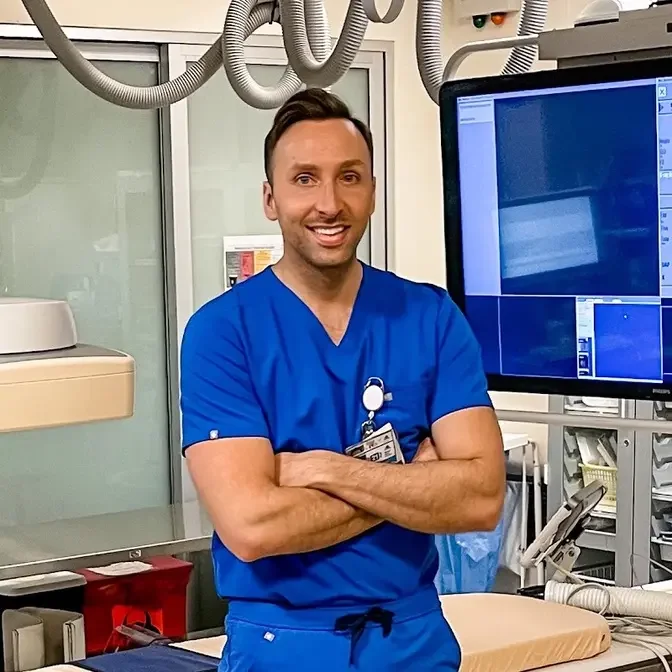
For those of you who are new around here, my name is Michael aka Dr. Cellini and I am
a board certified diagnostic and interventional radiologist in New Jersey.
Now on today's video we are going to be talking about none other than that huge thing that's
going on right now, well just finished actually, but we are going to talk about the residency
match process.
Why are we going to talk about that?
Well, one, at the time of watching this video, it just happened last week, which is always
around mid-March or St. Patrick's Day week, and it's always a kind of interesting experience.
You have tons of people who match and do well and are really excited and then you have the
other side of things where people don't match and they are not happy with where they matched
or not happy with what specialty they got into and all that stuff.
So I want to kind of touch on this super anxiety provoking topic that many people don't know
about and see where it goes.
Let's go.
So first and foremost, I wanted to talk about the actual residency match because a lot of
people may not know what it actually is.
And if you do know everything about the residency match process, go ahead and skip to this
timestamp right here. For those who don't know, the residency match is basically a huge
algorithm for which medical students match into their specialty of choice.
What happens is when you finish your fourth year of med school, you basically go into
this huge process where you start interviewing at multiple programs across the country.
So for starters, you choose a specialty.
You decide what specialty you want to go into after you finish your four years of med school
or right before you finish your four years of med school.
The process starts around September of the year prior to matching and by that time, which
is usually the start of your fourth year medical school, you should know exactly what you want
to do with your life, which is easier said than done because I didn't know what I wanted
to do until almost the start of my fourth year, which is a little delayed in terms of
matching and all that stuff.
So once you have step one complete, you know you want to do say surgery, you need to start
looking at programs and this is where the whole match process begins.
You start applying to programs, reaching out there, sending your CV, sending your applications
and hopefully they will look over those applications, think you're an amazing applicant and send
you an interview invite.
Those programs that don't send you an interview invite, you'll probably never hear from again.
That's just the way it goes.
Now let's backtrack a little bit because before you send out all those applications, how would
you do that without spending an exorbitant amount of money that you don't have?
Herein lies the NRMP aka the National Resident Match Program, non-profit might I add.
So before this non-profit organization can spit out your match results, you have to pay
fees in order to apply for different programs.
So say I wanted to apply for 50 or 100 residency programs in surgery across the country, I
would have to pay a fee for each of those applications.
Some of them are kind of bundled depending on how many applications you send out and
all that stuff but it changes year to year and I don't want to go into that but it averages
somewhere around like $50 or so.
I can't remember exactly how much I spent on the actual application but I will say that
once you get the interview invites from these programs which is usually a small percentage
of how many that you send out, that's where the fees start adding up.
But before talking about those alarming fees in addition to the application fees, let's
go ahead and thank today's video sponsor, Stoggles.
As an interventional radiologist, I literally use Stoggles every single day and I've been
looking for something just like this for a very long time.
Stoggles are stylish goggles that are protective goggles that you can actually wear at work.
I wear mine for literally every single procedure I do that doesn't use x-rays.
I wear them for ultrasound guided procedures.
I wear them for CT guided procedures because you never know when bodily fluids are going
to be splashing into your face and this can protect you, which is why I wear them every
single day.
Now, Stoggles are new and improved with Lucid Lens, which is a proprietary lens coating
technology that has significantly improved anti-fog, which means no more fog lenses when
you're wearing a mask, which is good for me.
Stoggles also added blue light technology for protection from screens and guards against
fatigue, better scratch resistant lenses so you'll always be able to see clearly when
you're doing procedures or anything you're doing.
You can also now get your Stoggles with prescription lenses, which is something I'll be doing very
shortly.
Prescription lens wearers often wear safety goggles over their regular frames and this
is a total game changer because now you can have all in one.
The frames are more impact resistant with better hinges to hold up in any situation.
Sturdier construction that remains lightweight and comfortable for all day wear.
And let's not forget about all the new shapes and colors Stoggles offers.
Like these, the new rectangle frames I obviously went with clear.
I have many other colors, but this is the option I chose for these specific frames and
you should go get a pair yourself.
There is another new frame coming out very shortly.
My favorite thing about Stoggles is that I don't even notice when I'm wearing them at
work.
I can be scrubbed into a procedure for an hour or so at a time and I literally never
even know that I'm wearing them.
That's how lightweight and comfortable they are.
I literally wear these Stoggles every single day and my staff can attest to that.
In fact, a lot of my staff also own Stoggles themselves, which I may have influenced.
So do yourself a favor and get your own set of Stoggles.
I promise you, you will not regret it.
Use my code CHELINE10 to get 10% off your order by using the link in my description.
Now let's get back to the video.
So once these residency programs actually accept your application and want to offer
you an interview invite, you accept it with open arms and then you have to go on the interview.
Now luckily last year during the pandemic, you didn't have to go on any interviews, but
I don't actually think they went on interviews this year either, but maybe it'll change next
year going forward.
And that's actually a really good thing because going on all of these interviews costs an
exorbitant amount of money.
Every interview you go to, you have to pay for a rental car, you have to pay for a flight,
you have to pay for a hotel, food, everything, a new suit, portfolio, pen, tie, new shoes,
all of that kind of stuff.
And you can imagine how these expenses add up.
You'll probably spend close to like $500 per out of town interview that you go on.
And I think I went on about 10 interviews and probably spent at least five plus thousand
dollars just on interviewing.
And that's on top of the fees you paid to send out those applications.
So as you can see, this is another exorbitant cost to med students spending money that they
don't have.
I've seen other students open up credit cards just to be able to cover these interview expenses
because it can add up pretty quickly.
So what happens next?
Well, you finally decide which residency program you want to match into.
You rank them according to how much you like them.
So obviously your number one choice would be your favorite choice.
So for me, University of North Carolina, it's my number one choice I wanted to go to.
So I ranked it number one.
And then the programs ranked all of their applicants one to like 100 or whatever.
Then it goes into this huge algorithm and it spits out some sort of match for you.
And then it tells you exactly where you're going to spend the next three to five or seven
plus years, which is crazy.
Now just think about for a second.
I said this on the podcast the other day, Jelena Rounds podcast, if you haven't seen
it.
Imagine you were going for a job and they were like, well, we're going to offer you
a job maybe.
But if we do offer you a job, we're not going to tell you where it is.
We're just going to let a computer decide where we're going to send you.
And then you have to stay in that program or that spot for the next five plus years.
Like that's that's crazy.
Nobody would take that job.
But for some reason, this is just what we do in medicine.
Again, let me rewind a little bit, because once you find out that you match, you find
out that you match on a Monday usually at the beginning of the match week.
And the reason it's a week is because, well, nobody knows.
But you find out that you match or don't match on Monday, and then you have to wait all the
way until Friday to find out where you match.
Just add in a little bit of anxiety onto the already anxiety filled process.
Dr. G or Dr. Glaucoma Flecken posted a video about the match process earlier this week,
and it's kind of funny.
So I kind of wanted to show a little bit of that right now.
Hey, boss, I got good news.
Oh, Winston, come in.
What is it?
All the med students have submitted and certified their rank lists.
Oh, that's great.
So can we do it?
Hmm. Do what?
See, this is the crazy part, because we submit our rank lists back in like February and then
you wait an entire month for this algorithm to like finally run.
Like it's just one button.
You just run the algorithm and you should know everybody's residency match immediately.
But for some reason, it takes a month.
Nobody knows why. Crazy.
Oh, come on, Winston.
You don't just run the algorithm.
It's extremely complex.
As quality checks involved, the whole process will take about two full weeks.
What?
Two weeks?
Yeah.
People don't realize the match algorithm takes a lot of work.
Really?
Because it kind of seems like you just push that big red button that says run the algorithm.
OK.
Yeah.
We just press a button.
So what?
We still got to wait two weeks before we do it.
But why?
Why does med school tuition cost $80,000 per year?
Why do people still choose to go into neurosurgery?
Nobody knows.
So it is crazy, right?
This whole process.
You started in September the year prior and then you submit your rank list in February
and then you have to wait an entire month to even know if you match.
And then once that happens, you have to wait until the end of the week to know where you
match.
It's like this huge thing of delayed ratification, which we are all too familiar with, which
is why I love that video.
So you may be wondering why there are multiple days in between finding out if you match and
where you match.
Well, the reason is because there are still a lot of people that don't match.
Now, imagine going through four years of med school only to find out that you did not match.
Spending all of that money on these interviews, on these application fees, travel, etc. and
you don't match.
So during that time, basically people who don't match, usually it's people who are not
competitive enough to match into specialties or are trying to match into very competitive
specialties and don't match.
They either scramble into another specialty altogether, likely one that they like less
than the specialty they tried to match into, or they end up at some random location they
didn't want to be at and it's a whole mess.
So imagine again, you spend four years trying to match into surgery, for instance, you don't
match into surgery and then the only spots available to you during the scramble process
are like pediatrics in Alaska.
Like that's obviously what you don't want to do, but at the end of the day, that's all
that's left and it's better than no job.
So I did want to kind of touch on the stats from this year, 2022, because I think it's
interesting and the match results were pretty good this year.
So this is the 2022 residency match by the numbers that they put out at the end of the
match every year.
They haven't gone through the whole like breakdown by specialty.
They usually do that.
It's usually like a year delayed, but this is what happened this year.
So the total positions available were 39,205, which is up almost 3% this year from 2021
or up almost 1100 spots, which is crazy.
You've seen on many of my other videos that the government is trying to increase residency
spots and it seems to be that they're doing a good job so far.
Did I just say the government is doing a good job?
And the total PGY-1 positions filled or intern year or first year residency was 36,277 and
the discrepancy from that is because there are more positions than there are just first
year positions alone.
There's almost like a 3000 spot discrepancy between those two and that's why.
So of those total positions, 36,943 were filled, which means there were 2,262 unfilled spots
and these unfilled positions are what people are going after if they did not match on Monday.
That's what you try to fill into that whole week during the match process.
So here we have some other interesting stats here.
So we have percent of USMD seniors matched into PGY-1 positions.
That's 93% almost and the USDO positions that's matching at almost 91%.
So pretty good results so far.
We have increased residency spots, increased match rates and so far so good.
And while we're at it, let's touch on the interventional radiology spots because that's
what I care about and that was a very competitive match this year.
So the interventional radiology stats were there were 168 positions offered and 100%
of them were filled.
Crazy?
Well, not crazy because I figured they would all fill.
There were 45 categorical positions and 246 applicants for those 45 positions.
There still aren't that many positions in my field.
There were 123 advanced positions for 300 applicants and 80% of those who matched were
MDs and 13% were DOs.
It was considered a top five competitive specialty this year, which is crazy.
All right, so what do I think about this whole process?
Well, for one, I just wanted to touch on this whole nonprofit NRMP organization that controls
this whole match algorithm process because I think it's kind of interesting.
So for one, the president of the residency match program for physicians is a nurse and
there's nothing wrong with nurses, but why is the president and CEO of the organization
that provides residents or physicians with residency spots not a physician?
Weird, like they've never even been through the process themselves and they're the president
and CEO running this whole nonprofit organization.
And the reason I keep saying nonprofit is because of the financials.
So this organization somehow takes in approximately 10 plus million dollars in revenue every single
year and it's kind of crazy.
So since it's a nonprofit organization, their tax information is released online.
But I don't have the 2020 or 2021 tax year yet, but I do have 2019 and I just want to
show you all what your money is going to.
So the total revenue for 2019 for the nonprofit organization was 10.7 million dollars.
That's right, 10.7 million dollars for this nonprofit organization.
Now, if you look on the report, which I'll put up on the screen here, they have a nice
pie chart and it shows how they kind of break down the expenses.
And by category, the biggest expenses they have are salary.
No surprise there of three point three million dollars in salary for that year and three
million dollars in information and technology, which I understand they have this big
algorithm. They have all these computers working to make sure everybody matches into the
appropriate program. But that still seems like a lot for a program that's been installed,
installed for many years now.
You know, this isn't like a new program that they have to invent every single year.
It's just an algorithm that they just use over and over again.
It doesn't go bad. It probably needs some maintenance every year, but it doesn't like
get erased every year. So I don't really know what all this money is going to.
Maybe the website. I don't know.
It seems a little weird to me. So again, 10.7 million dollars in 2019.
The total assets are 24 million dollars of this company and the net assets minus
liabilities are 19.5 million dollars.
This is a nonprofit company with 19.5 million dollars in assets.
Now, I know this, you know, it's it's a nonprofit company and they can still have
assets. That's fine.
But I just think it's interesting.
And I also think it's interesting that med students are paying so much every single
year, year after year to go to this nonprofit program.
So the net income for 2019 was almost two million dollars.
And you can see right here that most of it went to the salaries of the executive board
or the key employees of this program.
So the president and CEO that is now retired in 2019 made four hundred eighty seven
thousand two hundred ninety dollars.
And the chief information officer, chief policy officer, senior director, they were
all up close to three hundred thousand dollars and kind of goes down from there.
But I'll put this up on the screen so you can see.
And I just think it's interesting that a nonprofit organization is paying their
executives so much money.
And these poor med students who have no money to begin with are paying for all of
this. It's it's interesting.
I just wanted to shed some light on it and open your eyes and maybe we can dig a
little deeper on this once we have more information.
So anyways, back to my thoughts on the whole match process.
Well, for one, I think it's very expensive.
I think it's a little too expensive because as you know, if you're a med student
yourself, we are already exploited over the course of our med school.
Many fees year after year.
The tests, the board exams are expensive.
The rotations are expensive.
More board exams are expensive.
The travel, all that kind of stuff.
It really adds up, especially when you're just compiling all the student debt and
you don't have time to work.
Give you a second look on where all these fees are headed.
But I think there's a way to kind of cut costs for med students, especially when
these nonprofit organizations are profiting well over two million dollars every
single year. All on the backs of these poor med students who the match process is
incredibly anxiety provoking.
And I don't like that.
I've been in those shoes before.
I know how anxiety provoking it is.
I was very anxious myself.
Was I going to match into radiology?
Was I going to match into a program that I actually liked?
Was I going to end up 10th on my list into some middle America spot with like five
people in the town? You never know.
And then once you finally find out that, yes, you did match, you still don't know
where you matched. Let's not even think about how anxiety provoking it must be for
those people who don't match, how stressful it is after working their butts off for
four years and finding out you don't match.
It's very stressful.
And let's talk about another thing.
The whole match party thing.
Now, I don't know. There are certain schools that do this huge match day celebration
and they have envelopes for people.
They come up one by one and you open your envelopes in front of the whole school and
you say where you matched.
But what if it's somewhere you don't want to go or what if you don't match?
You just have to do that in front of everybody.
I don't know. You know what I'm talking about.
I know all of you have seen these videos of the match days and how crazy it is and
the cool celebrations, which is fine.
But the whole opening up the letters in front of people when you don't really know
what's going to happen is, you know, it's not the best.
My third thought on the match process is, unfortunately, I think it's probably
necessary. The reason we started this whole process way back when is because we
wanted to kind of streamline the process and get rid of the whole handshakes behind
the scenes and limit the empty promises of program directors and med students
promising program directors.
It ultimately helps programs to make sure that their program doesn't go unfilled.
It doesn't really help the med students as much as it does the programs.
But at the end of the day, programs have to make sure they're getting their piece of
the pie, aka money from the government, aka Medicare reimbursement for the
residency spots. And unfortunately, the med students are an afterthought.
I honestly can't think of a better way.
I sat here and thought about, like, what would I do differently in this whole
process? But to get rid of some of the behind the scenes handshake stuff and empty
promises, this is pretty much the only way.
Now, the algorithm could be run differently.
You could do it quicker. Obviously, you could limit the time between finding out if
you matched and where you matched.
All this stuff could be fixed.
But ultimately, I think it's a necessary evil.
OK, so I know this video is getting kind of long.
I just want to say a big congrats to those that have matched.
It's a huge accomplishment.
Your official journey begins now.
So if you like this video, smash that like and subscribe button.
Follow me on Instagram and TikTok if you don't already.
And as always, I'll see you all on the next video.
Bye.