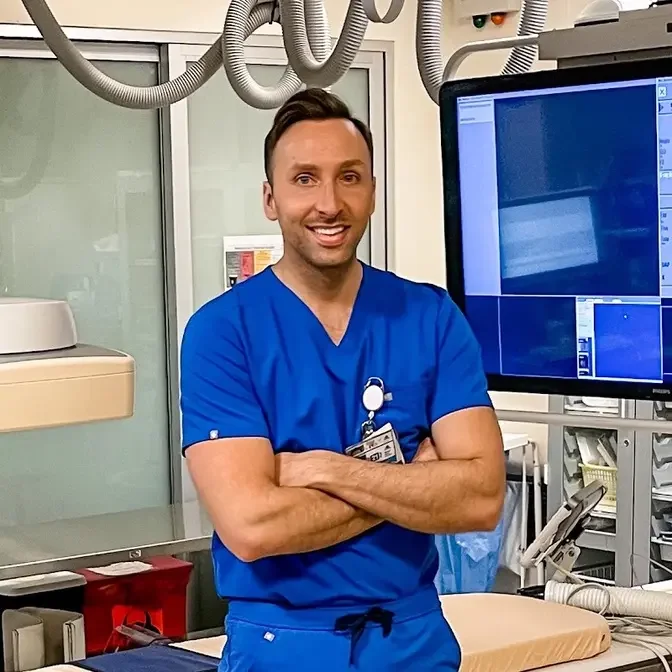
It's been about a decade since I took the MCAT and A LOT has changed with the MCAT since then. So why not embarrass myself and try to take the MCAT again, 10 years later!?
The MCAT and other med school board exams are full of esoteric information that you learn for the exam and then quickly forget. I think it's safe to say I forgot most of the random info that isn't pertinent to my daily practice in Radiology and Interventional Radiology.
What are my thoughts on the MCAT? Is the MCAT a good exam? Is the MCAT hard? Where to find MCAT practice questions. MCAT information
I answer all the above and much more! Hope you enjoy my ups and downs as I take the MCAT 🙃 - Michael __
What is up, YouTube? Welcome back to my channel.
For those of you who are new around here, my name is Michael, aka Dr. Cellini,
and I'm a fifth-year interventional radiology resident.
The other day I got a question in my Instagram DMs,
and if you don't follow me on Instagram, go ahead and do that right now.
And that question was asking for advice on what to do or study tips for taking the MCAT.
And it got me to thinking, because I haven't taken the MCAT since like 2009 or 2010,
and so much has changed since then, including the entire test, for example.
So when I took the exam way back in 2009 or 2010, like I said, I can't even remember,
but there were three different sections. I think there were a physical science and chemistry,
a biological science, and a verbal section, I think.
And the scores were 15 points for each section out of a total of 45, I believe.
The test has changed significantly since then, and I think now it's out of like 528 or something.
So we go from 45 points to 528 points because they added sections, made it longer.
They're basically just trying to make it more challenging,
which is fantastic, and I'm glad I already took it.
So with that being said, I don't have much advice for people taking the MCAT now,
but what I can do is embarrass myself and try to take the MCAT now as a doctor 10 years later.
So this should be very interesting because I haven't looked at these subjects in over 10 years,
but maybe there's some sort of medical tie-in? I don't know.
But we're about to find out. Doctor takes the MCAT. Let's go.
All right, so like I said, I'm going to attempt to take some
MCAT questions or practice questions.
I found a few free websites that offer practice questions.
So I'm going to use them, and you can see my screen the whole time I'm doing the questions.
And this should be embarrassing, so don't make fun of me in the comments below.
Also, this is actually a pretty good example for you guys to see exactly
what pre-med students have to go through in order to get into med school.
A lot of this stuff is not important or not relevant to practicing as a physician,
but kind of helps tune you up into those critical thinking skills early on,
which helps you as a physician.
But as you can see, I probably forgot all of this stuff, but here I am.
All right, so I'm just going to bounce around here and see what kind of tests I can find.
I just did a quick Google search for MCAT biology questions,
because I don't think I can answer any of the chemistry or physics questions.
All that stuff has completely left my brain.
So hopefully I can answer some biology questions,
because they'll probably have some sort of medical tie-in or something.
All right, let's try to find some.
So I searched earlier and found this MCAT biology practice questions here,
so let's answer these two.
Patient presents to the emergency room with asthma attack.
The patient has been hyperventilating for the past hour and has a blood pH of 7.52.
The patient is given treatment and does not appear to respond,
but a subsequent blood pH now reads 7.41.
Why might this blood pH not be a reassuring sign?
Well, because he's becoming acidotic, for one,
which means he's holding in CO2, which is why he's becoming acidotic.
He's air trapping, essentially.
So, so usually your body will try to correct this metabolically.
So, blah, blah, blah.
The patient's kidney may have compensated for alkalemia.
No, the normal pH, blood pH is inaccurate.
Patient may be descending into respiratory failure.
This is likely the answer, C.
So this is, C is the answer because patient's pH is dropping,
which means they're becoming more acidotic and they are air trapping
and basically going into respiratory failure.
Let's see if I'm right.
Boom!
One for one.
Now, it may take me a little longer to do questions like this
than some other physicians, like internal medicine physicians,
because I don't deal with acid-based stuff or blood gases anymore.
That's just not what a radiologist or interventional radiologist deals with anymore,
because we don't manage critically ill patients.
So all that stuff has kind of left my brain.
But anyways, let's go to the next one.
So this website is called Varsity Tutors.
It also has free practice tests, biology-based practice tests.
So these are all long, like 50, 60-question biology tests.
But if you go down here, maybe we can answer some of these.
Let's do like quick little three-question and four-question stuff.
All right.
I'm not reading all this because that's like a lot of words.
So the flow of a substance through the liver flows follows the portal triad.
The portal triad does not include which of the following structures.
Portal triad includes the bile duct, portal vein, and hepatic artery.
So the central vein, whatever that is, is the correct answer in this case.
Hemoglobin is the protein responsible for transferring blood, blah, blah, blah.
We know what hemoglobin is.
So where would hemoglobin have the lowest saturation percentage of oxygen?
So it should be basically right before it gets to the heart, I would imagine, or lungs.
So probably be the pulmonary artery, if I'm not mistaken,
because that is the last stop before it gets oxygenated.
Which of the following vessels has the highest concentration of oxygen?
So that would probably be the pulmonary veins
because it's just oxygenated and going back to the heart to be sent to the rest of the body.
All right.
Let's see how I did.
68 percent.
Oh, 100 percent.
I was about to say, what?
Oh, that's the average.
So I got 100 percent.
Those are easy questions for me, but as a med student,
or a pre-med student, I can imagine that being pretty tough.
All right.
Let's answer some more.
All right.
I'm just going to keep doing these like little four question things
because the rest are like impossible.
Calcium levels are least directly involved in which of the following process?
Which of the following process, processes?
Biotin and vitamin K production.
Signal transduction.
I'm going to go with this.
All right.
How could increasing the amount of fiber in one's diet
reduce the occurrence of constipation?
So decrease the volume of water entering the gut.
No.
Increase absorption of the fiber by gastrointestinal electrolytes.
I think it increases the volume of water.
The vitamins include A, B, C, D, E, and K,
which are fat soluble and which are water soluble.
Fat soluble, I think are A, D, E, K.
So B and C must be water soluble.
I think that's right.
I'm like pulling this from like years ago.
Let's see.
Which of the following nutrients enters the lymphatic vessels?
Lacteals of the villi upon absorption.
What?
I'm going to go with triglycerides.
Boom.
No, thank you.
See what I did on this one.
100% again, crushing it.
All right.
Let's take a more challenging test, if you will.
I should have done this as more of like a live YouTube video.
So you guys could message me and tell me which one of these sections you want me to take.
Because I'm obviously picking easy ones.
But write in the comments below if you want me to do another one of these videos
and tell me or send me questions you want me to answer on here and I'll try my best.
All right.
More short little questions here.
I'll see if I can find something.
Let's do some brain stuff.
Some of these words I haven't thought of in so long.
Efferent neurons carry information in what direction?
So efferent is going away.
So it should be this.
From the central nervous system to the peripheral nervous system,
the amygdala is located in what part of the brain?
That is the temporal lobe.
Crushing it.
I still got my neuro knowledge.
I have to at least know that.
You want to see me miss some serious questions here?
All right.
Other metabolic pathways practice tests.
All right.
This is where it'll be embarrassing.
I promise.
Glycolysis.
This was actually on our step one board exam, which is like...
I can't believe I didn't know all that stuff.
I don't remember any of that stuff.
The process of glycolysis is used by all cells in the body
to turn glucose into ATP for cellular energy.
When stores of glucose are low, however,
the body can break down the form of stored glucose in the liver
to increase glucose reserves.
I believe that's glycogen.
What molecule is broken down by phosphorylase in the liver
to yield glucose 1-phosphate?
I'm pretty sure it's glycogen.
Pretty sure.
Which of the following is not an adequate alternative energy source for humans?
I think cellulose.
Let's go with that.
Which of the following cannot be directly converted to acetyl-CoA?
What?
There was a time in my life that I knew this,
but that time is not right now.
Directly converted?
It might be pyruvate.
Isn't that like in the glycolysis?
I know there's a lot of pre-med and like med students out there
and like this is so obvious,
but trust me, you forget this so fast.
Let's go pyruvate.
In which organ does gluconeogenesis occur?
I'm pretty sure the liver?
Maybe?
Let's see how I did.
75% still passing.
Let's see what I missed.
Oh, glucose cannot be...
I mean, that's...
I think I remember glucose being a part of...
Isn't acetyl-CoA like on that chain or something?
Actually, let's look it up.
We're gonna do some learning together.
So, which one of these cannot be converted directly?
Oh, because glucose has to be converted to pyruvate first
before it goes acetyl-CoA.
I knew it was something like that.
Whatever.
Okay, this is gonna be probably the most embarrassing of all of these,
but let's do a reaction types practice test.
We'll see how this goes.
What intermediate is involved in the conversion of compound B to compound C?
I mean, I did what?
Two semesters of this organic chemistry study for the MCAT.
I don't even remember one thing of what's going on here.
I know this is called like a benzene ring or something,
but I honestly have no clue where to even begin on this question.
That information has left the building.
I don't know.
Secondary radical.
That sounds good, right?
The most stable radical shown below is...
I don't know.
This is so embarrassing.
So I'm gonna go with D and E.
How about a big whopping 0% correct?
A tertiary carbon.
A tertiary carbon, guys.
Tertiary carbocation.
I should have known.
And then clearly I was wrong here.
I don't know.
All right, let's do some immune proteins and signal practice tests.
I don't remember any of this stuff.
The mechanism of antibody-mediated antigen disposal occurs in what order?
I have no idea.
Obstinazation.
I don't even know what that word is.
Let's go with...
Oh, I think obstinazation is when the antibody is presented or something.
So I think that has to be in the middle.
Let's start with this.
Neutralization.
That sounds like afterwards.
I don't know.
MHC1 complex.
I remember that term.
Don't know what it is.
Presents antigen to the T-cells to which T-cell subclass?
This is one of those questions where like your second year med school,
you just boom, know it off the bat.
I think one is CD4 cells.
No, one is CD8 cells and two is CD4 cells.
I may have that backwards.
Let's go with eight.
Native T-cells need to be initially presented with antigen in order to be activated.
Which cell type is involved with this initial presentation?
Let's go with NK cells.
Natural killer cells.
I just like that name.
So I don't know if this is right or not.
Which...
Oh god.
Toll-like receptor recognizes single-stranded RNA.
Three.
No clue.
What part of the body do T-cells undergo maturation?
I think that's the thymus, I believe.
Let's see how I did.
Yikes.
Some mechanisms of...
Oh, I was way off.
I mean, there's no way I would have known these.
This is so far gone out of my head.
All right, guys.
So I think that was enough fun for one day.
It's also super embarrassing to keep getting all those questions wrong
because I once knew them all.
Well, not all of them, but like I once knew how to at least answer those questions.
But now, sadly, I remember none of them.
Which is good because my brain is full of more important and relevant information
because I need to know more radiology and how to do procedures
and not so much purine synthesis.
Now, this video is not designed to make fun of the MCAT
because I think it is important
because it weeds out people getting into medicine
and makes sure they know how to study hard
and are able to handle difficult tests
because all we do throughout medical training
is take difficult exams for like eight and ten hours at a time.
So this is good for that.
It prepares you for what you're getting into.
With that being said, if you want me to do another one of these,
let me know in the comments below.
Or if you have a specific question set you want me to answer
and embarrass myself with,
send that my way to my email or DM me on Instagram right here.
If you have any other questions, leave them in the comments below
and I will try to answer them.
As always, make sure you smash that like and subscribe button.
Otherwise, I'll see you guys on the next video.