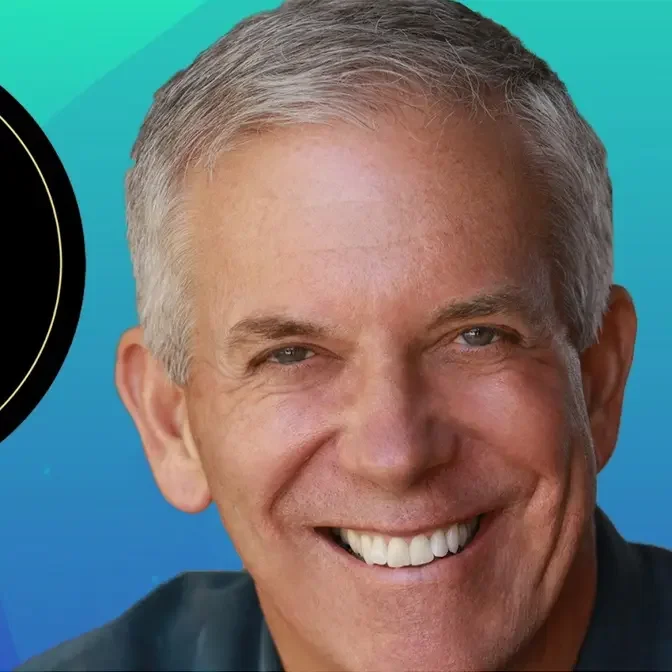
3-D Space in L.A. offers a history of a unique art form. Eric Kurland is the collector and curator of a treasure trove of amazing history and technology of all things 3-D. He explains the discovery of how we see in 3-D and how that was replicated in early photography as an entertainment and has been used in various mediums ever since. We also get the story of the iconic View Master and it's imaginative and chance beginnings. Eric also is a link to the community on teaching and exploring this art form.
“The Best of California with Pat Pattison” is a fast-paced half hour TV show that explores the natural wonder, people, history and mysteries of the California Lifestyle. California native and TV Host Pat Pattison explores the state’s nooks and crannies from the historic backlots of Hollywood, famous California Cuisine all the way to the mansions of the Gold Rush and Silicon Valley. The world’s fifth largest economy and almost a country unto itself “The Best of California with Pat Pattison” offers us a compelling window into the future, past and present of one of the world’s most dynamic places.
Watch us in: San Luis Obispo, Santa Barbara, Santa Maria on the Central Coast CW 5 Sundays 12:30pm Palm Spring on the CW5 Sundays 12:30pm Bakersfield FOX 58 Sundays 5:30pm
Watch us in San Francisco, Las Vegas, Salt Lake City, Detroit, Philadelphia and Orlando on Fun Roads TV. Check local listings at:
I'm seeing double. I am with Eric Kurland at 3d space at Echo Park and Eric
This is wild
Thanks for coming by Pat. This is incredible. So I'm gonna I can't wait a minute. Oh
Whoa, okay. Wait a minute. There we go
so this is
Basically a living museum. I feel like some of the stuff you've even shown me is research
How did you start this 3d space? Yeah, first of all, what does 3d space stand for 3d space is the Center for?
stereoscopic photography art cinema and education and we're a 501 c3 nonprofit
with a
Museum here in Los Angeles dedicated to the art science and history of everything that you see in 3d
Wow, and you shared with me you have a professional background and 3d photography. Tell me a little bit about that
Yeah, yeah, I've worked as a stereographer on a number of projects several music videos for the band. Okay, go
And I was the stereographer for the Simpsons theatrical short
Incredible and and and I mean, I think most of us particularly of a certain age. We kind of think of the 50s
3d but take us back into history a little bit about how 3d really got started. Sure. Sure
Way back in
1838 a British scientist named Sir Charles Wheatstone
He was the first to theorize that we see the world in three dimensions because we've got two eyes
Set a couple of inches apart and each eye sees a slightly different view of the world
so he opted to prove this he built a device that used mirrors and
geometric drawings from two perspectives and
You'd put your nose up to the mirror your left
eye would see a drawing from a left point of view your right eye would see a drawing from a right point of view and
These flat drawings suddenly had depth
So he was able to use this as his proof and he coined the term year again. It was 1838
So he coined the term stereoscopic
Which comes from the Greek scopic means to see and stereo?
Sort of means solid as in like sculpture or in relief. So stereoscopic means to see something in relief
so some of the earliest photographers
Realized they could take a picture from a left point of view and then move their camera over and take a picture from a right
point of view
Put those images into the stereoscope and actually see depth in their photos. Stereoscopes were sort of the home entertainment system and
Photographers would travel the world
Chronicling faraway lands and places that the people in that time couldn't really travel to
But you could go down to your general store and you could buy a pack of cards from
You know the Egyptian pyramids and it was like you were there just moving forward. I grew up with the view master. Yes
Yes, William Gruber in the 1930s. He wanted to revive the stereoscope and
he had this brainstorm that if he
used 16 millimeter frames and
Put them on a disc he could actually fit seven pairs
Onto a disc he designed a viewer for it so that you could rotate through them and get back to where you started
He had a chance encounter at the Oregon Caves with a gentleman named Harold Graves
Mr. Graves was the president of the Sawyers company of Portland and they were the largest photo finishing lab on the west coast
Like they were outside of Kodak. They were the biggest
Processor of Kodachrome film and they also had a big business doing travel postcards. So, you know, the tourist attraction would have Sawyer's postcards
so they saw the potential of this stereoscopic reel as
a tourism souvenir what's really interesting is
those
Early reels. This was all shot on Kodachrome. So
Over 80 years later. The images hold up
Beautifully and you can actually the form factor for the reels hasn't changed
So you can take an 80 year old view master reel
Pop it into a modern viewer and look at them like they were taken yesterday. The technology is digital now, but we're really
using it for the same purpose it was used for back then to be able to see places and and
Visit things that you wouldn't be able to see. Otherwise, what can people do to support you? Well, we have a website it is
La 3d dot space la 3d dot SP a CE, you know for for obvious reasons
During the pandemic we we had to close our doors for a year and a half
We have reopened so if you're in the Los Angeles area and you'd like to visit
You can visit our website and you can check out our online schedule and book a visit. Well Eric Kerlin
Thank you. This is an incredible space
Look their website up come down and see this here and support the 3d space
We need to keep all the all the heritage of our arts alive here in California
And that's our look at retro, California. Thanks to the Oscar Mayer people and the wiener mobile. Hope you enjoyed it. Tune in next time