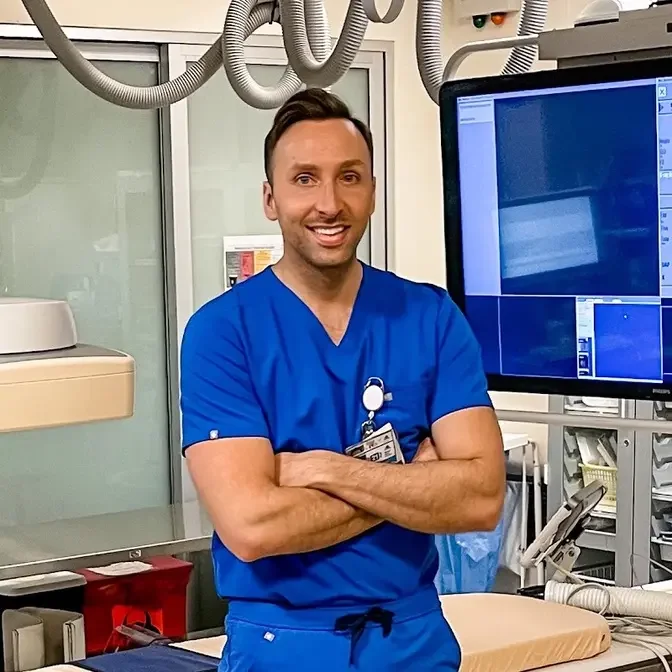
Doctors learn how to function off of little to no sleep during their training, but is this a good thing? In this video, I shed some light on how this all came about. I wanted to talk about exactly why physicians are so sleep-deprived, how we function on little sleep, and why it's necessary to get inadequate sleep during our residency training. It all starts back in med school and only escalates from there. Unfortunately, a lot of doctors still have to function this way even in practice...especially in communities where doctors are sparse. I personally know of many physicians who are often the only ones that are on call in a particular geographic area, which means they are ALWAYS on call. But in the end, we did choose this life! We all wanted to be a doctor for a reason, and even though we work long hours and lose sleep, most of us couldn't imagine doing anything else.
Hope you guys enjoy this video, and as always comment below with any questions! -Michael __
What is up, YouTube? Welcome back to my channel.
For those of you who are new to my channel, my name is Michael, aka Dr. Cellini,
and I am a fifth-year resident specializing in interventional radiology.
It's been about two months since I posted my last 96-hour call shift video,
which if you haven't seen, you can link up right here or hit the link in the description.
And since that video, the comments have been blowing up
on YouTube and in my DMs on Instagram, asking why I get no sleep,
why residents are expected to do so much on such little sleep,
and how can doctors overall function on such little sleep.
So on today's video, we are going to do a deep dive and find out exactly why
doctors are notoriously overworked and sleep-deprived.
So let's get into it.
This video is sponsored by MotivateMD.
MotivateMD is an entire platform devoted to healthcare professionals,
making your life easier both in and outside of the hospital
by providing you with services to make your life as productive as possible.
They have a ton of different products on their platform,
and I wanted to take a moment to talk about two of my favorite products they offer.
The first product I wanted to talk about is their pre-med app,
which is specifically designed for pre-med students
to keep them on track into getting into med school.
My favorite part of the app is the focus timer,
which allows you to set a specific amount of time to work on a specific target
and allows you to make every second count.
Now, I also love the MotivateMD planner,
which is designed for anybody in medicine from pre-health students
all the way to accomplished medical professionals.
I actually use this planner every single day for six months
in order to keep me on track for boards,
and I passed boards, so it clearly worked for me.
So do yourself a favor, click the link in my description below,
go visit the MotivateMD website,
and use my code CHELINE20 to get 20% off of everything we talked about
and so much more.
Go check out their website today and use my code CHELINE20.
Now, let's get back to the video.
Now, in order to figure out this whole lack of sleep issue amongst doctors,
I think we need to go back to the beginning, which is med school.
And after all, med school is the first time
where you kind of figure out how to function off of little sleep.
The first two years of med school are also called preclinical years,
and it's where you spend two years
studying insane amount of material every single day.
Now, in these first two years of med school,
massive amounts of information fly at you,
and you have to keep up,
or you'll end up drowning on these seemingly enormous exams
at the end of every two weeks or so.
So if there aren't enough hours in the day,
what would a med student do?
Well, it's easy.
They just start by sacrificing sleep,
what any normal student would do.
Many med students will consistently pull all-nighters
in the weeks leading up to a test,
and it's almost necessary at times
to get through the amount of information that's thrown at you.
I personally chose to go to bed on time each night,
but I would wake up around 4.30 or 5 a.m.
to start studying every day.
So either way you look at it,
you still end up losing sleep.
And once you finally finish your first two years of med school,
you're finally free,
and you get to go in the hospital
and go on many different rotations
of a ton of different specialties.
And in order to match into a good residency,
you need to have high marks on these hospital rotations.
And in order to get the honors pass for these rotations,
you have to go into the hospital early,
work extremely hard throughout the day,
and leave late.
And you guessed it,
you will inevitably sacrifice sleep doing this,
especially when you're on a surgical rotation.
Imagine waking up around 3.30 or 4 a.m.,
sometimes earlier,
pre-rounding on all the patients
so you know what's going on
eventually when the residents
and the attending round in the morning,
then going to the OR all day,
standing on your feet,
holding a retractor
till sometimes later on in the afternoon
or early evening,
and then waking up and doing it all over again.
And this goes on for at least four to six weeks.
The interesting thing about med school
is that there are no work hour restrictions
like there are in residency,
which means you can work as much as you want
and no one will tell you otherwise.
And to most physicians
who are handling these evaluations
at the end of a rotation,
more hours worked equals hard worker,
which equals a great student,
which means honors pass.
You kind of get the gist.
Basically what I'm trying to say is,
you have to sacrifice sleep
in your clinical rotations as well.
Are you sensing a common theme here?
And then finally you graduate
those grueling four years of med school
and you're finally a physician,
which means you can relax, right?
Wrong.
Now you have to spend the next
three to seven years in residency,
which is far and away
the hardest part of your medical training.
And it begins with your first year of residency
also known as internship or intern year.
Intern year is specific
for what specialty you go into.
For example,
I had the option of doing surgery
or medicine as my intern year
and I chose surgery because,
yeah, let's just leave it at that.
In my surgery internship,
I worked six days a week,
6 a.m. to 6 p.m.
With the exception of three weeks vacation
that I had throughout the year,
I worked every single weekend.
That's 49 out of 52 weekends.
That's 49 out of 52 weeks
working 72 plus hour weeks
as the lowest level physician in the hospital,
which means you're writing all the notes,
fielding all of the pages,
writing all of the prescriptions,
discharge summaries,
and you're the first person on the scene
when a patient starts doing poorly.
Now make no mistake,
this is the hardest year of residency
because it's your first time
kind of coming into the hospital
and learning everything all at once,
but it's essentially like a rite of passage
in becoming a physician.
Okay, yeah, yeah, yeah, Michael,
but how does that relate to sleep?
Well, the one thing I left out
is that intern year is the first time
in your career
that you start doing overnight shifts.
I did two one-month blocks of night flow
during my intern year
working 6 p.m. to 6 a.m.
I actually like these shifts
because things are much slower paced at night
and most of your patients are sleeping,
but you kind of feel like a zombie
while you're at work.
Now your body actually does eventually respond
to being on a night shift schedule,
but it takes around a few weeks to get adjusted
and that's about the time
where you switch back over to day shifts.
And yes, sometimes overnight
we would actually get to get some sleep,
but it was interrupted sleep,
which means every time I lay down,
my pager would keep going off
and sometimes we could go to the call room,
but let me see if I can find a picture
of our call room
and you'll see exactly why
I didn't go there very often
because it looks kind of like a prison cell.
Now let's talk about the rest of residency,
which is about three to seven years
in most situations.
My residency is actually six years long
and for example,
neurosurgery is seven years long.
It depends on the specialty.
Now residency is pretty similar to intern year,
but it definitely varies among specialties.
Some surgery specialties have it far worse
than say dermatology
or even diagnostic radiology for instance.
Luckily though in the US,
we have an 80 hour work week restriction policy,
which I went into more in depth on this video,
which I'll link up here in the description.
Now most residencies are set up the same way,
which means the more years spent in residency,
the more senior you become
and the more responsibility you are given or expected.
So for example, in my specialty,
the third through fifth years,
you are the most senior resident
and you take the most call,
which means now that I'm a fifth year resident
or a junior fellow in interventional radiology,
I take fellow call,
which means I'm on call every four nights
for 24 hour period
and usually about one in four weekends on call.
So how much sleep do I get on call?
Well, in short, it completely depends on the night.
So let me back up a little bit.
When I'm on call,
it's from 7 a.m in the morning
through 7 a.m the following morning.
So when I get into the hospital in the morning,
I'm usually just going about my normal day
doing procedures
and I usually am done around six-ish
or maybe like seven at the latest.
Sometimes or usually there's a late case
which goes on until like eight or nine
and sometimes an emergent case after that,
but then I get to go home
and I don't have to come back into the hospital
unless I get an emergent page,
which makes me come back in.
Otherwise, I'm just at home sleeping.
Now home call is so much better
than staying in a hospital
and sleeping here all night
and waiting for a page to come in,
but it's still interrupted sleep
because even though I may not get called in,
I still get paged about stuff all the time.
So we may have a person bleeding that's stable
that they still call me about
and maybe give me a heads up on
or I may have a patient that's actually bleeding
and becoming unstable
and I'm trending the labs all night.
So just because I'm taking home call
doesn't mean I just get to rest peacefully all night.
And the crazy part about being called in
in the middle of the night
is that regardless of how tired you are,
your body will somehow adapt
and allow you to complete the task
that you need to do
and stay focused on the procedure
or even a difficult surgery if you have to.
I really can't explain it.
You can just kind of focus.
Now it's not the part about waking up
in the middle of the night
that actually wears you out.
It's the fact that after you come
into the hospital in the middle of the night,
you still have an entire day ahead of you,
which you can imagine would be pretty exhausting,
especially if you have procedures
or surgeries planned that whole day.
Oh, and P.S.
This is my call setup when I take diagnostic call.
It's pretty inviting.
Coffee pillow.
So comfortable.
So the real question we have here is
why is training so difficult?
Why are doctors so overworked?
And why are we so sleep deprived because of it?
Well, I think a lot of it is actually generational.
I think part of it is that
they feel like we should experience
the same kind of training that they did
and experience the grueling long shifts
and stay in the hospital for days at a time.
The thought of taking vacation back then
was kind of comical.
You were expected to be in the hospital
and learn your craft
and stay there for as many days as it took
to become the best doctor you needed to be.
But eventually we realized something
that doctors are human too
and we need our sleep just as much as the next person.
Sleep used to be a sign of weakness
amongst the medical community
and now it's a necessity.
And because of all this new information,
the tide has slowly been turning,
which is why we implemented
this 80-hour workweek restriction policy
a few years back.
So do I personally think it's okay
for doctors to come in the middle of the night
and do an emergent procedure
or an emergent surgery?
Well, yeah, I do.
Because, I mean, somebody has to, right?
There really isn't another option.
There aren't enough physicians in America
to have one at every hospital in the US
working an overnight shift.
And you have to realize that's kind of expensive
to have a physician in-house overnight
because, after all,
the rate at which you come in overnight,
for me personally, for interventional radiology,
is around 20%,
which means of all the time that I take call,
I only come in about 20% of the time.
The other times I may stay up
and answer a few phone calls overnight,
but I don't actually come in the hospital,
which means I don't actually perform a procedure,
which means for a physician
that they would be paying
to cover the hospital overnight
for any emergencies that come in,
it would be kind of a waste
and the hospital wouldn't be getting their money's worth.
Which, as we all know, at the end of the day,
hospitals are businesses too.
Now, of course, I wish I didn't have to come in
in the middle of the night
and I wish I had a more laid-back schedule,
but I also couldn't see myself doing anything else.
Every doctor knows what they're getting into
before they start residency,
so for me, it wasn't any different.
I chose this avenue.
I chose this specialty
because it's what I enjoy
and it's what I love doing.
So that concludes this video.
I hope you guys enjoyed it.
It's a little different than usual.
Make sure you smash that like and subscribe button.
Follow me on Instagram right here.
If you have any questions,
leave them in the comments below
and I will try to answer them.
Otherwise, I'll see you guys on the next video.